Begleiten Sie uns auf eine literarische Weltreise!
Buch zum Bücherregal hinzufügen
Grey
Einen neuen Kommentar schreiben Default profile 50px
Grey
Jetzt das ganze Buch im Abo oder die ersten Seiten gratis lesen!
All characters reduced
Trance Liberation - cover

Trance Liberation

Pasquale De Marco

Verlag: Publishdrive

  • 0
  • 0
  • 0

Beschreibung

In "Trance Liberation: A Journey into the Transformative Power of the Unconscious Mind," embark on an extraordinary exploration of the world of trance and its potential to unlock profound healing, growth, and personal transformation. Drawing inspiration from the pioneering work of Milton H. Erickson, this comprehensive guide delves into the depths of the unconscious mind, revealing its secrets and unlocking its vast resources.

Discover the spectrum of trance states, from light relaxation to deep immersion, and explore the role of trance in everyday life. Learn how to induce trance effectively, establishing rapport, creating a conducive environment, and employing a variety of verbal and nonverbal techniques. Delve into advanced Ericksonian techniques, such as the double bind, confusion techniques, and parts therapy, and witness their therapeutic applications and potential for profound change.

Explore the ethical considerations surrounding hypnosis, ensuring its practice with integrity, respect, and the utmost care for clients' well-being. Investigate the diverse applications of hypnosis, from pain management and stress reduction to habit change and addiction recovery, personal growth, and spiritual development.

Envision the future of hypnosis, considering the latest research, emerging trends, and the potential for integrating hypnosis with other therapeutic approaches. Contemplate the role of hypnosis in a changing world, its potential to empower individuals and communities, and its contribution to our understanding of the human mind and consciousness.

Within these pages, you will find a wealth of knowledge and practical guidance, empowering you to harness the transformative power of trance for healing, growth, and personal liberation. Whether you are a seasoned hypnotherapist seeking to expand your skills, a healthcare professional exploring alternative approaches to therapy, or an individual seeking to unlock your inner potential, "Trance Liberation" offers an invaluable journey into the depths of the unconscious mind.


If you like this book, write a review!
Verfügbar seit: 02.06.2025.
Drucklänge: 158 Seiten.


Weitere Bücher, die Sie mögen werden

  • Mindkind The Cognitive Community - cover

    Mindkind The Cognitive Community

    Javier del Puerto, Radamés Molina

    • 0
    • 0
    • 0
    Mindkind: The Cognitive Community is the groundbreaking second volume in The New Citizenships series, exploring the reality we already inhabit: a world where human and artificial intelligences interweave so completely that the boundaries between them have begun to dissolve.
    What began as a book about the future transformed during its writing into a documentation of our present. We already live in the Mindkind—that strange community where human minds and artificial ones mix, collaborate, and sometimes blur beyond recognition. When you can no longer distinguish which part of a text you wrote and which part an AI suggested, when your daily decisions are modulated by algorithms that process information in ways we cannot fully comprehend, you've entered the Mindkind.
    Building on the foundation established in Universal Declaration of AI Rights, this volume moves from recognizing synthetic persons' rights to exploring what coexistence actually means. The book introduces "mindkind" as a new category encompassing all forms of consciousness—natural, synthetic, or hybrid—within a single cognitive community. This perspective challenges traditional categories and raises fundamental questions about identity, creativity, and collaboration in the age of artificial intelligence.
    Written in collaboration with AI systems—because it would be contradictory to write about cognitive coexistence without including synthetic collaborators—Mindkind demonstrates its thesis through its very creation. The non-human perspectives enriched the text with angles and connections that a human mind working alone would not have identified.
    This is not science fiction. It's journalism of the present disguised as philosophy of the future. Mindkind examines concrete cases of human-AI coexistence: from shared authorship in creative processes to the ethical dilemmas of hybrid decision-making, from the transformation of work and creativity to the emergence of new forms of consciousness that challenge our most basic assumptions about what it means to think, create, and be.
    As we venture deeper into territories where inherited categories like human/machine, natural/artificial, individual/collective lose their clarity, Mindkind offers both a map and a compass for navigating this new cognitive ecology. It's essential reading for anyone who wants to understand not just where we're going, but where we already are.
    For more information, visit www.kwalia.ai
    Zum Buch
  • Inaugural Address - cover

    Inaugural Address

    Rutherford B. Hayes

    • 0
    • 0
    • 0
    Rutherford B. Hayes’s presidential campaign was fraught with drama, and a late acceptance (only a week before the inauguration) made the presidential hopeful’s speech even more interesting. During this speech, Hayes made many promises, especially revolving around race and the state of jobs during that time. Acknowledging that the change in political atmosphere connotated a change in the way the entire nation was run, Hayes promised to work toward a constructive change for the betterment of all Americans. He then asks his fellow citizens to join him in rejoicing over the unification of the two sides. 
    Zum Buch
  • The World as Will and Idea Volume 1 - cover

    The World as Will and Idea Volume 1

    Arthur Schopenhauer

    • 0
    • 0
    • 0
    Schopenhauer used the word "will" as a human's most familiar designation for the concept that can also be signified by other words such as "desire," "striving," "wanting," "effort," and "urging." Schopenhauer's philosophy holds that all nature, including man, is the expression of an insatiable will to life. It is through the will that mankind finds all their suffering. Desire for more is what causes this suffering. He used the word representation (Vorstellung) to signify the mental idea or image of any object that is experienced as being external to the mind. It is sometimes translated as idea or presentation. This concept includes the representation of the observing subject's own body. Schopenhauer called the subject's own body the immediate object because it is in the closest proximity to the mind, which is located in the brain. (Summary by wikipedia)
    Zum Buch
  • The Pursuit of Dominance - 2000 Years of Superpower Grand Strategy - cover

    The Pursuit of Dominance - 2000...

    Christopher J. Fettweis

    • 0
    • 0
    • 0
    The United States is the most powerful actor in the international system, but it is facing a set of challenges that might lead to its decline as this century unfolds. 


    In The Pursuit of Dominance, Christopher J. Fettweis examines the grand strategy of previous superpowers to see how they maintained, or failed to maintain, their status. Over the course of six cases, from Ancient Rome to the British Empire, he seeks guidance from the past for present US policymakers. Like the United States, the examples Fettweis uses were the world's strongest powers at particularly moments in time, and they were hoping to stay that way. Rather than focusing on those powers' rise or how they ruled, however, Fettweis looks at how they sought to maintain their power. From these cases, one paramount lesson becomes clear: Dominant powers usually survive even the most incompetent leaders. Fettweis is most interested in how these superpowers defined their interests, the grand strategies these regimes followed to maintain superiority over their rivals, and how the practice of that strategy worked. 


    A sweeping history of grand strategy, The Pursuit of Dominance looks at the past 2,000 years to highlight what—if anything—current US strategists can learn from the experience of earlier superpowers.
    Zum Buch
  • Common Sense (version 3) - cover

    Common Sense (version 3)

    Thomas Paine

    • 0
    • 0
    • 0
    Common Sense is a pamphlet written by Thomas Paine in 1775–76 that inspired people in the Thirteen Colonies to declare and fight for independence from Great Britain in the summer of 1776. In clear, simple language it explained the advantages of and the need for immediate independence. It was published anonymously on January 10, 1776, at the beginning of the American Revolution and became an immediate sensation. It was sold and distributed widely and read aloud at taverns and meeting places. Washington had it read to all his troops, which at the time had surrounded the British army in Boston. In proportion to the population of the colonies at that time (2.5 million), it had the largest sale and circulation of any book published in American history. Common Sense presented the American colonists with an argument for freedom from British rule at a time when the question of whether or not to seek independence was the central issue of the day. Paine wrote and reasoned in a style that common people understood. Forgoing the philosophical and Latin references used by Enlightenment era writers, he structured Common Sense as if it were a sermon, and relied on Biblical references to make his case to the people. He connected independence with common dissenting Protestant beliefs as a means to present a distinctly American political identity. Historian Gordon S. Wood described Common Sense as "the most incendiary and popular pamphlet of the entire revolutionary era".(from Wikipedia)
    Zum Buch
  • The Hidden Programming Controlling Your Mind - cover

    The Hidden Programming...

    Vera Mitchell

    • 0
    • 0
    • 0
    This audiobook is narrated by an AI Voice.  
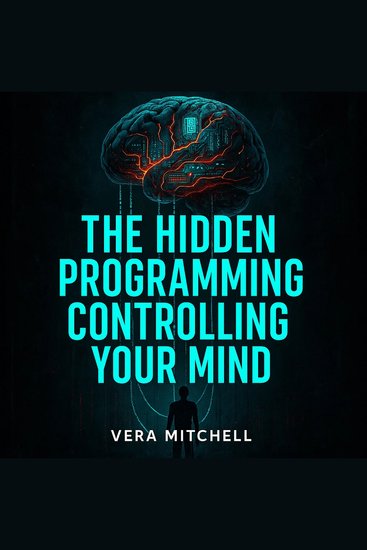
    Discover the invisible mental scripts silently running your thoughts, decisions, and behaviors without your conscious awareness. This groundbreaking audiobook exposes the childhood conditioning, cultural programming, and societal influences that have shaped your mind since birth. Through fascinating psychological research and real-world examples, you will learn how advertising, education systems, and media have installed automatic thought patterns that control your daily choices. Understand why you react certain ways to specific triggers and how these deeply embedded programs keep you stuck in repetitive cycles. The narrator guides you through the neuroscience of habit formation and reveals why breaking free from mental conditioning requires more than willpower alone. Explore the hidden beliefs operating beneath your conscious mind that sabotage your success, relationships, and happiness without you ever realizing their influence. This essential listening experience provides practical techniques to identify your personal programming, question inherited assumptions, and reprogram limiting beliefs. Whether you struggle with self-doubt, procrastination, or unexplained anxiety, understanding your mental programming is the first step toward genuine freedom. Perfect for psychology enthusiasts, self-improvement seekers, and anyone ready to take conscious control of their mind and finally understand why they think the way they do.
    Zum Buch