Rejoignez-nous pour un voyage dans le monde des livres!
Ajouter ce livre à l'électronique
Grey
Ecrivez un nouveau commentaire Default profile 50px
Grey
Abonnez-vous pour lire le livre complet ou lisez les premières pages gratuitement!
All characters reduced
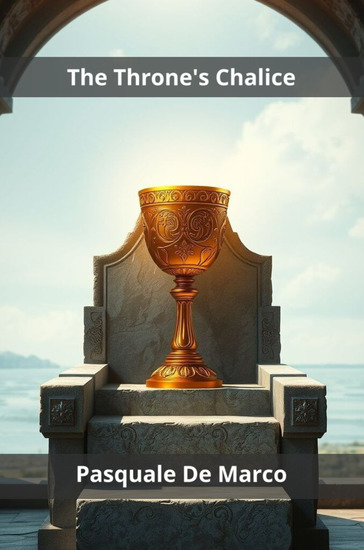
The Throne's Chalice - cover

The Throne's Chalice

Pasquale De Marco

Maison d'édition: Publishdrive

  • 0
  • 0
  • 0

Synopsis

In the annals of history, few figures capture the imagination quite like Marie Antoinette, the ill-fated queen of France. Her life, a whirlwind of splendor, tragedy, and controversy, has been the subject of countless books, films, and historical analyses. Yet, in this new and captivating narrative, we delve deeper into Marie Antoinette's story, offering a fresh perspective on her identity, her role in a tumultuous era, and her lasting legacy.

Drawing upon meticulously researched sources and a nuanced understanding of the historical context, this book unveils the complexities of Marie Antoinette's character. We witness her transformation from a young and idealistic princess to a powerful and polarizing queen, navigating the treacherous waters of the French court. Through her eyes, we experience the grandeur and decadence of Versailles, the growing unrest among the populace, and the inexorable march towards revolution.

This book challenges traditional portrayals of Marie Antoinette as either a frivolous spendthrift or a tragic victim. Instead, it presents a woman of remarkable strength and resilience, a queen who faced adversity with courage and determination. We explore her political acumen, her diplomatic efforts, and her deep love for her adopted country. Yet, we also confront the realities of her reign, the missteps and decisions that contributed to her downfall.

Beyond the political and historical narrative, this book delves into the personal life of Marie Antoinette. We encounter her as a devoted wife, a loving mother, and a passionate patron of the arts. We witness her struggles as she navigates the pressures of court life, the challenges of motherhood, and the ever-present threat of scandal. Her story is a poignant reminder of the human cost of power and the fragility of life in the spotlight.

Ultimately, this book offers a comprehensive and thought-provoking examination of Marie Antoinette's life and legacy. It invites readers to reconsider their perceptions of this enigmatic figure, to understand the forces that shaped her destiny, and to appreciate her enduring relevance to our contemporary world. Through its rich storytelling and insightful analysis, this book sheds new light on one of history's most fascinating and controversial queens.


If you like this book, write a review!
Disponible depuis: 02/06/2025.
Longueur d'impression: 164 pages.

D'autres livres qui pourraient vous intéresser

  • Learn French - Level 3: Lower Beginner French - Volume 2: Lessons 1-25 - cover

    Learn French - Level 3: Lower...

    Innovative Language Learning, ...

    • 0
    • 0
    • 0
    Welcome to Lower Beginner French, Volume 2


    You're on your way to France! Master the basics of French conversation!


    Start speaking French in minutes, and learn key vocabulary, phrases, and grammar in just minutes more with Lower Beginner French. Our native French hosts break down all the sentences, grammar and more in a simple, easily understandable way! 


    Here are a few topics covered in this audiobook: 
     
    • Talk About Numbers and Time
     
    • Saying "No"
     
    • Asking and Giving Directions
     
    • Talk About the Past
     
    • French Cultural Tips and More!


    This isn't stale textbook material - it's fun, effective, and practical! You learn beginner French conversation that you can use immediately!


    What you get in Lower Beginner French:
     
    • 190+ pages of French learning material 
     
    • 25 French lessons: dialog transcripts with translation, vocabulary, sample sentences and a grammar section
     
    • 25 Audio Lesson Tracks 
     
    • 25 Audio Review Tracks (practice new words and phrases)
     
    • 25 Audio Dialog Tracks (read along while you listen 


    Interactive. Effective. And FUN!


    Discover or rediscover how fun learning a language can be with the future of language learning.


    Buy this now and start speaking French instantly!


    Download the PDF and read along
    Voir livre
  • How to Make Money - An Ancient Guide to Wealth Management (series: Ancient Wisdom for Modern Readers) - cover

    How to Make Money - An Ancient...

    PLINY

    • 0
    • 0
    • 0
    Ancient Romans liked money. But how did they make a living and sometimes even become rich? The Roman economy was dominated by agriculture, but it was surprisingly modern in many ways: the Romans had companies with CEOs, shareholders, and detailed contracts regulated by meticulous laws; systems of banking and taxation; and a wide range of occupations, from merchant and doctor to architect and teacher. The Romans also enjoyed a relatively open society, where some could start from the bottom, work, invest, and grow rich. How to Make Money gathers a wide variety of ancient writings that show how Romans thought about, made, invested, spent, lost, and gave away money. 


    The Roman elite idealized farming and service to the state but treated many other occupations with suspicion or contempt, from money lending to wage labor. But whatever their attitudes, pecunia made the Roman world go round. In the Satyricon, Trimalchio brags about his wealth. Seneca accumulated a fortune—but taught that money can't buy happiness. Eumachia inherited a brick factory from her father, married well, and turned to philanthropy after she was widowed. How to Make Money also takes up some of the most troubling aspects of the Roman economy, slavery and prostitution, which the elite deemed unrespectable but often profited from.
    Voir livre
  • How to Steal a Presidential Election - cover

    How to Steal a Presidential...

    Lawrence Lessig, Matthew Seligman

    • 0
    • 0
    • 0
    From two distinguished experts on election law, an alarming look at how the American presidency could be stolen—by entirely legal means 
     
    Even in the fast and loose world of the Trump White House, the idea that a couple thousand disorganized protestors storming the U.S. Capitol might actually prevent a presidential succession was farfetched. Yet perfectly legal ways of overturning election results actually do exist, and they would allow a political party to install its own candidate in place of the true winner. 
     
    Lawrence Lessig and Matthew Seligman work through every option available for subverting a presumptively legitimate result—from vice-presidential intervention to election decertification and beyond. While many strategies would never pass constitutional muster, Lessig and Seligman explain how some might. They expose correctable weaknesses in the system, including one that could be corrected only by the Supreme Court. 
     
    Any strategy aimed at hacking a presidential election is a threat to democracy. This book is a clarion call to shore up the insecure system for electing the president before American democracy is forever compromised. 
     
    Lawrence Lessig is the Roy L. Furman Professor of Law and Leadership at Harvard Law School. Matthew Seligman is a fellow at the Constitutional Law Center at Stanford Law School and a partner at Stris & Maher LLP.
    Voir livre
  • The Great Migration - African Americans Move North - cover

    The Great Migration - African...

    Nova Ashford

    • 0
    • 0
    • 0
    The Great Migration was one of the most significant demographic shifts in American history. Between 1916 and 1970, more than six million African Americans left the rural South and moved to urban areas in the North, Midwest, and West. This movement not only changed the lives of the people who migrated but also reshaped the cultural, political, and economic fabric of the United States. 
    For many African Americans, life in the South was marked by racial discrimination, economic hardship, and constant threats of violence. Jim Crow laws enforced segregation in every aspect of public life, from schools and transportation to housing and employment. Black families lived under the constant fear of lynching and racial terror. Economically, most African Americans were trapped in sharecropping or low-wage labor, with little opportunity for advancement. 
    At the same time, the North offered a vision of hope. Industrial cities like Chicago, Detroit, Cleveland, and New York had booming economies, especially during World War I and World War II, when labor shortages opened up jobs in steel mills, factories, and railroads. Though racism still existed in the North, it was often less openly violent, and African Americans had more chances to organize, vote, and build communities. This combination of “push” and “pull” factors drove millions to pack up and seek a better future.
    Voir livre
  • Black Death - Causes Fatalities and Effects of the Plague - cover

    Black Death - Causes Fatalities...

    Kelly Mass

    • 0
    • 0
    • 0
    Here we have it: We may be looking at the years 2020-2021 and think a certain virus has been bad for the world population. However, what happened in these two years is nothing, proportionally, to the hundreds of millions of people who got wiped out by rat infestations spreading insanitary bacteria, resulting in the disease and death of huge parts of the European population in the mid-centuries. 
    The genesis or origin of the Black Death is a point of contention. The epidemic started in Central Asia or East Asia, but it wasn't till 1347 that it made its conclusive presence in Crimea. It spread out through the Mediterranean Basin, reaching Africa, Western Asia, and the remainder of Europe through Constantinople, Sicily, and the Italian Peninsula, probably brought by fleas surviving on black rats carried by Genoese servant ships. There's proof that the Black Death was spread out in big part by fleas-- which trigger pneumonic plague-- and the person-to-person contact by means of aerosols that pneumonic plague permits, which would clarify the epidemic's fast inland spread out, which would be expected if the main vector was rat fleas triggering bubonic plague. 
    The Black Death was the 2nd significant natural catastrophe to strike Europe in the late Middle Ages (the first being the Great Scarcity of 1315-- 1317), killing between 30 and sixty percent of Europe's population. 
    In the 14th century, the plague disease might have decreased the worldwide population from c. 475 million to 350-- 375 million. So, more than 100 million people died from it, which was almost a fourth of the world’s population. 
    To mention that such were difficult times, is an understatement. My empathy for those unfortunate souls has reached an entire new level of suffering. I don’t know about you, but when I did my research, I wanted to know more about it. I hope you feel the same way.
    Voir livre
  • The Coming Storm - Why water will write the 21st Century - cover

    The Coming Storm - Why water...

    Liam Fox

    • 0
    • 0
    • 0
    Following Russia's aggressive war in Ukraine, the world is suddenly gripped by concerns over energy security. And yet, there is an even greater threat ahead – one that is much more likely to shape the events of the twenty-first century than the competition for oil or gas.
    The combination of an ever-increasing global population, climate change, industrialisation, urbanisation and limited natural resources means that one difficulty, above all, will shape the political, economic and security environment in the years ahead: that is water. If people and nations will fight for fossil fuels, it is nothing compared to what they will do for the most vital natural resource of all.
    As both a citizen who has supported water charities and worked in the NHS and a politician who has dealt with security and economic issues, Liam Fox tells the story of water and the problems it presents in a more complete way than ever before. The Coming Storm unites a range of concerns that are often written about separately but seldom together and provides a comprehensible and compelling call for urgent action.
    Voir livre