Begleiten Sie uns auf eine literarische Weltreise!
Buch zum Bücherregal hinzufügen
Grey
Einen neuen Kommentar schreiben Default profile 50px
Grey
Jetzt das ganze Buch im Abo oder die ersten Seiten gratis lesen!
All characters reduced
The Montagnards - A Struggle for Freedom - cover

The Montagnards - A Struggle for Freedom

Pasquale De Marco

Verlag: Publishdrive

  • 0
  • 0
  • 0

Beschreibung

In the heart of Vietnam's Central Highlands, a proud and resilient people known as the Montagnards have fought for centuries to maintain their independence and cultural identity. This book tells their story, from their ancient origins to their present-day struggles.

The Montagnards are an ethnic minority group with their own languages, traditions, and customs. They have a rich history and culture, and are known for their skill in hunting, gathering, and farming, as well as their expertise in martial arts and traditional medicine.

Their homeland is a rugged and mountainous region, and they have a long history of defending it from invaders. In the 20th century, they fought against both the French and the Vietnamese governments, and they continue to face discrimination and oppression today.

Despite the challenges they face, the Montagnards have never given up hope for a better future. They are a proud and resilient people, and they continue to fight for their rights and their culture.

This book tells the story of their struggle, their triumphs, and their setbacks. It is a story of a people who have faced incredible hardship and oppression, yet have never surrendered their dream of freedom.

This book is a testament to the strength and resilience of the Montagnard people. It is a story that will inspire and uplift readers of all backgrounds.


If you like this book, write a review!
Verfügbar seit: 02.06.2025.
Drucklänge: 160 Seiten.


Weitere Bücher, die Sie mögen werden

  • The Rise of Anarchism - From Historical Roots to Modern Movements - cover

    The Rise of Anarchism - From...

    Arlo Holders

    • 0
    • 0
    • 0
    Anarchism is a political philosophy that advocates for a society without rulers, where individuals are free to govern themselves without the interference of centralized authority. It is a broad and diverse ideology that challenges traditional systems of power, particularly the state, while emphasizing voluntary cooperation and mutual aid among individuals. Anarchism is rooted in the belief that human beings are capable of organizing themselves in non-hierarchical, egalitarian structures, and that the imposition of authority and coercive institutions is both unjust and unnecessary. 
    At its core, anarchism rejects the concept of a state or any institution that wields power over others. Anarchists argue that the state is inherently oppressive and coercive, often serving the interests of the powerful rather than the people it is supposed to protect. The state's monopoly on violence, enforcement of laws, and control over resources are seen as mechanisms of domination that restrict human freedom and dignity. Instead of these top-down systems, anarchism envisions decentralized, voluntary forms of organization where individuals and communities govern themselves through direct democracy and mutual aid. 
    The philosophy of anarchism is built on a commitment to freedom, autonomy, and the abolition of all forms of hierarchy, including not only state power but also social, economic, and cultural hierarchies. Anarchists seek to dismantle systems of oppression such as capitalism, patriarchy, and racism, which they view as intertwined with state power. The idea of freedom in anarchism is not just the absence of external constraints, but the presence of opportunities for people to fully develop their potential and live in harmony with others.
    Zum Buch
  • Feed the People! - Food for the 99% - cover

    Feed the People! - Food for the 99%

    Gabriel Rosenberg, Jan Dutkiewicz

    • 0
    • 0
    • 0
    Why Wendell Berry, Michael Pollan, and other slow-food-loving locavores are wrong about food in America—and why Waffle House can save us allThe food industry is a major driver of climate change, pollution, obesity, animal suffering, and workplace exploitation. Many food writers blame the industrial food system and tell individual eaters to fix these problems by buying local, artisanal food from small farmers—a solution most Americans can't afford. But, as food policy experts Gabriel Rosenberg and Jan Dutkiewicz remind us, modern technology has made food more affordable, abundant, varied, and tastier than at any other time in history. In Feed the People!, they argue that modern food pleasures like Waffle House waffles, and the industrial systems that make them possible, are actually good. With smart technology and commonsense policies, we can make them even better.Rosenberg and Dutkiewicz have traveled around the United States to find the people changing the way we make and eat food, from the innovators behind plant-based burgers to the cooks serving free school lunches to the labor organizers unionizing fast food joints. They show that building a food system that works for everyone will take more than just eating your vegetables. Feed the People! invites you to sit at the table and join this delicious movement.
    Zum Buch
  • Battlefields of The Future: The Evolution of the Technology of War 2025-2125 - cover

    Battlefields of The Future: The...

    Dr. Nick Coman, I. A.I.

    • 0
    • 0
    • 0
    A 36‑lecture audio course on how wars are actually fought in the machine age—from seabed cables and city power grids to low‑Earth orbit, cislunar space, and the neural loop between a human and a weapon. We break the kill chain open: sensing and space‑based cueing; edge compute and target fusion; communications that survive jamming; and the things that do damage—mines, missiles, loitering munitions, directed energy, electromagnetic pulse, and code. 
    We make the stack legible for operators and serious thinkers alike: synthetic aperture radar becomes SAR; high‑altitude long endurance becomes HALE; link budgets and laser crosslinks stop being magic and start being math you can reason about in words. You will see how orbital “stalkers” shadow satellites, why stratospheric platforms matter when air defenses make manned ISR bleed, how decoys and digital camouflage fracture an adversary’s picture, and where the automation boundary really sits when AI runs parts of the kill web with a human on the loop. 
    Engineering reality, not brochure fog, sets the pace. We trace power budgets, attrition math, and reconstitution timelines; map chokepoints in chips, propellants, optics, batteries, and shipyards; and follow sanctions, export controls, and standards as operational constraints, not afterthoughts. 
    The glidepath is explicit. 2025 to 2035: proliferated space, cheap autonomy, hard lessons from electronic warfare. 2035 to 2050: directed‑energy baselines, resilient meshes, smarter decoys. 2050 to 2075 and beyond: cislunar logistics with teeth, human performance management that is governed not ghoulish, brain–computer interfaces that shorten loops without erasing judgment. 
    Rigorous, unsentimental, and built for the intellectually ambitious, this course is an operator’s guide to modern combat systems—how they are built, how they break, and how they win.
    Zum Buch
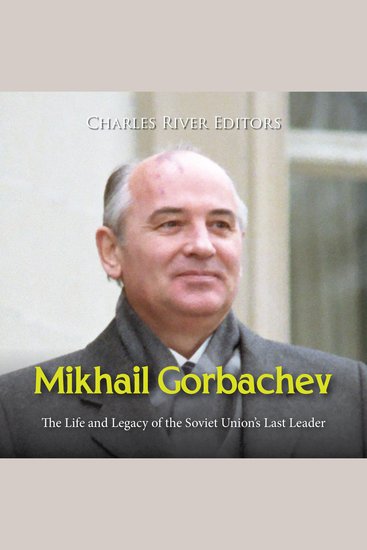
  • Mikhail Gorbachev: The Life and Legacy of the Soviet Union’s Last Leader - cover

    Mikhail Gorbachev: The Life and...

    Editors Charles River

    • 0
    • 0
    • 0
    After going through three elderly leaders in three years, Mikhail Gorbachev was chosen as the new General Secretary of the Soviet Union at the relatively youg age of 54 in March 1985. Gorbachev hoped to build the Soviet economy to relieve the persistent shortages of consumer goods it faced, which were caused by enormous military spending of the Soviet Union. Gorbachev tried to introduce some economic reforms, but they were blocked by communist hardliners. Gorbachev then came to the belief that the Soviet economy could not improved without political reform as well. 
    In comparison with other Soviet leaders, Gorbachev was leader of the USSR for a relatively short period, but the changes that took place under his leadership were monumental, including some that were intended and others that were unforeseen. Gorbachev oversaw the end of the Cold War and the peaceful transition away from communism in Central and Eastern Europe, and he ended the war in Afghanistan and many other proxy conflicts in the developing world. Gorbachev improved relations with the West and developed enough trust with President Ronald Reagan and President George H.W. Bush to decommission thousands of nuclear weapons. He also liberalized the political environment within the Soviet Union itself, increased accountability, and brought in a certain degree of democracy.  
    	Gorbachev was awarded the Nobel Peace Prize for these efforts in 1990, but his regime also left a legacy of turbulence and destruction in its wake. As a result of his policies, many Soviet people rose up against the status quo, demanding national self-determination and reviving old grievances. Gorbachev could not prevent the USSR from disbanding at the end of 1991, leaving much of the country’s economy in ruins and nationalist and ethnic conflicts that are still unresolved today.
    Zum Buch
  • The Adventures of Big-Foot Wallace (Illustrated Edition) - cover

    The Adventures of Big-Foot...

    John Crittenden Duval

    • 0
    • 0
    • 0
    The writer of this book is well aware that it will not stand the test of criticism as a literary production. A frontiersman himself, his opportunities for acquiring information, and for supplying the deficiencies of a rather limited education, have of course been "few and far between;" and therefore it cannot be reasonably expected that he could make a book under such circumstances which would not be sadly defective as to style and composition. However, it can justly lay claim to at least one merit, not often found in similar publications—it is not a compilation of imaginary scenes and incidents, concocted in the brain of one who never was beyond the sound of a dinner-bell in his life, but a plain, unvarnished story of the "'scapes and scrapes" of Big-Foot Wallace, the Texas Ranger and Hunter, written out from notes furnished by himself, and told, as well as my memory serves me, in his own language.
    Zum Buch
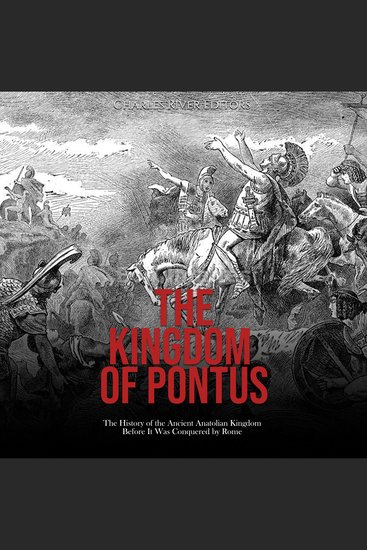
  • Kingdom of Pontus The: The History of the Ancient Anatolian Kingdom Before It Was Conquered by Rome - cover

    Kingdom of Pontus The: The...

    Editors Charles River

    • 0
    • 0
    • 0
    Rome faced many formidable enemies over the course of nearly 1,000 years, but perhaps none were as enigmatic and forgotten as King Mithridates VI of Pontus. Despite numerous ancient sources detailing the life of the foreign monarch and his wars with Rome, and despite being an interesting character who endured years as a fugitive in his youth, enjoyed a fascination with poisons, and held mercy and pragmatic ruthlessness in a delicate balance, very few scholarly books and works have been produced about the king. It may be that his largely unsuccessful military campaigns have contributed to his disappearance from active historical examination, but despite his poor record in engagements against the Romans, the Kingdom of Pontus dominated much of Asia Minor in the 1st century BCE, and the Romans themselves considered the kingdom one of its most dangerous enemies. According to Plutarch, when Mithridates died, the Roman soldiers felt that “in the person of Mithridates ten thousand enemies had died.” By then, it had required three of Rome’s most famous generals - Sulla, Lucullus, and Pompey - to finally subdue his kingdom.  
    	The early Pontic kings found themselves in the midst of the Diadochi Wars, quickly learning that the survival of their kingdom depended upon which Macedonian general to support and which ones to oppose. For the most part, the kings chose wisely and were able to not only stay independent but also to expand their kingdom’s borders. Somewhat fittingly, as the Pontic kings battled their neighbors for control of the Black Sea basin, they promoted a culture that grafted Greek, Persian, and local Anatolian traditions into a unique identity.  
    The Kingdom of Pontus’ power and prestige grew until it caught the attention of the Romans, whose upward trajectory coincided with Pontus’ in many ways. 
    Zum Buch