Begleiten Sie uns auf eine literarische Weltreise!
Buch zum Bücherregal hinzufügen
Grey
Einen neuen Kommentar schreiben Default profile 50px
Grey
Jetzt das ganze Buch im Abo oder die ersten Seiten gratis lesen!
All characters reduced
The Language of Serendipity - cover

The Language of Serendipity

Pasquale De Marco

Verlag: Publishdrive

  • 0
  • 0
  • 0

Beschreibung

Embark on a captivating journey into the wonders of language with "The Language of Serendipity." In this thought-provoking and insightful book, we explore the profound impact of language on our lives and the world around us.

Through engaging anecdotes, practical tips, and thought-provoking insights, "The Language of Serendipity" celebrates the beauty and diversity of language. From the power of words and their impact on communication to the influence of language on culture and identity, this book unravels the mysteries of language and invites readers to discover the magic that lies within the words we use every day.

Delve into the art of listening and uncover the secrets of effective communication. Learn how active listening can transform your relationships and enhance your understanding of others. Explore the world of storytelling and rhetoric, and discover the art of persuasive communication.

"The Language of Serendipity" also explores the profound connection between language and emotions. Discover how language can help you identify and express your emotions, and how it can be a powerful tool for cultivating emotional well-being and fostering meaningful connections.

Join us on a global adventure as we explore the world of multilingualism and the cognitive advantages of learning multiple languages. Discover the benefits of language diversity in fostering inclusivity and understanding in our increasingly interconnected world.

In the digital age, language and technology are intertwined. "The Language of Serendipity" navigates the impact of technology on language evolution and the future of communication. From artificial intelligence to language learning apps, this book explores the ever-changing landscape of language in the digital era.

Uncover the descriptive power of words and their ability to create vivid imagery in "The Language of Serendipity." Explore the influence of language on our perception of taste, sound, and other sensory experiences. Celebrate the language of the senses and discover how it enriches our understanding of the world.

"The Language of Serendipity" also delves into the profound connection between language and identity. Examine how language shapes our personal and cultural identities, and discover the importance of embracing linguistic diversity for more inclusive societies.

Gaze into the future of language and ponder its evolution and the emergence of new varieties. Explore the role of language in a globalized world and the quest for universal communication.

Unlock the power of words and embark on a journey of serendipity with "The Language of Serendipity." Let this book inspire you to celebrate the wonders of language and discover the boundless possibilities that lie within.


If you like this book, write a review!
Verfügbar seit: 02.06.2025.
Drucklänge: 180 Seiten.

Weitere Bücher, die Sie mögen werden

  • The Story of Abortion in America - A Street-Level History 1652–2022 - cover

    The Story of Abortion in America...

    Marvin Olasky, Leah Savas

    • 0
    • 0
    • 0
    Tracing the History of Abortion in America by Looking beyond the Laws to the Dramatic Stories and Colorful Personalities of the People They Touched
    Fifty years ago, the Roe v. Wade Supreme Court decision to legalize abortion-on-demand sparked nationwide tensions that continue to this day. In the decades since that ruling, abortion opponents and proponents have descended on the Capitol each year for marches and protests. But this story didn't begin with the Supreme Court in the 1970s; arguments about abortion have been a part of American history since the 17th century. So how did we get here?
    The Story of Abortion in America traces the long cultural history of this pressing issue from 1652 to today, focusing on the street-level activities of those drawn into the battles willingly or unwillingly. Authors Marvin Olasky and Leah Savas show complex lives on both sides: Some sacrificed much to help the poor and others sacrificed the helpless to empower themselves. The Story of Abortion in America argues that whatever happens legally won't end the debate, but it will affect lives. 
    
    - A Fair Survey of the History of the Debate: Opening with a foreword by renowned social conservative thinker Robert P. George, this book explores historic cases and key cultural moments from 1652 to 2022
    - Examines 5 Selling Points Used by Each Side in Different Eras: Anatomy, Bible, Community, Danger, and Enforcement
    - Chronicles the History of Abortion through Personal Narratives: Includes the memorable stories of Isaac Hathaway, Susan Warren, Elizabeth Lumbrozo, John McDowell, Hugh Hodge, Madame Restell, Augustus St. Clair, Inez Burns, Robert Dickinson, Sherri Finkbine, Henry Hyde, John Piper, Lila Rose, Terrisa Bukovinac, Mark Lee Dickson, and many others
    - Written for a Diverse Audience: While particularly useful for Christians who want to understand the history of abortion and its impact on American politics and culture, the book speaks to anyone who cares about abortion 
    Zum Buch
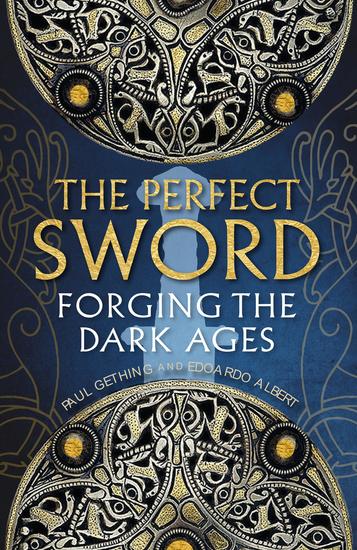
  • The Perfect Sword - Forging the Dark Ages - cover

    The Perfect Sword - Forging the...

    Edoardo Albert, Paul Gething

    • 0
    • 0
    • 0
    The story of the Bamburgh Sword – one of the finest swords ever forged.
    In 2000, archaeologist Paul Gething rediscovered a sword. An unprepossessing length of rusty metal, it had been left in a suitcase for thirty years. But Paul had a suspicion that the sword had more to tell than appeared, so he sent it for specialist tests. When the results came back, he realised that what he had in his possession was possibly the finest, and certainly the most complex, sword ever made, which had been forged in seventh-century Northumberland by an anonymous swordsmith.
    This is the story of the Bamburgh Sword – of how and why it was made, who made it and what it meant to the warriors and kings who wielded it over three centuries. It is also the remarkable story of the archaeologists and swordsmiths who found, studied and attempted to recreate the weapon using only the materials and technologies available to the original smith. 
    Zum Buch
  • The Rooster House - My Ukrainian Family Story: A Memoir - cover

    The Rooster House - My Ukrainian...

    Victoria Belim

    • 0
    • 0
    • 0
    A timely and deeply moving story of family, history, and Ukraine 
     
    In 2014, the landmarks of Victoria Belim’s personal geography were plunged into tumult at the hands of Russia. Her hometown, Kyiv, was gripped by protests and violence. Crimea, where she’d once been sent to school to avoid radiation from the nuclear disaster at Chernobyl, was invaded. Kharkiv,  
    where her grandmother Valentina studied economics and fell in love; Donetsk, where her father once worked; and Mariupol, where she and her mother bought a cherry tree for Valentina’s garden, all became battlegrounds. 
     
    Victoria, by then an American citizen living in Brussels, felt she had to go back. She had to spend time with her aging grandmother and her cousin Dima. She had to unravel a family mystery spanning several generations. And she needed to understand how a century of her country’s tragic history had  
    changed the course of their lives. 
     
    The Rooster House is a beautifully written memoir of a family, a country’s past, and its dangerous present. It is about parents and children, true believers and victims, gardens and art, secrets and tragedy. Compulsively readable, deeply moving, and at times laugh-out-loud funny, it is a stunning debut  
    book by an experienced, expressive, and gifted writer.
    Zum Buch
  • Socrates’ Children - An Introduction to Philosophy from the 100 Greatest Philosophers: Volume IV: Contemporary Philosophers - cover

    Socrates’ Children - An...

    Peter Kreeft

    • 0
    • 0
    • 0
    Peter Kreeft, esteemed philosophy professor and author of over eighty books, has taught college philosophy for sixty years. Throughout those decades, he yearned for a beginner's philosophy text that was clear, accessible, enjoyable, and exciting (perhaps even funny). Finding none that met those criteria, he eventually decided to write it himself.  In this four-volume series, Kreeft delivers, with his characteristic wit and clarity, an introduction to philosophy via the hundred greatest philosophers of all time. Socrates’ Children examines the big ideas of four major eras―ancient, medieval, modern, and contemporary―and immerses the reader in the “great conversation,” the ongoing dialogue among the great thinkers of history, including the most influential philosopher of all: Socrates, the father of Western philosophy.  Volume IV: Contemporary Philosophers surveys the great philosophers of the last two hundred years and observes the splintering of philosophy into a wide array of philosophical enterprises. Some, unhinged from the past, rebel against the very endeavor of philosophy, but others, seeking to revitalize ancient conversations, return to and renew the deepest questions of meaning, happiness, and the human person.
    Zum Buch
  • French Revolution The: The History and Legacy of the World’s Most Famous Social Revolution - cover

    French Revolution The: The...

    Editors Charles River

    • 0
    • 0
    • 0
    As one of the seminal social revolutions in human history, the French Revolution holds a unique legacy, especially in the West. The early years of the Revolution were fueled by Enlightenment ideals, seeking the social overthrow of the caste system that gave the royalty and aristocracy decisive advantages over the lower classes. But history remembers the French Revolution in a starkly different way, as the same leaders who sought a more democratic system while out of power devolved into establishing an incredibly repressive tyranny of their own once they acquired it. 
    The early years of the French Revolution were fueled by Enlightenment ideals, seeking the social overthrow of the caste system that gave the royalty and aristocracy decisive advantages over the lower classes. But history remembers the French Revolution in a starkly different way, as the same leaders who sought a more democratic system while out of power devolved into establishing an incredibly repressive tyranny of their own once they acquired it. 
    The height of Republican France’s tyranny came during a 10 month period forever known as the Reign of Terror, the most notorious and arguably most memorable part of the French Revolution. One of the first victims of the Reign of Terror was its most famous: former French Queen Marie Antoinette. But Antoinette was followed by thousands more, including everyone from aristocrats to clergy to prostitutes and even instrumental revolutionaries like Danton, Desmoulins, and, most notably, Robespierre. It was Robespierre whose position on the Committee of Public Safety made him the Reign of Terror’s instrumental figure until he himself became a victim of it in July 1794. Robespierre’s date with the guillotine is often considered the official end of the Reign of Terror, but by then it is estimated that at least 16,000 people were guillotined in that time and possibly 25,000 more were summarily executed across the country.
    Zum Buch
  • Life Under Nazi Occupation - The Struggle to Survive During World War II - cover

    Life Under Nazi Occupation - The...

    Paul Roland

    • 0
    • 0
    • 0
    When the Nazis invaded, they did not intend to govern fairly. Instead they stripped defeated nations of their treasures, industry and natural resources, with the aim of asserting German supremacy and imposing Hitler's New Order in Europe. 
     
    Paul Roland tells the story of daily life under Nazi rule - in France, Belgium, the Netherlands, Poland, Italy, Czechoslovakia, Austria, Denmark, Norway, Guernsey and the Channel Islands- to be brought to heel by bribery and brutality, rape and torture, inducement and intimidation as the Germans carried out their vile policies. 
     
    We hear of quislings and collaborators who conspired with their captors, the 'enemies of the Reich' including Jewish citizens who were rounded up and exterminated, as well as stories of incredible courage by individuals who struck back against the Führer.
    Zum Buch