Begleiten Sie uns auf eine literarische Weltreise!
Buch zum Bücherregal hinzufügen
Grey
Einen neuen Kommentar schreiben Default profile 50px
Grey
Jetzt das ganze Buch im Abo oder die ersten Seiten gratis lesen!
All characters reduced
The English-Japanese Dictionary for Wealthy Conversationalists - cover

The English-Japanese Dictionary for Wealthy Conversationalists

Pasquale De Marco

Verlag: Publishdrive

  • 0
  • 0
  • 0

Beschreibung

Embark on a linguistic and cultural adventure with "The English-Japanese Dictionary for Wealthy Conversationalists," your essential guide to mastering the Japanese language and unlocking the secrets of Japanese culture.

Within these pages, you'll find a comprehensive exploration of the Japanese language, from its intricate writing systems and nuanced grammar to its rich vocabulary and expressive idioms. With clear explanations, practical examples, and engaging exercises, this guide makes learning Japanese accessible and enjoyable.

But this book is more than just a language guide. It's an invitation to immerse yourself in the vibrant culture of Japan. Discover the beauty of Japanese art and aesthetics, the profound significance of Japanese traditions and festivals, and the delectable flavors of Japanese cuisine. Learn about Japan's fascinating history and its role in shaping the modern world.

Whether you're a business professional seeking to expand your global reach, a traveler eager to connect with the local people, or simply someone fascinated by the allure of Japan, this guide is your essential companion. With its comprehensive approach, engaging writing style, and wealth of practical information, it equips you with the tools and knowledge necessary to navigate the complexities of the Japanese language and culture.

More than just a language guide, "The English-Japanese Dictionary for Wealthy Conversationalists" is a gateway to a world of new experiences, connections, and understanding. As you delve into its pages, you'll gain a deeper appreciation for the beauty and diversity of human expression. The Japanese language, with its unique characters, intricate grammar, and profound cultural significance, will become a gateway to a world of new opportunities and possibilities.

Join us on this extraordinary journey of discovery as we explore the wonders of Japan, one word, one phrase, and one cultural nuance at a time. Let this guide be your trusted companion as you unlock the secrets of a nation that has long held the world in awe.


If you like this book, write a review!
Verfügbar seit: 02.06.2025.
Drucklänge: 164 Seiten.
Weitere Bücher, die Sie mögen werden

  • Deconstructionism - Dismantling Meaning in Text and Culture - cover

    Deconstructionism - Dismantling...

    Hector Davidson

    • 0
    • 0
    • 0
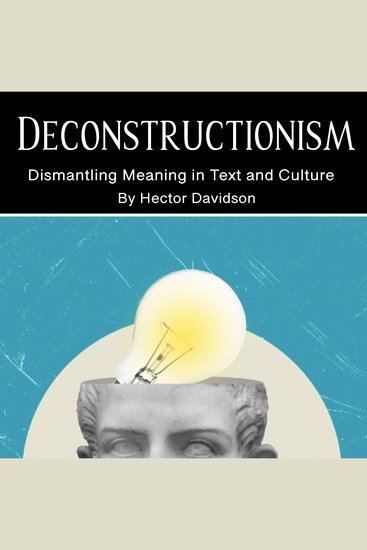
    Deconstructionism emerged in the late 20th century as a philosophical and literary movement that fundamentally questioned the nature of meaning, language, and interpretation. It is primarily associated with the work of French philosopher Jacques Derrida, who, in the 1960s and 1970s, began to develop ideas that would challenge long-held assumptions in philosophy, literary theory, and critical thought. The movement was a response to structuralism, which sought to uncover the underlying structures that govern language and society. In contrast, deconstruction aimed to show that meaning is inherently unstable and that texts and concepts can never be fully fixed or understood in a singular, unchanging way. 
      
    The foundational work of Jacques Derrida is central to deconstructionism. His concept of différance (a term he coined in 1968) highlighted the ways in which meaning is always deferred and never fully attainable. Derrida’s analysis of language showed that words and concepts derive meaning not from a stable, inherent essence, but from their relationships with other words. In this sense, meaning is always in flux, and any attempt to pin it down is doomed to fail. Derrida’s critique of binary oppositions—such as presence/absence, speech/writing, and truth/falsehood—argued that these pairs are not neutral but are hierarchically structured, with one term always subordinating the other. Through works like De la grammatologie (1967) and La Voie et le Voice (1967), Derrida redefined how we understand texts, insisting that they are always open to multiple interpretations.
    Zum Buch
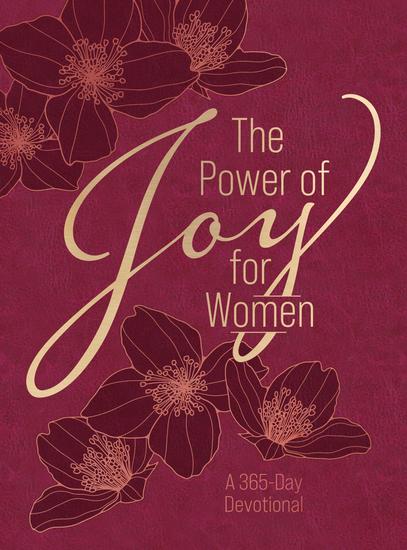
  • The Power of Joy for Women - A 365-Day Devotional - cover

    The Power of Joy for Women - A...

    Danette Joy Crawford

    • 0
    • 0
    • 0
    Anchor your life in God's abundant joy.


    Everyone wants a life filled with joy, but unforeseen obstacles and challenging circumstances remind us daily how uncertain the world is. Joy seems elusive when doubt, fear, and hardships bury us in weariness. Though the world shifts beneath us, God and his gift of joy remain constant.


    God's provision and promises sustained Danette Crawford when she started her television ministry as a single mom. During this time, she learned to trust the Father and the truth of his Word in every moment. Brimming with Danette's stories of God's faithfulness, powerful biblical insights, and Scripture-saturated hope, The Power of Joy for Women will embolden you to


    - abide in the Lord's strength,
    - proclaim God's unfailing promises,
    - pursue your calling in obedience,
    - persevere in every season, and
    - share joy with others.


    Overcome life's difficulties and rejoice every day in your unshakable identity as a daughter of the King.


    Zum Buch
  • Moving Past Marriage - Why We Should Ditch Marital Privilege End Relationship-Status Discrimination and Embrace Non-marital History - cover

    Moving Past Marriage - Why We...

    PhD Jaclyn Geller

    • 0
    • 0
    • 0
    A must-listen for anyone who has felt they are at a disadvantage simply because they are single or unmarried. 


    Married Americans enjoy over 1,000 benefits and entitlements that are withheld from our nonmarital counterparts. Health insurance, immigration rights, tax privileges (such as the estate tax), and hiring policies favor the married. Marriage is financially supported and incentivized by the federal government. Social customs such as blockbuster weddings, subvented honeymoons, and gifts reserved for wedded couples reify matrimony as a centering norm and further the idea that "marriage is best," a commonplace in popular psychology, where marriage-averse people are often tarred as "commitment-phobes." Despite this blatant and widespread prejudice, nonmarital Americans—nonmarital people—have not galvanized as a group to demand equality and inclusion. Why? 


    Moving Past Marriage argues that it is because of our troubled relationship to history. As women's history once was, nonmarital history has been buried, so the disenfranchisement that nonmarital people share in wedlock-dominated societies, as well as our remarkable, far-ranging achievements, have been hard to spot. In recovering our own history, nonmarital people can become self-aware as a group and begin to challenge marriage-centric thinking and practice.
    Zum Buch
  • The Dictionary of Body Language - A Field Guide to Human Behavior - cover

    The Dictionary of Body Language...

    Anonym

    • 0
    • 0
    • 0
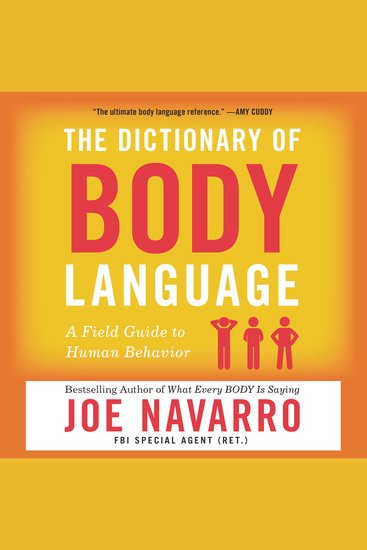
    From the world’s #1 body language expert* comes the essential audiobook for decoding human behavior 
    “The ultimate body language reference. I’ll be both referring to and recommending this book on a daily basis for many years to come.” —Amy Cuddy 
    Joe Navarro has spent a lifetime observing others. For 25 years, as a Special Agent for the FBI, he conducted and supervised interrogations of spies and other dangerous criminals, honing his mastery of nonverbal communication. After retiring from the bureau, he has become a sought-after public speaker and consultant, and an internationally bestselling author. Now, a decade after his groundbreaking book What Every BODY is Saying, Navarro returns with his most ambitious work yet. The Dictionary of Body Language is a pioneering “field guide” to nonverbal communication, describing and explaining the more than 400 behaviors that will allow you to gauge anyone’s true intentions. 
    Moving from the head down to the feet, Navarro reveals the hidden meanings behind the many conscious and subconscious things we do. Readers will learn how to tell a person’s actual feelings from subtle changes in their pupils; the lip behaviors that betray concerns or hidden information; the many different varieties of arm posturing, and what each one means; how the position of our thumbs when we stand akimbo reflects our mental state; and many other fascinating insights to help you both read others and change their perceptions of you. 
    Listeners will turn to The Dictionary Body Language again and again—a body language bible for anyone looking to understand what their boss really means, interpret whether a potential romantic partner is interested or not, and learn how to put themselves forward in the most favorable light. 
    *GlobalGurus.org
    Zum Buch
  • Moors The: The History of the Muslims Who Lived in North Africa and Europe during the Middle Ages - cover

    Moors The: The History of the...

    Editors Charles River

    • 0
    • 0
    • 0
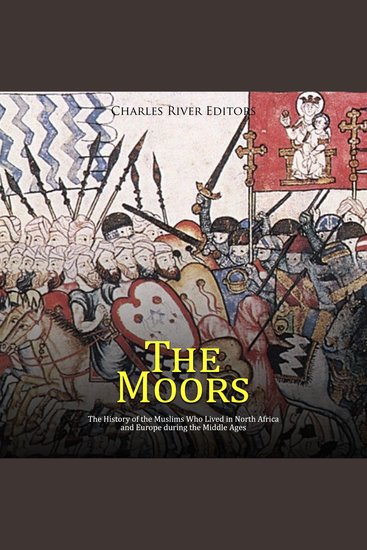
    The term Moor is a historical rather than an ethnic name. It is an invention of European Christians for the Islamic inhabitants of Maghreb (North Africa), Andalusia (Spain), Sicily and Malta, and was sometimes use to designate all Muslims. It is derived from Mauri, the Latin name for the Berbers who lived in the Roman province of Mauretania, which ranged across modern Algeria and Morocco. Saracen was another European term used to designate Muslims, though it usually referred to the Arabic peoples of the Middle East and derives from an ancient name for the Arabs, Sarakenoi. The Muslims of those regions no more refer to themselves by that term than those of North Africa call themselves Moors. Maghreb, or al-Maghreb, is a historical term used by Arabic Muslims for the territory of coastal North Africa from Alexandria to the Atlantic Coast. It means “The West” and is used in opposition to Mashrek, “The East,” used to refer to the lands of Islam in the Middle East and north-eastern Africa. The Berbers refer to the region in their own language as Tamazgha. In a limited, precise sense it can also refer to the Kingdom of Morocco, the proper name of which is al-Mamlakah al-Maghribiyyah, “Kingdom of the West.” 
    The history of the Spanish Peninsula is closely bound to that of the Moors. The term “Spain” was not in wide use until the region was united by the monarchs of Aragon and Castile, and the Moors called the lands they ruled in the Iberian Peninsula Al-Andalus, traditionally thought to be an Arabic transliteration of Vandal, the Germanic tribe which briefly ruled the region in the early fifth century. The English name Andalusia derives from the Spanish Andalucia, which is still used by Spain to name its southern region. Not surprisingly, three religions attempting to coexist during medieval times resulted in nearly incessant conflicts.
    Zum Buch
  • How to Focus - A Monastic Guide for an Age of Distraction - cover

    How to Focus - A Monastic Guide...

    John Cassian, Jamie Kreiner

    • 0
    • 0
    • 0
    Distraction isn't a new problem. We're also not the first to complain about how hard it is to concentrate. Early Christian monks beat us to it. They had given up everything to focus on God, yet they still struggled to keep the demons of distraction at bay. But rather than surrender to the meandering of their minds, they developed powerful strategies to improve their attention and engagement. How to Focus is an inviting collection of their strikingly relatable insights and advice—frank, funny, sympathetic, and psychologically sophisticated. 


    This wisdom is drawn from John Cassian's Collationes, one of the most influential manuals for monks from late antiquity. The Collationes follow Cassian and his friend Germanus as they travel around Egypt, asking a series of sage monks how they can make their minds stronger. In response, these monks offer a range of techniques for increasing focus, including setting goals, training the body, managing the memory, using mantras, taking breaks, consulting others—and, most of all, being honest about yourself. As Cassian and Germanus eventually realize, we can't escape distraction—but we can learn how to confront it and, eventually, to concentrate. 


    Featuring an engaging new translation by Jamie Kreiner, How to Focus can help even the least monkish of us to train our attention on what matters most.
    Zum Buch