Rejoignez-nous pour un voyage dans le monde des livres!
Ajouter ce livre à l'électronique
Grey
Ecrivez un nouveau commentaire Default profile 50px
Grey
Abonnez-vous pour lire le livre complet ou lisez les premières pages gratuitement!
All characters reduced
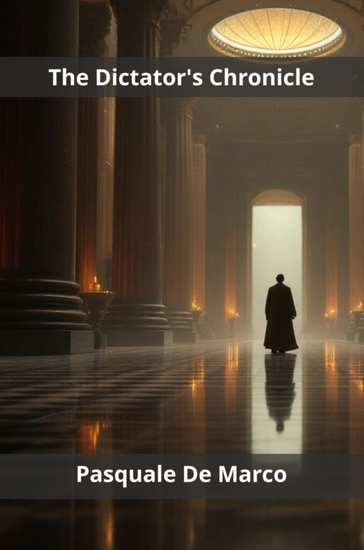
The Dictator's Chronicle - cover

The Dictator's Chronicle

Pasquale De Marco

Maison d'édition: Publishdrive

  • 0
  • 0
  • 0

Synopsis

In the annals of history, dictators have emerged as formidable figures, wielding absolute power and leaving an indelible mark on the societies they ruled. *The Dictator's Chronicle* takes readers on a captivating journey into the intricate world of dictatorships, delving into the motivations, methods, and consequences of these oppressive regimes.

Through the lens of a fictional dictator, this book explores the transformation of an ordinary individual into a ruthless oppressor. It delves into the complex interplay of power, ambition, and fear that fuels the dictator's actions and the devastating impact it has on the lives of ordinary citizens.

Unraveling the dictator's psyche, *The Dictator's Chronicle* examines the psychological factors that contribute to authoritarian tendencies. It sheds light on the intricate web of relationships and power dynamics within the dictator's inner circle, revealing the strategies and tactics employed to maintain control. From propaganda and censorship to intimidation and violence, the book exposes the chilling reality of life under dictatorship.

Furthermore, the book analyzes the global implications of dictatorships, examining their role in international relations and their impact on regional stability. It highlights the challenges and complexities of dealing with dictators on the world stage, emphasizing the delicate balance between diplomacy and intervention.

Ultimately, *The Dictator's Chronicle* serves as a stark reminder of the dangers of authoritarian rule, underscoring the importance of upholding democratic values and institutions. It is a thought-provoking examination of power and its corrosive effects, leaving readers with a deeper understanding of the human capacity for both tyranny and resilience.

Immerse yourself in the pages of *The Dictator's Chronicle* and gain a profound understanding of the dark underbelly of dictatorship, its lasting consequences, and the enduring struggle for freedom and justice.


If you like this book, write a review!
Disponible depuis: 02/06/2025.
Longueur d'impression: 157 pages.

D'autres livres qui pourraient vous intéresser

  • Chile - Historical Revolution and Economic Development - cover

    Chile - Historical Revolution...

    Anya Solace

    • 0
    • 0
    • 0
    Chile’s history is a tapestry woven with threads of indigenous heritage, colonial conquest, political revolution, and economic transformation. Stretching along the western edge of South America, Chile’s unique geography—bordered by the Pacific Ocean to the west and the towering Andes to the east—has shaped not only its physical landscape but also its historical trajectory and economic development. The country’s diverse climates, from the arid Atacama Desert in the north to the fertile central valleys and the rugged, windswept terrain of Patagonia in the south, have influenced settlement patterns, agricultural practices, and resource exploitation for centuries. 
    Long before Spanish colonization, Chile was home to numerous indigenous groups, including the Mapuche, who fiercely resisted foreign domination. Their cultural legacy remains an integral part of Chile’s identity, despite centuries of marginalization. The arrival of Spanish conquistadors in the 16th century marked the beginning of a colonial era characterized by the extraction of natural resources, the establishment of a rigid social hierarchy, and the introduction of European institutions. The colonial economy relied heavily on agriculture, mining, and forced indigenous labor, laying the foundation for economic systems that persisted well into the post-independence period. 
    Chile’s struggle for independence from Spain in the early 19th century was part of the broader wave of liberation movements sweeping across Latin America. Achieving independence in 1818 under the leadership of figures like Bernardo O’Higgins and José de San Martín, Chile faced the daunting task of nation-building. The early republican period was marked by political instability and power struggles between conservative and liberal factions, each advocating different visions for Chile’s future.
    Voir livre
  • A Rare Recording of Che Guevara - cover

    A Rare Recording of Che Guevara

    Che Guevara

    • 1
    • 1
    • 0
    Ernesto "Che" Guevara (June 14, 1928 - October 9, 1967) was an Argentine Marxist revolutionary, ruthless executioner, physician, author, guerrilla leader, diplomat, and military theorist. A major figure of the Cuban Revolution, his stylized visage has become a ubiquitous countercultural symbol of rebellion and global insignia in popular culture. The following recording is from a December 16, 1964 interview of Che Guevara (speaking Spanish) by journalists at the Cuban Mission headquarters in New York City.
    Voir livre
  • Mental Efficiency & Other Hints to Men & Women - cover

    Mental Efficiency & Other Hints...

    Arnold Bennett

    • 0
    • 0
    • 0
    English novelist Arnold Bennett uses his wit to convey how we work hard at the up keep of our physical bodies, while we often do little to workout our minds. He gives examples of ways to give the mind a workout. He also features essays that explore the presentation of self, breaking free from the past, relationships and marriage, and how to achieve success.
    Voir livre
  • Beyond the Secret Garden - The Life of Frances Hodgson Burnett - cover

    Beyond the Secret Garden - The...

    Ann Thwaite, Jacqueline Wilson

    • 0
    • 0
    • 0
    Frances Hodgson Burnett's favorite theme in her fiction was the reversal of fortune, and she herself knew extremes of poverty and wealth. Born in Manchester in 1849, she emigrated with her family to Tennessee because of the financial problems caused by the cotton famine. From a young age she published her stories to help the family make ends meet. Only after she married did she publish Little Lord Fauntleroy that shot her into literary stardom. 


    On the surface, Frances' life was extremely successful: hosting regular literary salons in her home and travelling frequently between properties in the United Kingdom and America. But behind the colorful personal and social life, she was a complex and contradictory character. She lost both parents by her twenty-first birthday, Henry James called her "the most heavenly of women" although avoided her; prominent people admired her and there were many friendships as well as an ill-advised marriage to a much younger man that ended in heartache. Her success was punctuated by periods of depression, in one instance brought on by the tragic loss of her eldest son to consumption. 


    Ann Thwaite creates a sympathetic but balanced and eye-opening biography of the woman who has enchanted numerous generations of children.
    Voir livre
  • America’s Greatest Engineering Projects: The Construction History of the Transcontinental Railroad the Panama Canal and the Hoover Dam - cover

    America’s Greatest Engineering...

    Editors Charles River

    • 0
    • 0
    • 0
    The Transcontinental Railroad, laid across the United States during the 1860s, remains the very epitome of contradiction. On the one hand, it was a triumph of engineering skills over thousands of miles of rough terrain, but on the other hand, it drained the natural resources in those places nearly dry. It “civilized” the American West by making it easier for women and children to travel there, but it dispossessed Native American civilizations that had lived there for generations. It made the careers of many men and destroyed the lives from many others. It was bold and careless, ingenious and cruel, gentle and violent, and it enriched some and bankrupted others. In short, it was the best and worst of 19th century America in action. 
    Traveling around the tip of South America was fraught with danger, and European explorers and settlers had proposed building a canal in Panama or Nicaragua several centuries before the Panama Canal was actually built. Taking about 10 years to build, workers had to excavate millions of cubic yards of earth and fight off hordes of insects to make Roosevelt’s vision a reality. Roosevelt also had to tie up the U.S. Navy in a revolt in Colombia to ensure Panama could become independent and thus ensure America had control of the canal. 
    During the 1930s, at the height of the Great Depression, thousands of workers began work on the Hoover Dam, built in the Black Canyon, which had been cut by the powerful Colorado River. The Colorado River was responsible for the Grand Canyon, and by the 20th century, the idea of damming the river and creating an artificial lake was being explored for all of its potential, including hydroelectric power and irrigation. By the time the project was proposed in the 1920s, the contractors vowing to build it were facing the challenge of building the largest dam the world had ever known. As if that wasn’t enough, the landscape was completely unforgiving.
    Voir livre
  • Feudal Japan - Warriors and Shoguns (3 in 1) - cover

    Feudal Japan - Warriors and...

    Rolf Hedger

    • 0
    • 0
    • 0
    IJourney through the dramatic evolution of Japan's feudal era in this comprehensive volume that chronicles three pivotal periods of Japanese history. From the cultural renaissance of the Muromachi Period to the chaotic warfare of the Sengoku Period, and finally to the enduring peace of the Tokugawa Shogunate, this meticulously researched work brings to life the warriors, lords, and cultural icons who shaped Japan's destiny. 
    The Muromachi Period (1336-1573) explores the rise of the Ashikaga shogunate and the unique blend of warrior culture with artistic achievement. Witness the flowering of Noh theater, ink painting, and the refined aesthetics of the "higashiyama culture" even as political power fragmented among regional warlords and Buddhist monasteries wielded military might. 
    The Sengoku Period (1467-1615) thrusts readers into Japan's turbulent "Age of Warring States," where legendary daimyo like Oda Nobunaga, Toyotomi Hideyoshi, and Tokugawa Ieyasu fought for supremacy. Experience the battlefield innovations, castle-building, and strategic alliances that transformed Japan's military landscape, while Portuguese firearms and Christian missionaries added new dimensions to the struggle. 
    The Tokugawa Shogunate (1603-1868) reveals how the Tokugawa clan established Japan's longest-lasting feudal government, creating an intricate social hierarchy and isolationist foreign policy that preserved peace for over 250 years. Discover how this period of stability led to the rise of the merchant class, the flourishing of ukiyo-e art, kabuki theater, and the vibrant urban culture of Edo (modern Tokyo). 
    Richly illustrated and accessibly written, this three-in-one volume provides both newcomers and history enthusiasts with a definitive guide to understanding how the interplay of war, culture, and governance shaped Japan's feudal society and continues to influence the nation today.
    Voir livre