Rejoignez-nous pour un voyage dans le monde des livres!
Ajouter ce livre à l'électronique
Grey
Ecrivez un nouveau commentaire Default profile 50px
Grey
Abonnez-vous pour lire le livre complet ou lisez les premières pages gratuitement!
All characters reduced
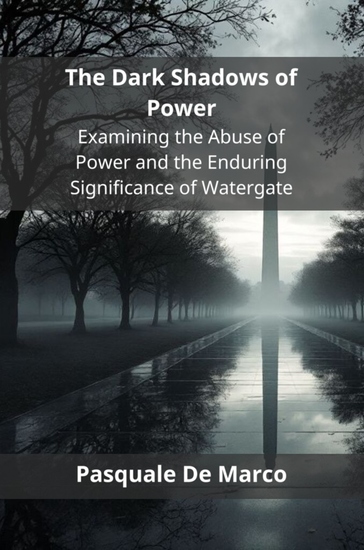
The Dark Shadows of Power - Examining the Abuse of Power and the Enduring Significance of Watergate - cover

The Dark Shadows of Power - Examining the Abuse of Power and the Enduring Significance of Watergate

Pasquale De Marco

Maison d'édition: Publishdrive

  • 0
  • 0
  • 0

Synopsis

In the annals of American history, few events loom as large and consequential as the Watergate scandal. This book delves into the depths of this watershed moment, offering a fresh perspective on the abuse of power, the erosion of trust, and the enduring legacy of Watergate.

Through meticulous research and analysis, this book unravels the intricate web of events that led to the downfall of President Richard Nixon. It examines the roots of corruption within his administration, the seeds of dissent that were sown, and the unraveling of the cover-up that ultimately brought him to his knees.

Beyond the confines of the scandal itself, this book explores the broader implications of Watergate, casting a critical eye on the abuse of power in the modern era. It delves into the patterns of misconduct that have plagued presidencies, the challenges posed by the rise of executive power, and the erosion of accountability in the face of partisan gridlock.

This book also examines the global impact of Watergate, exploring its role in shaping international perceptions of American democracy and the spread of authoritarianism. It highlights the importance of international cooperation in combating abuse of power and safeguarding democratic values.

Moreover, this book analyzes the enduring significance of Watergate, tracing its impact on the presidency, the media, and the public's trust in government. It emphasizes the importance of accountability, transparency, and vigilance in protecting democratic institutions and safeguarding the rule of law.

This book is a comprehensive and thought-provoking examination of the Watergate scandal and its far-reaching consequences. It is essential reading for anyone seeking to understand the complexities of power, the fragility of democracy, and the enduring significance of this pivotal moment in American history.


If you like this book, write a review!
Disponible depuis: 02/06/2025.
Longueur d'impression: 161 pages.
D'autres livres qui pourraient vous intéresser

  • Our Search for Belonging - How Our Need to Connect Is Tearing Us Apart - cover

    Our Search for Belonging - How...

    Howard J. Ross, JonRobert...

    • 0
    • 0
    • 0
    Why are we so divided today? Paradoxically, Howard Ross, author of Everyday Bias, says it's our compulsion to belong to a group--something hardwired into us-- that ends up making us deeply connected with some, yet deeply divided from others. Ross shows how we can overcome this growing tribalism. 
     
    We are living in a world of almost unparalleled separation. People are no longer disagreeing, but are instead disavowing each other's rights to an opinion. What is driving this polarization, and how can we overcome it? Howard Ross says that ironically it's our profound need to belong. He delves deeply into the powerful psychological, neurological, and biological forces that drive us to want to identify so strongly with a group we're sometimes even willing to sacrifice our individual identity. 
    Drawing on his decades of leadership in the diversity and inclusion field, Ross probes the depth and impact of this growing tribalism, the role social media plays in exacerbating it, the ways it impacts every aspect of the daily lives, and how to combat it.  Readers will gain tools for exploring contentious dialogue in healthier ways and guidelines for breaking down barriers and building bridges across difference, and organizations and institutions will be able to develop approaches that can open dialogue and encourage mutual understanding.
    Voir livre
  • We the Elites - Why the US Constitution Serves the Few - cover

    We the Elites - Why the US...

    Robert Ovetz

    • 0
    • 0
    • 0
    Written by fifty-five of the richest white men, and signed by only thirty-nine of them, the US constitution is the sacred text of American nationalism. Popular perceptions of it are mired in idolatry, myth, and misinformation—many Americans have opinions on the constitution but have little idea what it says. This book examines the constitution for what it is—a rule book for elites to protect capitalism from democracy. Social movements have misplaced faith in the constitution as a tool for achieving justice when it actually impedes social change through the many roadblocks and obstructions we call 'checks and balances'. This stymies urgent progress on issues like labor rights, poverty, public health, and climate change, propelling the American people and rest of the world towards destruction. Robert Ovetz's reading of the constitution shows that the system isn't broken. Far from it. It works as it was designed to.
    Voir livre
  • The Hijacking of American Flight 119 - How DB Cooper Inspired a Skyjacking Craze and the FBI's Battle to Stop It - cover

    The Hijacking of American Flight...

    John Wigger

    • 0
    • 0
    • 0
    He pulled off what some deem the crime of the century: skyjacking a commercial jetliner, collecting a ransom of $200,000, parachuting off the aft stairs of the Boeing 727 into the night, and simply disappearing. Since November 1971, “D. B. Cooper”—no one knows his real name or identity—has become a figure of enduring fascination and obsession. The FBI pursued him for over forty years, before closing the case and leaving it unsolved.  
     
    Unsolved, perhaps, but much admired. D. B. Cooper’s exploit over the skies of the American Northwest has inspired books, films, and endless speculation. What’s less known is that it inspired imitators. None were more daring than the hijacker of American Flight 119. After commandeering the flight from St. Louis with a machine gun and collecting $502,500 in ransom, he parachuted out over Indiana. Unlike Cooper, he was tracked down. 
     
    In The Hijacking of American Flight 119, John Wigger explores the wave of hijackings that swept over commercial flights between 1961 and 1972. One hijacker ran across the ramp in Reno, Nevada, with a pillowcase over his head, gun in hand, to seize a United Airlines flight.  
     
    Another collected a large ransom in Washington, D.C., before jumping over Honduras. Yet another rode a bicycle across the tarmac with a rifle strapped to the handlebars.  
     
    Motivations involved an admixture of ideology, greed, derring-do, and a desperate need to be noticed. What they had in common was that their exploits transfixed the nation’s attention, bringing about a transformation in airline security that remains with us still.  
     
    With its focus on the parachute hijackers, Wigger’s book gathers together the stories of this period of daring criminality and recounts them in gripping fashion, showing their effect on the public, the media, and law enforcement. Using never-before-published interviews and first-hand accounts, he brings to life one of the most chaotic and fascinating periods in American aviation history.
    Voir livre
  • The Constitution of the United States - A Primer for the People Second Edition - cover

    The Constitution of the United...

    David P. Currie

    • 0
    • 0
    • 0
    A masterly introduction to the United States Constitution, this concise book leads the reader through an overview of the document’s individual articles and amendments. With clear and accessible language, Currie then examines each of the three branches of the federal government and explains the relation between the federal and state governments. He analyzes those constitutional provisions that are designed to protect citizens from governmental interference, such as the due process and equal protection clauses and the confusing first amendment provisions respecting the separation of church and state and includes discussions of judicial review and freedom of speech and of the press.
     
    A sympathetic yet critical guide, Currie’s book enables students and laypersons to understand one of the cornerstones of the Western political tradition. The second edition incorporates the Supreme Court decisions that have affected constitutional interpretation.
     
    “Superb . . . highly recommended for those seeking a reliable, understandable, and useful introduction to our constitution.”—Appellate Practice Journal and Update
    Voir livre
  • The Road to Serfdom - cover

    The Road to Serfdom

    Friedrich Hayek

    • 0
    • 0
    • 0
    A classic work in political philosophy, intellectual history and economics, The Road to Serfdom has inspired and infuriated politicians and scholars for half a century. Originally published in 1944, it was seen as heretical for its passionate warning against the dangers of state control over the means of production. For Hayek, the collectivist idea of empowering government with increasing economic control would lead not to a utopia but to the horrors of Nazi Germany and Fascist Italy.
    Voir livre
  • HL Mencken's Essay The Penalty of Death - cover

    HL Mencken's Essay The Penalty...

    H. L. Mencken

    • 0
    • 0
    • 0
    Henry Louis Mencken (September 12, 1880 - January 29, 1956) was an American journalist, essayist, satirist, cultural critic, and scholar of American English. He commented widely on the social scene, literature, music, prominent politicians, and contemporary movements. His satirical reporting on the Scopes Trial, which he dubbed the "Monkey Trial", also gained him attention. The term "Menckenian" has entered multiple dictionaries to describe anything of or pertaining to Mencken, including his combative rhetorical and prose style.


    American journalist, essayist, satirist, and cultural critic, H.L. Mencken makes his 3-pronged case for  the death penalty for those who take the lives of other people, challenging civilized order. Mencken argues the death penalty is a form of catharsis for the immediate victims of the crime, and is not solely for deterring other criminals, but also to give peace of mind to the society that has been wronged.
    Voir livre