Begleiten Sie uns auf eine literarische Weltreise!
Buch zum Bücherregal hinzufügen
Grey
Einen neuen Kommentar schreiben Default profile 50px
Grey
Jetzt das ganze Buch im Abo oder die ersten Seiten gratis lesen!
All characters reduced
The C++ Standard - Guidelines for Modern C++ Programming - cover

The C++ Standard - Guidelines for Modern C++ Programming

Pasquale De Marco

Verlag: Publishdrive

  • 0
  • 0
  • 0

Beschreibung

Embark on a transformative journey into the realm of modern C++ programming with this comprehensive guide, meticulously crafted to equip you with the knowledge and skills to master the latest C++ techniques and create robust, efficient, and maintainable applications.

Delve into the intricacies of C++, from its fundamental building blocks to its advanced features, through intuitive explanations, real-world examples, and hands-on exercises. Whether you are a seasoned C++ programmer seeking to expand your skillset or a novice eager to delve into the world of modern C++, this book serves as an indispensable resource.

Discover the power of modern C++ standards, including C++11, C++14, C++17, and C++20, and leverage their enhancements to write more expressive, flexible, and performant code. Explore the core principles of object-oriented programming and learn how to design and implement elegant and maintainable code.

Unleash the potential of generic programming with templates and the Standard Template Library (STL) to write flexible and reusable code. Master exception handling and error management techniques to handle errors gracefully and ensure program stability. Delve into advanced memory management techniques, including dynamic memory allocation and smart pointers, to optimize performance and prevent memory-related issues.

Harness the power of concurrency and multithreading to create efficient concurrent applications. Explore input and output operations, file handling, formatted I/O, and object serialization to effectively manage data. Gain proficiency in strings and text processing, and unlock the advanced capabilities of modern C++ with metaprogramming, lambda expressions, and range-based for loops.

With this comprehensive guide as your trusted companion, you will embark on a journey of discovery, mastering the intricacies of modern C++ and unlocking your full potential as a software developer.


If you like this book, write a review!
Verfügbar seit: 02.06.2025.
Drucklänge: 176 Seiten.

Weitere Bücher, die Sie mögen werden

  • The RoboSphere - Robots Among Us: Insights into the World of Robotics and Automation - cover

    The RoboSphere - Robots Among...

    Zoe Carter

    • 0
    • 0
    • 0
    Get ready for an exciting trip into the future with "The RoboSphere: Robots Among Us - Insights into the World of Robotics and Automation." This book is your pass to a fantastic investigation into robotics's state-of-the-art discoveries and life-changing effects. 
    Explore the intriguing history of robotics, from mechanical devices to the intelligent machines that are a seamless part of our everyday lives. "Robots Among Us" appeals to science buffs, tech enthusiasts, and anybody who wants to learn more about the quickly changing field of automation. Whether you're a seasoned expert or a curious beginner, this book is designed to be accessible and engaging for all levels of technical knowledge. 
    Learn about the nuances of critical elements, categories, and the range of robots that coexist in our environments today. This book explores the worlds of possibility and potential, from industrial applications reshaping the manufacturing landscape to service robots improving our everyday lives, igniting curiosity about the significant consequences of these intelligent machines.
    Zum Buch
  • Environmental Care - Protecting Our Planet through Strategies for a Sustainable Future (2 in 1) - cover

    Environmental Care - Protecting...

    Jeron Iris

    • 0
    • 0
    • 0
    The two titles in this bundle are: 
    Agriculture - Agriculture stands at the heart of human civilization, sustaining populations, economies, and ecosystems around the globe. As the primary source of food and materials for countless industries, agriculture is fundamental to our daily lives. Yet, as demand for food and resources grows, traditional farming practices have come under scrutiny for their impact on land, water, and ecosystems. This situation has sparked a profound exploration into how agriculture can evolve to meet future needs without compromising environmental health or resource availability. In response to these challenges, sustainable agriculture has emerged as a guiding framework. Rather than depleting resources, sustainable agriculture seeks to work in harmony with nature, fostering productive systems that can endure and even improve over time.  
    Environmental Science - Environmental Science is an interdisciplinary field that integrates various scientific disciplines to study the natural world and the impact of human activities on it. This branch of science explores the complex interactions between living organisms, their physical surroundings, and the broader ecosystems they form. The primary goal of environmental science is to understand how natural systems function, identify environmental problems, and develop strategies for addressing these issues. At its core, environmental science seeks to answer fundamental questions about the earth's resources, how they are used, and how human actions influence the balance of ecosystems. It draws from biology, chemistry, physics, geology, and social sciences to provide a comprehensive understanding of the environment.
    Zum Buch
  • Toxicology - Poison and Its Power - The Science of Toxins - cover

    Toxicology - Poison and Its...

    Mike Crawford

    • 0
    • 0
    • 0
    Toxicology, the study of poisons and their effects on living organisms, has deep historical roots dating back thousands of years. The earliest civilizations recognized the dangers of certain substances and documented their effects, often intertwining them with myths, medicine, and warfare. The origins of toxicology can be traced to ancient Egypt, Mesopotamia, Greece, and Rome, where early scholars and physicians laid the groundwork for what would eventually become a scientific discipline. 
    Ancient Egyptian texts, such as the Ebers Papyrus (circa 1550 BCE), contain some of the earliest references to poisons, including plant-based toxins and venomous animal bites. Egyptian priests and physicians were aware of toxic substances, both as medicinal agents and as potential means of assassination. Similarly, Mesopotamian records describe the use of poisons in both healing practices and criminal activities. 
    In ancient Greece, the philosopher and physician Hippocrates (circa 460–370 BCE) discussed the effects of poisons and the importance of dosage in determining whether a substance was harmful or beneficial. His work influenced later Greek and Roman physicians, including Dioscorides, a first-century CE pharmacologist who compiled De Materia Medica, an extensive guide to medicinal and poisonous substances derived from plants, animals, and minerals. The Greek philosopher Theophrastus (circa 371–287 BCE) also contributed to early toxicology by documenting the properties of various poisonous plants.
    Zum Buch
  • The FACE Book - Functional and Cosmetic Excellence in Orthodontics - cover

    The FACE Book - Functional and...

    L. Douglas Knight

    • 0
    • 0
    • 0
    Dr. Douglas L. Knight educates patients on why orthodontic care is so much more important and comprehensive than most understand.FACE-trained orthodontists don’t just care about aesthetics or have the singular goal to straighten teeth.They solve the fundamental, underlying issues and have a goal-oriented approach that considers the health of the entire person, valuing long-term, stable outcomes.
    Zum Buch
  • Silicon Empires - The Fight for the Future of AI - cover

    Silicon Empires - The Fight for...

    Nick Srnicek

    • 0
    • 0
    • 0
    Since the emergence of ChatGPT, generative AI has been heralded as a technology poised to revolutionize our world. But beyond the hype and hyperbole, who truly wields power over this transformative technology?In Silicon Empires, Nick Srnicek explores the geopolitical economy of artificial intelligence, revealing how a handful of powerful corporations and states are engaged in a monumental struggle to control its future. Srnicek moves beyond the headlines to lay bare the elaborate strategies that these silicon empires—from tech giants to great powers—are deploying to capture the immense value of AI.This incisive analysis uncovers the deep-seated tensions between corporate ambitions and national interests, and the profound consequences of this new era of technological competition. As the race for AI supremacy accelerates, Srnicek compellingly demonstrates that the decisions being made in the boardrooms of Silicon Valley and the halls of government will shape the distribution of wealth and power on a global scale for decades to come.This book is essential listening for anyone who wants to understand the critical battle for the future of AI.
    Zum Buch
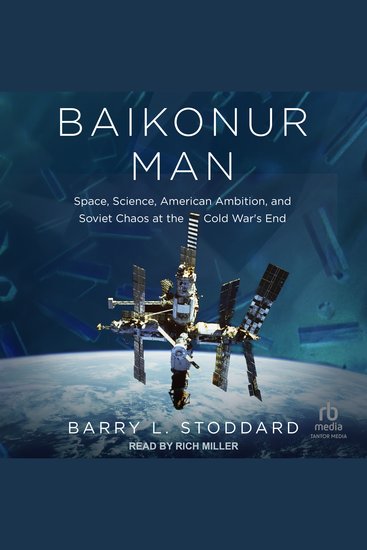
  • Baikonur Man - Space Science American Ambition and Soviet Chaos at the Cold War's End - cover

    Baikonur Man - Space Science...

    Barry L. Stoddard

    • 0
    • 0
    • 0
    Against the backdrop of the late Cold War, a tiny American start-up company forged a secret deal to place American scientific payloads aboard the Soviet space station MIR. Born out of sheer desperation after the Challenger explosion and grounding of the United States space shuttle program, the agreement was negotiated and approved behind the backs of NASA and Congress, with the help of United States government officials inside the Commerce and Defense departments. 


    On a cold gray morning in February 1988, the company founder met with three graduate students and their professor at the Massachusetts Institute of Technology to put his plans into action. Baikonur Man, written by one of those students, recounts the subsequent five-year saga of how science, comradery, hardship, drama, and occasional lunacy led to the first American experiments and payloads to fly on Russian rockets.
    Zum Buch