Begleiten Sie uns auf eine literarische Weltreise!
Buch zum Bücherregal hinzufügen
Grey
Einen neuen Kommentar schreiben Default profile 50px
Grey
Jetzt das ganze Buch im Abo oder die ersten Seiten gratis lesen!
All characters reduced
Speak Naturally - Mastering Conversational English with Confidence - cover

Speak Naturally - Mastering Conversational English with Confidence

Pasquale De Marco

Verlag: Publishdrive

  • 0
  • 0
  • 0

Beschreibung

In a world where communication is key, "Speak Naturally: Mastering Conversational English with Confidence" emerges as an indispensable guide for anyone seeking to unlock the secrets of effective communication in English. This comprehensive book is meticulously crafted to empower learners of all levels with the tools and techniques to navigate the intricacies of the English language, enabling them to engage in meaningful conversations, build connections, and leave a lasting impression.

With a focus on practical application and real-world scenarios, this book delves into the nuances of pronunciation, vocabulary expansion, grammar, and usage. Readers will embark on a journey of linguistic discovery, mastering the art of clear and confident communication in various contexts, from casual conversations to formal settings.

Furthermore, "Speak Naturally" recognizes the importance of cultural diversity in communication. It provides valuable insights into cultural differences and etiquette, equipping learners with the skills to navigate multicultural environments with ease and build bridges across cultures.

This book is more than just a language learning guide; it's an invitation to embark on a transformative journey of self-expression and connection. Through interactive exercises, engaging storytelling, and expert guidance, readers will unlock their full potential as communicators, leaving a lasting impact wherever they go.

Whether you're a business professional seeking to excel in global markets, a student aspiring for academic success, or simply someone who wants to connect with the world on a deeper level, "Speak Naturally" is your trusted companion on the path to linguistic mastery. Embrace the power of conversational English and unlock a world of possibilities.


If you like this book, write a review!
Verfügbar seit: 02.06.2025.
Drucklänge: 167 Seiten.

Weitere Bücher, die Sie mögen werden

  • The Birth of Anarchism - 1849-1887 - cover

    The Birth of Anarchism - 1849-1887

    Pierre-Joseph Proudhon, Mikhail...

    • 0
    • 0
    • 0
    Mankind can rule itself without the force of top-down authority, and freedom is more than just choosing how to meet the needs and demands of capital. Inequality is structural and intentional, not inevitable and necessary.  
    It does not have to be this way. In solidarity, we are better. 
    Think for yourself, and question authority. 
    This is the essence of anarchism, which has a bad name and reputation because it attacks the necessity of centralised power and authority. The media archetype is Tyler Durden, filled with violence and nihilism – yet anarchism is the most positive of political philosophies, one that Jesus and Buddha both preached, stating that empathy and a rejection of authority were key to human flourishing. Neither would disagree with most early anarchists. 
    Proudhon, whose “property is robbery” is perhaps the most well-known anarchist slogan, lays out the conceptual foundation for key anarchist ideas. He argues that usury (charging interest) is a fundamental harm to society, that there is enough for everyone if we simply take other values to be higher than capital gain, that mutualism is inevitable, and that all governments and ideologies make the same mistake, in trying to change society from the top. Positive change must arise from the great masses of humanity, not from their rulers. 
    Bakunin's speeches are about solidarity arising from the masses, and the ground for a global reconfiguration. 
    Louis Lingg was convicted to death with six others, for being one of the ‘Chicago Anarchists’. They were executed to make a political point, based on corrupted evidence and perjury. His statement is one of contempt for the powers that be, and his belief that mankind should be free and should fight until it is. 
    We end with Kropotkin, who firmly believed in decentralized society. He believed that the greatest strength of mankind lies in the masses, not their rulers, and exhorts us to “Act for Yourselves”.
    Zum Buch
  • Grief - Finding Hope Again - cover

    Grief - Finding Hope Again

    Paul David Tripp

    • 0
    • 0
    • 0
    No matter what the circumstances, death shakes us to the core. It seems so wrong, and it is! We long for comfort, but we don't know where to look. Can God really help when we are overwhelmed with grief? With compassion and biblical wisdom, Paul David Tripp shows us how to think and what to do when death enters our door in CCEFs Grief: Finding Hope Again.  He reminds us that we have a Savior who knows our sorrows, hears our cries, and promises to one day wipe away all tears. Hope and healing come from our relationship with Jesus, the One who promises to walk all the way through the valley of the shadow of death with us. All the minibooks in our Christian bookstore offer gospel-centered hope for everyday issues like parenting, marriage, and personal change.
    Zum Buch
  • Tango 1-1 - 9th Infantry Division LRPs in the Vietnam Delta - cover

    Tango 1-1 - 9th Infantry...

    Jim Thayer

    • 0
    • 0
    • 0
    LRPs were all volunteers. They were in the spine-tingling, brain-twisting, nerve-wracking business of Long Range Patrolling. They varied in age from eighteen to thirty. These men operated in precision movements, like walking through a jungle quietly and being able to tell whether a man or an animal is moving through the brush without seeing the cause of movement. They could sit in an ambush for hours without moving a muscle except to ease the safety off the automatic weapon in their hand at the first sign of trouble. These men were good because they had to be to survive. 


    Called LRPs for short, they were despised, respected, admired, and sometimes thought to be a little short on brains by those who watched from the sidelines as a team started out on another mission to seek out the enemy. They were men who can take a baby or small child in their arms and make them stop crying. They shared their last smoke, last ration of food, last canteen of water. They were kind in some ways, deadly in others. They were men who believed in their country, freedom, and fellow men. They were a new kind of soldier in a new type of warfare. 


    LRPs stand out in a crowd of soldiers. It's not just their tiger fatigues but the way they walk, talk, and stand. They were proud warriors because they were members of the Long Range Patrol.
    Zum Buch
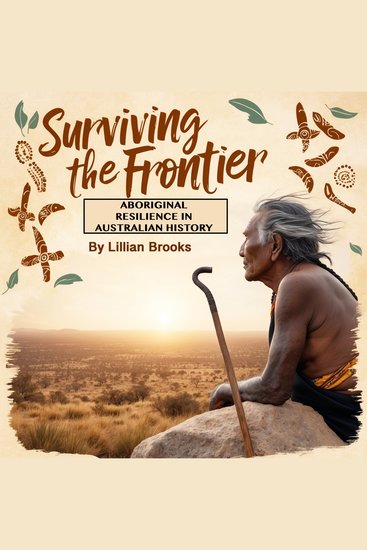
  • Surviving the Frontier - Aboriginal Resilience in Australian History - cover

    Surviving the Frontier -...

    Lillian Brooks

    • 0
    • 0
    • 0
    The story of Aboriginal resilience in Australian history is one of survival, adaptation, and unyielding strength in the face of immense challenges. For tens of thousands of years, Aboriginal peoples thrived across the diverse landscapes of the continent, developing complex societies deeply connected to the land. However, with the arrival of European settlers, they faced an unprecedented upheaval that threatened not only their way of life but also their very existence. Despite this, Aboriginal communities endured, finding ways to resist, adapt, and preserve their cultural heritage against overwhelming odds. 
    Colonization brought profound disruptions to Aboriginal societies. Traditional lands were seized, sacred sites were desecrated, and entire communities were forcibly removed from their ancestral homes. The introduction of foreign diseases, combined with violence and systematic dispossession, led to devastating population losses. European settlers viewed the land as something to be owned and exploited, disregarding the deep spiritual and cultural relationship that Aboriginal people had maintained with it for millennia. The introduction of colonial laws and policies further marginalized Aboriginal peoples, stripping them of autonomy and attempting to erase their identities through forced assimilation. 
    Yet, even in the darkest periods of history, Aboriginal resilience remained steadfast. Many Aboriginal nations engaged in active resistance, fighting to defend their land and people. Leaders emerged to challenge European incursions, using knowledge of the terrain to their advantage in conflicts now known as the Frontier Wars. Others found ways to survive within the new colonial framework, forming alliances, working within the pastoral industry, or preserving their culture in secret despite government suppression.
    Zum Buch
  • How to Heal Trauma Using Polyvagal Theory - The Complete Guide to Vagus Nerve Activation Understanding Nervous System Dysregulation and Rewiring Your Body's Stress Response - cover

    How to Heal Trauma Using...

    Emily Stone

    • 0
    • 0
    • 0
    If your body still lives in the past even though your mind knows you're safe, then keep reading...


    You've tried talking about it. You've tried thinking your way through it. But trauma doesn't live in your thoughts—it lives in your nervous system.
     
    Your body is still keeping score, even when you're trying to move on.
     
    Traditional therapy asks you to understand your trauma. Polyvagal Theory teaches you to release it. Not through more talking, but through understanding the language your nervous system has been screaming in all along.
     
    This isn't about reliving your past. It's about rewiring your present.


    You'll discover:
    
    Why your body reacts before your mind can catch up
    How your vagus nerve controls your sense of safety
    The science behind why you freeze, flee, or fight
    How to shift from survival mode to thriving mode
    Why "just calm down" has never worked for you
    The missing piece in traditional trauma therapy
    
     
    Healing trauma isn't about being strong enough to push through it.
     
    It's about being wise enough to work with your body's natural systems. Your nervous system isn't broken—it's been protecting you. Now it's time to teach it that the danger has passed.


    Grab your copy and start speaking your body's language today!
    Zum Buch
  • Social Science - A Very Short Introduction - cover

    Social Science - A Very Short...

    Alexander Betts

    • 0
    • 0
    • 0
    Social science is the study of human behavior. It offers the tools to understand and explain people's choices and actions, and how they live in communities. With insights from social science, organizations and individuals may be persuaded to change their behavior, making a difference in addressing societal challenges. Social science can offer us the answers to key questions, such as why do some people gamble, eat unhealthy foods, or hold racist beliefs? How do families allocate household tasks, raise children, or manage grief? How do companies weigh profit against sustainability, decide to invest, or adopt policies to address unequal pay? 


    This Very Short Introduction offers an overview of social science, explaining how methods and theory from different disciplines can be applied and combined to address major global challenges. It aims to equip students, scholars, and practitioners to analyze, interpret, and undertake social science research. Drawing upon inspiring examples, it shows how social scientists can have real-world impact and change the world for the better. It unpacks cutting-edge themes such as behavioral science, human data science, and the ways in which social science can work collaboratively with the natural sciences and humanities. It offers a vision for the future of social science that is interdisciplinary, inclusive, and impactful.
    Zum Buch