Rejoignez-nous pour un voyage dans le monde des livres!
Ajouter ce livre à l'électronique
Grey
Ecrivez un nouveau commentaire Default profile 50px
Grey
Abonnez-vous pour lire le livre complet ou lisez les premières pages gratuitement!
All characters reduced
Perception from the Crowd - cover

Perception from the Crowd

Pasquale De Marco

Maison d'édition: Publishdrive

  • 0
  • 0
  • 0

Synopsis

In a world awash with information and opinions, navigating the complexities of public sentiment can be a daunting task. "Perception from the Crowd: Unraveling the Enigma of Public Opinion through Survey Research" serves as your trusted guide, empowering you to decipher the intricacies of survey research and harness the power of public opinion.

Delve into the fascinating realm of survey methodology, where we uncover the psychological underpinnings of survey responses, explore the nuances of survey design and implementation, and unveil the secrets of effective data analysis. Discover how seemingly insignificant aspects of a survey can profoundly impact the answers obtained.

This comprehensive guide equips you with the knowledge and skills to craft surveys that accurately capture the pulse of public opinion. Learn how to select the appropriate survey method, develop a comprehensive questionnaire, and effectively manage data collection. Overcome common pitfalls and challenges, ensuring the quality and credibility of your survey findings.

With a blend of theoretical insights and practical guidance, "Perception from the Crowd" illuminates the path to designing, implementing, and analyzing surveys with confidence. Stay at the forefront of survey research with the latest innovations and best practices, ensuring your surveys remain relevant and impactful.

Whether you're a seasoned survey researcher, a student embarking on a research journey, or a professional seeking to understand public opinion, this book is your essential companion. Unlock the secrets of survey research and empower yourself to make informed decisions, navigate social and political landscapes, and contribute to a more informed and engaged society.

Embrace the power of public opinion and embark on an intellectual adventure that will transform the way you perceive and engage with the world around you. "Perception from the Crowd" is your key to unlocking the enigma of public opinion through the art of survey research.


If you like this book, write a review!
Disponible depuis: 02/06/2025.
Longueur d'impression: 169 pages.

D'autres livres qui pourraient vous intéresser

  • Settling the Boom - The Sites and Subjects of Bakken Oil - cover

    Settling the Boom - The Sites...

    Mary E. Thomas, Bruce Braun

    • 0
    • 0
    • 0
    Examines how settler colonial and sexist infrastructures and narratives order a resource boom 


    Over the past decade, new oil plays have unsettled U.S. energy landscapes and imaginaries. Settling the Boom studies how the disruptive forces of an oil boom in the northern Great Plains are contained through the extension of settler temporalities, reassertions of heteropatriarchy, and the tethering of life to the volatility of oil and its cruel optimisms. 


    This collection reveals the results of sustained research in Williston, North Dakota, the epicenter of the "Bakken Boom." While the boom brought a rapid influx of capital and workers, the book questions simple timelines of before and after. Instead, Settling the Boom demonstrates how the unsettling forces of an oil play resolve through normative narratives and material and affective infrastructures that support settler colonialism's violent extension and its gendered orders of time and space. Considering a wide range of evidence, from urban and regional policy, interviews with city officials, media, photography, and film, these essays analyze the ongoing material, aesthetic, and narrative ways of life and land in the Bakken.
    Voir livre
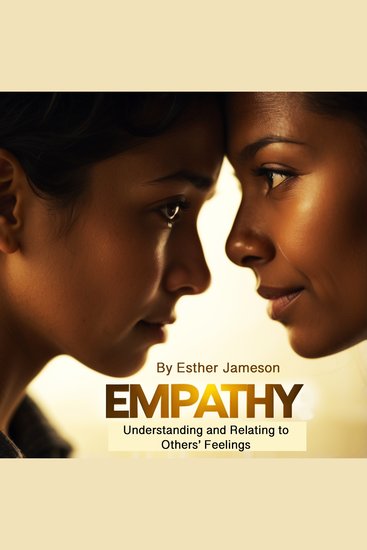
  • Empathy - Understanding and Relating to Others' Feelings - cover

    Empathy - Understanding and...

    Esther Jameson

    • 0
    • 0
    • 0
    Empathy is the ability to understand and share the feelings of another person. It is often considered a fundamental aspect of human connection, influencing how we relate to those around us. Whether it's offering a comforting word, understanding someone’s pain, or celebrating another's joy, empathy allows us to build meaningful relationships. It is more than just recognizing another person’s emotions; it involves feeling with them and, when appropriate, offering support. In a world where individuals often experience feelings of isolation or disconnection, empathy is a bridge that can bring people closer. 
    Empathy is not simply an emotional reaction; it is a skill that can be nurtured and developed. It plays a key role in many aspects of life, from personal relationships to professional environments. In fact, research has shown that individuals with a higher level of empathy are often better at problem-solving and conflict resolution. By understanding others' emotions, they are more likely to approach situations with sensitivity and tact, which leads to better outcomes in both personal and professional settings. 
    The science behind empathy is fascinating. Studies in neuroscience have revealed that when we experience empathy, certain areas of our brain light up, particularly the regions involved in emotional processing. This means that empathy is not just a learned behavior, but something deeply ingrained in our biological makeup. It involves both the emotional brain, which processes feelings, and the cognitive brain, which helps us interpret and understand those feelings. This dual process allows us to connect with others in a way that goes beyond intellectual understanding, allowing us to resonate with their experiences on a deeper, more personal level.
    Voir livre
  • The Pivot of Civilization - cover

    The Pivot of Civilization

    Margaret Sanger

    • 0
    • 0
    • 0
    "The Pivot of Civilization" is a non-fiction book written by Margaret Sanger, the founder of the birth control movement in the United States. Sanger argues that overpopulation is the root cause of poverty, disease, and social unrest. She advocates for the use of birth control methods to enable women to control their own reproductive health and prevent unwanted pregnancies. Sanger also argues that access to birth control can help to improve the lives of women and children, and can ultimately lead to a better society. In "The Pivot of Civilization," Sanger makes a powerful case for the importance of reproductive rights and family planning. Her ideas were controversial at the time, but they helped to pave the way for the widespread availability of birth control and the legalization of abortion in the United States. Overall, "The Pivot of Civilization" is an influential book that remains relevant today as debates around reproductive rights and family planning continue to shape public policy and social attitudes
    Voir livre
  • Vexillology - Flags of the World: Their History and Meaning - cover

    Vexillology - Flags of the...

    Mike Crawford

    • 0
    • 0
    • 0
    The history of flags is as old as civilization itself, beginning with the use of symbols to identify and distinguish groups, tribes, and nations. These symbols, initially simple and functional, later evolved into the complex designs we recognize today as flags. In their early forms, flags were not necessarily the fabric banners we use now but were often symbols or standards that represented a group or entity. These early markers were used to communicate identity, power, and territorial boundaries. 
    The earliest known use of flags dates back to ancient civilizations such as the Egyptians, Greeks, and Chinese. For example, the ancient Egyptians used flags made of fabric or leather as symbols of authority, carried into battle or displayed in royal courts. These early flags often consisted of simple shapes and symbols, such as the Egyptian ankh or the scarab, representing the gods and the ruling elite. 
    Similarly, ancient Greek and Roman civilizations used banners in both military and civic contexts. In Roman times, military standards called "signa" were carried by soldiers during battles. These standards were often adorned with the images of gods, and the legions were known for their proud display of these banners, which were considered sacred. These military standards were instrumental in maintaining order and morale within the ranks and also served as a form of propaganda, displaying the power and might of the Roman Empire.
    Voir livre
  • Intellectual Anarchy - The Art of Disruptive Innovation - cover

    Intellectual Anarchy - The Art...

    Patrick K Sullivan

    • 0
    • 0
    • 0
    So how do we move the future from the distant horizon to the present day? We need Intellectual Anarchy. 
    The accelerating challenges facing our planet—such as climate change, food scarcity, sustainable energy, overpopulation, nuclear proliferation, income inequality, and rising healthcare costs—are solvable. The question is not if, but when. 
    All these challenges directly impact our lives and our unwritten future. They have enormous economic consequences for humans and society. They also provide incredible opportunities for investors and innovators. This is a book about how we can find disruptive solutions to hard problems, problems so difficult that they can seem impossible. Problems of that magnitude demand radical new ideas—an incremental approach won’t work. Their solutions seemingly come out of left field, defying conventional wisdom, and overturning existing industries, practices, and business models. 
    This book details the Intellectual Anarchy methodology followed at Oceanit for generating disruptive solutions to these problems and taking them from the idea stage all the way to market—Mind-to-Market, including financing innovations to overcome the scarcity of venture capital anywhere away from the conventional tech hubs. 
    Oceanit operates from Hawai‘i, the most remote location in the world. Yet today Oceanit works across the world with just about everybody—the US government, Fortune 100 companies, and more than sixty universities—partnering and collaborating as we research, invent, and produce technology in energy, aerospace, life sciences, information technology, sustainability, and resiliency. 
    If Oceanit’s Intellectual Anarchy model works in Hawai‘i, it can work anywhere. 
    BOOK PDF FILE: drive.google.com/file/d/1_P9l1y5khTaO6bxavPnEzri-3ZByADNP/view
    Voir livre
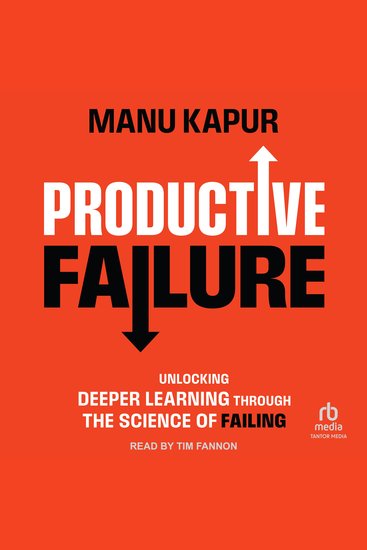
  • Productive Failure - Unlocking Deeper Learning Through the Science of Failing - cover

    Productive Failure - Unlocking...

    Manu Kapur

    • 0
    • 0
    • 0
    Productive Failure shows you how to design the experience of failing. Research shows that repeated experiences of intriguing, constructive failure can help students develop creativity and learn more deeply. When carefully curated, failure can become a signal for learning, not the noise detracting from it. Learners gain a lifelong readiness to push themselves outside of their comfort zones, using setbacks as launchpads. 


    The principles in this book are powerful for anyone taking charge of and designing their own lifelong learning. This book unpacks the science of Productive Failure and describes design principles that let you harness Productive Failure for your own benefit. 


    ● Learn and understand the science of failure 


    ● Apply the research-based Productive Failure framework in classrooms, teams, groups, and organizational settings 


    ● Learn techniques to deepen learning experiences 


    ● Reach new levels of critical thinking, innovation, and success by making failure the norm and learning how to cope with it 


    This fascinating and actionable book is a must for educators, parents, managers, leaders, and anyone who needs to help others (or themselves) learn how to learn.
    Voir livre