Rejoignez-nous pour un voyage dans le monde des livres!
Ajouter ce livre à l'électronique
Grey
Ecrivez un nouveau commentaire Default profile 50px
Grey
Abonnez-vous pour lire le livre complet ou lisez les premières pages gratuitement!
All characters reduced
Parenting a Child Who Has a Physical Disability - A Guide for Families - cover

Parenting a Child Who Has a Physical Disability - A Guide for Families

Pasquale De Marco

Maison d'édition: Publishdrive

  • 0
  • 0
  • 0

Synopsis

In a world where children with physical disabilities are often marginalized and misunderstood, this book offers a beacon of hope and guidance for families on a unique and challenging journey. With compassion, empathy, and practical advice, it provides a roadmap for navigating the complexities of raising a child with a physical disability.

From the moment of diagnosis, parents are thrust into a world of uncertainty and overwhelming emotions. This book provides a lifeline, guiding families through the initial shock and grief, and empowering them to embrace the journey ahead with strength and resilience.

Drawing on the latest research and best practices, as well as the lived experiences of countless families, this book covers a wide range of topics, including:

* Understanding your child's disability and its impact on daily life
* Creating a supportive home environment that promotes independence and autonomy
* Navigating the education system to ensure your child receives the services and accommodations they need
* Promoting your child's social and emotional well-being, including building self-esteem, coping with stress, and developing healthy relationships
* Managing medical care and treatment, including coordinating appointments, administering medications, and providing home-based care
* Planning for the future, including guardianship, financial planning, and vocational training
* Caring for yourself and your family, including managing stress, practicing self-care, and building a strong support system

Written in a warm and engaging style, this book is filled with real-life anecdotes, personal stories, and practical tips that can help families navigate the challenges and embrace the joys of raising a child with a physical disability. It is a must-read for parents who want to provide the best possible care and support for their child, while also ensuring their own well-being and the well-being of their family.

This book is more than just a guide; it is a source of hope, inspiration, and empowerment for families on this extraordinary journey. It is a testament to the resilience of the human spirit and the unwavering love that binds families together.


If you like this book, write a review!
Disponible depuis: 02/06/2025.
Longueur d'impression: 162 pages.

D'autres livres qui pourraient vous intéresser

  • Finalists - cover

    Finalists

    Rae Armantrout

    • 0
    • 0
    • 0
    A double book by Pulitzer Prize winning poet Rae Armantrout What will we call the last generation before the looming end times? With Finalists Rae Armantrout suggests one option. Brilliant and irascible, playful and intense, Armantrout nails the current moment's debris fields and super computers, its sizzling malaise and confusion, with an exemplary immensity of heart and a boundless capacity for humor. The poems in this book find (and create) beauty in midst of the ongoing crisis.  CONTRAST  What's to like if not contrast?  Shadows beneath the model's sharp  cheekbones, her ample yet precise lips.  Clean lines separating bounty from its opposite.  This is not what I want  to want.  These eyes on the hypothetical  distance.
    Voir livre
  • The Good Sport - Reflections on a Full Life in College Sports - cover

    The Good Sport - Reflections on...

    Kevin White

    • 0
    • 0
    • 0
    In The Good Sport, Kevin White takes an unflinching look at the current state of intercollegiate sports, including the tumultuous changes brought on by the Supreme Court's landmark decision on name, image, and likeness (NIL) rights. Drawing on his decades of leadership, White examines the chaos, challenges, and opportunities of this new era—and why he believes the future of college sports hangs in the balance.
    Voir livre
  • The Jewel in Mumbai - cover

    The Jewel in Mumbai

    Bikram Dandiya

    • 0
    • 0
    • 0
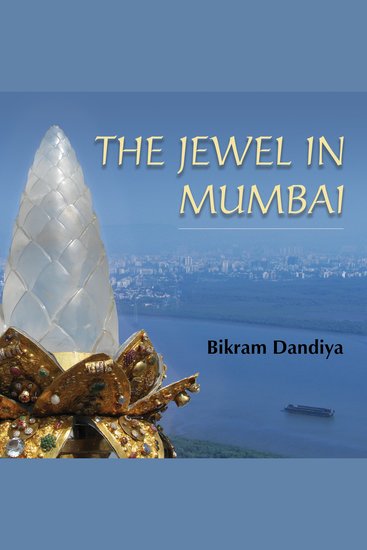
    The Global Vipassana Pagoda in Mumbai was built to mark the birth centenary year of Sayagyi U Ba Khin, the Burmese Dhamma teacher of S.N. Goenka. The monument is built in the Myanmar style of the Shwedagon pagoda, as a token of gratitude to that country where the essence of the Buddha’s teachings was maintained in its pristine purity, and from where it is now spreading throughout India, and via India to the rest of the world. Mr. S.N. Goenka became the vehicle to make this happen and was the inspiring guide for every important aspect of this building project. Tremendous volition and effort went into the building of this staggering monument, and it is interesting and educative to explore the journey. Mr. Bikram Dandiya has beautifully chronicled some of these experiences in this booklet, The Jewel in Mumbai, the story of the making of the crystal bud atop the Global Vipassana Pagoda.
    Voir livre
  • The Roman Empire and Byzantine Empire - The History and Legacy of Europe’s Most Important Empire and Its Successor - cover

    The Roman Empire and Byzantine...

    Charles River Editors

    • 0
    • 0
    • 0
    For the people of the ancient Mediterranean and beyond, the city of Rome had been a symbol of power for centuries, and entering the early 5th century CE, the Eternal City hadn’t been taken by an enemy force since the Gauls had done it about 800 years earlier, an unheard of period of tranquility in a world wracked with almost constant warfare. 
    Thus, when the Visigoths, whom the Romans considered uncultured and inferior, took the city of Rome and sacked it in 410, the world was stunned. It made theologians of the newly Christianized empire question God’s plan on Earth, and it encouraged many leading Romans to look east to Constantinople for their future. Indeed, the Western Roman Empire would completely collapse in the late 5th century, less than 70 years after the Visigoths sacked Rome, and just how it went from being a superpower to a poorly led, weak, and vulnerable shadow of its former self has preoccupied historians for centuries. 
    To this day, it remains difficult to trace just when the decline began, but it’s fair to say that the sack of Rome was the result of a number of factors that had been coalescing for many years. In the end, the fall of the Roman Empire was not a tale of cataclysmic events that shattered the sprawling power, but the culmination of centuries of internal dissent and decay, combined with growing external threats that led to gradual decline and eventually to the empire’s final destruction.  
    In terms of geopolitics, perhaps the most seminal event of the Middle Ages was the successful Ottoman siege of Constantinople in 1453. The city had been an imperial capital as far back as the 4th century, when Constantine the Great shifted the power center of the Roman Empire there, effectively establishing two almost equally powerful halves of antiquity’s greatest empire. Constantinople would continue to serve as the capital of the Byzantine Empire even after the Western half of the Roman Empire collapsed.
    Voir livre
  • Across the Board - How Games Make Us Human - cover

    Across the Board - How Games...

    Tim Clare

    • 0
    • 0
    • 0
    Tabletop games are ordinary and extraordinary. Ordinary because they're everywhere: played in bars and cafés, churches and casinos, through sunless winters in polar research stations and in the sweltering summer heat of Tanzanian villages and streamed live over Twitch to millions of viewers. They fill the activity pages of children's magazines and the halls of senior centers. They appear as smartphone apps and in luxury editions and as game boards scratched into the dirt. 


    And they're extraordinary for precisely the same reason: they're everywhere, in every civilization, everywhere in the world across all recorded human history. 


    In Across the Board, tabletop game aficionado Tim Clare takes us through that history and across those civilizations. We learn how the same games emerge over and over and how they've evolved and spread, as well as about the contemporary culture of gaming: with rousing enthusiasm, Tim explores games as familiar to us as Monopoly or chess, as niche as Magic: The Gathering, and as unexpected as the Japanese poetry-matching card game karuta. We learn about games as recreation and as ritual, and above all, we see how they can be a way for us to come together—because of all the things that make us human, there's nothing quite so set up for connection as sharing a round of cards or the roll of a d20.
    Voir livre
  • Initiates of Egypt The: In Search of the Ogdoad and Ancient Adept Wisdom - cover

    Initiates of Egypt The: In...

    Asher Benowitz

    • 0
    • 0
    • 0
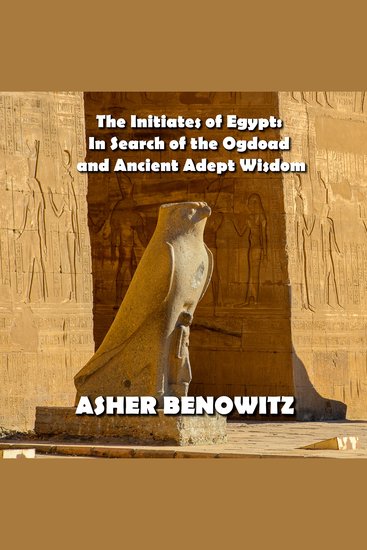
    The ancient Egyptians celebrated festivals (entirely or partially) in temples. These were sacred places where humans could approach the gods. Therefore, it is imperative to understand the character of the temples as separate entities from the world because they are in the lands that first appeared." The number of temples built by other ancient cultures is unparalleled. They have been classified as mansions of the deities, models of Egypt and the cosmos, focal points of worship, portals to the divine, islands of order amid oceans of chaos, and spiritual engines. Despite the physical stone of these temples, "we can still perceive much of their symbolic nature, the deeper reasons for their construction" beneath the surface.
    Voir livre