Join us on a literary world trip!
Add this book to bookshelf
Grey
Write a new comment Default profile 50px
Grey
Subscribe to read the full book or read the first pages for free!
All characters reduced
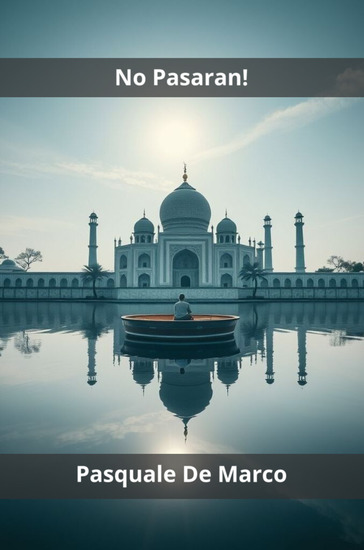
No Pasaran! - cover

No Pasaran!

Pasquale De Marco

Publisher: Publishdrive

  • 0
  • 0
  • 0

Summary

In the annals of history, the Spanish Civil War stands as a haunting reminder of the fragility of democracy and the devastating consequences of ideological extremism. This conflict, which raged from 1936 to 1939, was not merely a domestic struggle for power, but a proxy war between the rising tide of fascism and the forces of republicanism and socialism.

This book delves into the intricate web of events that led to the outbreak of hostilities, exploring the political, social, and economic factors that created a tinderbox of tensions in Spain. We examine the key battles and campaigns that shaped the course of the war, from the early Republican victories to the eventual Nationalist triumph.

Beyond the military narrative, this book delves into the human stories behind the headlines, shedding light on the experiences of ordinary people caught in the maelstrom of war. We encounter tales of courage and resilience, of unwavering idealism and tragic loss, as we piece together the mosaic of individual lives that were forever changed by the conflict.

Moreover, this book analyzes the profound impact of the Spanish Civil War on the international stage. It was a conflict that drew in volunteers from around the world, including the famed International Brigades, and served as a testing ground for the strategies and tactics that would be employed in the Second World War.

Through a comprehensive exploration of the Spanish Civil War, this book provides a deeper understanding of the historical context in which it unfolded, the motivations and actions of the various factions involved, and the enduring legacy of the conflict. It is a cautionary tale about the dangers of extremism, the importance of vigilance, and the resilience of the human spirit in the face of adversity.


If you like this book, write a review!
Available since: 06/02/2025.
Print length: 162 pages.


Other books that might interest you

  • Kings and Pawns - Jackie Robinson and Paul Robeson in America - cover

    Kings and Pawns - Jackie...

    Howard Bryant

    • 0
    • 0
    • 0
    “I loved this book.... I looked forward to [it] more than any other in a long time, and Howard Bryant exceeded my great expectations. Kings and Pawns is brilliantly conceived and powerfully written.” — David Maraniss, author of Path Lit by Lightning 
    A path-breaking work of biography of two American giants, Jackie Robinson and Paul Robeson, whose lives would forever be altered by the Cold War, and would explosively intersect before its most notorious weapon, the House Un-American Activities Committee — from one of the best sports and culture writers working today.  
    Kings and Pawns is the untold story of sports and fame, Black America and the promise of integration through the Cold War lens of two transformative events. The first occurred July 18, 1949 in Washington, D.C., when a reluctant Jackie Robinson, the Brooklyn Dodgers baseball star who integrated the game and at the time was the most famous Black man in America, appeared before the House Un-American Activities Committee to discredit Paul Robeson, the legendary athlete, baritone, and actor — himself once the most famous Black man in America. The testimony would be a defining moment in Robinson’s life and contribute heavily to the destruction of Robeson’s iconic reputation in the eyes of America. 
    The second occurred June 12, 1956, in the midst of the last, demagogic roar of McCarthyism, when a battered, defiant Robeson – prohibited from leaving the United States – faced off in a final showdown with HUAC in the same setting Robinson appeared in seven years earlier. These two moments would epitomize the ongoing Black American conflict between patriotism and protest. On the cusp of a nascent civil rights movement, Robinson and Robeson would represent two poles of a people pitted against itself by forces that demanded loyalty without equality in return – one man testifying in conflicted service to and the other in ferocious critique of a country that would ultimately and decisively wound both. 
    In a time of great division, with America in the midst of a new era of retrenchment and Black athletes again chilled into silence advocating for civil rights, the story of these two titans reverberates today within and beyond Black America. From the revival of government overreach to curb civil liberties to the Cold War-era rhetoric of “the enemy within” levied against fellow citizens, Kings and Pawns is a story of a moment that remains hauntingly present.
    Show book
  • Hitler's Girl - The British Aristocracy and the Third Reich on the Eve of WWII - cover

    Hitler's Girl - The British...

    Lauren Young

    • 0
    • 0
    • 0
    A timely, riveting book that presents for the first time an alternative history of 1930s Britain, revealing how prominent fascist sympathizers nearly succeeded in overturning British democracy—using the past as a road map to navigate the complexities of today’s turn toward authoritarianism. 
    Hitler’s Girl is a groundbreaking history that reveals how, in the 1930s, authoritarianism nearly took hold in Great Britain as it did in Italy and Germany. Drawing on recently declassified intelligence files, Lauren Young details the pervasiveness of Nazi sympathies among the British aristocracy, as significant factions of the upper class methodically pursued an actively pro-German agenda. She reveals how these aristocrats formed a murky Fifth Column to Nazi Germany, which depended on the complacence and complicity of the English to topple its proud and long-standing democratic tradition—and very nearly succeeded. 
    As she highlights the parallels to our similarly treacherous time, Young exposes the involvement of secret organizations like the Right Club, which counted the Duke of Wellington among its influential members; the Cliveden Set, which ran a shadow foreign policy in support of Hitler; and the shocking four-year affair between socialite Unity Mitford and Adolf Hitler. 
    Eye-opening and instructive, Hitler’s Girl re-evaluates 1930s England to help us understand our own vulnerabilities and poses urgent questions we must face to protect our freedom. At what point does complacency become complicity, posing real risk to the democratic norms that we take for granted? Will democracy again succeed—and will it require a similarly cataclysmic event like World War II to ensure its survival? Will we, in our own defining moment, stand up for democratic values—or will we succumb to political extremism? 
    Supplemental enhancement PDF accompanies the audiobook.
    Show book
  • Mexican History - Facts about Emiliano Zapata and the Revolution of Mexico - cover

    Mexican History - Facts about...

    Kelly Mass

    • 0
    • 0
    • 0
    This book deals with the following topics: 
    1 - Emiliano Zapata: Emiliano Zapata Salazar was a revolutionary in Mexico. He was a key figure in the Mexican Revolt of the years 1910 until 1920, and also the primary leader of the people's revolution in the Mexican state of Morelos and the creator of the Zapatismo agrarian movement. Zapata was born in the rural town of Anenecuilco in the state of Morelos, at the time of a period when peasant communities dealt with increasing pressure from the small-landowning class, which monopolized land and water resources for sugar-cane production with the support of totalitarian Porfirio Daz (President from the year 1877 to 1880 and from 1884 to 1911). 
    2 - Mexican Revolution: The Mexican Revolution was a great revolution that included a series of army local battles instead of a single united struggle. It destroyed the Federal Force and changed it with an innovative army, changing Mexican civilization and governance at the same time It also culminated in the adoption of a new constitution that included the revolutionaries' ideal visions. In spite of the fact that President Porfirio Daz's (from about 1880 to 1911) rule had grown progressively out of favor over the prior 31 years, there was no indicator that a transformation would break out in the year 1910.
    Show book
  • Joan of Arc - The Maid of Orleans - cover

    Joan of Arc - The Maid of Orleans

    Harris Ropes

    • 0
    • 0
    • 0
    Joan of Arc was born around January 6, 1412, in the small village of Domrémy, located in northeastern France. She came from a modest family of farmers, with her father, Jacques d’Arc, being a well-respected member of the community. Her mother, Isabelle Romée, was known for her devout religious beliefs, which would greatly influence Joan's early life. Joan was one of five children, and although she lived in relative poverty, her family provided her with a stable and loving environment. 
    Growing up in Domrémy, Joan was surrounded by the rural landscape of Lorraine, a region that was politically unstable at the time. The Hundred Years’ War, which pitted France against England, had caused widespread hardship for many French families. Domrémy, being on the border of French and Burgundian territories, was caught in the middle of this conflict. Joan witnessed firsthand the suffering of the French people, including raids and the destruction of villages, which left a lasting impact on her. 
    Joan was a deeply religious child, often spending time in the local church. It is said that she learned about the lives of saints and felt a special connection to them. Her strong faith became a central part of her identity. By the age of 13, Joan began to experience mystical visions. These visions, which she later described as coming from saints such as Saint Michael, Saint Catherine, and Saint Margaret, were significant in shaping her future. The voices instructed her to help the French crown, specifically to assist Charles VII, the Dauphin, in reclaiming his throne and driving out the English forces from France. Joan took these visions seriously, believing they were divine instructions, and they set her on a path that would change the course of history.
    Show book
  • This Creative Life - A Handbook for Writers - cover

    This Creative Life - A Handbook...

    Sara Zarr

    • 0
    • 0
    • 0
    There are a lot of books about writing out there. If you’re like most writers, you’ve just about read them all. But learning how to write (and organize and outline and plot and edit and save the cat and market a breakout book) is one thing. Making and living a sustainable creative life in the face of...everything...is an entirely different matter. To know how to do that, we need to take a look at what goes on between the lines of our lives as writers so that we can live them with maybe a little more thought and intention--no matter the many interior and exterior obstacles that can threaten to derail our purpose. 
    In this companion book to her long-running podcast, Sara Zarr brings her sixteen-year publishing career and experience as a speaker, teacher, and mentor to a conversational and encouraging collection of hard-won insights about what it means not to just write (and perchance to publish), but to be a writer.
    Show book
  • The Life Of Poor Children - Child Labour - cover

    The Life Of Poor Children -...

    Saurabh Kumar

    • 0
    • 0
    • 0
    This book tells us about the life of poor children, their thinking and the difficulties faced by them. It also sheds light on a global issue, child labour.
    Show book