Begleiten Sie uns auf eine literarische Weltreise!
Buch zum Bücherregal hinzufügen
Grey
Einen neuen Kommentar schreiben Default profile 50px
Grey
Jetzt das ganze Buch im Abo oder die ersten Seiten gratis lesen!
All characters reduced
Memories of a Jersey Kid - Tales of Growing Up in the Garden State - cover

Memories of a Jersey Kid - Tales of Growing Up in the Garden State

Pasquale De Marco

Verlag: Publishdrive

  • 0
  • 0
  • 0

Beschreibung

Journey back in time to the vibrant city of Passaic, New Jersey, through the eyes of a young boy growing up amidst extraordinary change. This captivating book chronicles Passaic's rich history, from its humble beginnings as a mill town to its transformation into a bustling industrial hub.

Immerse yourself in the tapestry of American history as you witness the impact of the Great Depression and World War II on the lives of ordinary people. Experience the postwar boom and the rise of consumerism, the Civil Rights Movement and the Vietnam War, and the technological advancements and cultural shifts that have defined the American experience.

Through the eyes of our young protagonist, you'll witness the transformation of Passaic from a manufacturing center to a city of artists, entrepreneurs, and innovators. Discover how the struggles of the past have shaped the present, and gain a deeper understanding of the challenges and opportunities that lie ahead.

This book is more than just a history lesson; it's a celebration of the human spirit, a testament to the power of community, and an exploration of the intricate tapestry of American life. As you delve into the stories of Passaic, you'll discover the stories of yourself, your family, and your nation.

With vivid storytelling and a keen eye for detail, this book brings the past to life, offering a unique perspective on the American experience. It's a must-read for anyone interested in history, culture, and the enduring spirit of community.


If you like this book, write a review!
Verfügbar seit: 02.06.2025.
Drucklänge: 158 Seiten.
Weitere Bücher, die Sie mögen werden

  • Countdown - The Blinding Future of Nuclear Weapons - cover

    Countdown - The Blinding Future...

    Sarah Scoles

    • 0
    • 0
    • 0
    Nuclear weapons are, today, as important as they were during the Cold War, and some experts say we could be as close to a nuclear catastrophe now as we were at the height of that conflict. Despite that, conversations about these bombs generally often happen in past tense. 


    In Countdown, science journalist Sarah Scoles uncovers a different atomic reality: the nuclear age's present. Drawing from years of on-the-ground reporting at the nation's nuclear weapons labs, Scoles interrogates the idea that having nuclear weapons keeps us safe, deterring attacks and preventing radioactive warfare. She deftly assesses the existing nuclear apparatus in the United States, taking readers beyond the news headlines and policy-speak to reveal the state of nuclear-weapons technology, as well as how people currently working within the United States nuclear weapons complex have come to think about these bombs and the idea that someone, someday, might use them. 


    Through a sharp, surprising, and undoubtedly urgent narrative, Scoles brings us out of the Cold War and into the twenty-first century, opening listeners' eyes to the true nature of nuclear weapons and their caretakers while also giving us the context necessary to understand the consequences of their existence, for worse and for better, for now and for the future.
    Zum Buch
  • Mud Flood Hypothesis The: The History of the Conspiracy Theory about the Global Empire of Tartaria - cover

    Mud Flood Hypothesis The: The...

    Editors Charles River

    • 0
    • 0
    • 0
    From time to time, a new theory about world history still makes an appearance, particularly interesting when based on a geological reality. A popular notion at present is the existence of a great empire covering the bulk of Asia and Russia until only one hundred years ago that was destroyed and covered up to enable the rise of present nations. This was accomplished by worldwide deluges of mud, modern energy weapons, and the erasure of an advanced architectural and technological civilization that was far beyond its time. Over the past four years, the theory has developed branch extensions that go off in seemingly all directions. 
    	The “mud flood” hypothesis is centered around the ancient empire of Tartaria, or Tartary, as it existed two hundred years ago, a continent-wide showcase of advanced architecture, transportation, free energy, and wireless technology. Tartary is generally described as occupying a large portion of Asia and Russia, bounded by the Caspian Sea and the Ural Mountains, the Pacific Ocean and Bulgaria, and the southern borders of China, India, and Persia. At one point, it took up the vast bulk of the Russian continent.  
    	Tartaria is a story in present circulation as a country that once seemed known to the world but is now forgotten. Tartaria, Tartary, or Grand Tartaria troubles online researchers as they look over old maps dating back as far as the fifteenth century. The intrigue began with a declassified document from the CIA in 1957, mentioning the deletion of the country’s history at the hands of communist attackers. The Khanate of Khazan (Bulgaria) was named Tatarstan, a republic of the Russian Federation that purportedly flew the same flag as ancient Tartaria. In a map of 1824, Chinese-Tartaria and China appear to coexist. By 1850, Mongolia begins to appear where independent Tartaria was before, while China expands to become an empire and Tartaria disappears from view.
    Zum Buch
  • Rus’ The: The History and Legacy of the Group that Established a Russian State in the Middle Ages - cover

    Rus’ The: The History and Legacy...

    Editors Charles River

    • 0
    • 0
    • 0
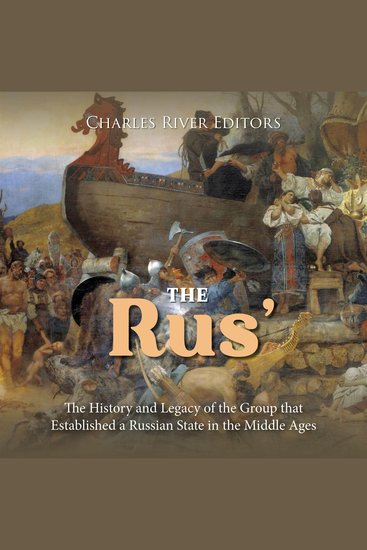
    For many, the Rus might be synonyms for Russia or Russians, perhaps an early form of the civilization that later became Russia. This is partly true. Modern-day Russia lays claim as a successor to the Rus, particularly the Kievan Rus empire that dominated, with oscillating borders, the area around today’s Kiev and Ukraine between the 8th and 11th centuries. Crucially, the Rus had roots in the Nordic region. Initially, they would travel into modern-day Russia, Ukraine, and beyond to trade. Only later would they start to settle in the region and then become known as the Rus. 
    As with many other groups, the origins of the Rus are tied to the dominance of the Vikings over Western Europe in the early part of the Dark Ages or Medieval Era. Their Scandinavian brethren also traveled eastwards, behaving in similar ways but ultimately settling and assimilating in the region in an idiosyncratic manner. The Rus focused on several trade routes. The most important of these was the “eastern” route towards the Caspian Sea and stretching as far as Baghdad in the Middle East. This then gave way to the “western” route leading through Kiev to the Black Sea and Byzantine capital city Constantinople. The Rus also developed other trade routes, including to Western Europe. 
    Eventually, the Rus began to establish permanent settlements, firstly in Novgorod and then south to Kiev. This will be accompanied by the exploration of growing Rus dominance of this region, particularly through historical figures in the Rurikid dynasty such as Rurik, Oleg, Igor, Olga, Svyatoslav, Vladimir, and Yaroslav. During this time, the Kievan Rus empire was established and rose steadily to become a major regional power, even challenging the dominant Byzantines.
    Zum Buch
  • How to Get Over a Breakup - An Ancient Guide to Moving On (Ancient Wisdom for Modern Readers) - cover

    How to Get Over a Breakup - An...

    Ovid

    • 0
    • 0
    • 0
    Breakups are the worst. On one scale devised by psychiatrists, only a spouse's death was ranked as more stressful than a marital split. Is there any treatment for a breakup? The ancient Roman poet Ovid thought so. Having become famous for teaching the art of seduction in The Art of Love, he then wrote Remedies for Love (Remedia Amoris), which presents thirty-eight frank and witty strategies for coping with unrequited love, falling out of love, ending a relationship, and healing a broken heart. How to Get Over a Breakup presents an unabashedly modern prose translation of Ovid's lighthearted and provocative work, complete with a lively introduction. 


    Ovid's advice—which he illustrates with ingenious interpretations of classical mythology—ranges from the practical, psychologically astute, and profound to the ironic, deliberately offensive, and bizarre. Some advice is conventional—such as staying busy, not spending time alone, and avoiding places associated with an ex. Some is off-color, such as having sex until you're sick of it. And some is simply and delightfully weird—such as becoming a lawyer and not eating arugula. 


    Whether his advice is good or bad, entertaining or outrageous, How to Get Over a Breakup reveals an Ovid who sounds startlingly modern.
    Zum Buch
  • Ottoman Empire’s Most Important Battles The: The History and Legacy of the Ottomans’ Biggest Victories and Defeats - cover

    Ottoman Empire’s Most Important...

    Editors Charles River

    • 0
    • 0
    • 0
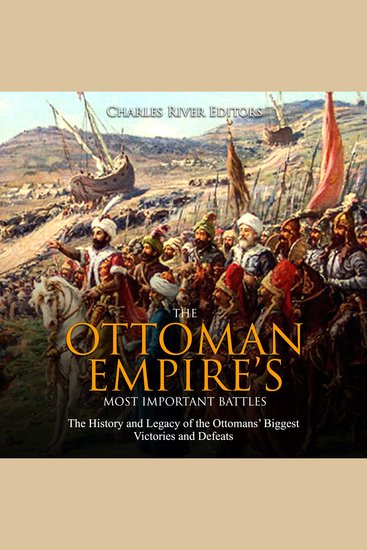
    In terms of geopolitics, perhaps the most seminal event of the Middle Ages was the successful Ottoman siege of Constantinople in 1453. The city had been an imperial capital as far back as the 4th century, when Constantine the Great shifted the power center of the Roman Empire there, effectively establishing two almost equally powerful halves of antiquity’s greatest empire. Constantinople would continue to serve as the capital of the Byzantine Empire even after the Western half of the Roman Empire collapsed in the late 5th century. Naturally, the Ottoman Empire would also use Constantinople as the capital of its empire after their conquest effectively ended the Byzantine Empire, and thanks to its strategic location, it has been a trading center for years and remains one today under the Turkish name of Istanbul.  
    The end of the Byzantine Empire had a profound effect not only on the Middle East but Europe as well. Constantinople had played a crucial part in the Crusades, and the fall of the Byzantines meant that the Ottomans now shared a border with Europe. Indeed, the Ottomans would clash with Russians, Austrians, Venetians, Polish, and more before collapsing as a result of World War I, when they were part of the Central powers.  
    In the wake of taking Constantinople, the Ottoman Empire would spend the next few centuries expanding its size, power, and influence, bumping up against Eastern Europe and becoming one of the world’s most important geopolitical players. It was a rise that would not truly start to wane until the 19th century. Preserving its mixed heritage, coming from both its geographic position rising above the ashes of the Byzantine Empire and the tradition inherited from the Muslim Conquests, the Ottoman Empire lasted more than six centuries.
    Zum Buch
  • Italy - the History of Italy from Etruscans to Contemporary Times - cover

    Italy - the History of Italy...

    Will Forrest

    • 0
    • 0
    • 0
    Do you want to uncover the secrets of Italy's ancient civilizations, such as the Etruscans and the roman empire? 
    Are you drawn to the captivating tales of legendary figures like Leonardo da Vinci, Michelangelo, Machiavelli and Italian Culture? 
    If so, this book is for you! 
    Discover Italy's captivating history, from the enigmatic Etruscans to the modern marvel of today. Together we will unveil the secrets of ancient civilizations, experience the rise of Rome's grandeur, and immerse ourselves in the Renaissance's artistic brilliance. Witness Italy's unification and its transformative triumphs, leading to its modern role in the European Union. This book, enriched with vivid narratives, invites you to traverse the epochs and relish Italy's rich past. 
    This book consist of:Etruscan origins and Roman Empire dominance.Renaissance sparks cultural rebirth.Unification effort shapes modern Italy.World Wars impact and post-war revival.European Union integration, enduring legacy. 
    Whether a history enthusiast or curious traveler, this treasure trove will illuminate Italy's vibrant journey through time. 
    Don´t wait any longer. Scroll up and buy this book now!
    Zum Buch