Begleiten Sie uns auf eine literarische Weltreise!
Buch zum Bücherregal hinzufügen
Grey
Einen neuen Kommentar schreiben Default profile 50px
Grey
Jetzt das ganze Buch im Abo oder die ersten Seiten gratis lesen!
All characters reduced
Mathematical Recreations - cover

Mathematical Recreations

Pasquale De Marco

Verlag: Publishdrive

  • 0
  • 0
  • 0

Beschreibung

In **Mathematical Recreations: Exploring the Playful Side of Math**, we embark on a captivating journey through the realm of mathematical puzzles, games, and challenges. Discover the beauty and wonder of mathematics as it transforms from an abstract concept into an engaging and enjoyable pursuit.

Delve into the rich history of recreational mathematics, tracing its origins back to ancient civilizations and exploring the contributions of brilliant minds throughout the ages. Encounter a kaleidoscope of mathematical challenges that have captivated and entertained people from all walks of life.

Explore the allure of number games, where patterns and sequences reveal hidden connections. Discover the elegance of geometric explorations, where shapes and spaces unfold their secrets. Engage in logical challenges, where deduction and reasoning lead to unexpected solutions.

Through mathematical recreations, we not only sharpen our problem-solving skills but also cultivate a deeper understanding of the world around us. We uncover the interconnectedness of seemingly disparate disciplines, the hidden patterns that underlie the universe, and the boundless possibilities that mathematics offers for exploration and discovery.

Join us on this captivating journey as we unlock the secrets of mathematical recreations and uncover the hidden wonders of the mathematical world. Whether you're a seasoned mathematician or simply someone who enjoys a good puzzle, **Mathematical Recreations** offers a treasure trove of challenges and delights that will entertain, educate, and inspire.


If you like this book, write a review!
Verfügbar seit: 02.06.2025.
Drucklänge: 158 Seiten.


Weitere Bücher, die Sie mögen werden

  • Practical Java Programming with ChatGPT - Develop Prototype and Validate Java Applications by integrating OpenAI API and leveraging Generative AI and LLMs - cover

    Practical Java Programming with...

    Alan S. Bluck

    • 0
    • 0
    • 0
    How to use ChatGPT to write fast validated Java code


    DESCRIPTIONEmbark on a Fascinating Journey into AI-Powered Software Development with ChatGPT. This transformative book challenges the conventional speed of software development by showcasing a diverse array of inquiries directed at cutting-edge AI tools, including Ask AI, ChatGPT 3.5, Perplexity AI, Microsoft Bing Chatbot based on ChatGPT 4.0, and the Phed mobile app. 


    Diving deep into the integration of Java and ChatGPT, this book provides readers with a comprehensive understanding of their synergy in programming. Each carefully crafted question serves as a testament to ChatGPT's exceptional ability to swiftly generate Java programs. 


    The resulting code undergoes rigorous validation using the latest open-source Eclipse IDE and the Java language, empowering readers to craft efficient code in a fraction of the usual time. The journey doesn't end there—this book looks ahead to the promising future of ChatGPT, unveiling exciting potential enhancements planned by OpenAI. These innovations are poised to usher in even more formidable AI-driven capabilities for software development. 


    TABLE OF CONTENTS 
    1. Getting Started with ChatGPT
    2. Java Programming – Best Practices as Stated by ChatGPT
    3. Developing Java Code for Utilizing the ChatGPT API
    4. Java Program for Using Binary Search
    5. Installation of the Latest Open-source Eclipse Java IDE
    6. ChatGPT Generated Java Code for Fourier Analysis
    7. ChatGPT Generated Java Code for the Fast Fourier Transform
    8. ChatGPT Generated Java Code for Indexing a Document
    9. ChatGPT-Generated Java Code for Saltikov Particle Distribution
    10. ChatGPT-Generated Java Code to Invert a Triangular Matrix
    11. ChatGPT Generated Java Code to Store a Document in the IBM FileNet System
    12. Conclusions and the Future of ChatGPT for Program Development
    13. Appendices for Additional Questions	
    Index
    Zum Buch
  • Mindful Living: Simple Steps to Save Our Planet - "Embrace Mindful Living! Access impactful audio lessons to effortlessly contribute to saving our planet" - cover

    Mindful Living: Simple Steps to...

    Dorian Halesworth

    • 0
    • 0
    • 0
    "Mindful Living: Simple Steps to Save Our Planet" 
    Embrace Mindful Living for a Sustainable Future: A Simple, Yet Profound Guide with Clear Insights and Explanations 
    Are you eager to enhance your understanding of transforming daily habits into sustainability practices and contribute positively to our planet’s health? 
    Looking for a comprehensive resource that offers all the essential insights for a sustainable lifestyle? 
    Your search ends here! 
    This guide is your ultimate companion for deepening your awareness, applying sustainable strategies, and engaging in practical exercises. With this, you're set for meaningful change. 
    Key Highlights of This Enlightened Guide: 
    - In-depth insights into transforming daily habits for a sustainable future. 
    - Detailed explanations for adopting eco-friendly practices. 
    - Effective strategies for integrating sustainability into everyday life. 
    Our guide sets itself apart through comprehensive coverage, ensuring your efforts lead to impactful results. Concepts are thoroughly explored rather than just touched upon. 
    Please note this guide is an independent resource designed for your benefit, unaffiliated with any official entity. 
    Crafted with a clear structure and straightforward language, our guide ensures seamless transitions between topics. Say farewell to complex terminology and welcome clear, precise, and actionable content. 
    Why wait? Click the BUY NOW button, secure your guide, and begin your journey towards a sustainable future today! 
    Begin the transformation towards mindful living now!
    Zum Buch
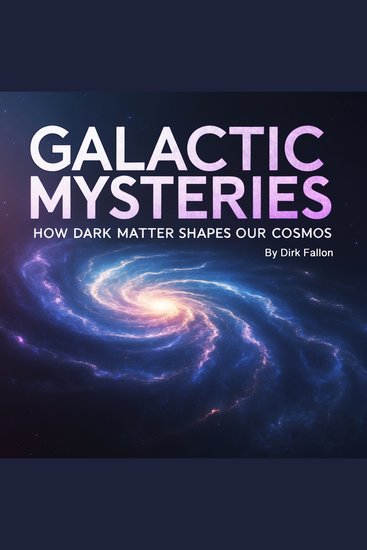
  • Galactic Mysteries - How Dark Matter Shapes Our Cosmos - cover

    Galactic Mysteries - How Dark...

    Dirk Fallon

    • 0
    • 0
    • 0
    In the vast expanse of space, not everything we observe tells the full story. For centuries, astronomers believed that the stars, planets, gas clouds, and galaxies we could see were all there was to the universe. However, observations in the twentieth century began to suggest otherwise. The cosmos, as it turns out, is filled with something we cannot directly observe—something invisible yet undeniably present. This hidden substance came to be known as dark matter, and its discovery revolutionized our understanding of the universe. 
    The first real hints of dark matter came from studies of galaxies. When scientists examined how stars move within galaxies, they expected the outer stars to move more slowly than those near the center, based on the distribution of visible mass. However, what they found was shocking. Stars far from the center were moving at similar speeds as those near the core. This was only possible if there was a large amount of unseen mass exerting gravitational force throughout the galaxy. This discrepancy between the predicted and observed rotation speeds became one of the earliest and strongest pieces of evidence for the existence of dark matter. 
    At the same time, astronomers began noticing unusual behavior in galaxy clusters. These massive structures, made up of hundreds or even thousands of galaxies bound together by gravity, seemed to have more mass than what could be accounted for by visible matter alone. The galaxies were moving too fast to be held together by the gravity of the stars and gas we could detect. Something else, something invisible, had to be holding them in place. Again, the idea of an unseen mass emerged, one that made up the majority of the clusters’ mass.
    Zum Buch
  • Earthmusic - cover

    Earthmusic

    Paul Winter

    • 0
    • 0
    • 0
    Since the 1960s, Paul Winter has been in the vanguard of musicians whose art expresses special appreciation for the natural music of our world--wolf, whale, wind and water, combined with everything from Bach to Bossa Nova. In this visit Paul tells about the making of Missa Gaia, and his lifelong love affair with music that "presses your wonder button."
    Zum Buch
  • Why Not Better and Cheaper? - Healthcare and Innovation - cover

    Why Not Better and Cheaper? -...

    James B. Rebitzer, Robert S....

    • 0
    • 0
    • 0
    An engaging account of innovation in healthcare and why the results fall short for patients and society. 


    The evolution of the cell phones we carry in our pockets demonstrates that quality can increase while prices fall. Why doesn't healthcare also get better and cheaper? 


    In Why Not Better and Cheaper?, James B. Rebitzer and Robert S. Rebitzer offer an answer to this question. Bringing together research on incentives, social norms, and market competition, they argue that the healthcare system generates the wrong kinds of innovation. It is too easy to profit from low-value innovations and too hard to profit from innovations that reduce the costs of care. The result is a healthcare system that is profusely innovative yet remarkably ineffective in discovering ways to deliver increased value at lower cost. 


    Why Not Better and Cheaper? sheds new light on the trajectory of innovation in healthcare, and how to point innovation in a better direction.
    Zum Buch
  • Structure of Scientific Revolutions The: Book Summary & Analysis - cover

    Structure of Scientific...

    Briefly Summaries

    • 0
    • 0
    • 0
    This is a concise summary and analysis of The Structure of Scientific Revolutions, by Thomas Kuhn. It is not the original book and is not affiliated with or endorsed by Thomas Kuhn. Ideal for those seeking a quick and insightful overview.
     
    This groundbreaking work challenges the traditional understanding of scientific progress, introducing the concept of paradigm shifts—fundamental changes in the way scientific communities perceive and interpret the world. It argues that scientific revolutions do not occur gradually but through periods of crisis and transformation, where existing frameworks are replaced by new, incommensurable paradigms. This influential study reshapes how we think about knowledge, progress, and the history of science.
    Zum Buch