Begleiten Sie uns auf eine literarische Weltreise!
Buch zum Bücherregal hinzufügen
Grey
Einen neuen Kommentar schreiben Default profile 50px
Grey
Jetzt das ganze Buch im Abo oder die ersten Seiten gratis lesen!
All characters reduced
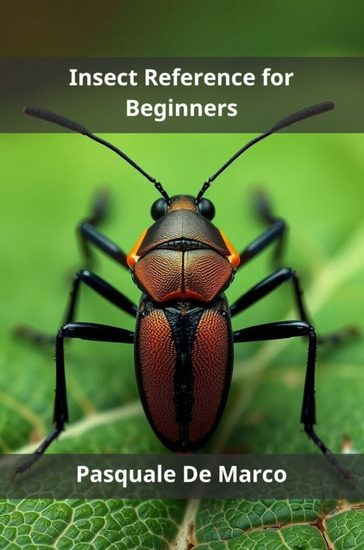
Insect Reference for Beginners - cover

Insect Reference for Beginners

Pasquale De Marco

Verlag: Publishdrive

  • 0
  • 0
  • 0

Beschreibung

In this comprehensive and engaging guide, we embark on a fascinating journey into the world of insects, revealing their remarkable diversity, intricate adaptations, and profound ecological significance.

With over a million known species and countless more yet to be discovered, insects are the most diverse group of animals on Earth. They inhabit every conceivable corner of the globe, from the scorching deserts to the frigid polar regions, from the depths of the oceans to the highest mountain peaks.

From the tiniest springtails to the colossal Goliath beetles, insects exhibit an astounding array of physical and behavioral adaptations that allow them to thrive in a wide range of habitats and exploit a vast array of food sources. Their exoskeletons provide protection and support, their wings enable them to travel long distances, and their specialized mouthparts allow them to consume a wide variety of foods, from nectar and pollen to blood and wood.

Insects are also masters of social organization. From the complex societies of ants and termites to the cooperative hunting strategies of wasps and bees, insects have developed intricate social structures that allow them to work together and achieve remarkable feats.

Their ecological importance cannot be overstated. Insects are essential pollinators, playing a vital role in the reproduction of many plants, including a large number of food crops. They are also important decomposers, breaking down dead plants and animals and returning nutrients to the soil. Insects are also a vital food source for many other animals, including birds, reptiles, amphibians, and mammals.

Despite their importance, insects often face a barrage of threats, from habitat loss and degradation to the indiscriminate use of pesticides. It is crucial that we recognize the value of these tiny creatures and take steps to protect them and their habitats.

This book is an indispensable resource for anyone interested in learning more about the fascinating world of insects. With its captivating writing style, stunning photographs, and in-depth exploration of insect biology and behavior, this book is sure to enthrall readers of all ages.


If you like this book, write a review!
Verfügbar seit: 02.06.2025.
Drucklänge: 155 Seiten.

Weitere Bücher, die Sie mögen werden

  • The Embodied Mind - Understanding the Mysteries of Cellular Memory Consciousness and Our Bodies - cover

    The Embodied Mind -...

    Thomas R. Verny

    • 0
    • 0
    • 0
    We understand the workings of the human body as a series of interdependent physiological relationships, all the way down to the inner workings of every cell. Why is it that the accepted understanding that the physical phenomenon of the mind is attributed only to the brain? 


    In The Embodied Mind, internationally renowned psychiatrist Dr. Thomas R. Verny sets out to redefine our concept of the mind and consciousness. He brilliantly compiles new research that points to the mind's ties to every part of the body. 


    The Embodied Mind collects disparate findings in physiology, genetics, and quantum physics in order to illustrate the mounting evidence that somatic cells, not just neural cells, store memory, inform genetic coding, and adapt to environmental changes—all behaviors that contribute to the mind and consciousness. 


    Verny describes single-celled organisms with no brains demonstrating memory, and points to the remarkable case of a French man who, despite having a brain just a fraction of the typical size, leads a normal life with a family and a job. The Embodied Mind shows how intelligence and consciousness—traits traditionally attributed to the brain alone—also permeate our entire being.
    Zum Buch
  • In the Days of the Comet - cover

    In the Days of the Comet

    H. G. Wells

    • 0
    • 0
    • 0
    A world on the brink of war. A young man on the edge of despair. And a comet that will change everything.
    As political chaos rises and personal heartbreak consumes him, Willie Leadford sees no hope—until a mysterious green comet sweeps across the sky. In its wake, humanity awakens transformed, freed from old fears, anger, and confusion. Suddenly, love, purpose, and clarity feel possible in ways the old world never allowed.
    
    Praised as "one of Wells's most imaginative and uplifting speculative works," this novel blends romance, social critique, and visionary science fiction into a story of profound emotional and philosophical transformation.
    
    If you enjoy bold ideas, personal redemption, and sci-fi that reshapes the meaning of being human, this classic will deeply move you.
    
    Open the book—and witness the moment the world—and one man's heart—changed forever.
    Zum Buch
  • Dark Space Unveiled - A Journey through the Hidden Cosmos - cover

    Dark Space Unveiled - A Journey...

    Dirk Fallon

    • 0
    • 0
    • 0
    The universe, as we know it, is far from what we can fully observe with our eyes. Much of its true nature is hidden in a vast expanse called Dark Space. The origin of this mysterious realm is tied to the very beginning of the cosmos itself. To understand Dark Space, we must first explore the birth of the universe. Around 13.8 billion years ago, the Big Bang marked the start of everything. It was a massive explosion that created space, time, and all the matter in the universe. In the initial moments of this event, the universe expanded at an incomprehensibly rapid rate, stretching from a point of infinite density to the vast expanse we see today. But the observable universe is only a small fraction of what exists, and what lies beyond is far more perplexing. 
    The universe, since its inception, has expanded, and during this expansion, a significant portion of its matter remained hidden from our detection methods. This invisible matter became known as Dark Matter. While we cannot see it, its presence is inferred through its gravitational effects on visible matter. Galaxies rotate in such a way that their outer stars should be flying off into space, but they do not. Instead, they remain bound together. Dark Matter is believed to be the unseen force holding galaxies together, influencing their structure and movement. However, this invisible substance isn't the only mystery lurking in the vastness of space. A far more enigmatic force was discovered in the late 20th century, known as Dark Energy. This force appears to be driving the accelerated expansion of the universe. Unlike Dark Matter, Dark Energy is not something we can detect through its gravitational pull, but its effects are unmistakable. The universe’s rate of expansion is speeding up, not slowing down as was once expected, and Dark Energy is thought to be the driving force behind this strange phenomenon.
    Zum Buch
  • UFOs - Myths Conspiracies and Realities - cover

    UFOs - Myths Conspiracies and...

    John B. Alexander

    • 0
    • 0
    • 0
    A never-before-heard firsthand account of a government insider's experience on the cutting edge of UFO exploration; includes a new afterword"Forget everything you think you know about UFOs - this insider's account exposes the reality... Packed with top grade information, insightful analysis and fascinating anecdotes, Alexander's interesting and controversial book sets the gold standard for titles on this subject." –Nick Pope, author of Open Skies, Closed Minds"Changes the playing field for both true believers and skeptics alike. Alexander strongly warns, be careful what you wish for when asking for presidential intervention.  Success could set the field of ufology back decades." --George Noory, host of Coast to Coast AMWhile still on active duty in the U.S. Army during the 1980s, Colonel John B. Alexander, Ph.D. created an interagency group to explore the controversial topic of UFOs. All members held Top Secret clearance. What they discovered was not at all what was expected. UFOs covers the numerous cases they saw, and answers questions like:• What was really in Hanger 18? • Did a UFO land at Holloman Air Force Base? • What happened at Roswell? • What is Majestic 12? • What is the Aviary? • What does the government know about UFOs? • What has happened with disclosure in other countries? • Has the U.S. reverse engineered a UFO? • Why don't presidents get access to UFO info? UFOs is at once a complete account of Alexander's findings, and a call to action. There are no conspiracy theories here—only hard facts—but they are merely the beginning. Foreword by Jacques F. ValleeIntroduction by Burt RutanCommentary by Tom Clancy
    Zum Buch
  • What You Don't Know - AI's Unseen Influence on Your Life and How to Take Back Control - cover

    What You Don't Know - AI's...

    Cortnie Abercrombie

    • 0
    • 0
    • 0
    You are probably not aware, because of their hidden nature, but artificial intelligence systems are all around you affecting some of the biggest areas of your life—jobs, loans, kids, mental health, relationships, freedoms, and even healthcare decisions that can determine if you live or die. As an executive working in AI at one of the largest, most sophisticated tech companies on the planet, Cortnie Abercrombie saw firsthand how the corporate executives and data science teams of the Fortune 500 think about and develop AI systems. In this book she makes it easy to understand how AI works and unveils what companies are doing with AI that can impact you the most. Most importantly, she offers practical advice on what you can do about it today and the change you should demand for the future. 


    This book addresses the pressing questions that non-insiders want answered, including: how does AI work (in words you don't need a PhD to understand)?; how can AI affect my job, replace me, or prevent my hire?; is AI involved in life-or-death decisions in healthcare?; could my digital accounts or home network be hacked because of my AI-based smart TV, coffeemaker, or robot vacuum?; how does AI know so much about me, what does it know, and can it be used against me?; can it manipulate people to do things they wouldn't normally?; and much more.
    Zum Buch
  • Turing's Vision - How AI is Shaping the World - cover

    Turing's Vision - How AI is...

    Pietro Perconti, Alessio Plebe

    • 0
    • 0
    • 0
    Chat-GPT, humanoid robotics, and self-driving cars are just a few of the things that are changing our everyday lives. The rapid advancement of AI is eroding one by one all the cornerstones considered unique of human nature: language, consciousness, creativity, and moral responsibility. The book argues that the revolution we are facing is driven by Alan Turing's "vision". This vision rests on the idea that intelligence is not an intrinsic property of human beings, but is a way in which matter is functionally organized and an attribute we are naturally inclined to ascribe to certain entities. For decades we have pretended that this idea does not have the corrosive power that it actually does, perhaps more so than the Copernican and Darwinian revolutions. But now, given the achievements of new forms of computing based on deep learning and predictive coding, the most common intuitions can no longer avoid the dangerous Turing idea. 
     
    The book is intended for scholars, researchers, and listeners intrigued by the intersections across disciplines interested in understanding the philosophical, ethical, and social implications of Artificial Intelligence and its impact on human nature.
    Zum Buch