Rejoignez-nous pour un voyage dans le monde des livres!
Ajouter ce livre à l'électronique
Grey
Ecrivez un nouveau commentaire Default profile 50px
Grey
Abonnez-vous pour lire le livre complet ou lisez les premières pages gratuitement!
All characters reduced
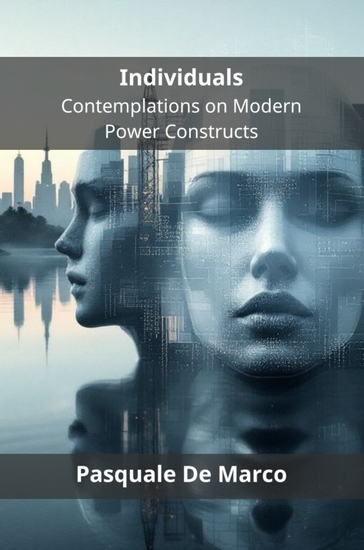
Individuals - Contemplations on Modern Power Constructs - cover

Individuals - Contemplations on Modern Power Constructs

Pasquale De Marco

Maison d'édition: Publishdrive

  • 0
  • 0
  • 0

Synopsis

In a world shaped by power dynamics, this book offers a profound exploration of the nature, manifestations, and consequences of power. Drawing on a wide range of disciplines, it delves into the intricate interplay between power and individuals, institutions, and discourse.

With thought-provoking insights and rigorous analysis, this book unravels the complex ways in which power operates in our lives. It examines the historical evolution of power structures, from traditional authority to modern disciplinary regimes, and explores the subtle and pervasive forms of power that permeate our societies.

Through in-depth analysis, the book reveals how power shapes our desires, aspirations, and sense of self, and how it can be internalized and exert a profound influence on our thoughts, feelings, and actions. It also investigates the strategies of resistance and subversion that emerge in response to power structures, highlighting the potential for power to be used for liberation and empowerment.

The book further examines the role of institutions, such as schools, prisons, and hospitals, in perpetuating and reinforcing power relations. It analyzes how these institutions shape individual behavior and experiences, and how they can be sites of resistance and transformation.

Delving into the complex relationship between power and discourse, the book explores how language and communication are used to construct and maintain power structures, and how counter-discourses can challenge and subvert these structures. It also examines the role of discourse in shaping our understanding of power and its potential to inspire collective action for social change.

This book is an essential read for anyone seeking a deeper understanding of power dynamics and their impact on individuals and societies. It is a thought-provoking and timely exploration of one of the most fundamental aspects of human existence.


If you like this book, write a review!
Disponible depuis: 02/06/2025.
Longueur d'impression: 157 pages.
D'autres livres qui pourraient vous intéresser

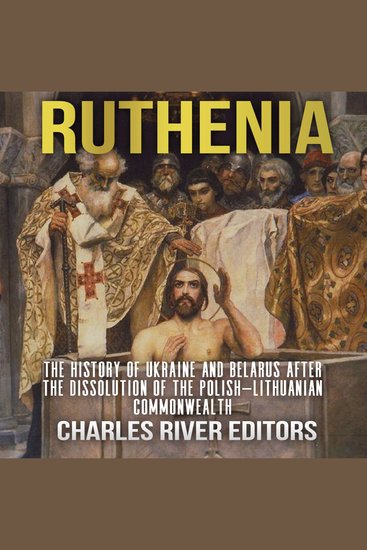
  • Ruthenia: The History of Ukraine and Belarus after the Dissolution of the Polish–Lithuanian Commonwealth - cover

    Ruthenia: The History of Ukraine...

    Editors Charles River

    • 0
    • 0
    • 0
    The history of Ukraine is a fascinating story of how cultures, political systems, religions, and power have met, intersected, morphed, and expanded. The region was relatively sparsely populated for much of ancient history, a wilderness of rivers, forests, and steppes, but that does not detract from the rich historical development of the region. A huge area, Ukraine is wedged between the continents of Asia and Europe, and its position as a crossroads ensured there was fierce competition for influence there. Historians have called the formation of Ukraine the “establishment of a unity among three zones…the ports of Crimea and the coast, the rich steppe heartland, and the forests,” based around the themes of “geography, ecology and culture.”  
    	Today’s Ukraine is a huge country, incorporating an area over 600,000 square kilometers and home to 42 million people. It stretches from the Crimean Peninsula on the Black Sea in the south to Belarus in the north, Russia to the east, and Poland, Slovakia, and Hungary to the west. The Dnieper River is the region’s key waterway, running into the Black Sea, while the Danube Delta also forms its border with modern-day Romania to the southwest. A steppe exists in the middle of the country while the Carpathian Mountains feature in the west. This geographical formation has influenced some of the country’s key historical developments, as well as the location of its major settlements. Kiev (known today as Kyiv) is, of course, the longstanding capital of the country, located on the Dnieper River in the central northern part of modern Ukraine. Lviv is another large city, located in the northwest near the border with Poland. Odessa is a seaside city on the Black Sea in Ukraine’s southwest, while Kharkiv, Luhansk, and Donetsk are major cities in the country’s east, close to the Russian border.
    Voir livre
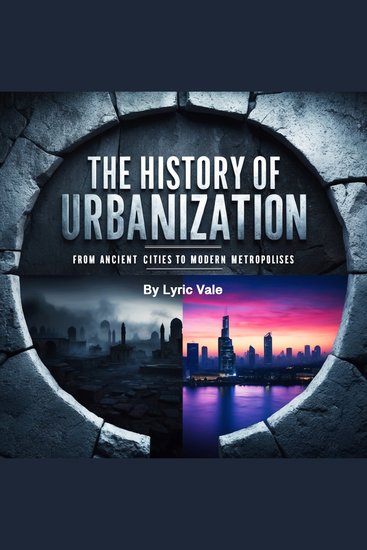
  • The History of Urbanization - From Ancient Cities to Modern Metropolises - cover

    The History of Urbanization -...

    Lyric Vale

    • 0
    • 0
    • 0
    Urbanization refers to the process through which cities and towns grow as a result of the migration of people from rural areas and the expansion of urban areas. It is a phenomenon that has shaped human history for thousands of years, influencing every aspect of society from economics to culture and beyond. As populations increase, the desire for better living conditions, access to employment, and social interaction has led individuals to seek opportunities in urban centers. Over time, these cities evolve to accommodate larger populations, evolving into complex hubs of commerce, culture, and technology. 
    The roots of urbanization trace back to the early agricultural revolution, which enabled humans to produce food more efficiently and settle in one place. This change allowed small villages to grow into the first cities, creating more permanent centers of human life. As civilizations advanced, cities became focal points for trade, governance, religion, and culture. Each of these elements played a crucial role in promoting further urban development, as settlements began to specialize in various industries, services, and functions that drew people from surrounding rural regions. 
    Historically, urbanization was most prominent in ancient civilizations such as Mesopotamia, Egypt, and later, Greece and Rome. These early cities, though primitive by modern standards, laid the foundations for the urban environments we know today. Greek and Roman cities were carefully planned, with infrastructures like roads, aqueducts, and public spaces that contributed to their growth and sustainability. In more recent centuries, urbanization expanded rapidly during the Industrial Revolution, driven by advances in technology, industry, and transportation. Factories, railroads, and new employment opportunities in cities attracted millions of people, transforming landscapes and social structures in profound ways.
    Voir livre
  • One Way Back - A Memoir - cover

    One Way Back - A Memoir

    Christine Blasey Ford

    • 0
    • 0
    • 0
    This program is read by the author and includes clips from her testimony, a Trump rally, C-SPAN, CNN, and ABC News.The compelling true story behind the testimony that awed the nation  On September 27, 2018, Christine Blasey Ford testified before the Senate Judiciary Committee which was considering the nomination of Judge Brett Kavanaugh to the United States Supreme Court. She described an alleged sexual assault by the Supreme Court nominee that took place at a high school party in the 1980s. Her words and courage on that day provided some of the most credible and unforgettable testimony our country has ever witnessed.  In One Way Back, Ford recounts the months she spent trying to get information into the right hands without exposing herself and her family to dangerous backlash. Drawing parallels to her life as a surfer, she explains the process of paddling out into unknown waters despite the risks and fears, knowing there is only one way back to shore. The book reveals riveting new details about the leadup to her testimony and its overwhelming aftermath and describes how she continues to navigate her way out of the storm.This is the real story behind the headlines and the soundbites, a complex, page-turning memoir of a scientist, a surfer, a mother, a patriot and an unlikely whistleblower. Ford’s experience shows that when one person steps forward to speak truth to power, she adds to a collective whole, causing "a ripple that might one day become a wave.”A Macmillan Audio production from St. Martin’s Press.
    Voir livre
  • A Relational Response to Climate Change - cover

    A Relational Response to Climate...

    Calum Samuelson

    • 0
    • 0
    • 0
    About Relationships and Climate ChangeThe challenge of climate change is one of the defining issues the world is facing at the start of the 2020s. It has mobilised a whole new generation of social activists, some of whom are going to extreme lengths to confront the public and especially political leaders with the threat that climate change makes to their future and the planet as a whole.Arguments about the causes of climate change are usually underpinned by the assumption that more human beings living on the planet are inevitably bad for the environment and climate. However, a careful biblical reflection on these issues yields a more nuanced and hopeful view, and this report seeks to stimulate fresh conversations about how best to respond to Climate Change now and in the future.
    Voir livre
  • Shakespeare's White Others - cover

    Shakespeare's White Others

    David Sterling Brown

    • 0
    • 0
    • 0
    Examining the racially white 'others' whom Shakespeare creates in characters like Richard III, Hamlet, and Tamora—figures who are never quite 'white enough'—this bold and compelling work emphasizes how such classification perpetuates anti-Blackness and reaffirms white supremacy. David Sterling Brown offers nothing less here than a wholesale deconstruction of whiteness in Shakespeare's plays, arguing that the 'white other' was a racialized category already in formation during the Elizabethan era—and also one to which Shakespeare was himself a crucial contributor. In exploring Shakespeare's determinative role and strategic investment in identity politics (while drawing powerfully on his own life experiences, including adolescence), the author argues that even as Shakespearean theatrical texts functioned as engines of white identity formation, they expose the illusion of white racial solidarity. This essential contribution to Shakespeare studies, critical whiteness studies, and critical race studies is an authoritative, urgent dismantling of dramatized racial profiling. 


    To access the virtual gallery accompanying this book, please visit https://hubs.mozilla.com/mEd5aWD/david-sterling-brown-gallery-vrv?utm_source=hootsuite&utm_medium=twitter&utm_campaign=MNE_campaign.
    Voir livre
  • Bury my Heart at Wounded Knee - A Native Tribe Story about the American West - cover

    Bury my Heart at Wounded Knee -...

    Harry Montgomery

    • 0
    • 0
    • 0
    The history of the American West is woven with the stories of lands that were once home to indigenous peoples whose lives were irrevocably transformed by the arrival of European settlers. The beginning of this contact was marked by curiosity, fear, and misunderstanding, as both sides struggled to comprehend the profound differences in their cultures and ways of life. Initially, this period was characterized by cautious encounters where indigenous communities and the newcomers exchanged gifts, ideas, and sometimes even skills. However, as explorers, traders, and missionaries increasingly set foot in native territories, the dynamics began to shift dramatically. 
    For many Native tribes, these early interactions brought both opportunity and challenge. The appearance of strangers from across the vast and mysterious ocean introduced new technologies and worldviews that were entirely foreign to the indigenous people. The initial exchange was not always violent, yet it set in motion a gradual process of disruption. Encounters with the newcomers soon revealed differences in attitudes toward land ownership and resource management. Where Native tribes had long held a spiritual connection to the land, considering it a shared, communal resource, European settlers arrived with the concept of individual property rights, leading to disputes and tensions that would only grow over time. 
    As the settlers journeyed further into the heart of the West, their presence ignited both awe and anxiety among the Native populations. The natural beauty and abundance of the land captured the imaginations of many settlers, yet it also raised concerns among indigenous communities about the lasting impact on the ecosystems and the delicate balance that had sustained them for generations.
    Voir livre