Join us on a literary world trip!
Add this book to bookshelf
Grey
Write a new comment Default profile 50px
Grey
Subscribe to read the full book or read the first pages for free!
All characters reduced
Housing Policy Is Not a Minor Issue - cover

Housing Policy Is Not a Minor Issue

Pasquale De Marco

Publisher: Publishdrive

  • 0
  • 0
  • 0

Summary

Housing Policy Is Not a Minor Issue is a comprehensive guide to understanding the intricacies of housing policy in the United States. Written in an engaging and accessible style, this book provides a thorough analysis of the challenges and opportunities that shape housing in America.

From the Great Depression to the subprime mortgage crisis, housing has been at the forefront of economic and social debates. Housing Policy Is Not a Minor Issue traces the evolution of housing policy, examining the role of government, market forces, and social movements in shaping the landscape of housing in America. It explores the complex relationship between housing and issues such as poverty, inequality, health, and climate change, highlighting the multifaceted nature of housing policy.

More than just a textbook, Housing Policy Is Not a Minor Issue is a call to action, urging readers to engage with the critical issues surrounding housing and to work towards creating a more just and equitable housing system for all Americans.

With its in-depth analysis, thought-provoking insights, and real-world examples, Housing Policy Is Not a Minor Issue is an essential resource for anyone seeking to understand the complexities of housing policy in the United States.

Whether you are a student, a practitioner, a government official, a real estate developer, or a policy analyst, this book offers a wealth of knowledge and insights that will inform your understanding of housing policy and its impact on American society.

Housing Policy Is Not a Minor Issue is a must-read for anyone who wants to make a difference in the lives of those struggling to find affordable and stable housing.


If you like this book, write a review!
Available since: 06/02/2025.
Print length: 165 pages.


Other books that might interest you

  • Risk Makes Sense - Human Judgement and Risk - cover

    Risk Makes Sense - Human...

    Dr Robert Long, Joshua Long

    • 0
    • 0
    • 0
    In a world of growing risk aversion, one could be forgiven for thinking that risk doesn’t make sense. Risk elimination thinking and behaviour sets a trajectory for a ‘dumb down’ workplace culture. The more efforts are made to ‘engineer out the idiot’, the more the system creates an unthinking workforce. 
    A Newsletter in 2011 by the Health and Safety Executive (HSE) in the UK lists a number of things that have been banned. Dodgem cars, school sack races and kite flying, amongst the activities which have been banned. Some schools have banned kids playing on monkey bars and others have banned leather footballs. A local council has instituted a $1000 penalty for kite flying on council ovals in case somebody might get hit. Even the Royal British Legion had to stop selling poppies with pins on Remembrance Day in case people might prick themselves. 
    The report above demonstrates just how absurd things have developed in our risk adverse society. The reality is, there is no learning without risk. Risk is not bad. You can’t live life without a ‘trade-off ’ for risk. You can’t learn without risk. We seem more than ever preoccupied with lawsuits than learning, more anxious about injury than adventure and, fearful of harm rather than welcoming creativity. The evolving language of risk elimination and cult-like fixation with everything ‘zero’ is a language that fosters the development of an unthinking workforce. As risk aversion increases, so do the resulting management systems that accompany it. This results in ‘flooding’ the worker so that they default to gut instincts, personal micro-rules and ‘risk quackery’. This increases risk. Rather than resist risk or extinguish risk, we need to embrace it and better understand it from a social-psychological and cultural perspective. 
    This book advocates a social psychology approach when applied to risk, a new approach to risk that identifies that risk makes sense and is sense-able.
    Show book
  • The Poetry of Strangers - What I Learned Traveling America with a Typewriter - cover

    The Poetry of Strangers - What I...

    Brian Sonia-Wallace

    • 0
    • 0
    • 0
    It might surprise you who’s a fan of poetry — when it meets them where they are. 
    Before he became an award-winning writer and poet, Brian Sonia-Wallace set up a typewriter on the street with a sign that said “Poetry Store” and discovered something surprising: all over America, people want poems. An amateur busker at first, Brian asked countless strangers, “What do you need a poem about?” To his surprise, passersby opened up to share their deepest yearnings, loves, and heartbreaks. Hundreds of them. Then thousands. Around the nation, Brian’s poetry crusade drew countless converts from all walks of life. 
    In The Poetry of Strangers, Brian tells the story of his cross-country journey in a series of heartfelt and insightful essays. From Minnesota to Tennessee, California to North Dakota, Brian discovered that people aren’t so afraid of poetry when it’s telling their stories. In “dying” towns flourish vibrant artistic spirits and fascinating American characters who often pass under the radar, from the Mall of America’s mall walkers to retirees on Amtrak to self-proclaimed witches in Salem. 
    In a time of unprecedented loneliness and isolation, Brian’s journey shows how art can be a vital bridge to community in surprising places. Conventional wisdom says Americans don’t want to talk to each other, but according to this poet-for-hire, everyone is just dying to be heard. 
    Thought-provoking, moving, and eye-opening, The Poetry of Strangers is an unforgettable portrait of America told through the hidden longings of one person at a time, by one of our most important voices today. The fault lines and conflicts which divide us fall away when we remember to look, in every stranger, for poetry. 
    Show book
  • life and teaching of Karl Marx The - Max Beer - cover

    life and teaching of Karl Marx...

    Max Beer

    • 0
    • 0
    • 0
    Max Beer's book "The Life and Teaching of Karl Marx" is a comprehensive biography of the famous German philosopher, economist, and social theorist, Karl Marx. The book explores Marx's life and ideas in great detail, from his early childhood in Trier, Germany, to his intellectual development and eventual rise to prominence as one of the most influential thinkers of the 19th century. 
    Beer begins by discussing Marx's early years, including his upbringing in a family of Jewish descent and his education at the University of Bonn and the University of Berlin. From there, he traces Marx's intellectual journey, from his early interest in Hegelian philosophy to his later involvement in socialist and communist politics. 
    The book also explores the key ideas and theories that Marx developed throughout his career, including his concept of historical materialism, his critique of capitalism, and his vision of a classless society. Beer examines these ideas in detail, providing historical context and explaining their significance both in Marx's time and in the years since. 
    Throughout the book, Beer emphasizes the political and social context in which Marx lived and worked. He discusses the rise of industrial capitalism in Europe, the development of socialist and communist movements, and the political struggles that shaped Marx's ideas and career. 
    Overall, "The Life and Teaching of Karl Marx" provides a thorough and insightful exploration of one of the most important figures in modern history. It offers a valuable perspective on Marx's life, ideas, and legacy, and is an essential read for anyone interested in political philosophy, economics, or social theory.
    Show book
  • The Family Gene - A Mission to Turn My Deadly Inheritance Into a Hopeful Future - cover

    The Family Gene - A Mission to...

    Joselin Linder

    • 0
    • 0
    • 0
    When Joselin Linder was in her twenties, her legs started to swell. She thought little of it, until her health problems started to compound in ways that baffled her doctors. Diagnosed with extreme liver blockage and dangerous levels of lymph fluid, Joselin turned to the most similar case she could think of—her father’s. 
    Joselin compared the medical chart of her father—who had died of an undiagnosed disease, ten years prior—-with that of an uncle who had died under similarly strange circumstances. Delving further into the past, she discovered her that her great grandmother had symptoms like hers, and she recognized that she was dealing with something more than a fluke. Whatever had killed her father, uncle, and great-grandmother was likely genetic, and the clock was ticking for the family members of her own generation. 
    Setting out to build a more complete picture of the disease that haunted her family, she approached Dr. Christine “Kricket” Seidman, the head of a group of world-class genetic researchers at Harvard Medical School and a colleague of her late father’s, for help. Dr. Seidman has been attempting the map the faulty gene for seventeen years and has confirmed not only that Joselin’s symptoms are genetic, but that Joselin’s family is this disease’s founder population—a group of people experiencing the baffling symptoms of a brand new mutation. Here, Joselin she tells the story of their gene: the lives it claimed and the future of genetics it foretells.  
    Digging into family records and medical history, interviews with family and friends and her own experiences with Harvard doctors, Joselin pieces together the story of a deadly gene to write a gripping and unforgettable exploration of family, history, love, and mortality. A compelling story of survival and perseverance, THE FAMILY GENE is an important story of a young woman reckoning with her father’s death, her own mortality, and her ethical obligations to herself, family, and society.
    Show book
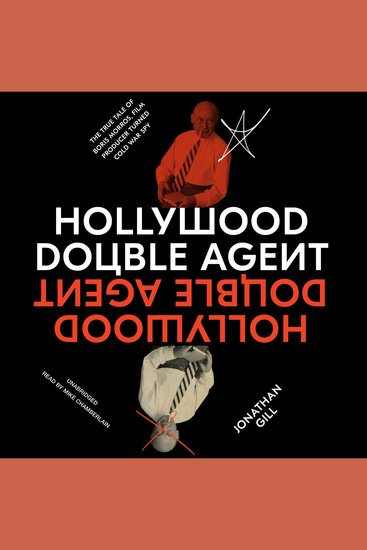
  • Hollywood Double Agent - The True Tale of Boris Morros Film Producer Turned Cold War Spy - cover

    Hollywood Double Agent - The...

    Jonathan Gill

    • 0
    • 0
    • 0
    The Cold War and the Golden Age of Hollywood meet in this story of the remarkable career of Boris Morros, film producer and Russian double agent. 
    Boris Morros was a major figure in the 1930s and 1940s. The head of music at Paramount, nominated for Academy Awards, he then went on to produce his own films with Laurel and Hardy, Fred Astaire, Henry Fonda, and others. But as J. Edgar Hoover would discover, these successes were a cover for one of the most incredible espionage tales in the history of the Cold War—Boris Morros also worked for Russian intelligence. 
    Morros’s assignments took him to the White House, the Vatican, and deep behind the Iron Curtain. The high-level intelligence he provided the KGB included military secrets and compromising information on prominent Americans: his friends. But in 1947, Morros flipped. At the height of the McCarthy era, he played a leading role in a deadly tale. 
    Jonathan Gill’s Hollywood Double Agent is an extraordinary story about Russian spies at the heart of American culture and politics, and one man caught in the middle of the Cold War.
    Show book
  • Mother Teresa: A short biography - 5 Minutes: Short on time – long on info! - cover

    Mother Teresa: A short biography...

    5 Minutes, 5 Minute Biographies,...

    • 0
    • 0
    • 0
    Mother Teresa, nun and Nobel peace prize laureate: Life and work in a short biography! Everything you need to know, brief and concise. Infotainment, education and entertainment at its best!
    Show book