Begleiten Sie uns auf eine literarische Weltreise!
Buch zum Bücherregal hinzufügen
Grey
Einen neuen Kommentar schreiben Default profile 50px
Grey
Jetzt das ganze Buch im Abo oder die ersten Seiten gratis lesen!
All characters reduced
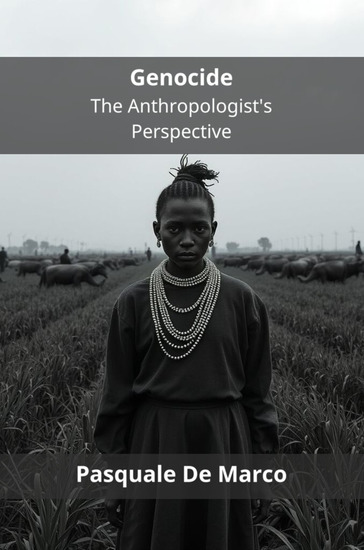
Genocide - The Anthropologist's Perspective - cover

Genocide - The Anthropologist's Perspective

Pasquale De Marco

Verlag: Publishdrive

  • 0
  • 0
  • 0

Beschreibung

Genocide is one of the most pressing issues that confronts us today. Its death toll is staggering: over one hundred million dead. This book explores a wide range of cases, including Nazi Germany, Cambodia, Guatemala, Rwanda, and Bosnia, to understand how and why this mass annihilation occurs and the types of devastation genocide causes.

Drawing on the latest scholarship in anthropology and related fields, this book provides a comprehensive overview of genocide. It examines the history of genocide, the causes and perpetrators of genocide, the victims of genocide, and the international response to genocide. The book also discusses the role of anthropology in studying genocide and the prevention of genocide.

This book is essential reading for anyone who wants to understand one of the most pressing issues of our time. It is a valuable resource for students, scholars, policymakers, and anyone else who is interested in preventing genocide and promoting peace.

In this book, you will learn about:

* The definition of genocide and its history
* The causes of genocide, including political, economic, and social factors
* The perpetrators of genocide, including states, militias, and terrorist groups
* The victims of genocide, including individuals, families, and communities
* The international response to genocide, including the role of the United Nations and other organizations
* The role of anthropology in studying genocide and the prevention of genocide

This book is a call to action. It is a reminder that genocide is a crime that must be prevented. It is also a source of hope, showing that it is possible to overcome the forces that lead to genocide and build a more just and peaceful world.


If you like this book, write a review!
Verfügbar seit: 02.06.2025.
Drucklänge: 161 Seiten.

Weitere Bücher, die Sie mögen werden

  • Imitation - The Basics - cover

    Imitation - The Basics

    Naomi Van Bergen, Bertjan...

    • 0
    • 0
    • 0
    Imitation: The Basics is an engaging introduction to the topic of imitation behavior in humans, providing a summary of existing scientific research on imitation, covering everything from examples of imitation across each developmental stage to animal imitation such as monkeys imitating each other. 


    The authors argue that imitation forms the foundation of long-lasting relationships, including those between children and parents, as well as intimate partners. Structured to resemble a human lifetime, chapters explore the reasons behind why people imitate, and address imitation across all phases of life, starting from infancy, childhood, adolescence, adulthood and ending with late adulthood. The authors describe characteristic forms of imitation that occur in these life stages and provide answers to the following important questions: Who do humans imitate? Who is more likely to imitate others? What kind of behaviors do humans imitate? Is there a dark side of imitation? When do humans imitate each other? And are there cultural differences in imitation? 


    Written in a clear and accessible style, this book is perfect for undergraduate students of social psychology, developmental psychology and neuroscience, as well as professionals, academics and any general listeners interested in research about human social behavior.
    Zum Buch
  • Christianity as Mystical Fact and the Mysteries of Antiquity - cover

    Christianity as Mystical Fact...

    Rudolf Steiner

    • 0
    • 0
    • 0
    “As simultaneously mysticism and fact, Christianity is a breakthrough in the historical development of humanity, for which the mysteries, with the results that they brought about, form a prior evolutionary stage.” ― 
    Rudolf Steiner 
    During the fall and winter of 1901–02, Steiner gave a series of lectures called “Christianity as Mystical Fact” to members of the Theosophical Society. The lectures were rewritten and issued as a book later that year. They mark a watershed in the development of Western esotericism. Steiner wrote of the idea behind his book: 
    “The title 
    Christianity as Mystical Fact 
    was one I gave to this work eight years ago, when I gathered together the content of lectures given in 1902. It was meant to indicate the special approach adopted in the book. Its theme is not just the mystical side of Christianity in a historical presentation. It was meant to show, from the standpoint of a mystical awareness, how Christianity came into being.
    Zum Buch
  • Astrophysicist Carl Sagan Discusses Life On Earth and Other Planets - cover

    Astrophysicist Carl Sagan...

    Carl Sagan

    • 0
    • 0
    • 0
    Carl Edward Sagan (November 9, 1934 - December 20, 1996), born in Brooklyn, NY, was an American astronomer and astrophysicist. His best-known scientific contribution was his research on the possibility of extraterrestrial life, including experimental demonstration of the production of amino acids from basic chemicals by exposure to light. He assembled the first physical messages sent into space, the Pioneer plaque and the Voyager Golden Record, which were universal messages that could potentially be understood by any extraterrestrial intelligence that might find them. The following is a lecture Sagan gave in 1977 during which he discussed life on earth and other planets.
    Zum Buch
  • Australian Frontier Wars The: The History of the Conflicts Between Indigenous Groups and Colonists across Australia - cover

    Australian Frontier Wars The:...

    Editors Charles River

    • 0
    • 0
    • 0
    A land of almost 3 million square miles has lain since time immemorial on the southern flank of the planet, so isolated that it remained entirely outside of European knowledge until 1770. However, the first human footprints on this vast territory were felt 70,000 years earlier, as people began to cross the periodic land bridges and the short sea crossings from Southeast Asia. 
    The history of the indigenous inhabitants of Australia, known in contemporary anthropology as the “Aboriginal and Torres Strait Islander people of Australia,” is a complex and continually evolving field of study, and it has been colored by politics. For generations after the arrival of whites in Australia, the Aboriginal people were disregarded and marginalized, largely because they offered little in the way of a labor resource, and they occupied land required for European settlement. 
    At the same time, it is a misconception that indigenous Australians meekly accepted the invasion of their country by the British, for they did not. They certainly resisted, but as far as colonial wars during that era went, the frontier conflicts of Australia did not warrant a great deal of attention. Indigenous Australians were hardly a warlike people, and without central organization, or political cohesion beyond scattered family groups, they succumbed to the orchestrated advance of white settlement with passionate, but futile resistance. In many instances, aggressive clashes between the two groups simply gave the white colonists reasonable cause to inflict a style of genocide on the Aborigines that stood in the way of progress. 
    Zum Buch
  • How to Overcome Your Childhood - How to raise contented interesting and resilient children - cover

    How to Overcome Your Childhood -...

    The School of Life

    • 0
    • 0
    • 0
    A guide to breaking free from the enduring, and sometimes damaging, behavioral patterns learned in childhood.  
    When trying to deal with our current troubles and anxieties, it can be deeply irritating to be asked to consider our childhoods. They happened so long ago; we can probably barely remember, let alone relate to, the little person we once were. But one of the most powerful explanations for why we may, as adults, be struggling, is that we were denied the opportunity to fully be ourselves in our earliest years. Perhaps we were over-disciplined and cowed, not allowed to be willful or difficult—and so learned to tell white lies and people-please. Or perhaps our caregivers were preoccupied or fragile and so we had to assume the role of parent, burying our true needs and desires deep underground.  
    When we thoroughly examine our upbringings, the larger implications for our adult selves are clear to see. Once we understand the roots from which our flaws stem, we can set about correcting the harmful behaviors we mistakenly believe to be innate. This book is a guide to better understanding our younger selves in order to shape who we wish to be in the future. It explores to what extent we can pin our actions in the present to our experiences in the past, and how we might then break free from the learned patterns of our childhoods.
    Zum Buch
  • Kurt Tucholsky: A short biography - 5 Minutes: Short on time – long on info! - cover

    Kurt Tucholsky: A short...

    5 Minutes, 5 Minute Biographies,...

    • 0
    • 0
    • 0
    Kurt Tucholsky, most famous German publicist: Life and work in a short biography! Everything you need to know, brief and concise. Infotainment, education and entertainment at its best!
    Zum Buch