Begleiten Sie uns auf eine literarische Weltreise!
Buch zum Bücherregal hinzufügen
Grey
Einen neuen Kommentar schreiben Default profile 50px
Grey
Jetzt das ganze Buch im Abo oder die ersten Seiten gratis lesen!
All characters reduced
Discourse Analysis in Language and Society - cover

Discourse Analysis in Language and Society

Pasquale De Marco

Verlag: Publishdrive

  • 0
  • 0
  • 0

Beschreibung

In a world awash with words, "Discourse Analysis in Language and Society" stands as a beacon of clarity, guiding readers through the labyrinthine world of human communication. This comprehensive and engaging book delves into the intricate relationship between language, power, and ideology, unveiling the hidden meanings and underlying structures that shape our interactions.

With meticulous precision, this book dissects the diverse ways in which language is used to construct narratives, negotiate meaning, and influence others. It explores the subtle nuances of politeness and face-saving, revealing how language is employed to maintain social harmony and avoid conflict. Through thought-provoking analysis, it unravels the complex interplay between discourse and power, demonstrating how language can be wielded as a tool for domination, control, and manipulation, while simultaneously serving as a catalyst for resistance and social change.

Moving beyond traditional boundaries, this book ventures into the realm of digital discourse, examining the profound impact of technology on the way we communicate. It investigates the unique features of computer-mediated communication, such as online forums, social media, and virtual reality, shedding light on how these platforms shape our interactions and relationships. With a keen eye for detail, it explores the challenges and opportunities presented by artificial intelligence, considering the ethical implications of AI-generated discourse and the potential for AI to enhance our understanding of human communication.

Written by a team of leading experts in the field, each chapter of this book provides a comprehensive overview of a specific aspect of discourse analysis, encompassing a wide range of topics and perspectives. From the analysis of everyday conversations to the examination of political speeches, from the study of legal discourse to the exploration of discourse in healthcare, this book leaves no stone unturned in its quest to unravel the complexities of human communication.

With its thought-provoking insights and cutting-edge research, "Discourse Analysis in Language and Society" is an essential resource for students, researchers, and practitioners alike. It is a book that will challenge your assumptions, expand your horizons, and deepen your understanding of the power of language and its profound impact on our social world.


If you like this book, write a review!
Verfügbar seit: 02.06.2025.
Drucklänge: 163 Seiten.

Weitere Bücher, die Sie mögen werden

  • The Classic Collection of Soren Kierkegaard - Fear and Trembling Philosophical Fragments Sickness Unto Death - cover

    The Classic Collection of Soren...

    Søren Kierkegaard

    • 0
    • 0
    • 0
    Soren Kierkegaard was a Danish theologian, philosopher, poet, social critic, and religious author who is widely considered to be the first existentialist philosopher.He wrote critical texts on organized religion, Christianity, morality, ethics, psychology, and the philosophy of religion, displaying a fondness for metaphor, irony, and parables. Much of his philosophical work deals with the issues of how one lives as a "single individual", giving priority to concrete human reality over abstract thinking and highlighting the importance of personal choice and commitment.He was against literary critics who defined idealist intellectuals and philosophers of his time, and thought that Swedenborg, Hegel, Fichte, Schelling, Schlegel, and Hans Christian Andersen were all "understood" far too quickly by "scholars".Contents:Fear and TremblingPhilosophical FragmentsSickness Unto Death
    Zum Buch
  • Roman Gladiators and the Colosseum The: The History and Legacy of Ancient Rome’s Most Famous Arena and Fighters - cover

    Roman Gladiators and the...

    Editors Charles River

    • 0
    • 0
    • 0
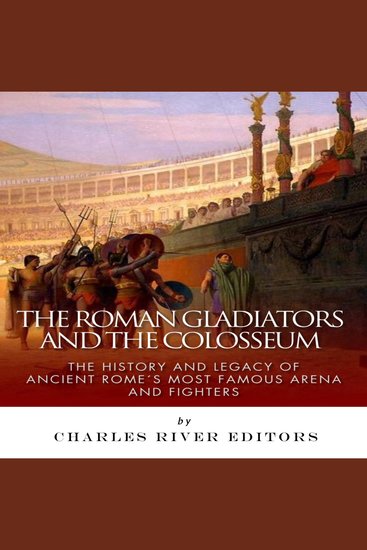
    When the Colosseum was built in the late 1st century A.D., the Romans, a people known for their architectural acumen, managed to amaze themselves. Martial, a Roman poet writing during the inauguration of the Colosseum, clearly believed the Colosseum was so grand a monument that it was even greater than the other Wonders of the Ancient World, which had been written about and visited endlessly by the Romans and Greeks in antiquity. Indeed, although the Wonders were wondrous to behold, the Colosseum was a spectacular achievement in architecture, something new and innovative, and therefore an amazing “Wonder” in its own way. 
    Of course, the main events in the Colosseum were gladiator fights. Gladiators are somewhat synonymous with ancient Rome, and even thousands of years after they performed on the sands, when people are asked about Roman culture, many think about and refer to the bloody spectacles of men fighting to the death in the arena. Gladiatorial combat is often regarded as barbaric, and most find it very difficult to comprehend how people could have enjoyed watching something so violent, but nevertheless, the spectacle still intrigues and fascinates people today, whether in movies like Gladiator or television shows about Spartacus. 
    Each match usually pitted one type of gladiator against a different type of gladiator, with each having their own kind of armor, weaponry and fighting style. For example, the retiarius was a gladiator that used a net, dagger and trident as his offensive weapons, while only wearing a protective guard over his left arm for protection. The retiarius would typically fight against the secutor, a gladiator armed with a sword, large shield, helmet and protective covering on his right arm and left leg. Therefore, a retiarius sacrificed armor for quickness in battle, while the secutor did the opposite.
    Zum Buch
  • A Truce That Is Not Peace - cover

    A Truce That Is Not Peace

    Miriam Toews

    • 0
    • 0
    • 0
    "Essential reading. A companion for turbulent times."—Laura van den Berg 
      
    Internationally bestselling author Miriam Toews' memoir of the will to write—a work of disobedient memory, humor, and exquisite craft set against a content-hungry, prose-stuffed society. 
      
    “Why do you write?” the organizer of a literary event in Mexico City asks Miriam Toews. Each attempted answer from Toews—all of them unsatisfactory to the organizer—surfaces new layers of grief, guilt, and futility connected to her sister's suicide. She has been keeping up, she realizes, a decades-old internal correspondence, filling a silence she barely understands. And we, her readers, come to see that the question is as impossible to answer as deciding whether to live life as a comedy or a tragedy. 
      
    Marking the first time Toews has written her own life in nonfiction, A Truce That Is Not Peace explores the uneasy pact a writer makes with memory. Wildly inventive yet masterfully controlled; slyly casual yet momentous; wrenching and joyful; hilarious and humane—this is Miriam Toews at her dazzling best, remaking her world and inventing an astonishing new literary form to contain it.
    Zum Buch
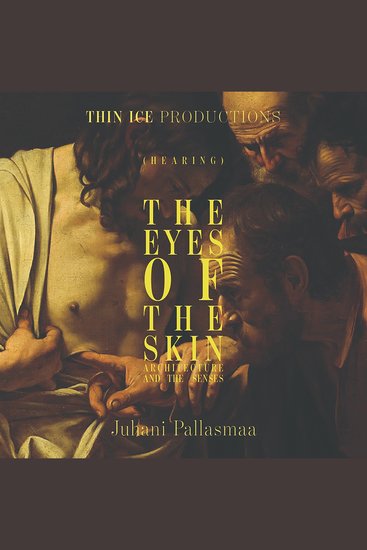
  • The Eyes of the Skin - Architecture and the Senses - cover

    The Eyes of the Skin -...

    Juhani Pallasmaa

    • 0
    • 0
    • 0
    Explore the relationship between architecture and the sensory experience with the fourth edition of this groundbreaking work. 
     
    First published in 1996, The Eyes of the Skin is a classic of architectural theory. It asks the far-reaching question why, when there are five senses, is one single sense―sight―so predominant in architectural culture and design? With the ascendancy of the digital and the all-pervasive use of the image electronically, the subject is all the more pressing and topical since the first edition’s publication. Juhani Pallasmaa argues that the suppression of the other four sensory realms has led to the overall impoverishment of our built environment, often diminishing the emphasis on the spatial experience of a building and architecture’s ability to inspire, engage and be wholly life enhancing. 
     
    For a student reading this text for the first time, The Eyes of the Skin is a revelation. It provides a fresh, compelling insight into architectural culture which continues to inspire more than a quarter-century after its initial publication. 
     
    The fourth edition of The Eyes of the Skin also features:The author’s latest views on the emphasis of place, unfocused perception and existential experienceUpdates and clarifications throughout, to reinforce how our sense of self in the world remains our most important sense with the greatest architectural impactAn updated Foreword that touches on the current understanding of the seminal importance of the existential sense 
     
    The Eyes of the Skin is a must-read for all architecture students, who will find its insights transformative. 
     
    This augmented spoken-word version was originally developed for neurodivergent audiences who may be challenged by the written word. However, as the project developed, it became clear that audiences such as those for whom English is a second language, those with visual challenges and others for whom the spoken word is preferred to the written word would also appreciate such a translation. 
     
    This audio version is narrated by significant architects and creative practitioners and those narrations are augmented by an evocative soundscape designed to amplify particular elements of the narrative through reimagining the Sami people’s tradition of ‘yoiking’, simultaneously providing a cultural reference to the author’s biography. 
     
    (Hearing) The Eyes of the Skin shifts the paradigm of architectural education and communication, acknowledging that we need diverse means of communication as we enter into what might be termed ‘a new age of orality’. 
     
    (Hearing) The Eyes of the Skin is now a must-listen for all architecture students, who will find its insights transformative.
    Zum Buch
  • On Peace Of Mind - The Stoic's Guide To Knowing You're On The Right Path - cover

    On Peace Of Mind - The Stoic's...

    Lucius Anneus Seneca The...

    • 0
    • 0
    • 0
    Written as a letter of a friend who’s not sure he’s on the right path De Tranquillitate Animi is one of the most intimate and practical works of Stoic philosophy. Serenus confesses to a restless indecision, a “sickness of the soul” that keeps him vacillating between public duty and private retreat, ascetic simplicity and worldly engagement.  
    Seneca has just returned from exile in Corsica to become the as tutor and advisor to the young Emperor Nero, and the dialogue reflects the acute pressure of a philosopher navigating the snares of the imperial court. At this time, he was one of the wealthiest and most powerful men in Rome, a position that sat uneasily with his Stoic professions and brought frequent accusations of hypocrisy. His advice to seek a modest, purposeful life reads not as serene counsel from a sage but as the hard-won reasoning of a man genuinely wrestling with his own compromises. 
    Seneca’s answer draws on the core Stoic tenets of mastering desire, accepting mortality, and anchoring the mind in virtue to map out a path to lasting tranquility. He insists that peace is won not by escaping the noise of the world but by cultivating an inner citadel, a steadiness that neither luxury nor danger can shatter. Brimming with vivid examples, self-revelation, and the hard-won wisdom of a man who would ultimately be ordered to take his own life by a famously insane emperor, On Peace of Mind remains a timeless antidote to anxiety and a guide to living with clarity amid chaos. 
     
    Compact, direct, and full of memorable aphorisms, this remains one of antiquity's most honest and practical guides to the art of living with oneself.
    Zum Buch
  • The Prince - cover

    The Prince

    Niccolò Machiavelli

    • 0
    • 0
    • 0
    Delve into the timeless wisdom and political acumen of Niccolò Machiavelli’s "The Prince," masterfully narrated by Daniel Pagone. Written in the early 16th century, "The Prince" remains one of the most influential political treatises ever penned, offering keen insights into power, leadership, and statecraft that continue to resonate in modern times. 
    Machiavelli's pragmatic approach to governance, often summarized by the phrase "the ends justify the means," provides a candid examination of how rulers can maintain power and navigate the complexities of political life. From the importance of military prowess to the manipulation of public perception, "The Prince" offers a blueprint for leaders in any era. 
    Daniel Pagone's engaging narration brings Machiavelli's text to life, capturing the nuance and intensity of this seminal work. His voice guides listeners through the intricate ideas and historical examples that Machiavelli employs to illustrate his theories, making this audiobook an accessible and thought-provoking experience. 
    Perfect for students of political science, history enthusiasts, or anyone interested in the art of leadership, "The Prince" is an essential addition to any audiobook collection. Experience Machiavelli’s enduring legacy and understand why his work remains a cornerstone of political literature.
    Zum Buch