Junte-se a nós em uma viagem ao mundo dos livros!
Adicionar este livro à prateleira
Grey
Deixe um novo comentário Default profile 50px
Grey
Assine para ler o livro completo ou leia as primeiras páginas de graça!
All characters reduced
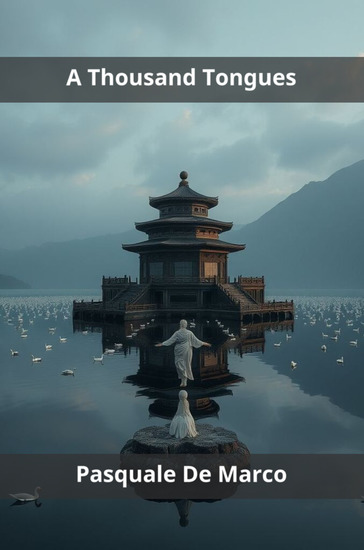
A Thousand Tongues - cover
LER

A Thousand Tongues

Pasquale De Marco

Editora: Publishdrive

  • 0
  • 0
  • 0

Sinopse

A Thousand Tongues is a comprehensive guide to the English language, written for anyone who wants to improve their communication skills or simply learn more about the fascinating world of words. From the basics of grammar and usage to the nuances of rhetoric and persuasion, this book covers everything you need to know to become a more confident and effective communicator.

In this book, you'll learn about:

* The building blocks of language, including words, phrases, sentences, and paragraphs
* The different ways words can be used to convey meaning, including denotation, connotation, euphemisms, and dysphemisms
* The art of communication, including how to write clearly and concisely, avoid jargon and technical terms, and use analogies and metaphors to make complex ideas more understandable
* The power of language in persuasion, including how to construct a convincing argument, use evidence to support your claims, and appeal to emotions
* The language of politics, law, science, technology, art, and everyday life

Whether you're a student, a professional, or simply someone who loves language, A Thousand Tongues is the perfect resource for expanding your knowledge and improving your communication skills.

With its engaging writing style and in-depth coverage of a wide range of topics, A Thousand Tongues is the ultimate guide to the English language for anyone who wants to master the art of communication.


If you like this book, write a review!
Disponível desde: 02/06/2025.
Comprimento de impressão: 152 páginas.

Outros livros que poderiam interessá-lo

  • Pragmatism - cover

    Pragmatism

    William James

    • 0
    • 0
    • 0
    In this book, James argues that the most important criterion for evaluating ideas and beliefs is their practical usefulness in real-life situations, rather than their abstract truth or correspondence to reality. James introduces the concept of "pragmatism," which he defines as a method of approaching philosophical questions by examining their practical consequences. He argues that truth is not an absolute and fixed entity, but rather a relative and changing one that is determined by the practical outcomes of our beliefs and actions. Read in English, unabridged.
    Ver livro
  • Language and Writing in Ancient Mesopotamia: The History and Legacy of the Languages and Scripts Used across the Region in Antiquity - cover

    Language and Writing in Ancient...

    Editors Charles River

    • 0
    • 0
    • 0
    Along with Egypt, the cultural and geographic region known as Mesopotamia was home to some of the world’s earliest civilizations and also the first known form of writing, cuneiform. Many different ethnic groups vied for power in ancient Mesopotamia over the course of antiquity, spanning about 3,000 years, and many of them spoke different languages. Despite these differences, the people in Mesopotamia shared many cultural attributes, including similar religious practices, a common art and architecture style, and a shared use of the cuneiform script.  
    	As this suggests, language and writing were different but also interconnected. The languages spoken by the peoples of Mesopotamia were as diverse as the many ethnic groups, but as those groups asserted their military, economic, and cultural power over the other groups, two languages became dominant in the region: Sumerian and Akkadian. These were the two languages that were primarily used by the people of Mesopotamia to record their myths, religious rituals, government records, and historiographical accounts.  
    	Indeed, the languages and written scripts of Mesopotamia were not just enduring over time in the region, but they also had wide geographic influence, much more than any language groups or scripts at the time. The Sumerian language continued to be learned by scribes throughout Mesopotamia centuries after it had become a “dead language,” and the Akkadian language eventually became the lingua franca of the Near East by the Late Bronze Age. Akkadian became the language of diplomacy and trade, while cuneiform was used to record agreements in Akkadian between the "Great Powers” of the era. Cuneiform was also adopted by people outside of Mesopotamia, such as the Hittites and Elamites, who modified the script to fit the lexicons and rules of grammar for their own languages.
    Ver livro
  • The Writing of Fiction - cover

    The Writing of Fiction

    Edith Wharton

    • 0
    • 0
    • 0
    “True originality consists not in a new manner, but in a new vision.” 
     
    Grab a pen and hone your writing skills under the guidance one of the greatest teachers of the craft. 
     
    Edith Wharton made her claim in the literary world as the first woman to win the Pulitzer Prize in Literature. She is famous for her works of fiction, which include The Age of Innocence, The House of Mirth, and Ethan Frome. Breaking from this tradition, The Writing of Fiction sets itself apart as a distinctive work of nonfiction, in which Wharton pulls back the curtain to reveal the theories behind a great story. 
     
    The Writing of Fiction delves into the timeless questions of all aspiring writers: 
     
    1. How do I find inspiration? 
    2. How do I turn thoughts and ideas into words? 
    3. How do I make my characters seem real? 
    4. How do I write something original when so much has already been written? 
    5. How do I tell a compelling story? 
    Wharton offers advice specific to writing short stories and writing novels. She pulls insights from other great writers along the way and concludes with an in-depth analysis of French novelist Marcel Proust. 
     
    The Writing of Fiction is a chance to mingle with renowned writers and find your own voice. Consider it Wharton’s personal invitation to discover your own potential and jump-start your creative process.
    Ver livro
  • LSAT Secrets for Instant Success - "Elevate your LSAT prep! Dive into our engaging audio lessons for guaranteed success!" - cover

    LSAT Secrets for Instant Success...

    Griffith Ormsbee

    • 0
    • 0
    • 0
    LSAT Secrets for Instant Success 
    ⭐⭐ Simplified Guide & Explanations Included ⭐⭐ 
    Are you aiming to advance your career and strengthen your knowledge by acing the LSAT? 
    In search of a thorough guide packed with everything you need to conquer the LSAT? 
    Your quest ends here! 
    This audiobook is your ultimate companion for enhancing your understanding, honing your skills, and engaging in practical exercises. With this resource, you're set for triumph. 
    Updated for the LSAT Exam Structure. 
    Key features of this comprehensive guide include: 
    - In-depth insights into LSAT Certification 
    - Clear explanations of the LSAT process 
    - Effective strategies for exam preparation and problem-solving 
    Our guide stands out with its extensive coverage, which is vital for your exam success. Concepts are explored in depth, not just brushed over. 
    Please note that this guide is an independent resource and is not affiliated with any official LSAT organization. 
    Crafted with a clear layout and accessible language, our LSAT Exam Guide ensures seamless transitions between topics. Say goodbye to complicated jargon and embrace straightforward, precise, and technically accurate content. 
    So, why wait? Click the BUY NOW button, secure your guide, and embark on your journey towards LSAT success! 
    Transform your LSAT preparation with this essential guide today!
    Ver livro
  • How to Make Money - An Ancient Guide to Wealth Management (series: Ancient Wisdom for Modern Readers) - cover

    How to Make Money - An Ancient...

    PLINY

    • 0
    • 0
    • 0
    Ancient Romans liked money. But how did they make a living and sometimes even become rich? The Roman economy was dominated by agriculture, but it was surprisingly modern in many ways: the Romans had companies with CEOs, shareholders, and detailed contracts regulated by meticulous laws; systems of banking and taxation; and a wide range of occupations, from merchant and doctor to architect and teacher. The Romans also enjoyed a relatively open society, where some could start from the bottom, work, invest, and grow rich. How to Make Money gathers a wide variety of ancient writings that show how Romans thought about, made, invested, spent, lost, and gave away money. 


    The Roman elite idealized farming and service to the state but treated many other occupations with suspicion or contempt, from money lending to wage labor. But whatever their attitudes, pecunia made the Roman world go round. In the Satyricon, Trimalchio brags about his wealth. Seneca accumulated a fortune—but taught that money can't buy happiness. Eumachia inherited a brick factory from her father, married well, and turned to philanthropy after she was widowed. How to Make Money also takes up some of the most troubling aspects of the Roman economy, slavery and prostitution, which the elite deemed unrespectable but often profited from.
    Ver livro
  • Medieval Architecture and Legacy - Building the Medieval World (3 in 1) - cover

    Medieval Architecture and Legacy...

    Harris Ropes

    • 0
    • 0
    • 0
    These three works highlight how architecture and intellectual ambition shaped the heart of the Middle Ages and left a legacy that endures to this day. 
    Begin with The Gothic Cathedral, a stunning symbol of spiritual devotion and engineering genius. Soaring spires, flying buttresses, and luminous stained glass windows combined to create sacred spaces that lifted hearts and minds toward heaven. These architectural marvels not only defined the skyline of medieval Europe but also reflected the era’s complex religious and social structures. 
    Next, delve into The Carolingian Renaissance, a revival of learning, literacy, and classical influence under Charlemagne's rule. This movement sparked architectural innovation, preserved ancient knowledge, and laid the foundations for a more cohesive European identity during a time of fragmentation and uncertainty. 
    Conclude with The Italian City-States, hubs of commerce, culture, and politics. Their wealth and rivalry fueled a vibrant civic life and groundbreaking urban planning that blended practicality with beauty. From Florence to Venice, these city-states bridged the medieval and Renaissance worlds, forever changing the course of European history. 
    Together, these works offer a window into how medieval people built not only physical structures—but also enduring cultural legacies.
    Ver livro