Rejoignez-nous pour un voyage dans le monde des livres!
Ajouter ce livre à l'électronique
Grey
Ecrivez un nouveau commentaire Default profile 50px
Grey
Abonnez-vous pour lire le livre complet ou lisez les premières pages gratuitement!
All characters reduced
A Philosopher's Journey - cover

A Philosopher's Journey

Pasquale De Marco

Maison d'édition: Publishdrive

  • 0
  • 0
  • 0

Synopsis

Plato, one of the most influential philosophers of all time, invites you on a journey to explore the world of ideas in this captivating book. Through his writings, Plato challenges us to question the nature of reality, knowledge, truth, ethics, politics, and art.

Plato believed that there is a realm of perfect Forms or Ideas that exist independently of the material world. He argued that the Forms are the true reality and that the material world is a mere shadow or imperfect copy of the Forms. This theory of Forms had a profound impact on Western philosophy and continues to be debated and discussed today.

Another central theme in Plato's philosophy is the immortality of the soul. He believed that the soul is a rational, immaterial substance that is distinct from the body. He argued that the soul survives the death of the body and that it continues to exist in an afterlife. Plato's theory of the immortality of the soul has also had a profound impact on Western thought and continues to be a source of debate and discussion today.

Plato's philosophy is not just a collection of abstract ideas; it is a way of life. He believed that philosophy should be used to improve the human condition and to create a more just and harmonious society. Plato's ideas have inspired countless thinkers and leaders throughout history, and they continue to be relevant and important today.

In this book, we will embark on a journey through Plato's philosophy, exploring his key ideas and their implications for our lives. We will examine his theory of Forms, his concept of the immortality of the soul, his ethical and political thought, and his views on art and beauty.

Whether you are a seasoned philosopher or a newcomer to Plato's thought, this book will provide you with a comprehensive and accessible introduction to one of the most important thinkers in Western history. Join us on this journey of exploration and discovery as we delve into the world of ideas with Plato.


If you like this book, write a review!
Disponible depuis: 02/06/2025.
Longueur d'impression: 163 pages.

D'autres livres qui pourraient vous intéresser

  • Beyond Ethnic Loneliness - The Pain of Marginalization and the Path to Belonging - cover

    Beyond Ethnic Loneliness - The...

    Prasanta Verma

    • 0
    • 0
    • 0
    Foreword INDIES Book of the Year Award Finalist
    "So what are you? Go back where you belong!"
    Majority white American culture has historically marginalized people of color, who at times feel invisible and alienated and at other times are traumatized by oppression and public discrimination. This reality leads to a particular kind of aloneness: ethnic and racial loneliness.
    An Indian American immigrant who grew up in white Southern culture, Prasanta Verma names and sheds light on the realities of ethnic loneliness. She unpacks the exhausting effects of cultural isolation, the dynamics of marginalization, and the weight of being other. In the midst of disconnection and erasure, she points to the longing to belong, the need to share our stories, and the hope of finding safe friendships and community. Our places of exile can become places where we find belonging—to ourselves, to others, and to God.
    Voir livre
  • The Antonine Wall - cover

    The Antonine Wall

    David J. Breeze

    • 0
    • 0
    • 0
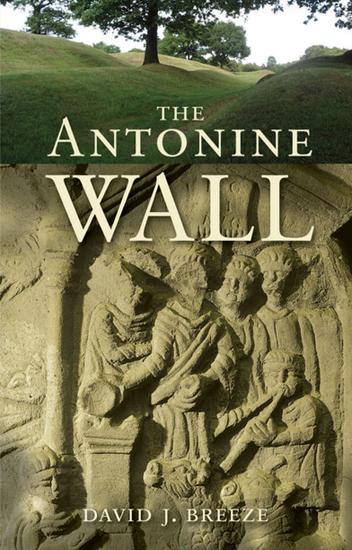
    As the most advanced frontier construction of its time, and as definitive evidence of the Romans' time in Scotland, the Antonine Wall is an invaluable and fascinating part of this country's varied and violent history. For a generation, from about AD 140 to 160, the Antonine Wall was the north-west frontier of the Roman Empire. Constructed by the Roman army, it ran from modern Bo'ness on the Forth to Old Kilpatrick on the Clyde and consisted of a turf rampart fronted by a wide and deep ditch.
    At regular intervals were forts connected by a road, while outside the fort gates clustered civil settlements. Antoninus Pius, whom the wall was named after, reigned longer than any other emperor with the exception of its founder Augustus. Yet relatively little is known about him.
    In this meticulously researched book, David Breeze examines this enigmatic life and the reasons for the construction and abandonment of his Wall.
    Voir livre
  • We Hold Our Breath - A Journey to Texas Between Storms - cover

    We Hold Our Breath - A Journey...

    Micah Fields

    • 0
    • 0
    • 0
    Developed as the commercial hub of the Texas cotton and sugarcane industries, Houston was designed for profit, not stability. Its first residents razed swamplands into submission to construct a maze of highways and suburbs, giving the city a sprawling, centerless energy as storms and floods rattled coastal Texas. 


    When Hurricane Harvey made landfall in 2017, Fields set off from his home in Iowa back to the battered city of his childhood to rescue his mother. Fields tracks the devastation of Hurricane Harvey, one storm in a long lineage that threatens the fourth largest city in America. 


    Fields depicts the history of Houston with reverence and lyrical certainty, investigating the conflicting facets of Texan identity that are steeped in racial subjugation, environmental collapse, and capitalist greed. He writes of the development of the modern city in the wake of the destruction of Galveston in 1900; of the oil booms and busts that shaped the city; of the unchecked lust for growth that makes Houston so expressive of the American dream. 


    We Hold Our Breath is a portrait of a city that exists despite it all, a city whose story has always been one of war waged relentlessly against water.
    Voir livre
  • History of Peru: A Captivating Guide to Peruvian History Starting from the Chavín Civilization and Other Ancient Andean Civilizations through the Inca Empire to the Present - cover

    History of Peru: A Captivating...

    Captivating History

    • 0
    • 0
    • 0
    Peru is a land of majesty and wonder where myth, legend, and history all come together. And this audiobook gives you a front-row seat! 
    The land of Peru is one that, for many, seems far away and distant. Even for those living relatively nearby geographically, Peru can seem just out of reach. After all, Peru is situated high in the Andes on the western coast of South America. Those who dare to live at this high of an elevation have learned to live on their own terms.  
    The Inca leader Manco II, for example, displayed his tenacity by heading a rebel kingdom in the depths of the Amazon even after much of the Inca Empire of his ancestors had been overrun by the Spanish conquistadors.  
    Manco’s struggle was later picked up by Túpac Amaru II, who waged war against the Spanish occupation. Túpac Amaru II would be captured and executed for daring to revolt against the Spanish Crown, but his legend would live on in the hearts and minds of Peruvians everywhere.  
    Fast forward to Peru’s independence from Spain, and one finds the heroic Simón Bolívar. He was pivotal in the independence of Peru, as well as a whole slew of Latin American countries, which he was put in charge of at various times during his dynamic career.  
    Great heroes like Simón Bolívar certainly stand out, but so do other intriguing and captivating characters from Peru’s past. From the great Inca ruler Atahualpa to Francisco Pizarro to modern-day Peruvian presidents like Alberto Fujimori and Dina Boluarte, Peru has quite a story to tell! 
    In this audiobook, you will learn about the following:The origins of Peruvian civilizationThe rise and fall of the Inca EmpireThe explorations of conquistadors like Francisco PizarroRevolutionaries like Túpac Amaru II and resistance to Spanish rulePeru’s struggle for independence 
    Scroll up and click the “add to cart” button to begin learning about Peru today!
    Voir livre
  • A History of Ireland in Ten Body Parts - cover

    A History of Ireland in Ten Body...

    Ian Miller

    • 0
    • 0
    • 0
    Skulls, height, hands, legs, sex organs, blood, brains, stomachs, ears and corpses – discover Irish history anew through the utterly unique prism of the human body.
    From the brutal beheading of the red-headed Clonycavan Man some 2,000 years ago to the ancient skulls – believed to be those of giants – stolen from islands off Ireland's west coast, medical historian Dr Ian Miller brings readers on a delightfully gruesome journey through our rich heritage.
    Learn about the fears of excessive tea drinking that were once such a great cause for concern on this isle – scarcely believable! Meet the doctors who revolutionised Irish medicine in the 19th century – along with the deplorable bodysnatching that accompanied this progress.
    Fact and folklore intertwine seamlessly throughout, providing the reader with an endlessly fascinating account of matters historical and mythological.
    Voir livre
  • Aztec Myths and Legends - Gods Rituals and the Cosmic Worldview - cover

    Aztec Myths and Legends - Gods...

    Odessa Nightshade

    • 0
    • 0
    • 0
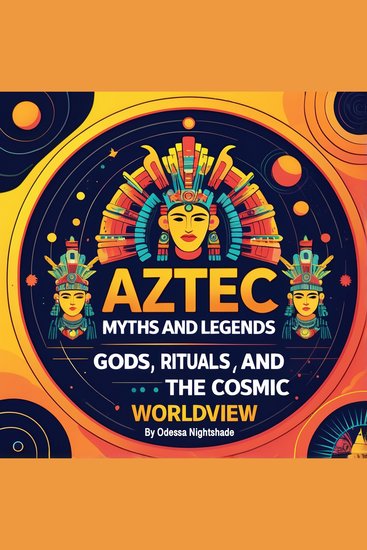
    The myths and legends of the Aztecs offer a glimpse into a world both vibrant and complex, where gods walked among mortals, and cosmic forces shaped the destiny of an empire. Rooted in the beliefs of the Nahua peoples of central Mexico, Aztec mythology was more than just a collection of stories—it was a sacred system that explained the origins of the universe, the role of humanity, and the ever-present struggle between order and chaos. These myths provided meaning to daily life, justified political and military expansion, and reinforced the religious practices that were central to Aztec society.  
    The origins of Aztec mythology are intertwined with the migrations and conquests that shaped their civilization. The Mexica, the people who would later establish the powerful city of Tenochtitlan, believed they were divinely chosen. According to their legends, they embarked on a long journey from a mythical homeland called Aztlán under the guidance of their patron god, Huitzilopochtli. Their eventual settlement on an island in Lake Texcoco fulfilled a prophecy that marked the beginning of their great empire. By weaving their own history into the fabric of myth, the Aztecs established their right to rule and their connection to the gods.  
    In Aztec society, mythology was inseparable from religion, politics, and even warfare. The gods required constant nourishment through human sacrifice, a practice that was not seen as cruel but as essential for maintaining cosmic balance. Warriors who died in battle were honored as they were believed to ascend to the sun’s domain, while sacrificial victims were thought to sustain the gods with their blood. Mythology also shaped the Aztec worldview through their intricate calendar system, which guided ceremonies, agriculture, and daily life. Time was cyclical, and each era was destined to end and be reborn—a belief that influenced their response to the arrival of the Spanish. 
    Voir livre