Begleiten Sie uns auf eine literarische Weltreise!
Buch zum Bücherregal hinzufügen
Grey
Einen neuen Kommentar schreiben Default profile 50px
Grey
Jetzt das ganze Buch im Abo oder die ersten Seiten gratis lesen!
All characters reduced
The Nürnberg Stove - A Tale of Love Sacrifice and Art in 19th Century Nuremberg - cover

The Nürnberg Stove - A Tale of Love Sacrifice and Art in 19th Century Nuremberg

Ouida

Verlag: Good Press

  • 0
  • 0
  • 0

Beschreibung

In 'The N√ºrnberg Stove,' Ouida crafts a rich tapestry of characters and emotions set against the backdrop of a picturesque German setting. Written in her signature style, the novel interweaves poetic prose with biting social commentary, reflecting the complexities of human relationships and the transformative power of art. The narrative pivots around an intricately designed stove, serving as a metaphor for both artistic creation and the impassioned lives of those who surround it, illuminating the cultural milieu of 19th-century Europe and its fascination with craftsmanship and beauty. Ouida, renowned for her adventurous spirit and diverse influences, was an English novelist whose works often challenged gender norms and explored the intricacies of relationships. Her experiences traveling across Europe, coupled with her profound appreciation for the arts, undoubtedly shaped her portrayal of the young, aspiring artists and the socio-political dynamics within the story. This background infuses 'The N√ºrnberg Stove' with a sense of authenticity and depth, reflecting both the author's personal beliefs and the zeitgeist of her time. Readers seeking a compelling narrative that intertwines artistic aspiration with poignant social themes will find 'The N√ºrnberg Stove' an enlightening and enriching journey. Ouida'Äôs masterful storytelling and vivid characterizations invite reflection on the nature of creativity and human connection, making this novel a highly recommended addition to any literary collection.
Verfügbar seit: 22.08.2023.
Drucklänge: 48 Seiten.

Weitere Bücher, die Sie mögen werden

  • Treasure - cover

    Treasure

    James E Reading

    • 0
    • 0
    • 0
    This book is the beginning of my story. If you are reading this, you are either my son or grandson. I hope doing good will be your mission, as it was mine. I lived an entire life with family, true friends, and adventures beyond anything I imagined. I fought in two wars, worked two primary careers, and created wealth to be used to do good. The wealth you will learn about and experience as you turn evil to good. Evil comes from anywhere, anytime. It never sleeps, rests, or needs time off. Many shapes, sizes, personalities, and shades of beauty carry evil.  
    Evil roams through countries, territories, states, counties, cities, large and small towns through people wanting chaos, creating fear and destruction. Countries fight battles to win treasures, land, people, ideas, resources, and freedom or cause despair. Evil disguises itself as fighting for good as it tears good apart. If you stand on the sidelines of life and watch evil overwhelm others, are you assisting the spread of evil? What can I do? I have fought evil most of my life from the shadows. Why is it so hard sometimes to have a life? I have combated evil by attempting to help all I encounter to obtain and maintain what they truly desire in life. Evil manifests by blocking what people need, want, and desire or providing paths leading to destruction, pain, death, or the opposite of what you should do. My philosophy is to unblock seemingly impossible pathways and free people to obtain their destiny by providing help to stay on the paths they were born to follow. Freedom started once I understood how to combat evil with good. While alive, this book is only for you. Your designated heir may read this book, and I hope you will write a book or two. There are secrets in this and a few other books, and I trust you to read them and keep their secrets undisclosed and safe. Enjoy the hope in others and the future. Jedediah Justin Davis, Sr.
    Zum Buch
  • The Apartment - A Novel - cover

    The Apartment - A Novel

    Ana Menéndez

    • 0
    • 0
    • 0
    From the critically acclaimed author of In Cuba I Was a German Shepherd comes a new novel about the search for freedom and the power of community that spans decades of residents in one Florida apartment 


    The Helena is an art deco apartment building that has witnessed the changing face of South Miami Beach for seventy years, observing the lives housed within. Among those who have called apartment 2B home are a Cuban concert pianist who performs in a nursing home; the widow of an intelligence officer raising her young daughter alone; a man waiting on a green card marriage to run its course so that he can divorce his wife and marry his lover, all of whom live together; a Tajik building manager with a secret identity; and a troubled young refugee named Lenin. Each tenant imbues 2B with energy that will either heal or overwhelm its latest resident, Lana, a mysterious woman struggling with her own past. 


    Examining exile, homesickness, and displacement, The Apartment asks what—in our violent and lonely century—do we owe one another? If alone we are powerless before sorrow and isolation, it is through community and the sharing of our stories that we may survive and persevere.
    Zum Buch
  • Sleeping in the Sun - A Novel - cover

    Sleeping in the Sun - A Novel

    Joanne Howard

    • 0
    • 0
    • 0
    In the last years of the British Raj, an American missionary family stays on in Midnapore, India. Though the Hintons enjoy white privileges, they have never been accepted by British society and instead run a boarding house on the outskirts of town where wayward native Indians come to find relief.Young Gene Hinton can't get out from under the thumb of his three older brothers, and the only person he can really relate to is Arthur, his family's Indian servant. But when Uncle Ellis, a high-ranking British judge, suddenly arrives and announces he'll be staying indefinitely in their humble house, far from his prestigious post in Himalayan foothills, life as Gene knows it is interrupted. While his brothers are excited at the judge's arrival, he is skeptical as to why this important man is hiding out with them in the backwaters of Bengal.Also skeptical is Arthur. Then an Indian woman appears on their doorstep—and, after growing close to her, he learns the sinister truth about the judge. Torn between a family that has provided him shelter, work, and purpose his whole life and the escalating outrage of his countrymen, Arthur must decide where his loyalties lie—and the Hintons must decide if they can still call India home.
    Zum Buch
  • Wuthering Heights - cover

    Wuthering Heights

    Emily Brontë

    • 0
    • 0
    • 0
    "Wuthering Heights" by Emily Brontë is a novel written in the early 19th century. The story focuses on the intense and turbulent relationships among the residents of Wuthering Heights and Thrushcross Grange, particularly highlighting the enigmatic figure of Heathcliff and his connection to Catherine Earnshaw. It explores themes of love, revenge, and the haunting consequences of past actions, all set against the backdrop of the desolate Yorkshire moors. 
    At the beginning of "Wuthering Heights," we meet Mr. Lockwood, who has recently rented a property at Thrushcross Grange. He decides to visit his reclusive landlord, Mr. Heathcliff, at Wuthering Heights. Lockwood's encounter with Heathcliff is filled with unease, revealing a hostile atmosphere marked by mistrust and discontent. The narrative then hints at Heathcliff’s complicated past as an orphan taken in by the Earnshaw family, setting the stage for an exploration of social hierarchies and emotional scars, which form the crux of the novel. 
    As Lockwood navigates his growing curiosity about these charged family dynamics, he inadvertently becomes entangled in the brooding past that shapes the present lives of the characters, particularly Heathcliff and Catherine.
    Zum Buch
  • The Existence of Pity - cover

    The Existence of Pity

    Jeannie Zokan

    • 0
    • 0
    • 0
    Growing up in a lush valley in the Andes mountains, sixteen-year-old Josie Wales is mostly isolated from the turbulence brewing in 1976 Colombia. As the daughter of missionaries, Josie feels torn between their beliefs and the need to choose for herself. She soon begins to hide things from her parents, like her new boyfriend and her explorations into different religions.Josie eventually discovers her parents’ secrets are far more insidious. When she attempts to unravel the web of lies surrounding her family, each thread stretches to its breaking point. Josie tries to save her family, but what happens if they don’t want to be saved?The Existence of Pity is a story of flawed characters told with heart and depth against the beautiful backdrop of Colombia.
    Zum Buch
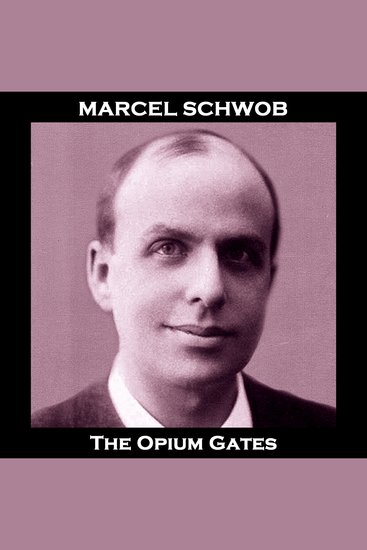
  • The Opium Gates - A tale from the French symbolist writer known mainly to be the primary influence on Jorge Luis Borges - cover

    The Opium Gates - A tale from...

    Marcel Schwob

    • 0
    • 0
    • 0
    Mayer André Marcel Schwob was born in Chaville, Hauts-de-Seine, France on 23rd August 1867 into a cultivated Jewish family.  
     
    As a child he devoured the works of Poe and Stevenson in French and then again in English.  His attachment to the bizarre and dark was already forming. 
     
    His education at the Lycée of Nantes earned him the 1st Prize for Excellence.  In 1881, he was in Paris with his maternal uncle to study at the Lycée Louis-le-Grand.  Schwob quickly developed his multilingual abilities and then studied philology and Sanscrit at the École pratique des hautes études before completing his military service in Vannes with the artillery. 
     
    After completing a Bachelor of Arts in 1888 he became a professional journalist and worked for the Phare de la Loire, the Événement and L'Écho de Paris. 
     
    The 1890’s marked his establishment as a brilliant writer with the publication of six short story collections.   
     
    He fell ill in 1896 with a chronic, incurable intestinal disorder.  He also suffered recurring bouts of influenza and pneumonia.  Intestinal surgery was given several times, at first with success but, by 1900, after two more surgeries, he was told that nothing more could be done for him.  Schwob now existed on kefir and fermented milk. 
     
    By the turn of the century, despite failing health, and often too ill to write, he embarked on several long travels, including to Vailima in the South Pacific where his literary hero Stevenson had died.  
     
    Schwob was regarded as a symbolist writer and a ‘precursor of Surrealism’.  He wrote over a hundred short stories, journalistic articles, essays, biographies, literary reviews and analysis, translations and plays.  
     
    Marcel Schwob died on 26th February 1905 of Pneumonia.  He was 37.
    Zum Buch