Begleiten Sie uns auf eine literarische Weltreise!
Buch zum Bücherregal hinzufügen
Grey
Einen neuen Kommentar schreiben Default profile 50px
Grey
Jetzt das ganze Buch im Abo oder die ersten Seiten gratis lesen!
All characters reduced
Blanche: The Maid of Lille - cover

Blanche: The Maid of Lille

Ossip Schubin

Übersetzer Sarah Holland Adams

Verlag: DigiCat

  • 0
  • 0
  • 0

Beschreibung

In "Blanche: The Maid of Lille," Ossip Schubin crafts a poignant narrative that explores themes of love, sacrifice, and social class against the backdrop of late 19th-century Europe. The novel unfolds through a blend of lyrical prose and vivid characterization, inviting readers to immerse themselves in the life of the titular character, Blanche, a devoted maid caught in the throes of an unrequited love for a nobleman. Schubin deftly integrates elements of realism with romantic undertones, providing not only a compelling personal story but also a critical reflection on the societal constraints of the era. Ossip Schubin, born in the Russian Empire and later a prominent figure in the Parisian literary scene, draws upon his own experiences of displacement and cultural dichotomy to inform his writing. His unique perspective as an immigrant informs his exploration of class distinctions and the quests for personal dignity and fulfillment. Schubin's works often grapple with issues of identity and belonging, positioning him as a significant voice in the discourse surrounding early modernity. Highly recommended for those interested in social commentary through a historical lens, "Blanche: The Maid of Lille" is not only a captivating tale but also an insightful examination of the human condition. Readers will find themselves drawn into its rich narrative tapestry, making it a worthwhile addition to the libraries of those passionate about literature that challenges societal norms.
Verfügbar seit: 16.09.2022.
Drucklänge: 23 Seiten.


Weitere Bücher, die Sie mögen werden

  • The Gold Seekers - cover

    The Gold Seekers

    Vivian Stuart

    • 0
    • 0
    • 0
    The thirteenth book in the dramatic and intriguing story about the colonisation of Australia: a country made of blood, passion, and dreams.
     
    Against overwhelming odds they fought to tame a savage land, now they must fight to keep it.
    During the 1850s on a promise of fertile soil, the wilderness of Australia had been tamed by proud men and passionate women like the Broomes or Tempests. This first line of pioneers had worked the land for the betterment of the colony. But when gold was discovered in the rugged hills and desolate outback, a different type of pioneers made their way into the wilderness: The Gold seekers.
    Zum Buch
  • Yesterday's Spy - cover

    Yesterday's Spy

    Len Deighton

    • 0
    • 0
    • 0
    "Deighton at his best" —Evening Standard 


    Steve Champion—flamboyant businessman, former leader of an anti-Nazi network in the Second World War—is a man surrounded by mysteries. There are rumors he is still in the spying business. And suspicions that his fortune may be built on something nefarious; something he'd rather stayed secret. The Department are nervous, so Champion's oldest wartime ally is sent to the South of France to investigate. It's time to reopen the file on yesterday's spy, whatever the consequences. 


    "Tough, well-written and extremely readable" —Daily Mail
    Zum Buch
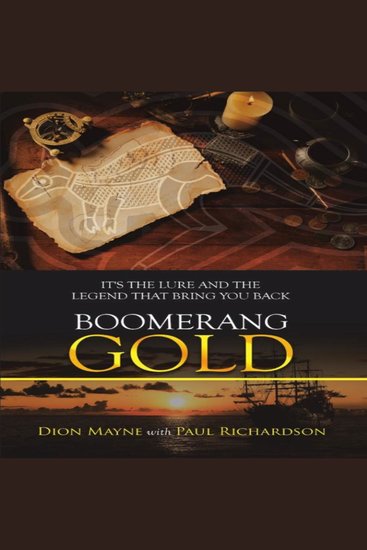
  • Boomerang Gold - It's The Lure And The Legend That Bring You Back - cover

    Boomerang Gold - It's The Lure...

    Dion Mayne, Paul Richardson

    • 0
    • 0
    • 0
    Captain Calder Velden, a ruthless seafaring servant of the Secret Dutch Allegiance, had been summoned to serve his state in territories unknown. 
    1586AD his beloved homelands were under Spanish Rule, there seemed to be no answers on how the resistance could end the tyranny. Backed by incredible wealth, King Phillip II of Spain had established a World Power hell bent on conquering all known territories. 
    The Dutch Allegiance knew the Spanish had discovered an untapped source of wealth in the territories of Nueva Guinea. It was time to send their cut-snake captain to disrupt and cripple the southern supply of gold to the Spanish Treasury. 
    Calder was in command of the new stealth ship, ‘The Kharon’, specifically made for the mission. Christened after the mythical ferry boat of the underworld, she was to pursue, raid and pillage enemy merchant ships along the trade route south of Bantam and leave no survivors! 
    However, the unpredictable cloak and dagger mission itself could not have foreseen the Captain and Crew being entangled in mass murder, hoards of treasure, discovery of new lands and revenge that would span the best part of twenty years. 
    Everyone knows you must be responsible for your actions; but when you mix gold fever, pride, revenge and the open seas then perhaps you may be forgiven for forgetting your responsibilities. 
    In the case of The Kharon and her crew’s greed, wealth may just play second fiddle to survival. 
    A tale entwined around historical events!
    Zum Buch
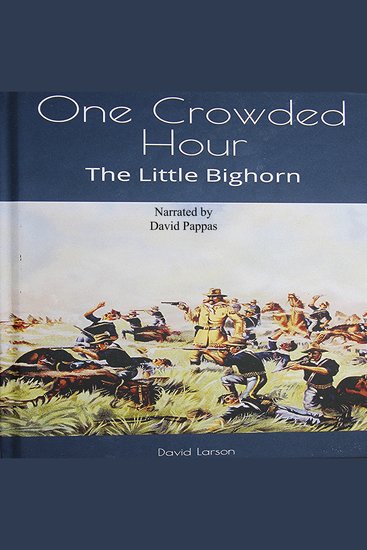
  • One Crowded Hour - the Little Bighorn - cover

    One Crowded Hour - the Little...

    David Larson

    • 0
    • 0
    • 0
    This work has all the gripping excitement of the American west in postbellum America and the operations of the seventh Cavalry in and around the Little Bighorn valley. Heart stopping cavalry charges, desperate solders surrounded and cut off from the rest of the command, forced to fight their way out, the Indigenous struggle to freely live a life they had lived for thousands of years, and the gut-wrenching sadness the futility of war produces  
    	Except for Will and Jake, all the characters, times, dates, actions, and movements in this book are historically accurate and written in the same manner as Michael Shaara’s. Killer Angels, or Jeff Shaara’s Gone for Soldiers.
    Zum Buch
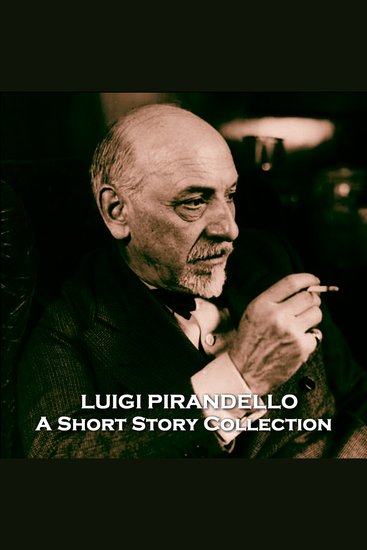
  • Luigi Pirandello - A Short Story Collection - Nobel prize winning Italian master author - cover

    Luigi Pirandello - A Short Story...

    Luigi Pirandello

    • 0
    • 0
    • 0
    Luigi Pirandello was born on 28th June 1867 into an upper-class family in Agrigento, in Sicily. 
     
    In 1880, the family moved to Palermo and there he completed high school and thence to the University of Palermo, at that time the centre of what became the Fasci Siciliani movement.  Although not an active member he had close friendships with many of its leading ideologists.  Pirandello then completed his university studies in Rome and Bonn, receiving his Doctorate in March, 1891. 
     
    His time in Rome had provided him with the opportunity to visit its many theatres. "Oh the dramatic theatre! I will conquer it. I cannot enter into one without experiencing a strange sensation, an excitement of the blood through all my veins..." 
     
    1894 brought marriage, at his father's suggestion, to a shy, withdrawn girl: Mara Antonietta Portulano.  The marriage encouraged his studies and writings and, the following year, the first part of the ‘Dialoghi tra Il Gran Me e Il Piccolo Me’ was published. 
     
    In 1903 the flooding of the sulphur mines in which his father had invested the family capital and Antonietta's dowry, brought financial catastrophe.  She, on hearing the news, was mentally broken.  Pirandello would now work a full day and then watch over his troubled wife at night. Somehow he found time to write ‘The Late Mattia Pascal’.  It was an immediate and resounding success.  
     
    In 1909, Pirandello began his collaboration with the prestigious Corriere della Sera.  Whilst his fame as a writer was increasing his private life was poisoned by the suspicion and jealousy of Antonietta who now turned physically violent.  His plays were now being regularly performed but, within a decade, Antonietta had to be placed into an asylum from which she never left. 
     
    In 1921, in Rome his play, ‘Six Characters in Search of an Author’ debuted.  It was a failure.  However, when presented in Milan it was a great success, as it also was in London and New York. 
     
    In 1925, Pirandello, with Mussolini’s help, assumed the artistic direction and ownership of the Teatro d'Arte di Roma.  He now described himself both as ‘a Fascist because I am Italian’ and ‘I'm apolitical, I'm only a man in the world...’  However his later conflicts with fascist leaders meant he fell under close surveillance by the OVRA, the secret police. 
     
    In 1934 he won the Nobel Prize but asked that the medal be melted down for Italy’s occupation of Abyssinia Campaign to which he had given his support.  
     
    Pirandello's canon stretches across novels, short stories, poetry, essays and some 40 plays.  His tragic farces are often cited as forerunners of the Theatre of the Absurd. 
     
    Luigi Pirandello died on the 10th December 1936 at his home at Via Bosio, Rome, Italy.  He was 69.
    Zum Buch
  • The Short Stories of Kenneth Grahame - Known for Wind in the Willows but wrote impressive stories for adults too as you can hear in this collection - cover

    The Short Stories of Kenneth...

    Kenneth Grahame

    • 0
    • 0
    • 0
    Kenneth Grahame was born on 8th March 1859 in Edinburgh. 
     
    At age 5 his mother succumbed to puerperal fever.  His father, who had a drinking problem, now sent his 4 children to live with their grandmother at her large house in Cookham, Berkshire. Here the children lived in large open grounds next to the river.  These early experiences would in later years, be retold in his writing through a myriad of characters. 
     
    Grahame loved being a pupil at St Edward's School, Oxford and wanted to enroll at the university there but his guardian demurred on account of the cost. 
     
    Instead, a banking career was chosen for him, starting in 1879 at the Bank of England, where he rose steadily to the rank of its Secretary until retiring, with a pension, in 1908 due to ill health. 
     
    Alongside his commercial career Grahame had written and published various stories and essays in several periodicals. Some were anthologized as ‘Pagan Papers’ in 1893, and two years later ‘The Golden Age’ and later still ‘Dream Days’ and its masterpiece ‘The Reluctant Dragon’ became part of many home libraries.  His ability to view life through the lens of a young and curious child was superb, enabling the reader to easily identify with the character.   
     
    Grahame married Elspeth Thomson in 1899 and they had one child; Alastair, born semi-blind and plagued by health problems.  In a heart-rending tragedy he would later take his own life whilst attending Oxford University in 1920.   
     
    In 1908 Grahame reworked many of the bedtime stories he had fashioned for his son into the enduring favourite; ‘The Wind in the Willows’, describing the heart-warming adventures of Mr Toad and his friends.   
     
    Kenneth Grahame died in Pangbourne, Berkshire, on 6th July 1932. 
    01 - Kenneth Grahame - A Short Story Collection - An Introduction 
    02 - A Saga of the Seas by Kenneth Grahame 
    03 - Dies Irae by Kenneth Grahame 
    04 - The Magic Ring by Kenneth Grahame 
    05 - Mutabile Semper by Kenneth Grahame 
    06 - The Inquity of Oblivion by Kenneth Grahame
    Zum Buch