Rejoignez-nous pour un voyage dans le monde des livres!
Ajouter ce livre à l'électronique
Grey
Ecrivez un nouveau commentaire Default profile 50px
Grey
Abonnez-vous pour lire le livre complet ou lisez les premières pages gratuitement!
All characters reduced
The Early History of the Airplane - cover

The Early History of the Airplane

Orville Wright, Wilbur Wright

Maison d'édition: DigiCat

  • 0
  • 0
  • 0

Synopsis

In 'The Early History of the Airplane,' readers are transported into the transformative era of aviation's dawn through a compelling anthology that seamlessly interweaves aeronautical innovation with literary craft. This collection offers a panoramic view of the early flights that defied earthly limitations and captivated imaginations across the globe. From detailed accounts of initial experiments to evocative narratives of daunting aerial feats, the anthology showcases a tapestry of writings that blend technical precision with aspirational prose. Among its standout pieces, readers will discover accounts that reflect the zeitgeist of an era eager to conquer the skies, highlighting the profound significance these writings hold in the context of scientific and literary endeavors of the early 20th century. Orville and Wilbur Wright, iconic figures in aviation history, present a curated tapestry of insights that capture the spirit of innovation characterizing the early 1900s. Through their pioneering perspective and meticulous documentation, they provide readers with a rare glimpse into the challenges and triumphs that marked the infancy of flight. This anthology, situated at the crossroads of history and progress, aligns with the technological and cultural shifts of the early 20th century, as its varied voices collectively enrich and expand the reader's appreciation for the era's groundbreaking achievements. A must-read for enthusiasts of history and innovation, 'The Early History of the Airplane' is an extraordinary anthology offering a rare confluence of perspectives from the vanguard of aviation. It invites readers to immerse themselves in a rich tapestry of ideas and aspirations that not only chart the evolution of flight but also celebrate the indomitable human spirit that dared to reach for the skies. Through this carefully curated volume, readers are afforded a unique educational opportunity to encounter diverse representations of a groundbreaking epoch, and the dynamic dialogue it nurtures between different facets of early aeronautical exploration.
Disponible depuis: 16/09/2022.
Longueur d'impression: 41 pages.
D'autres livres qui pourraient vous intéresser

  • After the Funeral - From their pens to your ears genius in every story - cover

    After the Funeral - From their...

    Mary Butts

    • 0
    • 0
    • 0
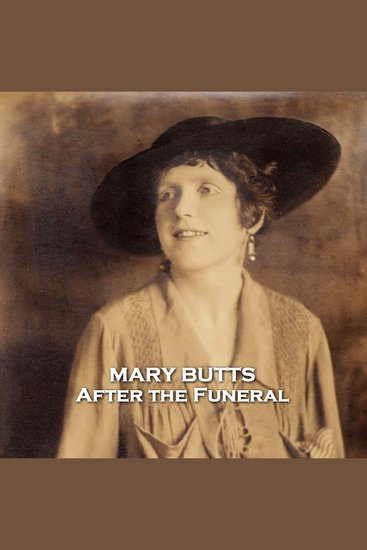
    Mary Frances Butts was born on 13th December 1890 in Poole, Dorset. 
    Her early years were spent at Salterns, an 18th-century house overlooking Poole Harbour.  Sadly in 1905 her father died, and she was sent for boarding at St Leonard's school for girls in St Andrews. 
    Her mother remarried and, from 1909, Mary studied at Westfield College in London, and here, first became aware of her bisexual feelings.  She was sent down for organising a trip to Epsom races and only completed her degree in 1914 when she graduated from the London School of Economics.  By then Mary had become an admirer of the occultist Aleister Crowley and she was given a co-authorship credit on his ‘Magick (Book 4)’. 
    In 1916, she began the diary which would now detail her future life and be a constant reference point for her observations and her absorbing experiences. 
    During World War I, she was doing social work for the London County Council in Hackney Wick, and involved in a lesbian relationship.  Life changed after meeting the modernist poet, John Rodker and they married in 1918. 
    In 1921 she spent 3 months at Aleister Crowley's Abbey of Thelema in Sicily; she found the practices dreadful and also acquired a drug habit.  Mary now spent time writing in Dorset, including her celebrated book of short stories ‘Speed the Plough’ which saw fully develop her unique Modernist prose style. 
    Europe now beckoned and several years were spent in Paris befriending many artists and writing further extraordinary stories.   
    She was continually sought after by literary magazines and also published several short story collections as books. Although a Modernist writer she worked in other genres but is essentially only known for her short stories.  Mary was deeply committed to nature conservation and wrote several pamphlets attacking the growing pollution of the countryside. 
    In 1927, she divorced and the following year her novel ‘Armed with Madness’ was published.  A further marriage followed in 1930 and time was spent attempting to settle in London and Newcastle before setting up home on the western tip of Cornwall.  By 1934 the marriage had failed. 
    Mary Butts died on 5th March 1937, at the West Cornwall Hospital, Penzance, after an operation for a perforated gastric ulcer. She was 46.
    Voir livre
  • Irma - The Education of a Mother's Son - cover

    Irma - The Education of a...

    Terry McDonell

    • 0
    • 0
    • 0
    A son’s lessons from his single mother—a twenty five year old widow who took control of her life, defied expectations and raised him into a manhood of his own—from the author of the acclaimed The Accidental Life. 
    As a child, Terry McDonell imagined epic stories about his father, a fighter pilot who died in World War II. But, as he discovers in this dazzling memoir, the real hero in his life was his mother, Irma, who moved with him to California hoping for a new life and raised him through difficult times. 
    Like most headstrong boys growing up in mid-century America, McDonell took his mother for granted, never giving her life much thought. He was bright, cocky, and determined to make his own way, separate from her and from his complicated roots. But as he matured, built a career, married, divorced, remarried, and raised his own sons, McDonell came to see that Irma had lived her life in a way that allowed him to discover what he wanted his own life to be. The person he was would be forever tied to Irma’s courage and wisdom and love. From his recollections—a series of colorful, deeply personal, sometimes funny, stunningly composed vignettes—an intriguing and poignant portrait emerges. 
    Irma is the story of a formidable woman who built the life she wanted as she raised her son to be the kind of man and father he had longed for but never knew.  
    Voir livre
  • Inventing BE - a memoir manifesto - cover

    Inventing BE - a memoir manifesto

    BE Alink

    • 0
    • 0
    • 0
    Fiercely courageous and exhilarating, Inventing BE depicts the life and time travel of Dutch designer, architect and Alinker walking bike founder, BE Alink. Growing up in the Netherlands, she had no language for what she felt about her body. How traditional society—including family members and teachers—viewed her did not align with how she identified from a very early age. In the stirring trenches of international humanitarian work across continents, BE discovered herself in places torn apart by volatile crises like Afghanistan, Kenya, Ethiopia, and Indonesia, positively affecting many others along the way.  
          BE has seen sights and peeked beneath oppressive systems most wouldn’t dare. In the process, she learned that to live a rich life, one had to confront the darkness of humanity to turn on the light of true freedom—in mind, body and spirit. Inventing BE is both memoir and manifesto dedicated to anyone who has ever had to conform or compromise their authentic self. You are never alone, and in the strangest, most far-flung places, you may be right at home.  
    VIDEO https://youtu.be/AcqJtQ-QELo?si=Io2ywyuIkc-Ow3F3
    Voir livre
  • Escaping Madness - Eyewitness Accounts from World War II - cover

    Escaping Madness - Eyewitness...

    Klaus G. Förg

    • 0
    • 0
    • 0
    This fascinating collection of personal narratives challenges the view that all Germans knew of the crimes perpetrated by the Third Reich and were complicit. The five accounts recall the lives of individuals born in the 1920s who resisted joining the SS, were horrified by atrocities, or otherwise remained true to their principals. Spanning their early life during the rise of the Nazi Party, through their adolescence in the war, to the early post-war years, they offer a compelling perspective on the diverse experiences and beliefs of Germans of the wartime generation.From Wehrmacht infantrymen to a Luftwaffe officer and a young woman on the home front, the accounts range from the relative comfort of German-occupied territories to the harrowing front lines against the Soviets. Standout stories include Heinz Polke's haunting description of the Warsaw Ghetto Rising, and three accounts of the often-overlooked aspect of being a prisoner of war in the USSR, providing valuable insights into the post-war German experience.Skillfully compiled by journalist Klaus Förg and with additional commentary by historian Roger Moorhouse, this is a powerful and worthy addition to World War II literature.
    Voir livre
  • A Fight with a Cannon - From their pens to your ears genius in every story - cover

    A Fight with a Cannon - From...

    Victor Hugo

    • 0
    • 0
    • 0
    Victor Marie Hugo was born on 26th February 1802 in Besançon, France.   
    There can be no doubt that Hugo is ranked as the greatest of French authors and poets. In addition to this he fought against social injustice throughout his life and from his frequent elections to the French Assembly. 
    Hugo published his first novel, Han d’Islande (1823), the year after his marriage and so began an immense canon of fiction and poetry not only for France but to World literature.  
    He was elected to the Académie Française in 1841 and the same year came a peerage and entrance to the Higher Chamber as a pair de France, where he spoke against the death penalty, social injustice and in favour of press freedom.  
    In the years leading up to the Revolution of 1848 Hugo began to lean towards Republicanism and greater freedoms.  With the formation of the Second Republic, he was again elected to the Assembly. 
    When Napoleon III seized power in 1851, and established an anti-parliamentary constitution, Hugo openly declared him a traitor to France. This, of course, meant exile where he remained until 1870.  In exile he published his greatest work ‘Les Misérables’, and further widely honoured collections of poetry. 
    Returning home he was again elected to the National Assembly and the Senate.  It was the time of the Franco-Prussian war and with Paris under siege and food ever more scarce, he wrote in his diary that he was now "eating the unknown". 
    Later he was instrumental in strengthening the rights of artists and copyright, steps which led to the international protections of the Berne Convention.  
    Victor Hugo died on 22nd May 1885, aged 83.
    Voir livre
  • Unwritten Novel An - From their pens to your ears genius in every story - cover

    Unwritten Novel An - From their...

    Virginia Woolf

    • 0
    • 0
    • 0
    Adeline Virginia Woolf was born on the 25th January 1882 in South Kensington in London. 
    Although lauded as a founder of modernist writing with such classics as ‘Orlando’, ‘Mrs Dalloway’ and ‘To the Lighthouse’ and, of course, many classic short stories, her background is filled with elements of tragedy that she somehow overcame to become such a revered writer.   Her mother died when she was 13, her half-sister Stella two years later and with it her first of several nervous breakdowns.  Appallingly it was later found that three of her half-brothers had sexually abused her so darkness must have seemed ever present.   
    She began writing professionally at age 20 but her father’s death two years later brought a complete mental collapse and she was briefly institutionalised.  Somehow she found within herself a literary career and with it great innovations in writing; she was a pioneer of “stream of consciousness”.    
    Her tight circle of friends were the founders of the Bloomsbury Group, a movement whose legacy still influences across the arts and society in many way to this day.   
    Whilst the dark periods continued to interrupt her emotional state her rate of work never ceased.  Until, on 28th March 1941, Woolf put on her overcoat, filled up its pockets with stones, and walked into the River Ouse, in Lewes, East Sussex and drowned herself.  Her body was not recovered until the 18th April.  She was 59. 
    She left behind a note which read in part “Dearest, I feel certain that I am going mad again.  I feel we can't go through another of those terrible times.  And I shan't recover this time.  I begin to hear voices, and I can't concentrate.  So I am doing what seems the best thing to do”.
    Voir livre