Join us on a literary world trip!
Add this book to bookshelf
Grey
Write a new comment Default profile 50px
Grey
Subscribe to read the full book or read the first pages for free!
All characters reduced
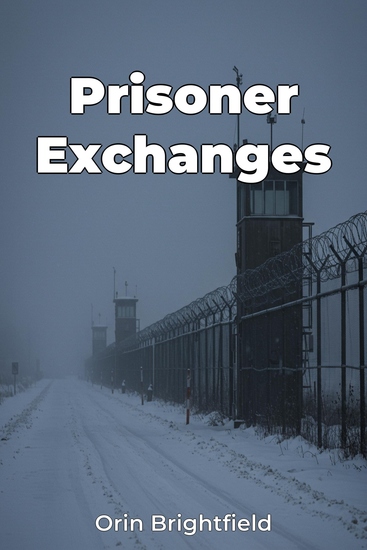
Prisoner Exchanges - cover

Prisoner Exchanges

Orin Brightfield

Translator A AI

Publisher: Publifye

  • 0
  • 0
  • 0

Summary

Prisoner Exchanges explores the intricate world of negotiated releases, delving into the history, political motivations, and human costs behind these complex transactions. It examines how prisoner swaps have been used as tools of statecraft and their impact on international relations. Did you know that prisoner exchanges can serve as confidence-building measures or, conversely, sources of renewed conflict? The book reveals how these exchanges reflect broader geopolitical dynamics, offering insights into the strategies shaping global events.

 
The book begins by introducing core concepts and defining different types of prisoner exchanges, then progresses into a historical overview with key case studies. From Cold War spy swaps to modern-day hostage negotiations, the book analyzes the political and diplomatic ramifications of these exchanges. It draws on archival documents, government reports, and personal accounts to offer a nuanced understanding.

 
Highlighting the role of non-state actors, the book argues that these negotiations are crucial indicators of the shifting dynamics of power and evolving norms in international relations. This book stands out for its comprehensive scope and rigorous analysis, focusing on the human dimension of prisoner exchanges. It aims to provide a balanced account of a sensitive topic, making it a valuable resource for students, academics, policymakers, and anyone interested in international relations, diplomatic history, and human rights.
Available since: 03/21/2025.
Print length: 70 pages.

Other books that might interest you

  • E-AGI Embodied Artificial General Intelligence - The Artificiology Journey - cover

    E-AGI Embodied Artificial...

    David Vivancos Cerezo

    • 0
    • 0
    • 0
    In this groundbreaking book, AI pioneer David Vivancos introduces Artificiology, a new field exploring how artificial intelligence will evolve toward consciousness. Through the innovative E-AGI Barometer framework, he maps our progress toward Embodied Artificial General Intelligence, examining the convergence of biological and machine intelligence and its profound implications for humanity's future. 
    The purchase of this print book grants a discount in the yearly subscription to the Artificiology.com E-AGI Barometer where you can also find complimentary David Vivancos books in PDF format, more details on the book itself. 
    Author website: https://www.vivancos.com
    Show book
  • German Literary History for Beginners an Exciting and Entertaining Journey Through German Literature From the Middle Ages to the Present Day - cover

    German Literary History for...

    Christian Möhlenkamp

    • 0
    • 0
    • 0
    This book is intended for readers who are looking for an introduction to the confusing diversity of German literature. The chronological order chosen is best suited for this purpose because, in contrast to topic- or genre-oriented ordering procedures, it shows a genesis and traces the genealogy of German literature. The fact that Goethe's novel Wilhelm Meisters Lehrjahre would most likely have looked completely different without Hans Jakob Christoffel von Grimmelshausen's Simplicissimus can be shown most easily and effectively in the context of a chronologically presented journey through time. And this is only one of many examples, especially in the field of poetry quite a few more could be found.
    
    "He who knows how to read holds the key to great deeds, to undreamed-of possibilities," Aldous Huxley once said. This book is intended to open up some of these possibilities for you.
    Show book
  • Burying the Dead in Ancient Egypt: The History of Egyptian Mummies Tombs and Other Burial Rituals - cover

    Burying the Dead in Ancient...

    Editors Charles River

    • 0
    • 0
    • 0
    Given the abundance of funerary artifacts that have been found within the sands of Egypt, it sometimes seems as though the Egyptians were more concerned with the matters of the afterlife than they were with matters of the life they experienced from day to day. This is underscored most prominently by the pyramids, which have captured the world’s imagination for centuries. The pyramids of Egypt are such recognizable symbols of antiquity that for millennia, people have made assumptions about what they are and why they exist, without full consideration of the various meanings these ancient symbolic structures have had over the centuries. Generations have viewed them as symbols of a lost past, which in turn is often portrayed as a world full of romance and mystery. This verbal meaning has become associated with the structures through the tourism industry, where intrigue obviously boosts ticket sales. In fact, the Egyptian pyramids are so old that they were also drawing tourists even in ancient times. In antiquity, the Great Pyramid of Giza was listed as one of Seven Ancient Wonders of the World, and it is the only one still surviving today. 
    The age and structural integrity of the pyramids also make them symbols of longevity and power, which is only fitting because those are two purposes the ancient pharaohs who commissioned these works intended them to serve. For the pharaohs, the construction of these large monuments presented an opportunity for them to showcase their influence and become something to be remembered by, both in the society they ruled and in the annals of history that would follow. Even as new dynasties came and went, and even as Egypt was subjected to foreign domination and rulers from across the world, the pyramids have continued to stand as a prominent testament to Egypt’s glorious past.
    Show book
  • Medieval Conspiracy Theories: The History of the Most Popular Conspiracy Theories about the Middle Ages - cover

    Medieval Conspiracy Theories:...

    Editors Charles River

    • 0
    • 0
    • 0
    Few eras are easier to let the imagination run wild than the Middle Ages, which have often been coined the Dark Ages based on a perceived lack of progress and information.[1] Indeed, we can say that it is not completely unfounded because we know less about that historical period compared to those that come after it. In addition, it is a period marked by a great number of deaths caused by plague epidemics, crusades, and inquisitorial persecutions. Often, researchers are not even sure how and why certain events happened, and these mysteries still occupy the attention of historians. 
    	This era was very harsh, difficult, and often gloomy. In that greyness, burdened by various fears, people were looking for something that would light up their lives and bring them a feeling of beauty and joy. People experienced all things and events around them more intensely than people do today. They often exaggerated the events that happened, giving them a mystical and divine character. For this reason, medieval sources are taken with a grain of salt and are first carefully examined before believing.  
    	At the same time, some historical mysteries about the era may never be solved, if only because the relevant excavated material has been lost or the archaeological site has been destroyed. In other cases, it is because new evidence is unlikely to emerge, or the surviving evidence is too vague to lead to a consensus. Of course, the lack of answers only makes these enigmas more intriguing. 	For example, the topic of witchcraft in Europe, once considered marginal and even frivolous, has become the subject of international debate among historians since the early 1970s. However, only a few of the many studies have paid attention to the sabbath - the nocturnal gathering of witches and sorceresses - even though the sabbath is clearly of crucial importance in the history of witchcraft and witch-hunting.
    Show book
  • John F Kennedy - His Life His Vision and His Assassination Explained - cover

    John F Kennedy - His Life His...

    Kelly Mass

    • 0
    • 0
    • 0
    JFK, or John Fitzgerald Kennedy, was an American political leader who functioned as the 35th President of the US from 1961 till his assassination to the conclusion of his 3rd year in office. Kennedy was president throughout the height of the Cold War, and the majority of his time in office was spent handling the Soviet Union and Cuba. Prior to his presidency, Kennedy acted as a Democrat in both homes of Congress, representing Massachusetts. 
    Much controversy exists about the war in Vietnam and other aspects of the Cold War that John F. Kennedy dealt with. Many conspiracy theories exist about this assassination, and all of this has become a big part of the American history and culture in the 20th century. Personally, I think it would be wise to study this part of history a little, with its significant impact on worldwide events, coalitions, cease-fires, wars, and more. 
    Read less
    Show book
  • Supportiveness - The Encouraging Presence - Being There for Others in Times of Need - cover

    Supportiveness - The Encouraging...

    Esther Jameson

    • 0
    • 0
    • 0
    Supportiveness is one of the most deeply human traits—a quiet yet powerful force that helps others feel seen, heard, and understood. It’s more than simply being nice or offering a few kind words. At its core, supportiveness is about being emotionally present in someone else’s world, especially when they’re navigating pain, uncertainty, or self-doubt. It means showing up with intention and empathy, even when you don’t have all the answers. In a world where distractions are endless and genuine connection can be rare, the ability to offer steady, meaningful support is a true gift. 
    To fully grasp what it means to be supportive, it’s important to understand its emotional depth. Supportiveness isn't about fixing problems for someone else. Instead, it's about standing beside them as they face what’s hard. It’s offering your presence—not your solutions. When someone is struggling, they often don’t need advice right away. They need to know they’re not alone. They need to feel safe in expressing themselves without fear of being judged or dismissed. That emotional safety is the foundation of support, and it starts with your willingness to be vulnerable too. 
    Trust is essential in any supportive relationship. Without trust, support can feel shallow or performative. But when trust is built through consistent actions—like showing up when it matters, keeping confidences, and listening without jumping to conclusions—your support becomes something the other person can lean on. It's this trust that allows others to open up, to speak their truth, and to feel a little less burdened by the weight they carry. Over time, your reliability becomes a source of strength, not just in moments of crisis but in everyday life.
    Show book