Rejoignez-nous pour un voyage dans le monde des livres!
Ajouter ce livre à l'électronique
Grey
Ecrivez un nouveau commentaire Default profile 50px
Grey
Abonnez-vous pour lire le livre complet ou lisez les premières pages gratuitement!
All characters reduced
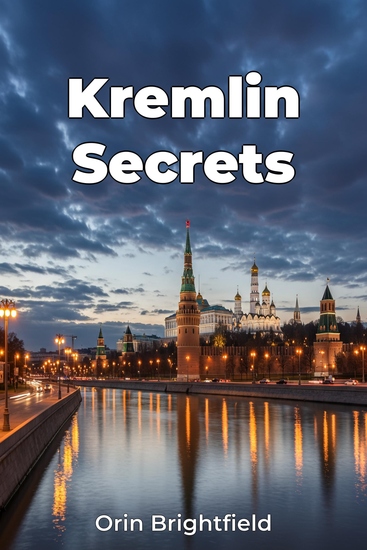
Kremlin Secrets - cover

Kremlin Secrets

Orin Brightfield

Traducteur A Ai

Maison d'édition: Publifye

  • 0
  • 0
  • 0

Synopsis

Kremlin Secrets explores the heart of Russian political power through the lens of its most iconic structure. This book examines the Kremlin's architectural evolution alongside the intense power struggles that have shaped Russian history, from the Tsarist era through the Soviet period and into modern times.

 
The book argues that the Kremlin is more than just a building; it is a physical embodiment of Russia's complex relationship with power, reflecting the nation’s evolving identity on the world stage. For instance, the architectural changes reflect changing ideologies, while the power struggles, like those during Ivan the Terrible's reign, reveal recurring patterns in the pursuit of political control.

 
The book provides a unique perspective by interweaving architectural analysis with the political narratives that have unfolded within the Kremlin's walls. It traces how the Kremlin adapted to different eras, from its origins as a wooden fortress to a symbol of imperial grandeur and later, Soviet might.

 
The comprehensive exploration of the Kremlin's history unfolds chronologically, examining its foundational history, key periods shaped by pivotal leaders, and the power dynamics during the Tsarist and Soviet eras, before analyzing the post-Soviet period.

 
Readers gain an understanding of Russian history, political science, and international relations.
Disponible depuis: 20/03/2025.
Longueur d'impression: 53 pages.


D'autres livres qui pourraient vous intéresser

  • Anchor's Long Chain The (Unabridged) - cover

    Anchor's Long Chain The...

    Yves Bonnefoy

    • 0
    • 0
    • 0
    An experiment with the sonnet form by one of the foremost French poets of his generation.
    
    Yves Bonnefoy has wowed the literary world for decades with his diffuse volumes. First published in France in 2008, The Anchor's Long Chain is an indispensable addition to his oeuvre. Enriching Bonnefoy's earlier work, the volume, translated by Beverley Bie Brahic, also innovates, including an unprecedented sequence of nineteen sonnets. These sonnets combine the strictness of the form with the freedom to vary line length and create evocative fragments. Compressed, emotionally powerful, and allusive, the poems are also autobiographical-but only in glimpses. Throughout, Bonnefoy conjures up life's eternal questions with each new poem.
    
    Longer, discursive pieces, including the title poem's meditation on a prehistoric stone circle and a legend about a ship, are also part of this volume, as are a number of poetic prose pieces in which Bonnefoy, like several of his great French predecessors, excels. Long-time fans will find much to praise here, while newer listeners will quickly find themselves under the spell of Bonnefoy's powerful, discursive poetry.
    Voir livre
  • Ramakrishna - Secrets Of A Perfect Master - cover

    Ramakrishna - Secrets Of A...

    Radha Krsna Das

    • 0
    • 0
    • 0
    Ramakrishna was an Indian Hindu mystic and religious leader, who lived in 19th-century Bengal. Ramakrishna approached his religious life through the path of devotion to the Goddess Kali, and by the observance of various elements from Tantra, Vaishnav Bhakti, and Advaita Vedanta, as well as dalliances with Christianity and Islam. After earnest practice of various religious traditions, he held that the world's religions represented "so many paths to reach one and the same goal". His followers came to regard him as a divine incarnation, as did some of the prominent scholars of his day. 
     
    Ramakrishna started his spiritual journey as a priest at the Dakshineshwar Kali Temple. Soon his mystical temperament gained him widespread acknowledgment amongst the general public attracting to him various religious teachers, social leaders, Bengali elites, and common people alike; he eventually taught his disciples, who later formed the monastic Ramakrishna Order. After his death, his chief disciple Swami Vivekananda popularized his ideas and founded the Ramakrishna Math, which provides spiritual training for monastics and householder devotees, and the Ramakrishna Mission, to provide charity, social work, and education. 
     
    Sarada Devi was the wife of Ramakrishna. Devi is also reverentially addressed as the Holy Mother by the followers of the Sri Ramakrishna monastic order. She played an important role in the growth of the Ramakrishna Movement.
    Voir livre
  • Inside the Nazi Ring - A Naval Attaché in Sweden 1940-45 - cover

    Inside the Nazi Ring - A Naval...

    H.M. Denham

    • 0
    • 0
    • 0
    On the morning of April 9, 1940, German forces occupied Denmark and invaded Norway, leaving Sweden as the only neutral country in Scandinavia. 


    It was to this country, surrounded by Axis forces, that Captain H. M. Denham was posted as Naval Attaché, arriving after evading capture by the Nazi Wehrmacht in the summer of 1940. 


    Over the course of the next five years Captain Denham used his position to covertly provide valuable intelligence to the British military, such as the Bismarck's attempt to break into the Atlantic Ocean and raid Allied shipping. Thanks to his information, the terrifying battleship was sunk just eight days later. 


    The Swedish were suspicious of Denham, resulting in the Swedish Secret Police even bugging his flat, yet he remained free and continued to acquire and pass on information throughout the war. 


    In Inside the Nazi Ring, Denham gives vivid accounts of his meetings with numerous important political and military figures, such as King Gustav V of Sweden, Field Marshal Mannerheim of Finland, Admiral Raeder, leader of the German Navy, and the Soviet minister, Alexandra Kollontay, as well as various members of the Nordic intelligence services.
    Voir livre
  • Richard Sorge and the Cambridge Five: The History of the Soviet Union’s Most Important Foreign Spies during World War II - cover

    Richard Sorge and the Cambridge...

    Charles River Editors

    • 0
    • 0
    • 0
    Soviet Russia followed a philosophy demanding international, global revolution – which, in practice, often resembled conquest by any means available, direct or indirect. While the Soviets never hesitated to use naked force when it seemed advisable, or when compelled to it by outside attack, they made intensive use of covert operations – spying, assassination, bribery, infiltration of governments and educational systems, the deployment of agents provocateur and “agitprop” – in an effort to weaken other nations from within or possibly cause takeover by a friendly revolutionary regime.  
    Soviet agents operated in all European countries and others, but their main efforts naturally focused on the strongest potential rivals – Germany, the United States, and Great Britain. Intelligent, persistent, and ruthless, the Soviets succeeded in recruiting a considerable number of agents, including men from the British ruling class. 
    Their activities enabled the Soviets to capture and execute hundreds, if not thousands, of the opponents of their regime along with numbers of British agents. The men responsible for this unprecedented leaking of life-or-death information would enter history as the Cambridge Five – though in fact, they may have been only the core of a much larger group.  
    Occasionally, a spy will be so successful that they are able to place themselves in a position where they have access to information at the highest levels, secrets that really can change the course of world events. Sometimes, these spies may even be as handsome, charming, charismatic, and bold as their fictional counterparts.	One such spy was a man named Richard Sorge. Experiencing the horrors of World War I at first-hand turned Sorge into an ardent communist, after which he worked as a spy for the USSR in Germany, China, and Japan before and during World War II. He obtained vital military and political secrets and maintained his cover for over nine years.
    Voir livre
  • COPOUT - How governments have failed the people on climate - An insider’s view of Climate Change Conferences from Paris to Dubai - cover

    COPOUT - How governments have...

    Nick Breeze

    • 0
    • 0
    • 0
    ‘Wry and passionate first-hand observations from the global climate negotiations – essential for capturing the spirit of this endlessly frustrating struggle’ – Bill McKibben 
    Most people tend to turn away, perhaps understandably, from the key existential issue of the day: climate change or, some would say more accurately, climate collapse. Nick Breeze tells the engaging, very human story of successive COP conferences over the past decade: it is a tale of imperfection, failure even, but not yet defeat. 
    So far, the UN process has achieved almost the exact opposite of what it first set out to achieve at the Rio Earth Summit in 1992. Nick shows clearly that it is not Extinction Rebellion, Just Stop Oil nor any other climate protesters who are the extremists; the true extremists are the policymakers who consistently undermine faltering efforts to reduce emissions. Repeatedly claiming to be saving us whilst allowing carbon emissions to continue rising, governments have failed their people on climate. Nick shows us how, why and what we can do about it. 
    The public remains largely uninformed about climate change and, for the most part, those who seek to draw attention to the issue are seen as ‘crazy’. There remains a terrifying gap between scientific reality and political action. 
    Packed with his own experiences and insights from expert interviewees, Nick’s page-turning account is less about the intricacies of the science and more about the mainstream perception of how we are understanding and responding to the problem.
    Voir livre
  • Rome’s Best Emperors: The History and Legacy of the Roman Empire’s Most Able Leaders - cover

    Rome’s Best Emperors: The...

    Editors Charles River

    • 0
    • 0
    • 0
    The importance of Gaius Julius Caesar Augustus (or as he was known from birth, Gaius Octavius “Octavian” Thurinus) to the course of Western history is hard to overstate. His life, his rise to power, his political, and his social and military achievements all laid the foundations for the creation of an empire which would endure for almost five centuries, and whose traditions, laws, architecture and art continue to influence much of Europe and the world today. Octavian was the first true Roman Emperor, and the first man since the Etruscan Tarquins five centuries earlier to establish a successful hereditary ruling dynasty in what had been a proud Republic for over half a millennium. He was a canny strategist, an excellent orator, a fine writer, a generous patron of the arts and enthusiastic promoter of public works, but above all he was a master politician. Octavian’s great-uncle (and adoptive father) Julius Caesar was a great general, and his rival Mark Antony was a great soldier, but as a politician Octavian outmatched them all. He still stands in bronze on Rome’s Via dei Fori Imperiali to this day, along with the likes of Caesar, Hadrian, Trajan and Marcus Aurelius, and he is forever immortalized in all Western calendars as the patron of the month of August, which was dedicated to him when he was deified, following his death, as Divus Augustus.  
    	“The Five Good Emperors,” a reference to the five emperors who ruled the Roman Empire between 96 and 180 CE (Nerva, Trajan, Hadrian, Antoninus Pius, and Marcus Aurelius), was a term first coined by Machiavelli and later adopted and popularized by historian Edward Gibbon, who said that under these men, the Roman Empire “was governed by absolute power under the guidance of wisdom and virtue.” This period of 84 years is generally regarded as the high point of the Roman Empire, at least after Augustus.
    Voir livre