Begleiten Sie uns auf eine literarische Weltreise!
Buch zum Bücherregal hinzufügen
Grey
Einen neuen Kommentar schreiben Default profile 50px
Grey
Jetzt das ganze Buch im Abo oder die ersten Seiten gratis lesen!
All characters reduced
Colonial Trade Networks - cover

Colonial Trade Networks

Orin Brightfield

Übersetzer A AI

Verlag: Publifye

  • 0
  • 0
  • 0

Beschreibung

Colonial Trade Networks explores how the colonial era's global commerce shaped today's international economics and political structures. It examines the mechanics of colonial trade routes, highlighting the long-term socioeconomic impacts on both colonizers and colonized populations. The book argues that these trade routes were powerful instruments that fundamentally reshaped global power dynamics, leading to enduring economic disparities and social inequalities. For example, the insatiable European desire for spices and precious metals fueled the establishment of trade networks like the transatlantic slave trade and the spice routes, which had devastating consequences for local populations.

 
The book progresses by first introducing key concepts such as triangular trade and chartered companies. It then develops these ideas through case studies of specific trade routes, analyzing the commodities traded and the actors involved. Finally, it examines the long-term consequences, focusing on resource dependence and the creation of global supply chains.

 
By drawing upon historical shipping records, colonial administrative documents, and economic data, Colonial Trade Networks provides empirical support for its arguments, offering a critical perspective on the roots of global trade imbalances and the legacy of mercantilism and resource extraction.
Verfügbar seit: 05.05.2025.
Drucklänge: 68 Seiten.


Weitere Bücher, die Sie mögen werden

  • The Lion and the Fox - Two Rival Spies and the Secret Plot to Build a Confederate Navy - cover

    The Lion and the Fox - Two Rival...

    Alexander Rose

    • 0
    • 0
    • 0
    From the New York Times bestselling author of Washington’s Spies, the thrilling story of the Confederate spy who came to Britain to turn the tide of the Civil War—and the Union agent resolved to stop him. 
     
    In 1861, soon after the outbreak of the Civil War, two secret agents—one a Confederate, the other his Union rival—were dispatched to neutral Britain, each entrusted with a vital mission. 
    The South’s James Bulloch, charming and devious, was to acquire a cutting-edge clandestine fleet intended to break President Lincoln’s blockade of Confederate ports, sink Northern merchant vessels, and drown the U.S. Navy’s mightiest ships at sea. The profits from gunrunning and smuggling cotton—Dixie’s notorious “white gold”—would finance the scheme. Opposing him was Thomas Dudley, a resolute Quaker lawyer and abolitionist. He was determined to stop Bulloch by any means necessary in a spy-versus-spy game of move and countermove, gambit and sacrifice, intrigue and betrayal. If Dudley failed, Britain would ally with the South and imperil a Northern victory. The battleground was the Dickensian port of Liverpool, whose dockyards built more ships each year than the rest of the world combined, whose warehouses stored more cotton than anywhere else on earth, and whose merchant princes, said one observer, were “addicted to Southern proclivities, foreign slave trade, and domestic bribery.” 
    From master of historical espionage Alexander Rose, The Lion and the Fox is the astonishing, untold tale of two implacable foes and their twilight struggle for the highest stakes.  
    Supplemental enhancement PDF accompanies the audiobook.
    Zum Buch
  • NASA’s Deadly Accidents - The History of the Disasters that Killed 17 Astronauts - cover

    NASA’s Deadly Accidents - The...

    Editors Charles River

    • 0
    • 0
    • 0
    As Apollo 11’s name suggests, there were actually a number of Apollo missions that came before, many of which included testing the rockets and different orbital and lunar modules in orbit. In fact, it wasn’t until Apollo 8 that a manned vehicle was sent towards the Moon and back, and before that mission, the most famous Apollo mission was Apollo 1, albeit for all the wrong reasons. There were no delusions regarding the dangers of manned space travel, but they were brought home on January 27, 1967, when all three astronauts were killed by a fire that ignited in the cabin during a launch rehearsal. To this day, there is still debate over what ignited the fire, but the disaster made clear that the modules being used by NASA had a series of fatal flaws.  
    In the decades after the Apollo program, American Space Shuttles flew over 130 missions and successfully completed over 98% of them, but unfortunately, the two most famous missions were the ones that ended tragically aboard the Challenger and Columbia.  
    The notorious date of the Challenger disaster was commemorated by the crew of the Columbia while they were in space in 2003, and a few days later, on February 1, the Columbia was due to land at the Kennedy Space Center in Florida at 09:16. At 08:59, 17 minutes before it was scheduled to land, Columbia was passing over Texas 37 miles above the ground and reentering the atmosphere. Mission Control was discussing a landing gear tire pressure issue with Mission Commander Rick Husband when radio transmission from the shuttle abruptly ceased. Within hours, it would become clear that Columbia had disintegrated over Central Texas, scattering debris and the remains of the seven people aboard over thousands of square miles of east Texas and southern Louisiana. 
    Zum Buch
  • The Rise and Fall of the Egyptian Empire - A Historical Overview - cover

    The Rise and Fall of the...

    Omar Khalil

    • 0
    • 0
    • 0
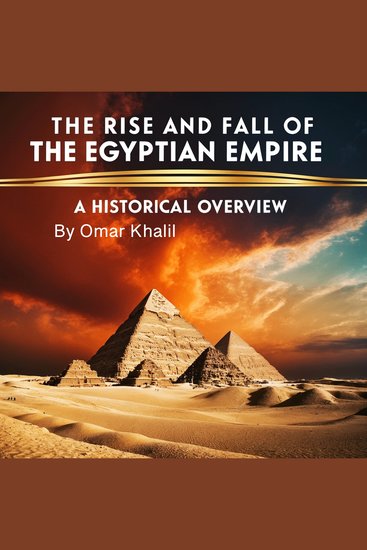
    The origins of Ancient Egypt trace back to a time when the Nile River served as the lifeline for scattered communities that gradually developed into one of the world’s first great civilizations. The unification of Upper and Lower Egypt around 3100 BCE marked a turning point, traditionally credited to King Narmer (also known as Menes). This consolidation of power not only brought political unity but also forged a shared identity among the people along the Nile, creating the foundation for the dynastic rule that would follow for centuries. 
    Geography played a central role in shaping early Egyptian civilization. The Nile River, flowing from south to north, provided a reliable source of water and fertile soil through its annual inundation. These floods deposited nutrient-rich silt on the riverbanks, enabling agriculture to flourish in an otherwise arid environment. Settlements grew along the river, connected by the waterway, which also served as a route for trade and communication. Natural barriers such as deserts and the Mediterranean Sea offered protection from external invasions, allowing Egyptian culture to evolve with limited outside interference in its formative years. 
    The Early Dynastic Period (c. 3100–2686 BCE) saw the establishment of the first centralized state under pharaonic rule. Kings were not merely political leaders but were also regarded as divine beings, intermediaries between the gods and the people. This belief in divine kingship helped maintain stability and order in a society where religion permeated all aspects of life. Temples, tombs, and other ceremonial structures began to emerge during this era, laying the groundwork for the grand architectural achievements of later periods.
    Zum Buch
  • Busting the Brass Ceiling - How a Heroic Female Cop Changed the Face of Policing - cover

    Busting the Brass Ceiling - How...

    Fanchon Blake, Linden Gross

    • 0
    • 0
    • 0
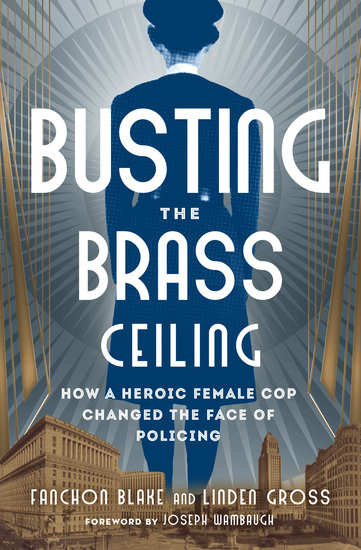
    A policewoman chronicles her historic legal battle against sexism within the LAPD in this “valuable . . . and at times, frightening” memoir (Kirkus Reviews). Former Army major Fanchon Blake dreamed of becoming a top cop. She joined the LAPD in 1948, confident that her efforts and talent would be rewarded. Instead, despite long hours and high achievement ratings, Blake—like all other women on the force—was denied promotion time and again. Over the years, the tenacious officer challenged the LAPD’s discriminatory agenda from within. Eventually, she broke the “blue wall of silence” by going to the press. And when all else failed, Blake saw one last chance to effect change: she filed a complaint against the LAPD with the federal Equal Employment Opportunity Commission in 1973. What followed was a harrowing struggle against discrimination that would make history for women and other minority groups. Despite the ensuing verbal abuse, silent treatment, and intimidation, Blake pushed on. Seven years later, her heroic efforts would finally make it possible for women to bust through the brass ceiling.
    Zum Buch
  • Getting Russia Right - 1st Edition - cover

    Getting Russia Right - 1st Edition

    Thomas Graham

    • 0
    • 0
    • 0
    As US-Russian relations scrape the depths of cold-war antagonism, the promise of partnership that beguiled American administrations during the first post-Soviet decades increasingly appears to have been false from the start. Why did American leaders persist in pursuing it? Was there another path that would have produced more constructive relations or better prepared Washington to face the challenge Russia poses today? 


    With a practitioner's eye honed during decades of work on Russian affairs, Thomas Graham deftly traces the evolution of opposing ideas of national purpose that created an inherent tension in relations. Getting Russia Right identifies the blind spots that prevented Washington from seeing Russia as it really is and crafting a policy to advance American interests without provoking an aggressive Russian response. Distilling the Putin factor to reveal the contours of the Russia challenge facing the United States whenever he departs the scene, Graham lays out a compelling way to deal with it so that the United States can continue to advance its interests in a rapidly changing world.
    Zum Buch
  • The Islamic Moses - How the Prophet Inspired Jews and Muslims to Flourish Together and Change the World - cover

    The Islamic Moses - How the...

    Mustafa Akyol

    • 0
    • 0
    • 0
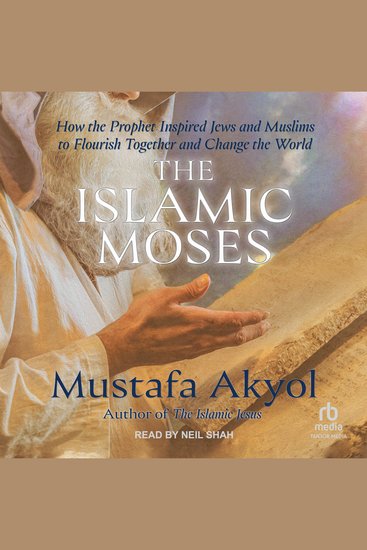
    There is one human mentioned in the Quran more than any other: Moses. Why is it that the Jewish prophet dominates the Islamic scripture? Because he is the role model for Muhammad, Islam's own prophet. Because Islam, just like Christianity, is deeply intertwined with Judaism—although surprisingly little attention has been given to this fascinating connection between the two religions. 


    Author and journalist Mustafa Akyol takes listeners on a theological and historical walk through that much-neglected side of the Abrahamic triangle: the Judeo-Islamic tradition. Using Moses's presence in the Quran as a jumping-off point, Akyol explores the first historical encounter between Muslims and Jews, the creative symbiosis and mutual enrichment that occurred between the two belief systems in medieval times, and the modern emergence, development, and perception of the two religions. 


    At a time of bitter conflict in the Middle East, The Islamic Moses dives into the older, deeper, and often unexpectedly brighter story of Jews and Muslims. Listeners of any background will be surprised by the common historical and theological ground that exists between the two religions, and will come away with a better understanding of both.
    Zum Buch