Begleiten Sie uns auf eine literarische Weltreise!
Buch zum Bücherregal hinzufügen
Grey
Einen neuen Kommentar schreiben Default profile 50px
Grey
Jetzt das ganze Buch im Abo oder die ersten Seiten gratis lesen!
All characters reduced
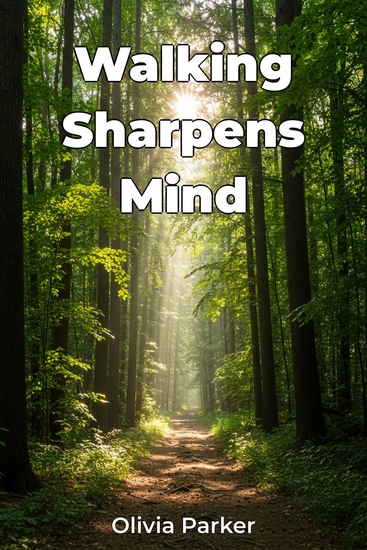
Walking Sharpens Mind - cover

Walking Sharpens Mind

Olivia Parker

Übersetzer A AI

Verlag: Publifye

  • 0
  • 0
  • 0

Beschreibung

Walking Sharpens Mind explores the powerful connection between walking and enhanced cognitive function, revealing how this simple activity can significantly boost brain health and mental well-being. The book explains how regular walking increases blood flow to the brain, stimulating neurogenesis, the growth of new brain cells. It also delves into how walking serves as a form of mindful exercise that can unlock creative potential and aid in stress management. 

 
The book approaches this topic by bridging historical insights with contemporary scientific findings from neuroscience and psychology. It demonstrates the measurable cognitive benefits of short walks, emphasizing how walking enhances synaptic plasticity, improving memory and attention.

 
The book progresses by first introducing the science behind walking's effects on brain health, then exploring practical strategies for incorporating mindful walking into daily routines, and finally synthesizing these findings to offer a holistic perspective on walking as a cornerstone of cognitive and mental well-being.
Verfügbar seit: 18.02.2025.
Drucklänge: 85 Seiten.

Weitere Bücher, die Sie mögen werden

  • Summary: Tired of Winning - Donald Trump and the End of the Grand Old Party By Jonathan Karl: Key Takeaways Summary and Analysis - cover

    Summary: Tired of Winning -...

    Brooks Bryant

    • 0
    • 0
    • 0
    DISCLAIMER: THIS IS NOT THE OFFICIAL BOOK. 
    This is a summary, and it does not accompany the official 
    'Tired of Winning' by Jonathan Karl examines Donald Trump's resurgence in the Republican Party following his presidency. The book describes Trump's journey from a defeated and disgraced former president to regaining prominence within the party. Karl, with his extensive experience as a reporter and ABC News's chief White House correspondent, offers detailed insights into Trump's post-presidency period at Mar-a-Lago, where he became increasingly extreme and vengeful, causing damage to the GOP's electoral prospects. Despite legal challenges and a divisive presence, Trump re-emerged as a frontrunner for the 2024 Republican presidential nomination. The book poses a critical question to the Republican Party, paralleling Ronald Reagan's 1964 speech, about whether they are ready to continue their path with Trump as their leader. Karl's unique perspective, rooted in his long history of covering Trump, provides a comprehensive view of the former president's quest for retribution and the potential implications for the GOP.
    Zum Buch
  • Edna St Vincent Millay Reads Her Poetry - cover

    Edna St Vincent Millay Reads Her...

    Edna St. Vincent Millay

    • 0
    • 0
    • 0
    Edna St. Vincent Millay (February 22, 1892 to October 19, 1950) was an American lyrical poet and playwright. Millay was a renowned social figure and noted feminist in New York City during the Roaring Twenties and beyond. Millay won the 1923 Pulitzer Prize for Poetry for her poem "The Ballad of the Harp-Weaver"; she was the first woman and second person to win the award. In 1943, Millay was the sixth person and the second woman to be awarded the Frost Medal for her lifetime contribution to American poetry. The following recordings include "The Ballad Of The Harp-Weaver," "Childhood Is The Kingdom Where Nobody Dies," "Recuerdo," "This Beast That Rends Me," "Not In A Silver Casket Cool With Pearls," "Love Is Not All (Sonnet XXX)," "Sorrowful Dreams," "Oh, Sleep Forever In The Latmian Cave," "I Shall Forget You Presently, My Dear (Sonnet IV)," and "Renascence."
    Zum Buch
  • A Brief History On The Black Death - The Black Plague Unveiled: A Compelling Collection of Facts & Trivia From History's Darkest Pandemic - cover

    A Brief History On The Black...

    Scott Matthews

    • 0
    • 0
    • 0
    In A Brief History On The Black Death, we embark on a gripping journey through one of humanity's most devastating catastrophes—the Black Death. This meticulously researched and engaging book offers a concise yet comprehensive account of the infamous pandemic that swept across Europe in the 14th century, leaving a trail of destruction in its wake. 
    Drawing from a vast array of historical sources and scholarly research, this captivating exploration delves into the origins, spread, and impact of the Black Death with meticulous detail. From its mysterious beginnings in Asia to the tumultuous consequences that reshaped societies, you will uncover the eerie chain of events that unleashed this merciless plague upon unsuspecting populations. 
    Immerse yourself in a gripping narrative that vividly describes the harrowing experiences of individuals and communities during the height of the epidemic. Walk alongside doctors and healers who battled against a seemingly unstoppable enemy, witness the panic and despair that gripped cities and towns, and glimpse the profound societal transformations that emerged from the ashes. 
    But this book is not merely a somber account of suffering and devastation. It also offers a treasure trove of intriguing trivia and lesser-known facts that shed light on the Black Death's multifaceted impact. Discover curious anecdotes, bizarre medical treatments, and superstitions that emerged in response to the plague. Explore the unprecedented socio-economic changes it catalyzed, the transformative impact on religious beliefs, and the lasting effects on art, literature, and culture.
    Zum Buch
  • ABC - The Beginning Of The End - cover

    ABC - The Beginning Of The End

    Aaron LaLux

    • 0
    • 0
    • 0
    The poems written in this book were composed in over 20 different countries & different cities including Australia, Bali, Brooklyn, Budapest, Colombia, Cyprus, Greece, India, Israel, Istanbul, Los Angeles, Madagascar, Miami, New Zealand, Oklahoma, Portugal, Romania, Sydney, Tbilisi, Thailand, & The Hamptons & Ukraine. 
    I left a piece of my heart in each one of these places that I visited along with leaving a piece of my heart, with every one of those amazing souls that I met & connected with along the way, a lot of who I still know to this day. Those out there know who you are so I don’t need to name names. 
    I’ve been traveling the world for several decades, but I notice this most recent trip felt the most strange & I can’t just blame COVID for this post COVID feeling. See something has just fundamentally changed the whole global vibe is a bit off & I don’t just mean the obvious stuff.  
    Sure there’s the political chaos with right & left becoming increasingly polarized which is absolutely heartbreaking because if we put our differences aside we’d see we have more similarities than differences what I'm really talking about a fundamental change in the individual.  
    We're spending way more time with machines than we are spending with each other & a lot of the time we spend interacting with each other is done through machines instead of directly with each other. 
    It’s as if we are recognizing each other’s existences less & less. 
    On top of this a majority of people including myself seem tired “out of it” directionless & disassociated. Maybe I’m trippin’ but I can’t be imagining all these things, it can’t just be me.  
    So yeah, a lot more to say, but I’m just going to stop here & let the poems contained in this book do the explaining, 
    Zum Buch
  • Freedom from Health Anxiety - Understand and Overcome Obsessive Worry about Your Health or Someone Else's and Find Peace of Mind - cover

    Freedom from Health Anxiety -...

    PhD Karen Lynn Cassiday, PsyD...

    • 0
    • 0
    • 0
    Are you constantly worrying about your health, or the health of a loved one? Do you frequently check yourself for lumps, bumps, tingling, or pain? Do you find yourself endlessly looking up symptoms on the internet? Perhaps you find yourself asking others for reassurance or validation that you’re okay, obsessing over health scares in the media, or monitoring your blood pressure on an hourly basis? No matter how your health anxiety manifests, it can be a crippling psychological burden. Endlessly ruminating about illness and death can affect all aspects of life—at home, work, school, as well as the doctor’s office. 


    In Freedom from Health Anxiety, nationally recognized anxiety expert Karen Lynn Cassiday teaches you skills to conquer health anxiety, once and for all. You'll learn to switch from focusing on worst-case scenarios to appreciating the joy of the present moment—regardless of  health status. Using a blend of cognitive behavioral therapy (CBT), positive psychology, and the author's "learned inhibition" model, you'll finally acquire the tools you need to take charge of your fear and break the cycle of stressing over your—or your loved one's—well-being. You'll also learn effective methods for tolerating health uncertainty, getting in touch with your body's cues, and rediscovering the pleasure of the present.
    Zum Buch
  • European Imperialism in China: The History and Legacy of the European Powers’ Attempts to Establish Chinese Trade Routes - cover

    European Imperialism in China:...

    Editors Charles River

    • 0
    • 0
    • 0
    During the 15th century, China had become economically and technologically advanced compared to civilizations in Europe at the time, and its fleet, which had reached a total of 3,500 ships, was unmatched by any other world power. Nevertheless, after conducting several trade expeditions with the massive fleet, the Chinese ships were either burned in the docks or left to rot. With that, China began to revert to the xenophobic policies of its past and reduce its presence in other lands. By 1525, the largest naval fleet in the world had essentially been destroyed or dismantled by China itself.  
    While China was in the process of isolating itself from the rest of the world, the European explorers were beginning to discover new lands, such as North America and South America. Among the countries doing the most exploring during this time were the Portuguese. The Portuguese had reached India in 1498, and by 1509 they had established part of their empire in India. This allowed the Portuguese to have a base of operations to further expand east into Asia. In 1511, the Portuguese captured the large spice trading center of Malacca in Malaysia, and like their base in India, Malacca allowed the Portuguese to have a foothold, thereby providing access to China and Southeast Asia. 
    The location of Macau was beneficial and strategically chosen by the Portuguese, as it was in close communication with Guangzhou and connected via a river system. In contrast to their earlier dealings with the Chinese, the Portuguese attempted to appear more humble and comply with the wishes of the Chinese rather than with force. As it turned out, the policy, in conjunction with increased European activities in the region, would help the Portuguese Empire hold on to Macau even as its fortunes dwindled everywhere else across the world.
    Zum Buch