Begleiten Sie uns auf eine literarische Weltreise!
Buch zum Bücherregal hinzufügen
Grey
Einen neuen Kommentar schreiben Default profile 50px
Grey
Jetzt das ganze Buch im Abo oder die ersten Seiten gratis lesen!
All characters reduced
Addiction and Brain Chemistry - cover

Addiction and Brain Chemistry

Olivia Clarke

Übersetzer A AI

Verlag: Publifye

  • 0
  • 0
  • 0

Beschreibung

Addiction and Brain Chemistry explores the complex science behind substance abuse and addictive behaviors, emphasizing that addiction is a neurological disorder affecting brain structure and function, not merely a lack of willpower. It reveals how addictive substances hijack the brain's reward system, particularly dopamine pathways, leading to compulsive behaviors despite negative consequences. Understanding these neurobiological changes is crucial for developing effective treatment and prevention strategies.

 
The book delves into the impact of addiction on key brain regions like the prefrontal cortex, amygdala, and nucleus accumbens, illustrating how long-term exposure alters synaptic plasticity and neuronal morphology. It highlights the neurobiological mechanisms underlying recovery, including abstinence, relapse, and the rebuilding of healthy brain function through therapies like CBT and MAT.

 
The book uniquely integrates neuroscience with practical strategies, offering guidance for individuals and families affected by addiction. Beginning with an introduction to brain chemistry and the historical context of addiction research, subsequent chapters dissect the effects on brain circuitry and address the crucial topic of recovery.

 
It emphasizes the importance of environmental factors, support systems, and lifestyle changes in sustaining long-term recovery, providing a comprehensive understanding of the science to promote recovery.
Verfügbar seit: 28.02.2025.
Drucklänge: 82 Seiten.

Weitere Bücher, die Sie mögen werden

  • Why It's OK to Eat Meat - cover

    Why It's OK to Eat Meat

    Dan C. Shahar

    • 0
    • 0
    • 0
    In Why It's OK to Eat Meat, Dan C. Shahar argues the answer is no: it's entirely possible to be an ethical person while continuing to eat meat—and not just the "fancy" offerings from the farmers' market but also the regular meat we find at most supermarkets and restaurants. Shahar's examination forcefully echoes vegetarians' concerns about the meat industry's impacts on animals, workers, the environment, and public health. However, he shows that the most influential ethical arguments for avoiding meat on the basis of these considerations are ultimately unpersuasive. Instead of insisting we all become vegetarians, Shahar argues each of us has broad latitude to choose which of the world's problems to tackle. 


    Key Features include: 


    ● First book-length defense of meat-eating written for a popular audience 


    ● Punchy, accessible introduction to the multifaceted debate over the ethics of eating meat 


    ● Includes pioneering new examinations of humane labeling practices 


    ● Shows why appeals to universalized patterns of behavior can't vindicate vegetarians' claims that there's a duty to avoid meat 


    ● Develops a novel theory of ethical activism with potential applications to a wide range of other issues
    Zum Buch
  • A Rare Recording of Orson Welles - cover

    A Rare Recording of Orson Welles

    Orson Welles

    • 0
    • 0
    • 0
    George Orson Welles (May 6, 1915 – October 10, 1985) was an American actor, director, screenwriter, and producer who is remembered for his innovative work in film, radio, and theatre. He is considered to be among the greatest and most influential filmmakers of all time, creating such classics as Citizen Kane, The Third Man and The Magnificent Ambersons.
    Zum Buch
  • Portuguese Empire - Historical Overview of One of the Most Powerful Trading Routes in Europe - cover

    Portuguese Empire - Historical...

    Kelly Mass

    • 0
    • 0
    • 0
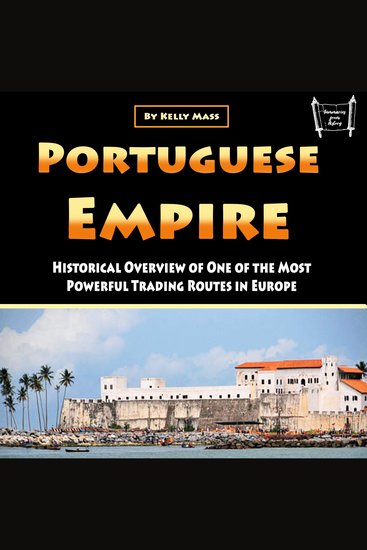
    The Portuguese Empire comprised a vast network of colonies, factories, and overseas territories established by Portugal. Beginning with the capture of Ceuta in North Africa in 1415 and continuing until the handover of sovereignty over Macau to China in 1999, it stands as one of the longest-lasting empires in European history. The empire's roots can be traced back to the 15th century, and by the early 16th century, it had established a global presence with strategic bases in North and South America, Africa, Asia, and Oceania. 
    The rise of the Portuguese Empire coincided with the dawn of the Age of Discovery, a period characterized by exploration and expansion. Following the Reconquista, which concluded in 1492, Portuguese sailors embarked on expeditions along the African coast and the Atlantic archipelagos starting in 1418. Leveraging advancements in navigation, mapping, and maritime technology, particularly the caravel—a vessel adept at oceanic travel—they aimed to uncover a sea route to the lucrative spice trade of the East. Key milestones during this era included Bartolomeu Dias’s successful rounding of the Cape of Good Hope in 1488 and Vasco da Gama’s historic arrival in India in 1498. Around 1500, Pedro Álvares Cabral arrived at the shores of Brazil, either by chance or as part of a broader imperial strategy.
    Zum Buch
  • Warning Signs - Identifying School Shooters Before They Strike - cover

    Warning Signs - Identifying...

    PhD Peter Langman

    • 0
    • 0
    • 0
    How do we prevent the next school shooting? By knowing the warning signs. 


    Dr. Langman's timely book presents practical, research-based guidance on anticipating and preventing mass attacks. Warning Signs is for all members of a school community, including school personnel, mental health professionals, law enforcement officers, parents, and students. Drawing on lessons learned from dozens of thwarted plots and deadly attacks, Warning Signs provides the insight necessary to keep schools safe.
    Zum Buch
  • The Balkans - A History of Conflict and Division - Exploring the Causes and Consequences of the Region's Turbulent Past - cover

    The Balkans - A History of...

    Days of History

    • 0
    • 0
    • 0
    Step into the complex world of Balkan history with this captivating book. From ancient times to the present day, this book covers the key events and factors that have shaped the region's turbulent past. 
    Here are five key things you'll learn:The impact of Ottoman rule on the Balkans, including the development of Islamic culture and the struggle for independence.The role of the Balkans in World War I and II, including the experiences of Serbian soldier and nationalist Gavrilo Princip, whose assassination of Archduke Franz Ferdinand sparked the First World War.The post-war era, including the rise of communism and the impact of the Cold War on the region.The collapse of Yugoslavia in the 1990s and the resulting conflicts, including the Bosnian War and the Kosovo War.The ongoing challenges faced by the Balkans today, including political instability, economic struggles, and social inequality. 
    Whether you're a history enthusiast or just curious about the world, this book is a great read for understanding the complex and often turbulent history of the Balkans.
    Zum Buch
  • The Dokkōdō - The Way of Walking Alone - cover

    The Dokkōdō - The Way of Walking...

    Miyamoto Musashi

    • 0
    • 0
    • 0
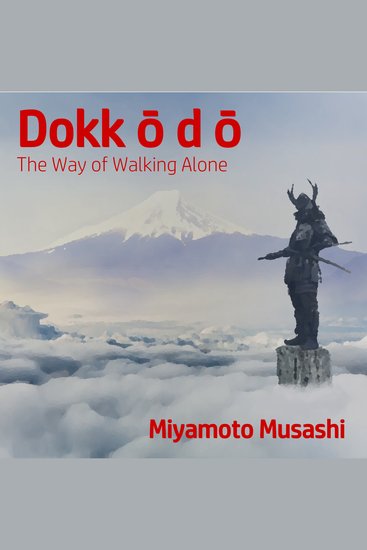
    A testament to the way of solitude and simplicity, the 21 precepts of the Dokkōdō, also known as The Way of Walking Alone, is one of Musashi's principal legacies. Inspired by his life of combat and the bushido code, Miyamoto Musashi wrote the Dokkōdō in Japan in 1645, to pass on his wisdom and philosophy of life before he died. In the short text, the master duelist shares 21 precepts for healthy living. They are influenced by principles akin to Stoicism. Even today, these universal lessons can be useful for leading an honest and happy life. 
    Among the main themes he addresses in the Dokkōdō, Miyamoto Musashi stresses the importance of simplicity, discipline and detachment. He suggests forgetting material desires and distractions and concentrating on the essential. He advocates not only material simplicity, but also mental, spiritual simplicity; purity of thought. In his vision, mental clarity enables deeper self-mastery.
    Zum Buch