Rejoignez-nous pour un voyage dans le monde des livres!
Ajouter ce livre à l'électronique
Grey
Ecrivez un nouveau commentaire Default profile 50px
Grey
Abonnez-vous pour lire le livre complet ou lisez les premières pages gratuitement!
All characters reduced
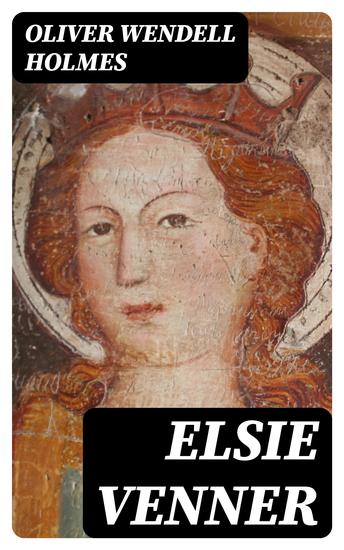
Elsie Venner - cover

Elsie Venner

Oliver Wendell Holmes

Maison d'édition: DigiCat

  • 0
  • 0
  • 0

Synopsis

"Elsie Venner," a novel published in 1861 by Oliver Wendell Holmes, weaves a rich tapestry of romance, psychology, and moral philosophy set against the backdrop of New England society. Known for its intricate narrative style, Holmes employs a detailed and introspective lens, exploring the complexities of human nature through the protagonist, Elsie, who embodies both innocence and innate ferocity. The book's unique exploration of the connection between character and environment, coupled with its innovative use of vivid imagery and symbolism, places it within the tradition of American Transcendentalism while critically engaging with themes of gender and identity that would resonate in later literature. Oliver Wendell Holmes, a prominent figure in American literature and medicine, was deeply influenced by his own experiences as a physician and his keen observations of society and human behavior. His background in both the literary and medical fields provided a unique perspective on the psychological implications of morality and social expectations, often reflected in his writing. Holmes's ability to bridge these two seemingly disparate worlds enabled him to craft a narrative that delves into the intricacies of mental states and societal pressures. "Elsie Venner" is a must-read for those seeking an insightful examination of character and societal norms in 19th-century America. With its profound psychological insights and nuanced character development, the novel invites readers to reflect on the nature of humanity and the influence of one's environment, making it a timeless piece for scholars and casual readers alike.
Disponible depuis: 15/09/2022.
Longueur d'impression: 345 pages.
D'autres livres qui pourraient vous intéresser

  • The Theogony - cover

    The Theogony

    Hesiod

    • 0
    • 0
    • 0
    The Theogony "the genealogy or birth of the gods" is a poem by Hesiod (8th – 7th century BC) describing the origins and genealogies of the Greek gods, composed c. 730–700 BC. It is written in the Epic dialect of Ancient Greek and contains 1022 lines. 
    Hesiod's Theogony is a large-scale synthesis of a vast variety of local Greek traditions concerning the gods, organized as a narrative that tells how they came to be and how they established permanent control over the cosmos. It is the first known Greek mythical cosmogony. The initial state of the universe is chaos, a dark indefinite void considered a divine primordial condition from which everything else appeared. Theogonies are a part of Greek mythology which embodies the desire to articulate reality as a whole; this universalizing impulse was fundamental for the first later projects of speculative theorizing.
    Hesiod appropriates to himself the authority usually reserved to sacred kingship. The poet declares that it is he, where we might have expected some king instead, upon whom the Muses have bestowed the two gifts of a scepter and an authoritative voice (Hesiod, Theogony 30–3), which are the visible signs of kingship. It is not that this gesture is meant to make Hesiod a king. Rather, the point is that the authority of kingship now belongs to the poetic voice, the voice that is declaiming the Theogony.
    Voir livre
  • At Christmas Time - From their pens to your ears genius in every story - cover

    At Christmas Time - From their...

    Anton Chekhov

    • 0
    • 0
    • 0
    Anton Pavlovich Chekhov was born on 29th January 1860 in Taganrog, on the south coast of Russia.  
    His family life was difficult; his father was strict and over-bearing but his mother was a passionate story-teller, a subject Chekhov warmed to. As he later said; ‘our talents we got from our father, but our soul from our mother’.  
    At school Chekhov was distinctly average. At 16 his father mis-managed his finances and was declared bankrupt. His family fled to Moscow. Chekhov remained and eked out a living by various means, including writing and selling short sketches to newspapers, to finish his schooling. That completed and with a scholarship to Moscow University obtained he rejoined his family. 
    He was able to help support them by selling satirical sketches and vignettes of Russian lifestyles and gradually obtained further commissions. In 1884, he qualified as a physician and, although it earned him little, he often treated the poor for free, he was fond of saying ‘Medicine is my lawful wife, and literature is my mistress.’ 
    His own health was now an issue as he began to cough up blood, a symptom of tuberculosis.  Despite this his writing success enabled him to move the family into more comfortable accommodation.  
    Chekhov wrote over 500 short stories which included many, many classics including ‘The Kiss’ and ‘The Lady with a Dog’.  His collection ‘At Dusk’ won him the coveted Pushkin Prize when was only 26.  
    He was also a major playwright beginning with the huge success of ‘Ivanov’ in 1887.   
    In 1892 Chekhov bought a country estate north of Moscow. Here his medical skills and money helped the peasants tackle outbreaks of cholera and bouts of famine. He also built three schools, a fire station and a clinic.  It left him with less time for writing but the interactions with real people gained him detailed knowledge about the peasantry and their living conditions for his stories.  
    His most famous work, ‘The Seagull’ was received disastrously at its premiere in St Petersburg. It was later restaged in Moscow to highlight its psychological aspects and was a huge success. It led to ‘Uncle Vanya’, ‘The Three Sisters’ and ‘The Cherry Orchard’.  
    Chekhov suffered a major lung hemorrhage in 1897 while visiting Moscow. A formal diagnosis confirmed tuberculosis and the doctors ordered changes to his lifestyle.  
    Despite a dread of weddings the elusive literary bachelor quietly married the actress Olga Knipper, whom he had met at rehearsals for ‘The Seagull’, on 25th May 1901. 
    By May 1904 with his tuberculosis worsening and death imminent he set off for the German town of Badenweiler writing cheerful, witty letters to his family and assuring them his health was improving.  
    On 15th July 1904 Anton Chekhov died at Badenweiler.  He was 44.
    Voir livre
  • Germans at Meat - cover

    Germans at Meat

    Katherine Mansfield

    • 0
    • 0
    • 0
    Germans at Meat is a short story by Katherine Mansfield: Bread soup was placed upon the table. – “Ah,” said the Herr Rat, leaning upon the table as he peered into the tureen, “that is what I need. My ‘magen’ has not been in order for several days. Bread soup, and just the right consistency. I am a good cook myself”—he turned to me. – “How interesting,” I said, attempting to infuse just the right amount of enthusiasm into my voice...
    Voir livre
  • The Complete Alice in Wonderland Collection - Alice's Adventures in Wonderland Through the Looking-Glass The Hunting of the Snark & Alice's Adventures Under Ground - cover

    The Complete Alice in Wonderland...

    Lewis Carroll

    • 0
    • 0
    • 0
    The Complete Alice in Wonderland Collection includes the four original stories about Alice in Wonderland by Lewis Carroll.
    Alice's Adventures in Wonderland (commonly shortened to Alice in Wonderland) is an 1865 novel written by English author Charles Lutwidge Dodgson under the pseudonym Lewis Carroll. It tells of a young girl named Alice falling through a rabbit hole into a fantasy world populated by peculiar, anthropomorphic creatures. The tale plays with logic, giving the story lasting popularity with adults as well as with children. It is considered to be one of the best examples of the literary nonsense genre. Its narrative course, structure, characters, and imagery have been enormously influential in both popular culture and literature, especially in the fantasy genre.
    Included in this collection:
    1. Alice's Adventures in Wonderland (1865)
    2. Through the Looking-Glass (1871)
    3. The Hunting of the Snark (1876)
    4. Alice's Adventures Under Ground (1886)
    Voir livre
  • 50 Great Russian Short Stories - Notes From The Underground The Death Of Ivan Ilyich The Lady With The Dog First Love The Mantle The Queen Of Spades The Embroidered Towel And Others Stories - cover

    50 Great Russian Short Stories -...

    Fyodor Dostoyevsky, Leo Tolstoy,...

    • 0
    • 0
    • 0
    The collection includes the best works of famous Russian writers:
    Fyodor Dostoevsky
    NOTES FROM THE UNDERGROUND
    THE DREAM OF A RIDICULOUS MAN
    THE BEGGAR BOY AT CHRIST'S CHRISTMAS TREE
     
    Leo Tolstoy
    THE DEATH OF IVAN ILYICH
    A LETTER TO A HINDU
    A CONFESSION
    GOD SEES THE TRUTH, BUT WAITS
    A RUSSIAN CHRISTMAS PARTY
     
    Anton Chekhov
    THE LADY WITH THE DOG
    A SLANDER
    THE HORSE-STEALERS
    THE PETCHENYEG
    A DEAD BODY
    A HAPPY ENDING
    THE LOOKING-GLASS
    OLD AGE
    DARKNESS
    THE BEGGAR
    IN TROUBLE
    FROST
    MINDS IN FERMENT
    GONE ASTRAY
    AN AVENGER
    THE JEUNE PREMIER
    A DEFENCELESS CREATURE
    AN ENIGMATIC NATURE
    A HAPPY MAN
    A TROUBLESOME VISITOR
    AN ACTOR'S END
    A STORY WITHOUT A TITLE
    VANKA
     
    Ivan Turgenev
    FIRST LOVE
    THE DISTRICT DOCTOR
    MUMU
     
    Nikolay Gogol
    THE MANTLE
    MEMOIRS OF A MADMAN
    THE NOSE
    A MAY NIGHT
    THE CLOAK
    THE VIY
    CHRISTMAS EVE
    THE VIY
     
    Alexsandr Pushkin
    THE QUEEN OF SPADES
     
    Maxim Gorky
    ONE AUTUMN NIGHT
    HER LOVER
     
    Leonid Andreyev
    LAZARUS
    THE LITTLE ANGEL
     
    Aleksandr Kuprin
    THE OUTRAGE
     
    Mikhail Bulgakov
    THE EMBROIDERED TOWEL
     
    Ivan Bunin
    THE GENTLEMAN FROM SAN FRANCISCO
     
    Mikhail Saltykov-Shchedrin
    HOW A MUZHIK FED TWO OFFICIALS
    Voir livre
  • The Leo Tolstoy Collection - Alyosha the Pot Kholstomer A Russian Christmas Party A Confession God Sees the Truth But Waits A Letter to a Hindu The Death of Ivan Ilyich - cover

    The Leo Tolstoy Collection -...

    Leo Tolstoy

    • 0
    • 0
    • 0
    This collection brings together stories and reflections in which Leo Tolstoy turns inward.
    Stripped of grandeur, these works offer something more intimate: the inner noise of conscience, the weight of faith, the silence before death.
    A servant's silence, a horse's memory, a dying man's doubt—these are not performances.
    They are questions, waiting quietly for whoever dares to ask the same.
    Tolstoy isn't offering answers. He's writing toward something deeper. And the questions haven't aged a day.
    Contents:
    • Alyosha the Pot
    • Kholstomer: The Story of a Horse
    • A Russian Christmas Party
    • A Confession
    • God Sees the Truth, But Waits
    • A Letter to a Hindu
    • The Death of Ivan Ilyich
    Voir livre