Rejoignez-nous pour un voyage dans le monde des livres!
Ajouter ce livre à l'électronique
Grey
Ecrivez un nouveau commentaire Default profile 50px
Grey
Abonnez-vous pour lire le livre complet ou lisez les premières pages gratuitement!
All characters reduced
Seville Rhythms - cover

Seville Rhythms

Oliver Scott

Traducteur A AI

Maison d'édition: Publifye

  • 0
  • 0
  • 0

Synopsis

Seville Rhythms explores the captivating city of Seville, Spain, examining its rich tapestry of history, culture, and traditions. Seville is a unique crucible of Spanish cultural identity.

 
The book highlights how Seville's Moorish past, passionate flamenco, and controversial bullfighting tradition have shaped its identity. Seville was once known as Al-Andalus under Islamic rule, and later became a major port in the Spanish Empire.

 
The narrative progresses from the origins of flamenco in marginalized communities to the architectural wonders left by the Moors, such as the Alcázar. It also confronts the debates surrounding bullfighting.

 
This exploration provides a lens through which to understand broader aspects of Spanish history and identity. The book aims to provide a balanced view of Seville's traditions, acknowledging the complexities and controversies that surround them.

 
The journey through Seville Rhythms begins with an introduction to Seville’s history and geography, then moves into in-depth explorations of flamenco, Moorish heritage, and bullfighting. It culminates in an analysis of Seville's enduring influence on Spanish art, music, and traditions.

 
Ultimately, this book aims to enrich the understanding of travelers, students, and anyone curious about Spanish culture.
Disponible depuis: 20/02/2025.
Longueur d'impression: 61 pages.

D'autres livres qui pourraient vous intéresser

  • Satavahana Empire - Buddhism Trade and the Power of the Deccan - cover

    Satavahana Empire - Buddhism...

    Rolf Hedger

    • 0
    • 0
    • 0
    The Satavahana Empire, one of the earliest and most influential dynasties in ancient India, emerged in the Deccan region after the decline of the Mauryan Empire. The origins of the Satavahanas remain a subject of historical debate, but they are believed to have belonged to the Andhra region, gaining prominence as local chieftains before consolidating their rule into a powerful dynasty. Their rise marked a significant transition in Indian history, bridging the gap between the Mauryan administration and later regional powers. 
    The early history of the Satavahanas is primarily reconstructed through inscriptions, numismatic evidence, and references in ancient texts. The Puranas mention them as the Andhra dynasty, while inscriptions such as the Naneghat and Nasik inscriptions provide valuable insights into their rulers and governance. The first known ruler of the dynasty, Simuka, is credited with establishing Satavahana rule by overthrowing remnants of Mauryan authority in the Deccan and expanding his control over parts of present-day Maharashtra, Telangana, and Andhra Pradesh. His successors continued to strengthen the empire, laying the foundation for centuries of Satavahana dominance. 
    Following Simuka, his brother and successor Krishna further expanded the territory, but it was under the reign of Satakarni I that the empire gained considerable power. Satakarni I led successful military campaigns, extending his influence northward to the Narmada region and challenging the Shunga and Kshatrapa rulers. His achievements were commemorated in inscriptions and coins, some of which depict him performing Vedic sacrifices such as the Ashvamedha, indicating his aspirations for imperial legitimacy. This period also saw the Satavahanas emerging as key players in trade, administration, and culture, integrating diverse communities into their governance system.
    Voir livre
  • Unicorns: Mythology & Legends - cover

    Unicorns: Mythology & Legends

    Niina Niskanen

    • 0
    • 0
    • 0
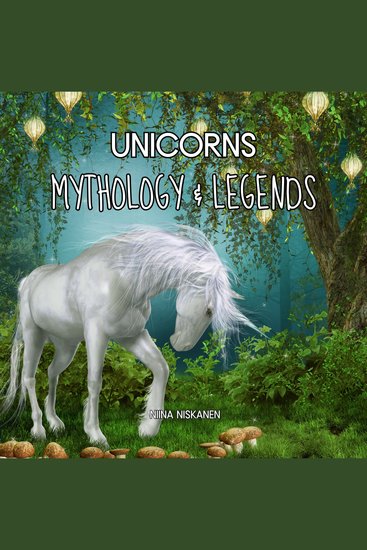
    Unicorns are made of dreams and enchantments. They are some of the most beloved mythical beings and very common motifs that we still come across today. In this book, we will go through the history of unicorns from ancient times to the medieval time period and renaissance. 
    A lot of people believed that a unicorn was an actual animal. It is possible that the legend of the unicorn was born from rhinos, deer, antelopes or roe deer and other animals with antlers. We will also be discussing the symbolism behind horns and antlers, and the different meanings and interpretations that unicorns horn has been given. You will learn about the domestic lives of the unicorns. Where they live, what they eat and who creates the unicorns. 
    Unicorns are often connected to spirituality and magic. In this book, you will also find out about the Christian symbolism behind unicorns and why we can still today find unicorn imagery in churches around Europe. There are many mentions of unicorns in the Bible as well. Step into a journey to learn about unicorns in ancient civilizations such as Greece and Persia. What unicorns are symbolised in Greek and Roman mythology? You will also learn about unicorns in Asian cultures and how they can take many kinds of shapes and forms. 
    In medieval times unicorns symbolized purity and in medieval bestiaries, the unicorn was a commonly depicted animal but more than that, during these times unicorns became the symbol of courtly love and this is why we find him woven into many medieval tapestries. 
    Voir livre
  • Kaisa Marna Hoey - cover

    Kaisa Marna Hoey

    Meet Anmol

    • 0
    • 0
    • 0
    Kaisa Marna Hoey by Meet Anmol explores the deep questions of life and death. Through reflective writing, the author seeks to answer timeless questions like: Who am I? Where am I headed? Who is God? Where can I find God? What is the right way to live? This book invites readers on a spiritual journey of self-discovery and inner truth.
    Voir livre
  • The Archive of Empire - Knowledge Conquest and the Making of the Early Modern British World - cover

    The Archive of Empire -...

    Asheesh Kapur Siddique

    • 0
    • 0
    • 0
    How modern data-driven government originated in the creation and use of administrative archives in the British Empire 


    Over the span of two hundred years, Great Britain established, governed, lost, and reconstructed an empire that embraced three continents and two oceanic worlds. The British ruled this empire by correlating incoming information about the conduct of subjects and aliens in imperial spaces with norms of good governance developed in London. Officials derived these norms by studying the histories of government contained in the official records of both the state and corporations and located in repositories known as archives. 


    As the empire expanded in both the Americas and India, however, this system of political knowledge came to be regarded as inadequate in governing the non-English people who inhabited the lands over which the British asserted sovereignty. This posed a key problem for imperial officials: What kind of knowledge was required to govern an empire populated by a growing number of culturally different people? Using files, pens, and paper, the British defined the information order of the modern state as they debated answers to this question. In tracing the rise and deployment of archives in early modern British imperial rule, Asheesh Kapur Siddique uncovers the origins of our data-driven present.
    Voir livre
  • Black Cats & Evil Eyes - A Book of Old-Fashioned Superstitions - cover

    Black Cats & Evil Eyes - A Book...

    Chloe Rhodes

    • 0
    • 0
    • 0
    This collection investigates the origins of our most intriguing old-fashioned superstitions, many of which we still find ourselves abiding by today. Hundreds of the beliefs passed down through the generations have their foundations in our ancestors' efforts to ward off evil, which they blamed for hardship, illness, and injustice in times when life was, as often as not, "nasty, brutish and short." Black Cats and Evil Eyes sets these superstitions in their historical and social context, explaining how fear of the Devil, demons, evil spirits, and witchcraft drove people to arm themselves with rituals and talismans to repel dark forces and allow them to live long and healthy lives. In examining many of our common superstitions, this book illuminates the customs, beliefs, and practices that link us to an ancient, and often darker, human past.
    Voir livre
  • Squalus Disaster The: The History of the Dramatic Rescue Operation on a Sunken Submarine - cover

    Squalus Disaster The: The...

    Charles River Editors

    • 0
    • 0
    • 0
    Given that there’s such little margin for error in a submersible, many submarine losses remain sources of intrigue and mystery, but in American history, few rival the tragedy and drama aboard the Squalus in 1939. On May 23 of that year, the Squalus, one of the U.S. Navy’s newest submarines, was undertaking the latest in a series of test dives off the coast of New Hampshire. She had been commissioned less than three months before and represented the cutting-edge of new submarine technology. Provided with eight torpedo tubes and a three-inch deck gun, Squalus had a range of over 11,000 miles and was capable of running at over 20 knots on the surface. This was a formidable warship, and the test dives undertaken in May were a routine part of preparing the submarine for service. 
    After successfully completing a series of dives over the previous days, on the 23rd, the Squalus undertook practice for one of the most challenging maneuvers, a rapid dive performed while the sub was running at full speed on the surface. This was a vital procedure if the submarine was attacked unexpectedly by an aircraft or surface ship - it had to be able to dive quickly in any circumstances. This practice ensured that the crew, and the submarine, were fully prepared.  
    Tragically, during this test dive, the unthinkable happened: the rear section of Squalus flooded, and the submarine, without power, began to sink to the bottom of the Atlantic Ocean. 26 men in the rear compartments died in the flooding, but 33 men in the forward compartments were still alive as Squalus came to rest on the ocean floor almost 250 feet below the surface.  
    The situation seemed hopeless to everyone but one naval officer, Lieutenant Commander Charles B. "Swede" Momsen. 
    Voir livre