Begleiten Sie uns auf eine literarische Weltreise!
Buch zum Bücherregal hinzufügen
Grey
Einen neuen Kommentar schreiben Default profile 50px
Grey
Jetzt das ganze Buch im Abo oder die ersten Seiten gratis lesen!
All characters reduced
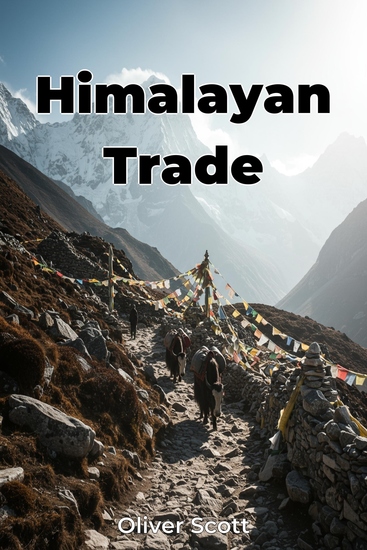
Himalayan Trade - cover

Himalayan Trade

Oliver Scott

Übersetzer A AI

Verlag: Publifye

  • 0
  • 0
  • 0

Beschreibung

Himalayan Trade explores the vibrant exchange of goods, ideas, and culture that flourished for centuries between India, Tibet, and China. It delves into the complex network of trade routes crisscrossing the Himalayas, revealing how these pathways facilitated not only the movement of commodities like silk, salt, and spices, but also spurred significant cultural and political transformations. 

 
The book highlights how economic interdependence shaped regional identities, demonstrating that trade was more than just commerce; it was a catalyst for societal change. The approach is interdisciplinary, drawing from history, anthropology, and economics to provide a well-rounded view. For instance, the book examines how the rise and fall of empires directly impacted trade regulations and routes, akin to how a change in government policies can alter modern trade agreements. The study also looks at how communities adapted socially and culturally to new ideas and goods. 

 
The book progresses systematically, starting with the geographical and historical context, then moves on to the major commodities traded and their economic impact. It culminates with an analysis of the geopolitical forces at play and the eventual decline of traditional routes due to modern globalization. This comprehensive approach makes Himalayan Trade a valuable resource for anyone interested in world history, economic history, and the cultural dynamics of the Himalayas.
Verfügbar seit: 20.03.2025.
Drucklänge: 70 Seiten.

Weitere Bücher, die Sie mögen werden

  • National Geographic Magazine Vol 06 - cover

    National Geographic Magazine Vol 06

    Various Various

    • 0
    • 0
    • 0
    National Geographic Magazine Volume 6, articles published from January, 1894, to May, 1895. Geographic Progress of Civilization - Annual Address by the President Honorable Gardiner G. HubbardShawangunk Mountain, by N. H. DartonWeather Making, Ancient and Modern, by Mark W. HarringtonGeomorphology of the Southern Appalachians, by Charles Willard Hayes and Marius R. CampbellThe Battle of the Forest, by B. E. FernowSurveys and Maps of the District of Columbia, by Marcus BakerThe first Landfall of Columbus, by Jacques W. Redway, F. R. G. S.Japan, by D.W. StevensGeography of the Air, Annual Address by the Vice-President, General A. W. GreelySir Francis Drake's Anchorage, by Edward L. BerthoudNote on the Height of Mount Saint Elias, by Professor Israel C. RussellGeographic Notes, by Cyrus C. Babb (The Antarctic Continent - Magnetic Observation in Iceland, Jan Mayen and Spitzbergen in 1892 - A New Light on the Discovery of America - Monographs of the National Geographic Sociaty - Important Announcement Concerning Essays)Laws of the Temperature Control of the Geographic Distribution of Terrestrial Animals and Plants. Annual Address by Vice-President Dr. C. Hart Merriam.Oregon: Its History, Geography, and Resources, by John H. Mitchell.
    Zum Buch
  • His Final Tomb - A Disturbing True Story of John Jones And The Nutty Putty Cave Incident - cover

    His Final Tomb - A Disturbing...

    Daniel Turmoil

    • 0
    • 0
    • 0
    With only three days remaining until Thanksgiving, the day was graced by beautiful, sunny weather. A bright and intelligent medical student decided to embark on an adventure to explore a popular and intriguing cave, which was considered suitable for beginners. Despite everything appearing to go smoothly, a single mistake changed the course of events. Taking a wrong turn led to a tragedy that continues to evoke speculation and terror even today. This tragic incident is famously known as The Nutty Putty Cave incident.
    Zum Buch
  • The Siamese - History of the Nation of Thailand - cover

    The Siamese - History of the...

    Kelly Mass

    • 0
    • 0
    • 0
    Siam was just a much different name for what's now referred to as Thailand. The Siamese are the people who live there, though they're never ever called as such any longer. 
    The most current and right clarification concerning the Tai people's beginnings claims that Guangxi, instead of Yunnan, is the Tai motherland. Today, Guangxi is home to a big population of Tai people referred to as the Zhuang. According to the Khun Borom folklore, Tai people who were not affected by the Chinese settled in what's now Biên Ph in modern Vietnam around 700 AD. Pittayawat Pittayaporn (2014) assumed that this movement occurred at the time of the 8th and 10th centuries, based upon layers of Chinese loanwords in proto-Southwestern Tai and other historic information. Chinese growth and mistreatment could have triggered Tai-speaking tribe to travel southwestward down rivers and over lower enters Southeast Asia. 
    Thailand is a fascinating country, with its own culinary arts, culture, history, royalty, infrastructure, and influence on the world. To learn more about these “Thai” people before they were called Thai, when they were Siamese, is to learn about those people’s roots.
    Zum Buch
  • Gettysburg - The Story of the Battle with Maps - cover

    Gettysburg - The Story of the...

    Books Editors of Stackpole

    • 0
    • 0
    • 0
    A unique visual account: “The hour-by-hour maps of the maneuvering and fighting provide the clearest cartographic picture of the battle in existence.” —James M. McPherson, Pulitzer Prize-winning author of Battle Cry of Freedom   In this extraordinary book, seventy crystal-clear color maps and insightful text tell the hour-by-hour story of the three-day Battle of Gettysburg. Each map shows the same three-and-a-half-by-four-and-a-half-mile view of the battlefield, allowing the reader to visualize the battle as it developed over the entire area, including key engagements, troop movements and positions, and locations of commanders. It sheds new light on important events such as the first clash west of town on July 1, the fighting for Cemetery Hill, the defense of Little Round Top, Pickett’s Charge, and more.   “The accompanying text brings the battle alive and nicely compliments the maps.” —D. Scott Hartwig, author of To Antietam Creek   “The movements are depicted clearly, and in full color, so that even a complete newcomer to the battle can follow the action easily.”—Craig L. Symonds, author of The American Heritage History of the Battle of Gettysburg
    Zum Buch
  • Learn Spanish in Your Car: The Complete Audio Course for Beginners - 10 Hours of Conversational Dialogues Vocabulary Travel Phrases and Grammar for Kids & Adults (Simple Language Lessons) - cover

    Learn Spanish in Your Car: The...

    Damián Carabello

    • 0
    • 0
    • 0
    Buckle up and get ready to turn every drive into an exciting Spanish-learning adventure! "Learn Spanish in Your Car: The Complete Audio Course for Beginners" is your ultimate companion that transforms commuting time into powerful, productive learning. Imagine greeting locals with ease, ordering tapas without hesitation, and connecting with new friends—all while sitting behind the wheel. With engaging lessons, clear pronunciation guides, and interactive dialogues, you’ll quickly move from simple greetings to real conversations that flow naturally. Each chapter is designed to make Spanish stick through repetition and practice, so you’ll not just memorize words—you’ll live them. Whether you’re commuting to work, running errands, or heading on a road trip, this audiobook turns your car into a moving classroom where every mile brings you closer to fluency. Say goodbye to boring drills and hello to practical Spanish you can use right away. Press play and let’s go—¡Vamos!
    Zum Buch
  • Persian Pictures - cover

    Persian Pictures

    Gertrude Bell

    • 0
    • 0
    • 0
    In 1892, Gertrude Bell visited Persia (now Iran) shortly after the appointment of her uncle, Sir Frank Lascelles, as British minister in Tehran. Three years later came Persian Pictures, Gertrude Bell’s first written work, which presents a series of vivid sketches of Persian culture and society at the time. Bell explores various cities and landscapes, and encounters local characters along the way, providing a unique perspective on Persian life and customs. While much of what is depicted in Persian Pictures has long since changed, Bell’s writing is a valuable account of the anachronisms and inconsistencies of the dying dynasty of medieval Persia. Her depiction of Muharram – the month of mourning for Imam Hussein, the grandson of the Prophet Mohammed – and Ramadan, display a mind finely attuned to the differences and similarities between Islam and Christianity, and East and West. Persian Pictures is both travelogue and meditation – an elegiac and beautifully observed account of a spellbinding land.
    Zum Buch