Begleiten Sie uns auf eine literarische Weltreise!
Buch zum Bücherregal hinzufügen
Grey
Einen neuen Kommentar schreiben Default profile 50px
Grey
Jetzt das ganze Buch im Abo oder die ersten Seiten gratis lesen!
All characters reduced
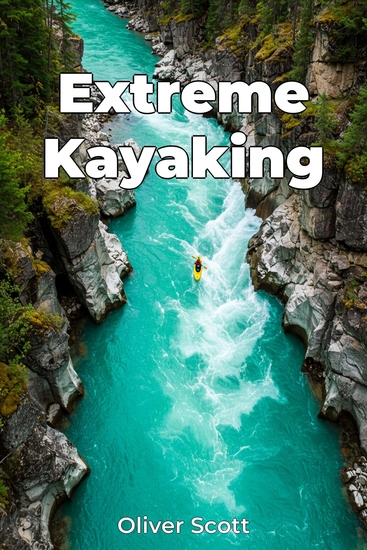
Extreme Kayaking - cover

Extreme Kayaking

Oliver Scott

Übersetzer A AI

Verlag: Publifye

  • 0
  • 0
  • 0

Beschreibung

Extreme Kayaking plunges into the adrenaline-fueled world of navigating extreme whitewater, emphasizing that success hinges not just on physical prowess, but on astute judgment and technical skill. This book details the knowledge needed to assess risks and make critical decisions in high-stakes environments. Discover how mastering advanced maneuvers like boofing and understanding river hydraulics are essential for tackling the world's most challenging waterways.  
The book starts with fundamental kayaking principles, covering boat design, paddling techniques, and safety equipment, before diving into advanced topics like reading rapids and rescue strategies. A significant portion focuses on risk management, highlighting the importance of scouting and assessing environmental conditions.  
Concluding with real-world case studies, Extreme Kayaking offers practical lessons derived from both successful and unsuccessful expeditions, illustrating the consequences of sound versus flawed decision-making, and reshaping the perception of extreme kayaking.
Verfügbar seit: 10.03.2025.
Drucklänge: 94 Seiten.

Weitere Bücher, die Sie mögen werden

  • The Shocking Truth about Travel Safety - cover

    The Shocking Truth about Travel...

    Zoey Fraisers

    • 0
    • 0
    • 0
    Traveling is one of life’s greatest pleasures. It opens doors to new cultures, breathtaking landscapes, and unforgettable experiences. Yet, amidst the allure of adventure, many travelers overlook one critical aspect of their journey: safety. Whether venturing to bustling cities or remote destinations, the risks associated with travel are real, often hidden beneath the surface of wanderlust and excitement. Understanding these risks is the first step toward ensuring a secure and enjoyable journey.  
      
    The concept of travel safety isn’t just about avoiding danger—it’s about being prepared for the unexpected. From lost belongings to health emergencies, navigating unfamiliar environments can be challenging. Every destination comes with its unique set of hazards, and even the most seasoned travelers can encounter unforeseen circumstances. However, being aware of these challenges and taking proactive steps to mitigate them can make all the difference between a smooth trip and one fraught with complications.  
      
    One of the most common misconceptions about travel safety is that it’s only necessary for “high-risk” destinations. The reality is that risks exist everywhere, even in the most familiar or seemingly safe locations. A well-planned trip can go awry due to factors as simple as a missed flight, a lost passport, or a moment of carelessness in a crowded market. These situations, though common, can leave travelers vulnerable and unprepared. 
    Zum Buch
  • Moche Civilization - Warriors Pottery and the Pyramid Builders of Northern Peru - cover

    Moche Civilization - Warriors...

    Rolf Hedger

    • 0
    • 0
    • 0
    The Moche civilization emerged along the northern coast of present-day Peru, flourishing between approximately 100 and 750 CE. This society developed in a region marked by arid deserts, fertile river valleys, and proximity to the Pacific Ocean, which shaped its economy, culture, and political structure. The Moche were not a singular unified state but rather a collection of regional polities connected through shared traditions, artistic styles, and religious beliefs. Their rise was influenced by earlier Andean cultures, particularly the Cupisnique and Chavín, which had already laid the foundations for complex societies in the region. 
    The origins of the Moche civilization can be traced to the early centuries of the Common Era when small communities along the coast began to expand due to agricultural advancements and increasing social stratification. The region's rivers, fed by Andean runoff, allowed for irrigation-based farming that supported large populations. Over time, leaders emerged who controlled land, labor, and water resources, leading to the development of hierarchical societies. These early rulers likely solidified their power through religious authority, military strength, and their ability to organize large-scale construction projects. 
    One of the defining aspects of Moche civilization was its adaptation to the harsh environment. The coastal deserts of northern Peru posed challenges for sustaining large populations, yet the Moche mastered irrigation technology, channeling river water to expand arable land. This agricultural innovation provided surplus food, which in turn fueled urban growth, specialization of labor, and the rise of elite classes. Moche settlements grew into centers of political and religious activity, with monumental architecture such as pyramids and temples becoming focal points of their cities.
    Zum Buch
  • Awesome Arizona - 200 Amazing Facts about the Grand Canyon State - cover

    Awesome Arizona - 200 Amazing...

    Roger Naylor

    • 0
    • 0
    • 0
    Which state has the most national monuments? Where in America can you find one of the Seven Natural Wonders of the World? Where is the largest contiguous forest of ponderosa pine? In Awesome Arizona, Roger Naylor, "the Dean of Arizona Travel Writers," has amassed 200 amazing facts and fascinating commentary about his beloved state. This is the fast-paced, funny encyclopedia that lovers of Arizona have been craving. 


    Awesome Arizona captures the essence of the sixth-largest state, from its rowdy past to its epic landscape bulging with mountains, slashed by canyons, and blown apart by volcanoes. Learn about trees that once shaded dinosaurs, the West's most legendary gunfight, the world's largest antique, the best-preserved meteor crater on earth, where the post office still delivers mail by mule, the longest poker game in history, how Arizona saved the unicorn, and so much more.
    Zum Buch
  • Ancient Egyptian Gods - From Ra to Anubis - cover

    Ancient Egyptian Gods - From Ra...

    Odessa Nightshade

    • 0
    • 0
    • 0
    Ancient Egyptian civilization was deeply intertwined with religion, and at the heart of their belief system was a vast pantheon of gods and goddesses. These deities were more than just figures of worship; they shaped every aspect of daily life, from the rising of the sun to the passage into the afterlife. Unlike many modern religions, Egyptian theology was fluid, allowing gods to merge, evolve, or take on different roles depending on the time and region. This dynamic belief system gave rise to a rich mythology that endured for thousands of years.   
    The gods of Egypt were not distant, abstract beings but rather personal and deeply involved in the world. They governed nature, oversaw justice, protected the people, and maintained cosmic balance, known as *ma’at*. The concept of *ma’at* was central to Egyptian religion, representing order, harmony, and truth. It was the gods' duty to uphold *ma’at* against chaos, often personified by Set, the god of disorder and storms. This cosmic struggle played out in myths, particularly in the tales of Osiris, Isis, and Horus, which symbolized the eternal battle between good and evil, life and death.  
    Temples were the primary centers of worship, serving as both religious and political institutions. Each major city had its patron deity, and grand temples were built to honor and house these gods. Priests conducted daily rituals, offering food, incense, and prayers to ensure divine favor. Unlike in many other religions, common Egyptians were not allowed direct access to the inner sanctums of temples, where the gods' statues resided. Instead, they worshipped through prayers, festivals, and personal altars in their homes. 
    Zum Buch
  • Hemingway and Bimini - The Birth of Sport Fishing at "The End of the World" - cover

    Hemingway and Bimini - The Birth...

    Ashley Oliphant

    • 0
    • 0
    • 0
    Follow Ernest Hemingway's exploits on the Bahamian island of Bimini from 1935 to 1937, the very moment in time when the International Game Fish Association (under the author's co-leadership) was emerging. Covers Hemingway's role in the formation of the IGFA, his underappreciated seminal writing about competitive saltwater angling when the sport was still in its infancy, the amazing fishing he enjoyed on the island, and the way all of these experiences translated into the composition of his posthumous novel Islands in the Stream. 


    This is the only book on this period in Hemingway's life and reveals unexpected dimensions to the Hemingway portrait that deserve attention, including his surprising humor, his advanced conservationist views several decades before the environmental movement even began, and his egalitarian ideas about his contemporary female counterparts in the big-game fishing world—challenging the usual portrait of Hemingway as a chauvinist with no personal rules, boundaries, or conscience.
    Zum Buch
  • Great Southern Land - one man one bike one midlife crisis the outback - cover

    Great Southern Land - one man...

    Mark DK Berry

    • 0
    • 0
    • 0
    In this captivating memoir, Mark, in the throes of a mid-life crisis, embarks on a solo cycling odyssey across Australia’s vast and unforgiving outback. Newly emigrated from the UK, he sets out to discover where this new life should begin. 
    Navigating barren landscapes, he confronts the harsh realities of the Australian wilderness while reflecting on life and the challenges of adapting to the environment. His journey unveils a profound appreciation of Aboriginal Australian culture and the struggles of early European settlers. 
    Through on-the-road philosophising, Mark contemplates the life he has left behind in England with the daunting task of starting anew in an unknown land. Music becomes his emotional anchor, providing solace during the most demanding stretches. 
    As he battles extreme heat, sleep deprivation, aloneness, and countless other dangers, his journey develops into a spiritual pilgrimage. Grappling with the monotony of modern life, the allure of the open road, and the elusive concept of freedom, Mark seeks direction and healing from his mid-life crisis. 
    As his funds dwindle, the journey culminates in hard-won insights, until Mark must make a final decision on where and how to begin his new life in Australia.
    Zum Buch