
Begleiten Sie uns auf eine literarische Weltreise!
Buch zum Bücherregal hinzufügen
Grey
Einen neuen Kommentar schreiben Default profile 50px
Grey
Jetzt das ganze Buch im Abo oder die ersten Seiten gratis lesen!
All characters reduced
Thoughts on South Africa - Enriched edition - cover

Thoughts on South Africa - Enriched edition

Olive Schreiner

Verlag: DigiCat

  • 0
  • 0
  • 0

Beschreibung

In "Thoughts on South Africa," Olive Schreiner presents a profound reflection on the socio-political landscape of South Africa in the late 19th century. This work transcends the simplicity of travel writing, integrating elements of social critique and philosophical discourse. Schreiner's narrative is marked by her introspective and lyrical prose, rendering the complexities of colonialism, race relations, and the human condition in vivid detail. Through her keen observations, she offers not just a critique of her contemporaries but also an early feminist voice questioning the status quo in a rapidly changing society. Olive Schreiner, a pioneering figure in feminist literature and a committed advocate for social justice, wrote this book against the backdrop of her own experiences as a South African settler. Her deep concern for the plight of marginalized communities and her commitment to discussing the psychological effects of colonial rule inform her insights in this work. Schreiner's unique perspective as a woman writer in a patriarchal society enriches her analysis, making it a significant contribution to both South African literature and feminist thought. Recommended for scholars, students, and anyone interested in the interplay of race, gender, and politics in colonial contexts, "Thoughts on South Africa" is an essential read. Schreiner's engaging prose and critical perspective provoke thoughtful dialogue about the legacies of colonialism and the ongoing struggle for equality, marking this book as a timeless and essential resource for understanding the complexities of South African identity.

In this enriched edition, we have carefully created added value for your reading experience:
- A succinct Introduction situates the work's timeless appeal and themes.
- The Synopsis outlines the central plot, highlighting key developments without spoiling critical twists.
- A detailed Historical Context immerses you in the era's events and influences that shaped the writing.
- A thorough Analysis dissects symbols, motifs, and character arcs to unearth underlying meanings.
- Reflection questions prompt you to engage personally with the work's messages, connecting them to modern life.
- Hand‐picked Memorable Quotes shine a spotlight on moments of literary brilliance.
- Interactive footnotes clarify unusual references, historical allusions, and archaic phrases for an effortless, more informed read.
Verfügbar seit: 03.06.2022.
Drucklänge: 373 Seiten.

Weitere Bücher, die Sie mögen werden

  • We Uyghurs Have No Say - An Imprisoned Writer Speaks - cover

    We Uyghurs Have No Say - An...

    Ilham Tohti

    • 0
    • 0
    • 0
    The words of China's most famous political prisoner 


    In Xinjiang, the large northwest region of China, the government has imprisoned more than a million Uyghurs in reeducation camps. One of the incarcerated—whose sentence, unlike most others, has no end date—is Ilham Tohti, an intellectual and economist, a prolific writer, and formerly the host of a website, Uyghur Online. In 2014, Tohti was arrested; accused of advocating separatism, violence, and the overthrow of the Chinese government; subjected to a two-day trial; and sentenced to life. Nothing has been heard from him since. 


    Here are Tohti's own words, a collection of his plain-spoken calls for justice, scholarly explanations of the history of Xinjiang, and poignant personal reflections. While his courage and outspokenness about the plight of China's Muslim minorities is extraordinary, these essays sound a measured insistence on peace and just treatment for the Uyghurs. 


    Winner of the PEN/Goldsmith Freedom to Write Award and the Sakharov Prize for Freedom of Thought while imprisoned, this book is the only way to hear from a man who has been called "a Uyghur Mandela."
    Zum Buch
  • Harlem Hellfighters The: The History of the 369th Infantry Regiment during World War I - cover

    Harlem Hellfighters The: The...

    Charles River Editors

    • 0
    • 0
    • 0
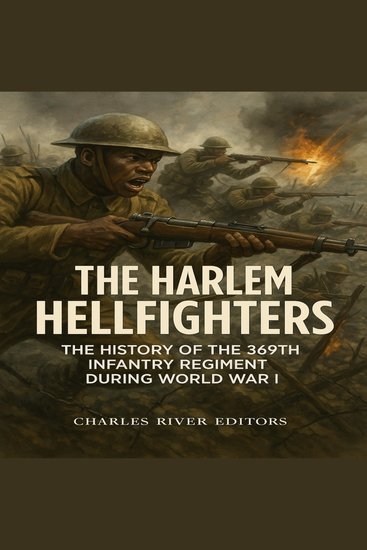
    The Harlem Hellfighters, also known as the 369th Infantry Regiment of the U.S. Army, embody a significant intersection of America’s military history and racial history. Initially raised as the 15th New York (Colored) National Guard and later federalized for World War I, the regiment was "loaned" to the French Army, where it compiled an extraordinary combat record, with a remarkable 191 days on the line and suffering about 1,400 casualties while never yielding its sector. These numbers, often highlighted in museum and official summaries, became a central pillar of the unit’s symbolic influence back home, and the unit’s performance in battle, unique experience under French command, and their triumphant homecoming in 1919 collectively reshaped debates concerning black soldiers’ loyalty, capability, and rights. As Colonel William Hayward famously told journalists, his men “never retire,” a sentiment that both the contemporary press and later unit histories preserved, capturing their combat ethos and the representational burdens they carried as black citizen-soldiers. 
    	At the same time, of course, their service did not immediately undo Jim Crow back home, even as the formation of the regiment was tied to civil rights efforts. Authorized in 1913 and organized in 1916 as New York’s first black National Guard regiment, the 15th drew volunteers from Harlem and beyond and practiced drills in borrowed spaces due to a lack of a finished armory. The regiment’s creation was the product of sustained black civic mobilization in New York and an older tradition of black soldiers that dated to the Civil War. When the United States declared war in April 1917, black leaders and newspapers urged enlistment, often framing service as a path to recognition and citizenship. W.E.B. Du Bois’s 1919 call to “return fighting” distilled that logic into a programmatic slogan.
    Zum Buch
  • Guardians of the Good - Standing Firm in a Society Adrift - cover

    Guardians of the Good - Standing...

    Frederick Luke

    • 0
    • 0
    • 0
    Embark on a Quest for Honour in a World Losing Its Way  
    Within these pages lies a compelling invitation to rediscover the bedrock of moral character, as you journey through the essence of virtue, leadership, and the resilient power of purpose. It's more than a book—it's a mission for those who dare to define their why, set a soaring course for their lives, and live with intentional gusto, making every day a testament to their unwavering resolve. 
    Assume the esteemed mantle of the Valiant Protector, understanding that courage, protectiveness, and a sacred commitment to family are not antiquated ideals but the pillars of a stewardship that can shape the very world. Embrace the noble art of selflessness as you learn about sacrifice and the profound ripple effects of service that holds the power to transform society. 
    Pursuit of the Truth cuts through the fog of modern deception with the sharpness of critical thought, enabling you to shine the light of reality upon an oft-obscured path. This explorative odyssey rewards the seeker with the ultimate treasures of respect and honour—currencies that are earned through action, not bestowed by title. 
    In answering the call to return to tradition, you'll find that forgotten wisdom and ancient rituals still have a vital place in the modern man's world, offering stability amidst chaos. "Guardians of the Good" guides you through the trials of adversity and forges within you the resilience required to emerge stronger, more connected to your brothers in solidarity, and unwavering in your ethical convictions. 
    Answer the call. Take your place amongst the guardians. For you are the beacon of hope, the immortalised essence of goodness, in a world thirsting for the strength of virtue. This book is your map, your compass, your advocate—in forging the path to a life of brazen honour and unspoken legacies. Are you ready to become a guardian of the good?
    Zum Buch
  • Aithníonn an Fhuil a Chéile - cover

    Aithníonn an Fhuil a Chéile

    Roddy Doyle

    • 0
    • 0
    • 0
    Tá Danny Ó Murchú ag dul le bualadh lena dheartháir Jimmy. Ní fhaca siad a chéile le níos mó ná fiche bliain. Ar an mbealach chuig an gcruinniú, is cuimhin le Danny na tréimhsí maithe agus na drochthréimhsí, an spraoi agus na troideanna – agus an t-achrann mór amháin a scar iad. An dtroidfidh siad arís nó an mbeidh siad ina gcairde mar ba ghnáth leo a bheith? Níl a fhios ag Danny.
    Danny Murphy is going to meet his brother, Jimmy. They haven't seen each other in over twenty years. On the way to the meeting, Danny remembers the good times and the bad times, the fun and the fights - and the one big row that drove them apart. Will they fight again or will they become the friends they used to be? Danny doesn't know.
    Zum Buch
  • Saddam Hussein - Warmonger Invader Dictator and Oil Trader - cover

    Saddam Hussein - Warmonger...

    Kelly Mass

    • 0
    • 0
    • 0
    Saddam Hussein, the sixth president of Iraq, held power from July 16, 1979, until his downfall on April 9, 2003. A central figure in Iraq's political history, Saddam was a founding member of the Arab Socialist Ba'ath Party, which advocated for a fusion of Arab nationalism and socialism, known as Ba'athism. The party's rise to power in Iraq was marked by the 1968 coup, often referred to as the 17 July Revolution, which saw the Ba'ath Party assume control. Saddam, a key figure in the party, was instrumental in establishing its dominance in Iraq. 
    Saddam's path to the presidency was shaped by his political astuteness and ruthless consolidation of power. He became vice president under General Ahmed Hassan al-Bakr, who was severely weakened by ill health. At a time when numerous factions within the country threatened to destabilize the government, Saddam focused on building and strengthening the security forces that would enable him to suppress dissent. He carefully navigated the complexities of power struggles between the administration and the military, ensuring his influence over both the party and the state apparatus. His careful maneuvering eventually led to his formal assumption of power in 1979, though he had already been Iraq's de facto leader for several years. 
    In the early 1970s, Saddam took aggressive steps to nationalize Iraq's most important industries, including the Iraq Petroleum Company and various independent banks. This move, though initially successful in securing Iraq's economic independence, led to long-term financial instability. The nationalization policies, combined with inflation and a series of bad loans, contributed to the eventual collapse of Iraq's financial sector. Nevertheless, Saddam's regime was buoyed by the economic boom fueled by Iraq's oil exports, which provided the government with significant wealth and the ability to fund state projects.
    Zum Buch
  • Summary: The Body Keeps the Score - Brain Mind and Body in the Healing of Trauma - cover

    Summary: The Body Keeps the...

    Liam Daniels, Alice Moore

    • 0
    • 0
    • 0
    To many people, trauma is something that happens to soldiers and refugees, far away and out of sight. But in fact, trauma is the single greatest threat to public health and well-being that America has ever seen. 
    As humans, we are exposed to a horde of trauma, from physical, sexual, and emotional abuse, to neglect, accidents, and the list can go on and on. And while the naked eye can see the immediate effects of that trauma, it is usually the long-term trauma we carry that bogs us down and infects every aspect of our lives, whether we are aware of it or not. 
    Summary: The Body Keeps the Score provides you with all of van der Kolk's teachings about trauma in a clear, comprehensive, and condensed manner—without missing anything important! 
    If you found The Body Keeps the Score an intriguing read, this summary offers you the chance to refresh and consolidate what you've learned. If you've heard of the book but are put off by how long and dense it is, this is the perfect opportunity to access all the information you need in a clear, concise form. 
     You will get:What trauma is and how it may look in your lifeShocking facts about the reality of trauma in our world todayThe latest research on psychiatric theory and practice from the world's leading trauma specialistInsights into the different methods of treatment, including skills and tools for healing traumaMoving personal stories of recoverykey takeaways that serve as refreshing reminders 
    …and more! 
    The messages in this book contain information for everyone; for the fight against trauma to be successful, it needs to be a collective effort. Don't miss out on the wisdom and awareness this book offers. 
    Get your copy today, and let's all work toward creating a trauma-free generation. 
    *All page references correspond to the latest edition
    Zum Buch