Rejoignez-nous pour un voyage dans le monde des livres!
Ajouter ce livre à l'électronique
Grey
Ecrivez un nouveau commentaire Default profile 50px
Grey
Abonnez-vous pour lire le livre complet ou lisez les premières pages gratuitement!
All characters reduced
Happy Land - A Lover's Revenge - cover

Happy Land - A Lover's Revenge

OJ Modjeska

Maison d'édition: Next Chapter

  • 0
  • 0
  • 0

Synopsis

The scene was paralyzing. We stood there, numb. No one spoke. There were 69 bodies spread about the 24x50 foot area. They all could have been sleeping.
 
In the small hours of the annual Punta Carnivale celebrations held by Central American communities of the West Bronx, residents witness flames and smoke coming from a popular nightspot known as Happy Land. Fire and rescue personnel arrive at the scene within three minutes, only to find all 87 party-goers trapped inside already dead. The victims have died at an unfathomable speed, succumbing to suffocation and the effects of lethal gases before the flames could even reach them.
 
Detectives soon realize that the disaster, epic and tragic in proportions, is no accident. The fire has been deliberately lit by an arsonist, the man responsible for what is to be the worst mass murder in American history.
 
Happy Land - A Lover's Revenge untangles the shocking story behind one of the worst fires in New York history. Exploring in detail a tragedy little remembered today, but rich with contemporary meaning, the story provides an unnerving snapshot of the possible consequences of societal indifference to violence against women and the plight of the most vulnerable in our communities.
Disponible depuis: 04/01/2022.
D'autres livres qui pourraient vous intéresser

  • Assassinated Presidents The: The Lives and Deaths of Abraham Lincoln James Garfield William McKinley and John F Kennedy - cover

    Assassinated Presidents The: The...

    Editors Charles River

    • 0
    • 0
    • 0
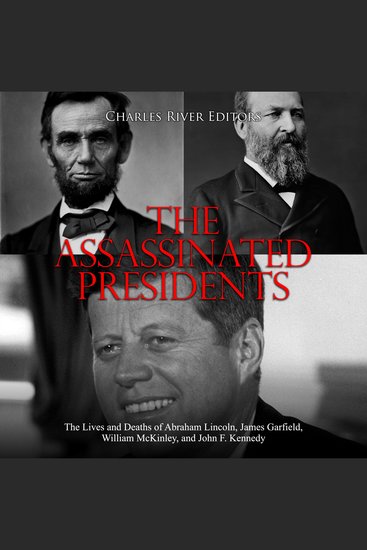
    Until April 14, 1865, John Wilkes Booth was one of the most famous actors of his time, and President Abraham Lincoln had even watched him perform. But his most significant performance at a theater did not take place on the stage. That night, Booth became one of history’s most infamous assassins when he assassinated President Lincoln at Ford's Theatre in Washington, D.C. 
    	In 1880, Garfield ran as a Republican for president, and one of his supporters was a man named Charles Guiteau, who wrote and circulated a speech called “Garfield vs. Hancock” that aimed to rally support for the Republican candidate. Though few knew it, Guiteau’s family had already deemed him insane and attempted to keep him committed in an asylum, only to have him manage an escape from confinement. Garfield went on to narrowly edge Winfield Scott Hancock in the election, and Guiteau, harboring delusions of grandeur, believed he had helped tip the scales in Garfield’s favor.  
    President James Garfield had been assassinated just 20 years earlier, but McKinley didn’t worry about presidential security or his own safety, and that was the case in Buffalo. McKinley’s insistence on greeting the public and shaking hands allowed Czolgosz to walk up to him on September 6, 1901 at a public reception in the Temple of Music on the expo grounds and shoot him point blank, with one bullet grazing the president and another lodging in his abdomen.  
    In many ways, John Fitzgerald Kennedy and his young family were the perfect embodiment of the ‘60s. The decade began with a sense of idealism, personified by the attractive Kennedy, his beautiful and fashionable wife Jackie, and his young children. Months into his presidency, Kennedy exhorted the country to reach for the stars, calling upon the nation to send a man to the Moon and back by the end of the decade. But the idealism and optimism of the decade was quickly shattered, starting with Kennedy’s assassination in 1963. 
    Voir livre
  • The Astonishing History of Assassins - From Ancient Killers to Modern Hitmen - cover

    The Astonishing History of...

    John Harpoon

    • 0
    • 0
    • 0
    Throughout history, the act of assassination has been a tool of power, vengeance, and politics, often carried out in the shadows and shrouded in secrecy. From the ancient world to modern times, assassins have played pivotal roles in shaping the course of history. Yet, the nature of assassination has evolved, reflecting the complex interplay of politics, culture, and technology across the centuries. This book seeks to unravel the astonishing history of assassins, exploring their origins, their methods, and the lasting impact they have had on world events. 
      
    In ancient civilizations, assassination was often a political tool, employed by rulers, rebels, and conquerors alike. It was a means of securing power, removing enemies, or solidifying control over vast empires. The first known assassins operated in ancient Egypt, Persia, and Rome, where rulers and military leaders sought to eliminate their adversaries in the most covert and deadly ways possible. Over time, the practice would evolve, becoming more organized and ritualized, with the establishment of secretive cults like the Hashashin, who would later influence both the Crusades and the broader history of the Middle East. 
      
    As time progressed, the nature of assassination became more sophisticated. In the medieval world, political intrigue was rife, and assassins found themselves at the heart of royal courts, hired to remove monarchs or their rivals in clandestine operations. The Italian Renaissance, with its complex web of political factions, provided fertile ground for the rise of professional assassins. Meanwhile, during the Age of Revolution, assassination became both a tool of rebellion and a strategy for suppressing dissent, influencing the outcomes of revolutions that reshaped Europe and the rest of the world.
    Voir livre
  • Dark Psychology - Body Language Seduction Non-Verbal Communication and More - cover

    Dark Psychology - Body Language...

    Lucia Kohlers

    • 0
    • 0
    • 0
    What is dark psychology? You probably already know the answer to this question, but there is so much involved in it. 
    What is manipulation? And more importantly, how can you spot it fast when others use it? 
    These questions will be answered exactly in this elaborate book. A myriad of other subtopics will be addressed as well. We will talk about things like: 
    Seduction 
    Sex traffickers 
    Verbal abuse 
    Persuasion techniques 
    The Dark Triad 
    How people decide on things 
    Sociopaths 
    NLP 
    Serial killers 
    Mentalism 
    Propaganda 
    Emotions 
    Scams 
    Subconscious mind 
    And so many other things. You probably don’t realize how much of a jackpot you have hit when it comes to valuable content. I suggest you pick up this book now! Don’t wait any longer!
    Voir livre
  • Psychopaths - Unraveling the Mind of a Psychopath and Its Impacts - cover

    Psychopaths - Unraveling the...

    Coral Nunez

    • 0
    • 0
    • 0
    Psychopathy is a personality disorder characterized by a lack of empathy, manipulative behavior, and a disregard for social norms. While often associated with violent criminals, not all psychopaths engage in illegal activities. Many live among us, blending into society while exhibiting traits that set them apart. Understanding psychopathy requires examining its defining characteristics, how it differs from other disorders, and how it has been studied over time. 
    At the core of psychopathy is a profound emotional deficit. Psychopaths struggle to feel deep emotions such as guilt, remorse, or love. While they can mimic emotions to manipulate others, their reactions are often shallow and insincere. This emotional disconnect allows them to deceive, exploit, and harm others without experiencing the moral conflicts that most people do. Their ability to charm and manipulate makes them particularly dangerous, as they can easily gain trust and control over those around them. 
    A common misconception is that psychopathy and sociopathy are the same. While they share some similarities, they are distinct disorders. Psychopaths are typically more calculated, controlled, and charismatic. They can function in society, often excelling in careers that require persuasion and risk-taking. Sociopaths, on the other hand, are more impulsive and prone to emotional outbursts, making it harder for them to maintain stable relationships or careers. These differences highlight why some psychopaths remain undetected, while sociopaths are more likely to be caught for reckless behavior.
    Voir livre
  • For Valerie - The story of my sister 's death at the hands of her husband and its devastating aftermath - cover

    For Valerie - The story of my...

    David French

    • 0
    • 0
    • 0
    In June 2019, Valerie French Kilroy was brutally murdered by her husband at their home near Westport, while her three young sons lay in bed. For her brother David and the rest of her family, it was the beginning of a battle against a system unprepared to protect the three innocent children whose father remains their legal guardian, despite being convicted of their mother's murder.
    From the devastating shock of hearing of his sister's death to the multiple criminal trials before the guilty verdict was delivered, David describes the issues his family faced in the aftermath of Valerie's murder. He provides a deeply personal insight into Valerie's marriage and the hidden struggles she faced in the run-up to her murder.
    This book is both a heartfelt tribute to Valerie's life and legacy and an urgent call to rethink the way our society responds to domestic homicide.
    Voir livre
  • Deadly Procurement - cover

    Deadly Procurement

    Howard Livingston

    • 0
    • 0
    • 0
    From an environment of mystery, murder, and romance, the author takes you inside this world from a safe distance. After you’ve finished the book, you’re on your own...
    Voir livre