Rejoignez-nous pour un voyage dans le monde des livres!
Ajouter ce livre à l'électronique
Grey
Ecrivez un nouveau commentaire Default profile 50px
Grey
Abonnez-vous pour lire le livre complet ou lisez les premiĂšres pages gratuitement!
All characters reduced
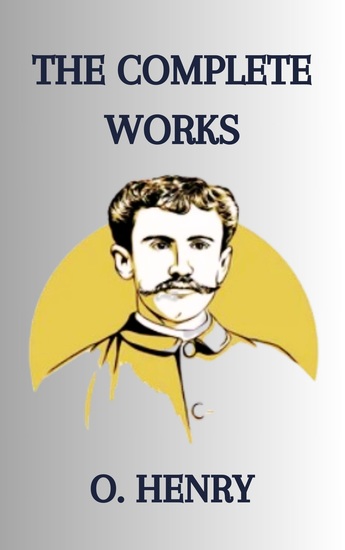
O Henry - The Complete Works - cover

O Henry - The Complete Works

O. Henry, Zenith Crescent Moon Press

Maison d'édition: Zenith Crescent Moon Press

  • 0
  • 0
  • 0

Synopsis

Step into the charming and unpredictable world of O. Henry Complete Works 📖✹. This comprehensive collection brings together the heartwarming and ingenious short stories of one of America's most beloved storytellers 🌟📚.
Enjoy unforgettable tales such as The Gift of the Magi 🎁✹ and The Ransom of Red Chief 😂, known for their iconic twist endings and masterful storytelling. O. Henry's works transport readers to the bustling streets of turn-of-the-century America, capturing moments of love, humor, and human connection with wit and sentiment 🌎💕.
🌟 Why Readers Adore It

This collection is a treasure trove of literary gems that celebrate the art of storytelling, ideal for anyone who loves tales that tug at the heartstrings and leave a lasting smile ✹📚.
Click "Buy Now" to discover the genius of O. Henry today 🚀
Disponible depuis: 25/03/2025.
Longueur d'impression: 2435 pages.

D'autres livres qui pourraient vous intéresser

  • The Daughter of Lilith - From their pens to your ears genius in every story - cover

    The Daughter of Lilith - From...

    Anatole France

    • 0
    • 0
    • 0
    François-Anatole Thibault was born on the 16th April 1844 in Paris, France, the son of a bookseller and bibliophile. 
    He studied at the CollĂšge Stanislas, a private Catholic school, and after graduating joined his father in the bookstore, which specialised in works on the French Revolution.  Several years later he secured a position as cataloguer at Bacheline-Deflorenne and at Lemerre before being appointed librarian for the French Senate in 1876. 
    His literary career had begun as a journalist and as a poet before publishing his novel ‘Le Crime de Sylvestre Bonnard’ in 1881.  Praised for its elegant prose, it won him a prestigious prize from the AcadĂ©mie Française, which later elected him to its storied ranks. 
    His works were profound and thoughtful and often couched in surreal and outlandish expressions; whether penguins baptized by a near-blind Abbott transformed themselves into humans or of a guardian angel who becomes an atheist, his stories turned established thought into startling literature. 
    His short stories run in the same vein.  The premise may seem plausible but his distinctive style turns them into an individual viewpoint which invokes both discussion and admiration. 
    In his private life his relationships with women were often turbulent.  A Socialist, he was a fervent supporter of the Russian Revolution and the early years of the French Communist party. 
    He was awarded the Nobel Prize in 1921 but the following year his entire canon of works was placed on the prohibited list of the Catholic Church, which he thought of as a credit to his name. 
    Anatole France died on the 12th October 1924 in Tours.  He was 80.
    Voir livre
  • The Light That Takes - cover

    The Light That Takes

    Karyne Norton

    • 0
    • 0
    • 0
    It's been fourteen years since Gaeren saw Aeliana disappear, but he still searches every port for his childhood friend. When the latest clue points to lands across the barrier, where people are no longer supposed to exist, Gaeren is forced to relive the painful memories of losing Aeliana in order to discover if she's still within his reach. 
    The Light That Takes is a prequel short story in The Half-Light Chronicles. Gaeren and Aeliana's story continues in Blood of the Stars.
    Voir livre
  • 3 Stories - Success at What Cost - A trio of classic tales perfect for a commute walk or quiet night in - cover

    3 Stories - Success at What Cost...

    Leo Tolstoy, Anthony Hope, Amy Levy

    • 0
    • 0
    • 0
    There is something about the number 3.    
     
    The Ancient Greeks believed 3 was the perfect number, and in China 3 has always been a lucky number, and they know a thing or two.   
     
    Most religions also have 3 this and 3 that and, of course, in these more modern times, three’s a crowd may be too many, except when it’s a mĂ©nage Ă  trois.  It seems good things usually come in threes. 
     
    Whatever history and culture says WE think 3, a hat-trick of stories, is a great number to explore themes and literary avenues that classic authors were so adept at creating. 
     
    From their pens to your your ears.  
     
    01 - 3 Stories - Success At What Cost 
    02 - How Much Land Does A Man Need by Leo Tolstoy 
    03 - Cohen of Trinity by Amy Levy 
    04 - A Sucessful Rehearsal by Anthony Hope
    Voir livre
  • Virginia Woolf - Six of the Best - Their legacy in 6 classic stories - cover

    Virginia Woolf - Six of the Best...

    Virginia Woolf

    • 0
    • 0
    • 0
    Six has always been a number we group things around – Six of the best, six of one half a dozen of another, six feet under, six pack, six degrees of separation and a sixth sense are but a few of the ways we use this number. 
     
    Such is its popularity that we thought it is also a very good way of challenging and investigating an author’s work to give width, brevity, humour and depth across six of their very best. 
     
    In this series we gather together authors whose short stories both rivet the attention and inspire the imagination to visit their gems in a series of six, to roam across an author’s legacy in a few short hours and gain a greater understanding of their writing and, of course, to be lavishly entertained by their ideas, their narrative and their way with words. 
     
    These stories can be surprising and sometimes at a tangent to what we expected, but each is fully formed and a marvellous adventure into the world and words of a literary master.
    Voir livre
  • Gooseberries - From their pens to your ears genius in every story - cover

    Gooseberries - From their pens...

    Anton Chekhov

    • 0
    • 0
    • 0
    Anton Pavlovich Chekhov was born on 29th January 1860 in Taganrog, on the south coast of Russia.  
    His family life was difficult; his father was strict and over-bearing but his mother was a passionate story-teller, a subject Chekhov warmed to. As he later said; ‘our talents we got from our father, but our soul from our mother’.  
    At school Chekhov was distinctly average. At 16 his father mis-managed his finances and was declared bankrupt. His family fled to Moscow. Chekhov remained and eked out a living by various means, including writing and selling short sketches to newspapers, to finish his schooling. That completed and with a scholarship to Moscow University obtained he rejoined his family. 
    He was able to help support them by selling satirical sketches and vignettes of Russian lifestyles and gradually obtained further commissions. In 1884, he qualified as a physician and, although it earned him little, he often treated the poor for free, he was fond of saying ‘Medicine is my lawful wife, and literature is my mistress.’ 
    His own health was now an issue as he began to cough up blood, a symptom of tuberculosis.  Despite this his writing success enabled him to move the family into more comfortable accommodation.  
    Chekhov wrote over 500 short stories which included many, many classics including ‘The Kiss’ and ‘The Lady with a Dog’.  His collection ‘At Dusk’ won him the coveted Pushkin Prize when was only 26.  
    He was also a major playwright beginning with the huge success of ‘Ivanov’ in 1887.   
    In 1892 Chekhov bought a country estate north of Moscow. Here his medical skills and money helped the peasants tackle outbreaks of cholera and bouts of famine. He also built three schools, a fire station and a clinic.  It left him with less time for writing but the interactions with real people gained him detailed knowledge about the peasantry and their living conditions for his stories.  
    His most famous work, ‘The Seagull’ was received disastrously at its premiere in St Petersburg. It was later restaged in Moscow to highlight its psychological aspects and was a huge success. It led to ‘Uncle Vanya’, ‘The Three Sisters’ and ‘The Cherry Orchard’.  
    Chekhov suffered a major lung hemorrhage in 1897 while visiting Moscow. A formal diagnosis confirmed tuberculosis and the doctors ordered changes to his lifestyle.  
    Despite a dread of weddings the elusive literary bachelor quietly married the actress Olga Knipper, whom he had met at rehearsals for ‘The Seagull’, on 25th May 1901. 
    By May 1904 with his tuberculosis worsening and death imminent he set off for the German town of Badenweiler writing cheerful, witty letters to his family and assuring them his health was improving.  
    On 15th July 1904 Anton Chekhov died at Badenweiler.  He was 44.
    Voir livre
  • People Want to Live - cover

    People Want to Live

    Farah Ali

    • 0
    • 0
    • 0
    Set primarily in Pakistan, these award-winning stories follow people living on the brink of abandonment—in their personal relationships and their place in the world. 


    A mother, coping with the sudden death of her son, uncovers long buried secrets in his absence. An anguished girl grabs a chance for a life beyond the orphanage walls where she lives and discovers the price of freedom. A young couple tries to keep their fraught relationship steady as a heat wave engulfs their city. A son returns to visit his ageing parents while beset with memories of a troubled childhood. And two thieves find themselves in a situation more precarious by the minute, and more dangerous than their original mission. 


    Farah Ali's debut collection of thirteen stories, People Want to Live, features stories of togetherness and reckless faith in the face of a world that's built to break us. Her characters mount battle with loneliness and in their fight reveal surprising vulnerabilities and an astonishing measure of hope.
    Voir livre