Rejoignez-nous pour un voyage dans le monde des livres!
Ajouter ce livre à l'électronique
Grey
Ecrivez un nouveau commentaire Default profile 50px
Grey
Abonnez-vous pour lire le livre complet ou lisez les premières pages gratuitement!
All characters reduced
Election Process Explained - cover

Election Process Explained

Nora Franklin

Traducteur A AI

Maison d'édition: Publifye

  • 0
  • 0
  • 0

Synopsis

Election Process Explained offers a crucial guide to the often-complex mechanisms underpinning democratic elections, emphasizing the importance of informed citizenship in an era where electoral outcomes face increasing scrutiny. The book delves into voter access and registration, the mechanics of voting and vote tabulation, and the diverse electoral systems used globally. It provides essential context by tracing the historical evolution of voting rights, legal frameworks, and technological advancements that have shaped modern elections. Understanding concepts like gerrymandering and voter suppression is key to grasping the nuances of today's elections. The book argues that accessibility, transparency, and fairness are cornerstones of democratic legitimacy. It begins by introducing fundamental concepts, then moves into major areas such as voter registration models, voting technologies and security (addressing cybersecurity risks), and electoral system design, comparing systems like proportional representation and ranked-choice voting. A unique aspect of this book is its comparative, global perspective on election processes, going beyond a single-country focus. Employing a clear, accessible writing style, Election Process Explained avoids jargon and uses real-world examples to explain complex topics. This approach makes it valuable for students, journalists, engaged citizens, and anyone interested in understanding and participating in electoral reform efforts. By integrating perspectives from political science, law, and computer science, the book provides a holistic understanding of the challenges and opportunities facing electoral systems today.
Disponible depuis: 15/02/2025.
Longueur d'impression: 87 pages.

D'autres livres qui pourraient vous intéresser

  • Collected Works Of Marxism Anarchism Communism - The Communist Manifesto Reform or Revolution The Conquest of Bread Anarchism: What it Really Stands The State and Revolution Fascism: What It Is and How To Fight It - cover

    Collected Works Of Marxism...

    Karl Marx, Friedrich Engels,...

    • 0
    • 0
    • 0
    This book contains the fundamental works of Marxism, Anarchism and Bolshevism:
    The Communist Manifesto, originally the Manifesto of the Communist Party, by Karl Marx and Friedrich Engels;
    Reform or Revolution by Rosa Luxemburg;
    The Conquest of Bread by the Russian anarcho-communist Peter Kropotkin;
    Anarchism: What it Really Stands For by Emma Goldman;
    The State and Revolution by Vladimir Lenin;
    Fascism: What It Is and How To Fight It by Leon Trotsky.
     
    Translated by Mary Fox.
    Illustrated by Dmytro Rybalko.
    Voir livre
  • Simple Sabotage Field Manual - cover

    Simple Sabotage Field Manual

    United States Office of...

    • 0
    • 0
    • 0
    The *Simple Sabotage Field Manual*, created in 1944 by the U.S. Office of Strategic Services (OSS), is a unique World War II-era document that provides guidance on simple methods of sabotage. Originally intended for citizens in enemy-occupied territories, it describes easy-to-execute tactics for disrupting enemy operations without special tools or skills. The manual covers areas such as industrial sabotage, transportation interference, and general workplace disruption, encouraging small acts like misplacing tools, giving incorrect directions, or insisting on unnecessary bureaucracy to lower productivity and morale. Emphasizing the power of collective minor disruptions, this field manual offers a fascinating look at unconventional resistance strategies and reflects the ingenuity of wartime intelligence efforts. Now in the public domain, it serves as a historical document on guerrilla tactics and psychological warfare.
    Voir livre
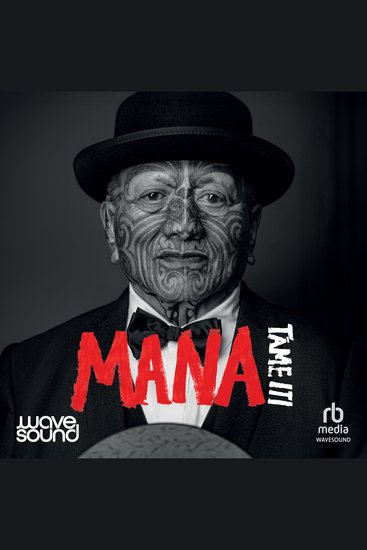
  • Mana - cover

    Mana

    Tame Iti

    • 0
    • 0
    • 0
    Mana. It's a big word. But what is it? Are you born with it, can you earn it, can it be taken away? 
     
    For more than five decades, Tame Iti has stood at the heart of Aotearoa's struggle for indigenous rights. From land marches to performance art, police raids to prison cells, his voice has challenged New Zealand to reckon with its colonial legacy.  
     
    Once branded as a dangerous and extreme activist, nowhailed as a national treasure, Tame has lived the contradictions and realities of standing with mana motuhake in a modern world. 
     
    After being silenced from speaking te reo Maori as a child, Tame went on to champion its revitalisation. He discovered the power of protest and what it means to live with mana in a world that often tries to strip it away. 
     
    This is his korero of the road he walked and the people who joined him. The comrades, the supporters, and the ones who tried to take him out. 
     
    Mana is the story of a man who has never stopped challenging the status quo. It cements Tame's place as one of Aotearoa's most iconic figures.
    Voir livre
  • The Tragic Mind - Fear Fate and the Burden of Power - cover

    The Tragic Mind - Fear Fate and...

    Robert D. Kaplan

    • 0
    • 0
    • 0
    A moving meditation on recent geopolitical crises, viewed through the lens of ancient and modern tragedy 
     
    Some books emerge from a lifetime of hard-won knowledge. Robert D. Kaplan has learned, from a career spent reporting on wars, revolutions, and international politics in Europe, the Middle East, and East Asia, that the essence of geopolitics is tragedy. In The Tragic Mind, he employs the works of ancient Greek dramatists, Shakespeare, German philosophers, and the modern classics to explore the central subjects of international politics: order, disorder, rebellion, ambition, loyalty to family and state, violence, and the mistakes of power. The great dilemmas of international politics, he argues, are not posed by good versus evil—a clear and easy choice—but by contests of good versus good, where the choices are often searing, incompatible, and fraught with consequences. A deeply learned and deeply felt meditation on the importance of lived experience in conducting international relations, this is a book for everyone who wants a profound understanding of the tragic politics of our time.
    Voir livre
  • Arthashastra or The Playbook of Material Gain - Pragmatic and amoral tips on how to gain defend and expand power from India’s greatest philosopher - cover

    Arthashastra or The Playbook of...

    Chanakya

    • 0
    • 0
    • 0
    Truly radical "Machiavellianism", in the popular sense of that word, is classically expressed in Indian literature in the Arthashastra of Kautilya (written long before the birth of Christ, ostensibly in the time of Chandragupta): compared to it, Machiavelli's The Prince is harmless.— Max Weber, Politics as a Vocation (1919)Chanakya's treatise, written while turning a farmhand into the emperor of the largest empire India had ever seen, focuses on how to manage an empire, covering everything from domestic policy and personal rights to assassination and the dirtier arts of politics. This is not, as with Plato’s Republic, a work of theory. Chanakya’s guidance is entirely practical, and is based on both his education and his experience building an empire. It lacks the philosophical ponderings and moralizing of its equivalent Western works (such as The Prince, The Republic or Leviathan) and instead focuses on how one deals with the messiness of the world in practice.People will occasionally refer to Chanakya as an Indian Machiavelli, but this does some discredit to Chanakya. The Prince is a satire, and focused around exposing the tactics and inhumanity of Cesare Borgia. Arthashastra is a manual for every aspect of statecraft, and while it deals in the unethical it does so only because that is, after all is said and done, one of the options available to a ruler.If you're after a totally pragmatic analysis of leadership, stripped of moralising and focused on what works and how to deal with real-world issues, this is the book for you.
    Voir livre
  • Creating the KGB and CIA: The Establishment of the World’s Most Famous Intelligence Agencies - cover

    Creating the KGB and CIA: The...

    Editors Charles River

    • 0
    • 0
    • 0
    The KGB is one of the most famous abbreviations of the 20th century, and it has become synonymous with the shadowy and often violent actions of the Soviet Union’s secret police and internal security agencies. In fact, it is often used to refer to the Soviet state security agencies throughout its history, from the inception of the inception of the Cheka (Extraordinary Commission) in 1917 to the official elimination of the KGB in 1992. Whether it’s associated with the Russian Civil War’s excesses, Stalin’s purges, and even Vladimir Putin, the KGB has long been viewed as the West’s biggest bogeyman during the second half of the 20th century. However, the KGB did not appear out of thin air. Naturally, the earliest Soviet leaders utilized intelligence agencies that collected information both abroad and within the Soviet Union, targeting foreign opponents and domestic opponents alike. Lenin did not imagine the scale of the opposition he would have to face after the revolution, and he quickly came to the conclusion that "a special system of organized violence" must be created to implement the dictatorship of the proletariat. 
    Though it might be hard to believe, the Americans did not have a covert operations organization when they joined World War II, and like the British, it took them some time to realize it could be a powerful tool. As a result, the Office of Strategic Services (OSS) was not established until June 13, 1942, six months after the attack on Pearl Harbor. This would all chart a path for the early days of America’s most famous intelligence agency, the CIA. Although plagued by its own share of problems in its early existence during World War II and the early Cold War years, the agency’s early problems, smoothed over by a string of tenured presidents, paled in comparison to those it would face in the coming decades.
    Voir livre