Begleiten Sie uns auf eine literarische Weltreise!
Buch zum Bücherregal hinzufügen
Grey
Einen neuen Kommentar schreiben Default profile 50px
Grey
Jetzt das ganze Buch im Abo oder die ersten Seiten gratis lesen!
All characters reduced
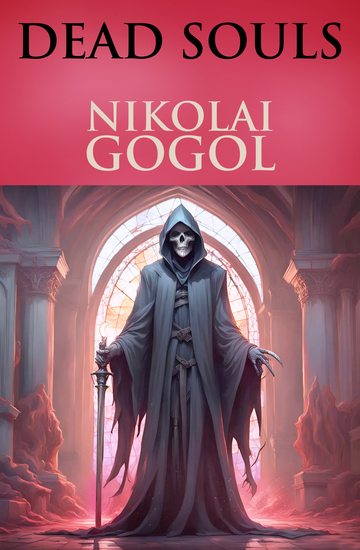
Dead Souls - cover

Dead Souls

Nikolai Gogol

Übersetzer D. J. Hogarth

Verlag: E-Kitap Projesi & Cheapest Books

  • 0
  • 0
  • 0

Beschreibung

Dead Souls, is a novel by Nikolai Gogol, first published in 1842, and widely regarded as an exemplar of 19th-century Russian literature. The purpose of the novel was to demonstrate the flaws and faults of the Russian mentality and character. Gogol masterfully portrayed those defects through Pavel Ivanovich Chichikov (the main character) and the people whom he encounters in his endeavours. These people are typical of the Russian middle-class of the time. Gogol himself saw it as an "epic poem in prose", and within the book as a "novel in verse". Despite supposedly completing the trilogy's second part, Gogol destroyed it shortly before his death. Although the novel ends in mid-sentence (like Sterne's Sentimental Journey)

"To the door of an inn in the provincial town of N. there drew up a smart britchka—a light spring-carriage of the sort affected by bachelors, retired lieutenant-colonels, staff-captains, land-owners possessed of about a hundred souls, and, in short, all persons who rank as gentlemen of the intermediate category.

In the britchka was seated such a gentleman—a man who, though not handsome, was not ill-favoured, not over-fat, and not over-thin. Also, though not over-elderly, he was not over-young. His arrival produced no stir in the town, and was ac-companied by no particular incident, beyond that a couple of peasants who happened to be standing at the door of a dramshop exchanged a few comments with reference to the equipage rather than to the individual who was seated in it. "Look at that carriage," one of them said to the other. "Think you it will be going as far as Moscow?"

"I think it will," replied his companion. "But not as far as Kazan, eh?" "No, not as far as Kazan." With that the conversation ended. Presently, as the britchka was approaching the inn, it was met by a young man in a pair of very short, very tight breeches of white dimity, a quasi-fashionable frockcoat, and a dickey fastened with a pistol-shaped bronze tie-pin.

The young man turned his head as he passed the britchka and eyed it attentively; after which he clapped his hand to his cap (which was in danger of being removed by the wind) and resumed his way.."
Verfügbar seit: 25.01.2024.
Drucklänge: 500 Seiten.

Weitere Bücher, die Sie mögen werden

  • The Secret Garden - cover

    The Secret Garden

    Frances Hodgson Burnett

    • 0
    • 0
    • 0
    Unlock the magic of "The Secret Garden" by Frances Hodgson Burnett, a timeless tale of renewal and discovery. Mary Lennox, a spoiled and lonely orphan, finds herself in her uncle's gloomy Yorkshire estate. Her curiosity leads her to an abandoned and hidden garden. As she breathes life back into it, Mary, along with newfound friends Colin and Dickon, experiences a profound transformation. Through nature's healing power, the garden becomes a sanctuary of hope, friendship, and inner growth.
    Zum Buch
  • Treasure Island - A Classic Adventure Tale - cover

    Treasure Island - A Classic...

    Robert Louis Stevenson

    • 0
    • 0
    • 0
    A thrilling journey of pirates, buried treasure, and dangerous secrets on the high seas. 
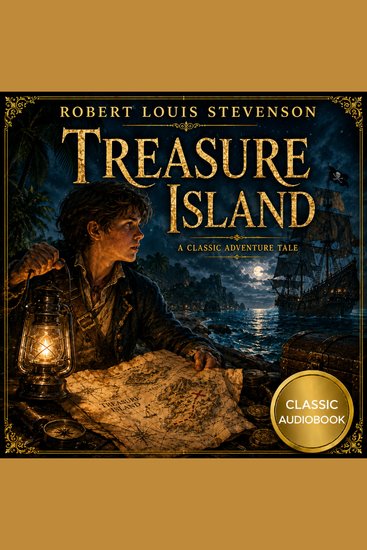
    When young Jim Hawkins discovers a mysterious treasure map, he is swept into a perilous adventure that will change his life forever. Joined by a crew of sailors and fortune seekers, Jim sets sail for a remote island rumored to hold the hidden treasure of the infamous Captain Flint. But among the crew is the cunning and unforgettable Long John Silver—a man whose charm conceals deadly ambition. 
    Filled with mutiny, suspense, hidden gold, and unforgettable characters, Treasure Island is one of the greatest adventure stories ever written. Robert Louis Stevenson’s timeless classic helped define the modern pirate tale and continues to inspire readers and listeners across generations. 
    First published in 1883, this beloved novel combines danger, courage, betrayal, and discovery into an unforgettable voyage across stormy seas and mysterious shores. 
    Perfect for listeners who enjoy classic adventure fiction, pirate stories, nautical tales, and timeless literary classics.
    Zum Buch
  • Wonderland Collection The (Seasons Edition -- Summer) - cover

    Wonderland Collection The...

    Lewis Carroll

    • 0
    • 0
    • 0
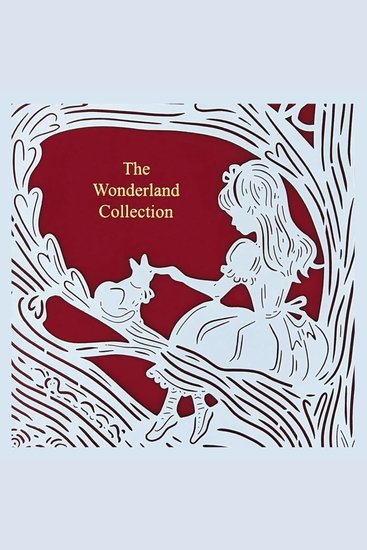
    So she was considering in her own mind (as well as she could, for the hot day made her feel very sleepy and stupid), whether the pleasure of making a daisy-chain would be worth the trouble of getting up and picking the daisies, when suddenly a White Rabbit with pink eyes ran close to her. 
    Lewis Carroll’s Alice in Wonderland books have delighted readers across the globe for more than a hundred years. The Wonderland Collection presents three of Carroll's most famous works:Alice in WonderlandThrough the Looking GlassA Tangled Tale 
    Narrated by award-winning voice talent Simon Bubb, The Wonderland Collection (Seasons Edition--Summer) is one of three titles available in June 2020. The summer season audio collection also will include Persuasion and the Adventures of Huckleberry Finn. 
    Solutions and explanations of the riddles in A Tangled Tale are included in the audiobook companion PDF download. 
      
     
    Zum Buch
  • Pygmalion - cover

    Pygmalion

    George Bernard Shaw

    • 0
    • 0
    • 0
    Pygmalion is a play by George Bernard Shaw, named after the Greek mythological figure. It premiered at the Hofburg Theatre in Vienna on 16 October 1913 and was first presented in German on stage to the public in 1913. Its English-language premiere took place at Her Majesty's Theatre in the West End in April 1914 and starred Herbert Beerbohm Tree as phonetics professor Henry Higgins and Mrs Patrick Campbell as Cockney flower girl Eliza Doolittle.
    In ancient Greek mythology, Pygmalion fell in love with one of his sculptures, which then came to life. The general idea of that myth was a popular subject for Victorian era British playwrights, including one of Shaw's influences, W. S. Gilbert, who wrote a successful play based on the story called Pygmalion and Galatea that was first presented in 1871. Shaw would also have been familiar with the musical Adonis and the burlesque version, Galatea, or Pygmalion Reversed. Shaw's play has been adapted numerous times, most notably as the 1938 film Pygmalion, the 1956 musical My Fair Lady and its 1964 film version.
    Shaw mentioned that the character of Professor Henry Higgins was inspired by several British professors of phonetics: Alexander Melville Bell, Alexander J. Ellis, Tito Pagliardini, but above all, the cantankerous Henry Sweet.
    Zum Buch
  • The Phantom Rickshaw And Other Ghost Stories - cover

    The Phantom Rickshaw And Other...

    Rudyard Kipling

    • 0
    • 0
    • 0
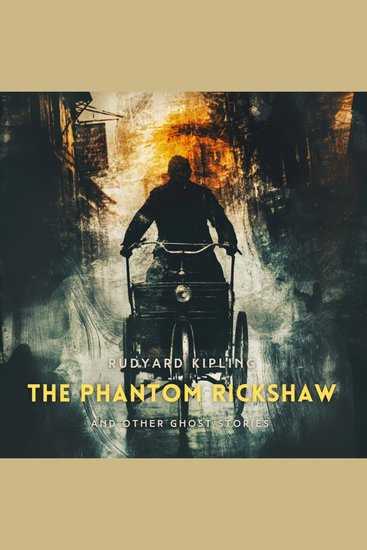
    Rudyard Kipling’s The Phantom Rickshaw and Other Ghost Stories conjures colonial India’s spectral shadows to expose human vice and imperial hubris. In the titular tale, John Holderness, a British officer, is tormented by the vengeful ghost of Bessie Slane—a woman he abandoned—manifesting as an unstoppable phantom rickshaw, symbolizing guilt and moral rot. Stories like The Strange Ride of Morrowbie Noul trap characters in surreal horrors, while My Own True Ghost Story blends dark humor with existential dread. The Man Who Would Be King critiques imperial ambition through two adventurers’ doomed quest for power. Kipling’s evocative prose merges Gothic terror with sharp social critique, using the supernatural to mirror colonial fragility and the inescapable echoes of sin. This anthology hauntingly reveals how personal and imperial pasts linger as spectral judges of human folly.
    Zum Buch
  • Twilight Alley - From their pens to your ears genius in every story - cover

    Twilight Alley - From their pens...

    Stefan Zweig

    • 0
    • 0
    • 0
    Stefan Zweig was born on the 28th November 1881 in Vienna, then part of the Austro-Hungarian Empire, and into a wealthy Jewish family with interests in banking and textiles. 
    He studied philosophy at the University of Vienna and achieved his degree in 1904. 
    Zweig first published in 1900 and two decades later was a popular and highly regarded author in many parts of the world, although not in England.    
    During the Great War he served in the Archives of the Ministry of War and supported Austria's war effort through his writings in the ‘Neue Freie Presse’.  Whilst his work praised his Country’s progress and, on occasions, its excesses and massacres, he later claimed, in his memoir, that he was a pacifist. 
    In 1912 he began an affair with the married, and mother or two, Friderike Maria von Winternitz, but it was only in 1920 that circumstances allowed them to marry.  She took care of much of his business interests and supported him artistically.  In this decade too many of his most famous works including the short stories; ‘Amok’, and ‘Letter from an Unknown Woman’ (filmed in 1948 by Max Ophüls), novels; ‘Confusion of Feelings’ and biographies including that on Marie Antoinette (filmed by MGM in 1938) were published. 
    He was also the librettist with Richard Strauss of two operas and a keen collector of autographed musical manuscripts.  His collection of over two hundred pieces was later donated to the British Library.  
    In 1934, Zweig, as a Jew, and finding life very difficult under his anti-Semitic government and the neighbouring Nazi’s persuaded him to leave Austria for England.   
    In 1940 Zweig, now divorced and married to his second wife, and former secretary, Lotte Altmann, left London and via New York moved to Petrópolis, a German-colonized town 50 miles north of Rio de Janeiro in Brazil.  Although he continued to write he became, along with his wife, increasingly depressed about the situation in Europe and the future for humanity,  
    His memoir ‘The World of Yesterday’ was completed on the 22nd February 1942. 
    The following day the Zweig’s were found in their house dead of a barbiturate overdose, holding each other’s hand.  He was 60.
    Zum Buch