Begleiten Sie uns auf eine literarische Weltreise!
Buch zum Bücherregal hinzufügen
Grey
Einen neuen Kommentar schreiben Default profile 50px
Grey
Jetzt das ganze Buch im Abo oder die ersten Seiten gratis lesen!
All characters reduced
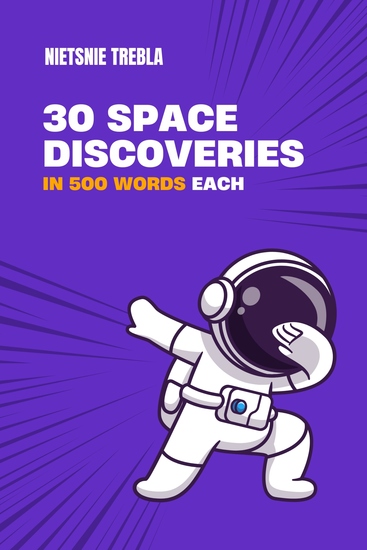
30 Space Discoveries in 500 Words Each - cover

30 Space Discoveries in 500 Words Each

Nietsnie Trebla

Verlag: Shelf Indulgence

  • 0
  • 0
  • 0

Beschreibung

Ever wanted to explore the most groundbreaking space discoveries—without wading through complex scientific papers? This book takes you on a journey through 30 of the most fascinating astronomical breakthroughs, distilling each into clear, concise, and engaging reads.
 
📖 What’s Inside?
 
🌌 Revolutionary Space Discoveries – From the detection of exoplanet atmospheres to the discovery of dark energy, uncover the biggest findings that reshaped our understanding of the cosmos.
 
🚀 The Future of Space Exploration – Learn about groundbreaking missions, the hunt for extraterrestrial life, and humanity’s quest to explore the stars.
 
🧠 And So Much More – Each space discovery is explained in just 500 words, offering a thrilling glimpse into the wonders of the universe.
 
🔖 Read Smarter, Not Harder
 
Forget dense scientific texts—dive into space exploration with clarity and simplicity. Each chapter is a fast yet enriching read, perfect for the curious mind.
 
🎯 Who’s It For?
 
Astronomy Enthusiasts – Discover the secrets of the universe in bite-sized explanations.
 
Students & Lifelong Learners – Gain valuable insights into space discoveries without the jargon.
 
Busy Readers – Learn something new about the cosmos in just a few minutes a day.
 
👉 Start your journey now with the book series that’s been translated into multiple languages and loved by readers worldwide!
Verfügbar seit: 19.02.2024.
Drucklänge: 120 Seiten.

Weitere Bücher, die Sie mögen werden

  • Race for Nuclear Weapons during World War II The: The History and Legacy of Both Sides’ Efforts to Build an Atomic Bomb - cover

    Race for Nuclear Weapons during...

    Editors Charles River

    • 0
    • 0
    • 0
    Before the Second World War, military conflicts were fought under orthodox conditions, usually termed “conventional warfare,” but several innovations had significantly changed combat, leading inextricably to the race for a nuclear weapon in the 1930s and 1940s. Conflicts had been fought by armies on horseback with guns of varying sophistication since the 16th century, but mechanized warfare and machine guns changed this calculus and set the stage for future combat by the end of World War I. Other sinister changes entered the fray during this conflict, such as chemical weapons like chlorine and mustard gas. The total warfare brought about by World War I and ensuing wars like the Spanish Civil War made the quest for the most powerful weapons somewhat necessary. 
    The Manhattan Project would ultimately yield the “Little Boy” and “Fat Man” bombs that released more than 100 Terajoules of energy at Hiroshima and Nagasaki, but as it turned out, the Axis were not far behind with their own nuclear weapons program. When the Nazis’ quest for a nuclear weapon began in earnest in 1939, no one really had a handle on how important nuclear weapons would prove to war and geopolitics. The attacks on Hiroshima and Nagasaki in August 1945, along with the Cold War-era tests and their accompanying mushroom clouds, would demonstrate the true power and terror of nuclear weapons, but in the late 1930s these bombs were only vaguely being thought through, particularly after the successful first experiment to split the atom by a German scientist. The nuclear age itself was in its infancy, barely 35 years old, but within a few short years the advent of nuclear war loomed over the world and the prospect of the enemy winning the nuclear race kept Allied leaders awake at night.
    Zum Buch
  • This Will Shift Your Reality: Manifestation ASMR Whisper Affirmations Before Sleep - cover

    This Will Shift Your Reality:...

    RealityBender

    • 0
    • 0
    • 0
    Step into the transformative power of This Will Shift Your Reality, a unique ASMR whispering experience designed to align your thoughts and emotions with the reality you wish to create. This audiobook combines soothing whispers with powerful affirmations to guide you toward manifesting your deepest desires. Listen nightly or as part of your daily routine, and watch as your life begins to change in miraculous ways. 
    With repeated affirmations, you’ll strengthen your ability to co-create with the universe, bending reality effortlessly to align with your highest aspirations. Feel the energy of abundance, love, and success flow into your life as each whispered statement reinforces your belief in your creative power. From financial prosperity to loving relationships and personal growth, this audiobook is your ultimate companion in crafting the life you truly deserve. 
    Perfect for use before sleep, these affirmations will imprint positivity on your subconscious mind, allowing you to awaken refreshed and aligned with the flow of universal abundance. Trust in the process, and let your dreams become your reality. Manifestation starts here—with you.
    Zum Buch
  • Renewable Power Generation Costs in 2021 - cover

    Renewable Power Generation Costs...

    Irena International Renewable...

    • 0
    • 0
    • 0
    IRENA's latest global cost study shows how the competitiveness of renewables continued amid the fossil fuel crisis and highlights cost trends for major renewable electricity sources.
    Zum Buch
  • Empiricism - Knowledge Through Experience - cover

    Empiricism - Knowledge Through...

    Hector Davidson

    • 0
    • 0
    • 0
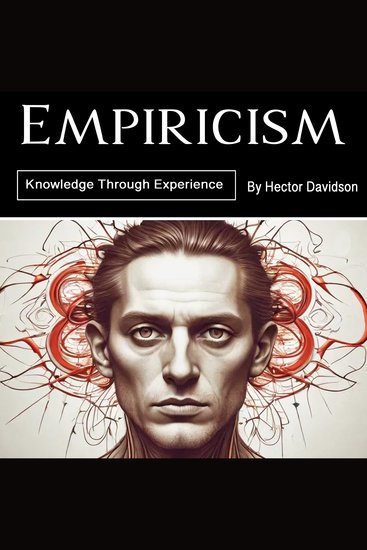
    Empiricism, as a philosophical doctrine, asserts that knowledge is primarily derived from sensory experience. This perspective contrasts sharply with rationalism, which emphasizes reason and innate knowledge. Empiricism has shaped our understanding of the world and influenced numerous fields, from the natural sciences to ethics and epistemology. The essence of empiricism lies in the conviction that the mind begins as a "blank slate" (tabula rasa) and that experience, rather than pre-existing ideas or concepts, forms the foundation of all knowledge. 
    At the heart of empiricist thought is the belief that all human knowledge starts with perception. We acquire information about the world through our senses—sight, hearing, touch, taste, and smell—which provide the raw data from which we form concepts and beliefs. For empiricists, knowledge is not something we discover internally, but something we gather from external reality. This view stands in contrast to the rationalist emphasis on a priori knowledge, which is independent of experience and accessible only through reason. 
    Empiricism's roots can be traced back to ancient philosophy, with early proponents like Aristotle, who argued that all knowledge comes from sensory observation. However, the modern development of empiricism is largely credited to three major figures: John Locke, George Berkeley, and David Hume. Locke introduced the idea of the mind as a tabula rasa, arguing that individuals are born without innate ideas and that all knowledge comes from experience. Berkeley took this further by suggesting that even the existence of the external world depends on perception, encapsulating the notion that "to be is to be perceived." Hume, the most radical empiricist of the three, questioned the very basis of causality and inductive reasoning, asserting that our beliefs in cause-and-effect relationships were not rationally justified but arose from habitual experience.
    Zum Buch
  • Philosophy - Exploring Life's Big Questions and Timeless Wisdom - cover

    Philosophy - Exploring Life's...

    Coral Nunez

    • 0
    • 0
    • 0
    Philosophy, at its core, is the study of fundamental questions about existence, knowledge, values, reason, and the human condition. It is not merely an academic subject but a way of thinking, questioning, and understanding the world. The term "philosophy" comes from the Greek words "philo" (love) and "sophia" (wisdom), meaning "the love of wisdom." This pursuit of wisdom has been a defining aspect of human civilization for thousands of years, shaping our perspectives on reality, morality, and truth. 
    One of the key aspects of philosophy is its role in fostering critical thinking. Philosophers do not accept ideas at face value but engage in rational inquiry, examining beliefs and assumptions. This is why philosophy often begins with questions rather than answers. What is real? How do we know what we know? What is the purpose of life? These questions are not easily answered, yet they push us to think deeply about our existence. 
    Philosophy is divided into several branches, each focusing on different aspects of human thought. Metaphysics explores the nature of reality, asking questions about existence, time, and the universe. Epistemology deals with the nature and limits of knowledge—how we acquire it and whether absolute truth exists. Ethics examines the principles of right and wrong, guiding moral behavior. Logic studies the structure of reasoning, ensuring that arguments are sound and rational. Political philosophy and aesthetics, while sometimes considered separate disciplines, also fall under the broader philosophical umbrella, dealing with justice, governance, and beauty.
    Zum Buch
  • Learning Primary Programming with Scratch (Home Learning Book Years 5-6) - cover

    Learning Primary Programming...

    Phil Bagge

    • 0
    • 0
    • 0
    This book, written by Phil Bagge and published in conjunction with Hampshire Inspection and Advisory Service (HIAS), has been devised for children of KS2 (Year 5 and 6) age to learn programming outside of school.
    Zum Buch