Rejoignez-nous pour un voyage dans le monde des livres!
Ajouter ce livre à l'électronique
Grey
Ecrivez un nouveau commentaire Default profile 50px
Grey
Abonnez-vous pour lire le livre complet ou lisez les premières pages gratuitement!
All characters reduced
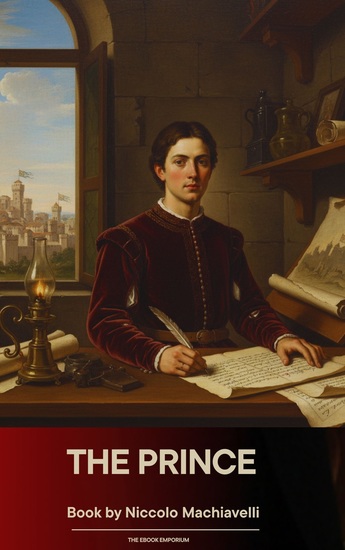
The Prince - cover

The Prince

Niccolò Machiavelli

Maison d'édition: The Ebook Emporium

  • 0
  • 0
  • 0

Synopsis

"The ends justify the means."

What does it truly take to win and maintain power? In The Prince, Niccolò Machiavelli strips away the pretenses of "noble" leadership to reveal the ruthless mechanics of governing. Dedicated to Lorenzo de' Medici, this work serves as a practical handbook for a new ruler. Machiavelli argues that a successful prince must be as cunning as a fox and as fierce as a lion. He explores the delicate balance of Virtù (the ability of a leader) and Fortuna (the whims of fate), providing timeless—and often shocking—advice on everything from managing advisors to the necessity of strategic cruelty.

Realpolitik at Its Source: Machiavelli was the first to separate politics from traditional Christian ethics. He famously asks whether it is better to be loved or feared, concluding that while being both is ideal, if one must choose, it is "much safer to be feared than loved"—as long as one avoids being hated.

Virtù vs. Fortuna: The novel introduces the groundbreaking concept that a leader's success depends on their ability to adapt their character to the times. A prince must be flexible, prepared to act "against faith, against charity, against humanity" if the survival of the state is at stake.

Why It Is Still Essential: From corporate boardrooms to modern campaign offices, The Prince remains the foundational text for understanding how the world actually works. It is a masterclass in strategy, human psychology, and the uncompromising logic of success.

Master the art of the possible. Purchase "The Prince" today.
Disponible depuis: 16/01/2026.
Longueur d'impression: 167 pages.

D'autres livres qui pourraient vous intéresser

  • Prehistoric World The - Vanished Races - cover

    Prehistoric World The - Vanished...

    E. A. Allen

    • 0
    • 0
    • 0
    Originally published in 1885. 
    The Prehistoric World; or, Vanished Races, by E.A. Allen 
    We are told that in Tartary, each native makes the iron he needs, just as every household would make its own bread. The furnace is a very small affair, not holding more than three pounds of ore. This is filled with ore and charcoal. The bellows are used, and after the charcoal is all burned out, the result is a small piece of spongy iron, which needs only repeated heating and hammering to be made serviceable. 
    Primitive furnaces, on a somewhat larger scale, have been discovered in Switzerland. Here, the excavation was made in the side of a hill, and a rude, dome-shaped chimney built over it. We must not forget that our task ends where the historian's begins. The use of iron did not long precede history, so we have but little to describe as to the customs and manners of life during the prehistoric Iron Age.
    Voir livre
  • Famous Landmarks of Ancient Rome - cover

    Famous Landmarks of Ancient Rome

    Editors Charles River

    • 0
    • 0
    • 0
    When the Colosseum was built in the late 1st century A.D., the Romans, who were known for their architectural acumen, managed to amaze themselves. Martial, a Roman poet writing during the inauguration of the Colosseum, clearly believed the Colosseum was so grand a monument that it was even greater than the other Wonders of the Ancient World, which had been written about and visited endlessly by the Romans and Greeks in antiquity. Indeed, although the Wonders were wondrous to behold, the Colosseum was a spectacular achievement in architecture, something new and innovative, and therefore an amazing “Wonder” in its own way.  
    For well over a thousand years, the Forum was the scene of intense construction, as well as social, political, and commercial activity, making the Forum a boon for the study of Roman history, even though some buildings in the Forum are of such importance that they cannot be disassembled in order to discover the older layers underneath and thus find more evidence about the origins of this area. Ultimately, the Forum transformed from being a backwater used for grazing livestock into the religious and political center of Roman life, and it has long been an inspiration for subsequent generations, influencing the Renaissance, Romanticism, and even Fascism.  
    	Although Roman roads may not have attained the glamorous status of other inventions, their influence is just as profound; roads provide essential communication and transport lines for any country – throughout the hundreds of years when Rome was ascendant in the ancient world, the roads they built held together first their republic and then their empire into a cohesive unit. Since the Appian Way was first built in 312 BC, it has inspired poets, slaves, and conquerors, and Mark Antony, Spartacus, Hannibal, and Horace are just a few of the notable historical personalities who travelled on the Appian Way. 
    Voir livre
  • Iron Imperator - Roman Grand Strategy under Tiberius - cover

    Iron Imperator - Roman Grand...

    Iskander Rehman, Sir Peter Stothard

    • 0
    • 0
    • 0
    One of the most enigmatic figures of antiquity, Tiberius lacked the imperial splendour of his great predecessor Augustus and the excesses of many of his successors, and has been overlooked by history. Yet this compelling study offers a portrait of a complex and contradictory man, both emperor and exile, tyrant and recluse. 
    Drawing on a wealth of ancient sources as well as contemporary classical scholarship, Iskander Rehman engages in a nuanced and multidisciplinary examination of Tiberius’ philosophical, intellectual and military influences, and the effectiveness of his foreign policy. Analysing key conflicts, Rehman evaluates the reach and efficacy of Rome’s grand strategy, applying the lessons of the past to contemporary security challenges and modern global defence policy. 
    The book has a preface written by Sir Peter Stothard, British author, journalist and critic.
    Voir livre
  • The Cards You're Dealt - How to Deal when Life Gets Real (A Tarot Guidebook) - cover

    The Cards You're Dealt - How to...

    Theresa Reed

    • 0
    • 0
    • 0
    Gold Winner, Tarot Books, COVR Visionary Awards and Bronze Winner, Grief Books, COVR Visionary Awards“Whether you’re a seasoned enthusiast or a tarot newcomer, this book is not merely a guide. It’s a revelation, a compass, empowering its readers to navigate life’s tumultuous waters with unmatched grace, resilience, and purpose.” —Mat Auryn, bestselling author of Psychic Witch   We are not always dealt the gentlest cards in life. Sometimes we’re dealt a very difficult hand. At some point all of us will be confronted by life’s inevitable tough passages: the loss of loved ones, a health crisis or illness, the endless thrum of national and global tragedies—as well as the empty nest, the loss of a job, the loss of a relationship, the loss of youth.  “Theresa Reed has written the exact book I need exactly when I needed it.” —Melinda Lee Holm, author of Your Tarot Guide   When we’re going through a difficult time, tarot can be a source of comfort, catharsis, healing, and connection to a power greater than ourselves. Doing a tarot reading can help you tune into your instincts and make better choices. It can help you think clearly during those moments when nothing feels simple or clear. And when you realize, “I have three options, and frankly, all of them are lousy and this whole situation is just really sad,” tarot can help you find acceptance and bear the pain with a little more grace.   But even in difficult times, we can find purpose and hope. With tarot as a tool, we can make wiser choices and steer things in a more positive direction. In this guidebook, Theresa provides  Card meanings and how to interpret them in the context of difficult passages  Tarot spreads, practices, rituals, and exercises  Personal reflections and journaling prompts   “The stories that Theresa shares are vulnerable and real, sprinkled with her Scorpio Moon humor. This book is for both tarot beginners and seasoned practitioners.” —Pamela Chen, author of Tarot of the Owls  The Cards You’re Dealt will help you deepen your connection to the tarot and find what you need to help you, and your clients, begin the healing process.
    Voir livre
  • Insurrection - Rebellion Civil Rights and the Paradoxical State of Black Citizenship - cover

    Insurrection - Rebellion Civil...

    Hawa Allan

    • 0
    • 0
    • 0
    The little-known and under-studied 1807 Insurrection Act was passed to give the president the ability to deploy federal military forces to fend off lawlessness and rebellion, but it soon became much more than the sum of its parts. Its power is integrally linked to the perceived threat of black American equity in what lawyer and critic Hawa Allan demonstrates is a dangerous paradox. While the Act was initially used to repress rebellion against slavery, during Reconstruction it was invoked by President Grant to quell white-supremacist uprisings in the South. During the civil rights movement, it enabled the protection of black students who attended previously segregated educational institutions. Most recently, the Insurrection Act has been the vehicle for presidents to call upon federal troops to suppress so-called "race riots" like those in Los Angeles in 1992, and for them to threaten to do so in other cases of racial justice activism. 


    Allan's distinctly literary voice underscores her paradigm-shifting reflections on the presence of fear and silence in history and their shadowy impact on the law. Throughout, she draws revealing insight from her own experiences as one of the only black girls in her leafy Long Island suburb, as a black lawyer at a predominantly white firm, and as a thinker about the use and misuse of appeals to law and order.
    Voir livre
  • Princes in the Tower The: The History of the Mysterious Disappearances of King Edward V and the Duke of York - cover

    Princes in the Tower The: The...

    Editors Charles River

    • 0
    • 0
    • 0
    When England’s King Edward IV fell ill at Easter 1483 after coming back from a fishing trip and died shortly after on April 9, it threw a country that had already suffered a series of wars into a state of chaos. What exactly killed him is unclear, and though some people would later speculate that he had been poisoned, there is every reason to believe that he died of natural causes. Disease was common in medieval England, and doctors lacked much of the medical knowledge now taken for granted. The king's spectacular lifestyle had taken its toll, and he was significantly overweight, so it seems the lifestyle which he thought he had earned as king, and which he used to remind everyone of his status, was probably his undoing. 
    	Recognizing that death was coming, the 40-year-old Edward IV had tried to make arrangements for how the kingdom would be ruled during his son's minority. His aim was for Rivers to continue running the young king's household while Richard, Duke of Gloucester, became protector and took responsibility for running the country until Edward V was old enough to do so for himself. It was an arrangement designed to prevent any one person from gaining total authority during his son's childhood reign, and thus to protect the young king. 
    	At first, everything seemed to be going smoothly, but behind the scenes Richard was scheming. As Edward V and his guardian Rivers were travelling toward London, Richard and his substantial military retinue met them on the road. After setting Rivers and another adviser at ease through a pleasant dinner on April 29, Richard showed his true colors the next day by taking them captive and taking control of the teenaged king. His justification was the old classic of protecting a king from evil advisers. 
    	The chain of events also contributed to one of England’s most enduring mysteries, because Edward and Richard never emerged from the Tower of London.
    Voir livre