Begleiten Sie uns auf eine literarische Weltreise!
Buch zum Bücherregal hinzufügen
Grey
Einen neuen Kommentar schreiben Default profile 50px
Grey
Jetzt das ganze Buch im Abo oder die ersten Seiten gratis lesen!
All characters reduced
The Art of War - Book Set - The Most influential Military Strategy Books: The Art of War by Sun Tzu Confucius Machiavelli Maxims of War by Napoleon On War by Clausewitz The Book of War by Wu Qi Battle Studies by Du Picq Guerrilla Warfare by Che Guevara Arthashastra & U - cover

The Art of War - Book Set - The Most influential Military Strategy Books: The Art of War by Sun Tzu Confucius Machiavelli Maxims of War by Napoleon On War by Clausewitz The Book of War by Wu Qi Battle Studies by Du Picq Guerrilla Warfare by Che Guevara Arthashastra & U

Niccolò Machiavelli, Carl von Clausewitz, Napoleon Bonaparte, Sun Tzu, Ernesto Che Guevara, Wu Qi, Ardant du Picq, Kautilya, Confucius, Sextus Julius Frontinus, US Marine Corps, Publius Vegetius Renatus

Verlag: e-artnow

  • 0
  • 0
  • 0

Beschreibung

E-artnow presents to you the most important books on military organization, the art of war, movements of armies, decision-making, leadership and most important of all - the strategy:
The Book of War (Wu Qi)
The Art of War (Sun Tzu)
The Analects: The Book of Leadership (Confucius) 
Arthashastra: The Ancient Indian Book on Wisdom and Strategy (Kautilya)
Strategemata: The Manual of Military Tactics (Sextus Julius Frontinus)
De re military: Organization of the Roman Army and Battle Tactics (Publius Vegetius Renatus)
The Art of War (Niccolò Machiavelli)
On War (Carl von Clausewitz)
Maxims of War (Napoleon Bonaparte)
Battle Studies (Ardant du Picq) 
Guerrilla Warfare (Ernesto Che Guevara)
Small Wars Manual: The Strategy of Military Operations (US Marine Corps)
Verfügbar seit: 15.03.2022.
Drucklänge: 2523 Seiten.
Weitere Bücher, die Sie mögen werden

  • Better Dead - From their pens to your ears genius in every story - cover

    Better Dead - From their pens to...

    J M Barrie

    • 0
    • 0
    • 0
    Sir James Matthew Barrie, 1st Baronet, OM, was born in Kirriemuir, Angus on 9th May, 1860.  
    Barrie knew from an early age that he wished to be an author. His family wished otherwise. The compromise was that he would attend university to study literature at the University of Edinburgh. He graduated with an M.A. in April, 1882. 
    His first job was as a staff journalist for the Nottingham Journal. The London editor of the St. James's Gazette "liked that Scotch thing" in Barrie’s work and he wrote several stories for them and later several novels based on his mother’s early life.  
    Barrie though was increasingly drawn to working in the theatre.  His first plays achieved little attention but in 1901 and 1902, Barrie had back-to-back theatre successes with Quality Street and The Admirable Crichton. 
    The character of ‘Peter Pan’ first appeared in The Little White Bird in 1902. This most famous and enduring of his works; Peter Pan, or The Boy Who Wouldn't Grow Up had its first stage performance on December 27th, 1904.  
    Peter Pan would overshadow all his other works.  But his short stories cannot be overlooked.  Indeed, from today’s vantage point they are excellent gems of social manners, of class and the way characters, sometimes in the most mundane of circumstances, react in the most surprising of ways.
    Zum Buch
  • The Boys in Chicago Heights - The Forgotten Crew of the Chicago Outfit - cover

    The Boys in Chicago Heights -...

    Matthew J. Luzi

    • 0
    • 0
    • 0
    Chicago Heights was long the seat of one of the major street crews of the Chicago Outfit, but its importance has often been overlooked and misunderstood. 


    The crew's origins predate Prohibition, when Chicago Heights was a developing manufacturing center with a large Italian immigrant population. Its earliest bosses struggled for control until a violent gang war left the crew solidified under the auspices of Al Capone. For the remainder of the twentieth century, the boys from Chicago Heights generated large streams of revenue for the Outfit through its vast gambling enterprises, union infiltration and stolen auto rackets. For the first time, the history of the Chicago Heights street crew is traced from its inception through its last known boss.
    Zum Buch
  • Dead Body Calls - One Cop's Experiences With Homicides Suicides Fatal Accidents and Natural Deaths - cover

    Dead Body Calls - One Cop's...

    Loren W. Christensen, Lt. Col....

    • 0
    • 0
    • 0
    Bestselling author Loren W. Christensen served as a Military Policeman in Saigon, Vietnam, "the most dangerous city in the world," as it was called at the time. Shortly after returning home, he joined the Portland Police Bureau in Oregon, serving for twenty-five years. As a street cop, there were times he was dispatched to dead body calls so frequently that other officers teasingly called him the "Death Car." 


    It didn't help that the morgue was in his beat, which meant he and his partner were often called to identify freshly brought in corpses without identification. 


    Dead Body Calls tells of some of his experiences with the victims of suicide, homicide, fatal accidents, and natural deaths that crossed his path. Loren shows the effects of the deaths on family and friends at the scenes and the eventual toll on him and other officers.
    Zum Buch
  • A Little Cocaine to Loosen My Tongue - cover

    A Little Cocaine to Loosen My...

    Sigmund Freud

    • 0
    • 0
    • 0
    In the 1880s, Freud discovered cocaine and became enthusiastic about what was not yet considered a party drug. Favoring the use of cocaine in the treatment of neurasthenia, as an energizer, or as an anesthetic, Freud made a creative and fashionable use of it, heralding practices that our society knows well. Several surprising texts are gathered here on cocaine. Freud recounts the use of coca in history, particularly in South America, from where it was imported. In Cocaine Addiction and Cocaine Phobia, the inventor of psychoanalysis defended coca against its accusers as a dangerous product. Finally, in the letters to Martha Bernays, his future wife, we discover an intimate and loving Freud, telling how he escaped boring dinners thanks to his dear magic substance.
    Zum Buch
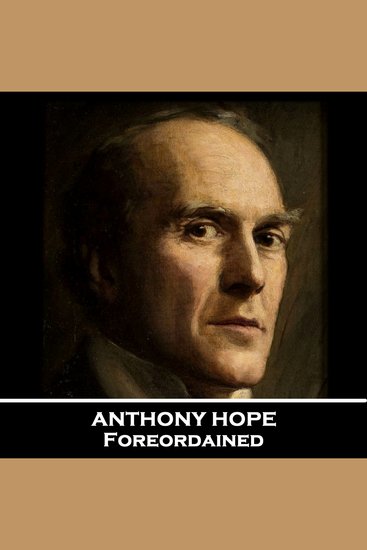
  • Foreordained - From their pens to your ears genius in every story - cover

    Foreordained - From their pens...

    Anthony Hope

    • 0
    • 0
    • 0
    Sir Anthony Hope Hawkins was born on 9th February 1863 in Clapton, London.  
    He was educated at St John's School, Leatherhead, Marlborough College and Balliol College, Oxford.  Hope trained as a lawyer and barrister and was called to the Bar by the Middle Temple in 1887. Despite what was thought to be a promising legal career he had literary ambitions and wrote in his spare time. 
    His early works appeared in various periodicals of the day but for his first book ‘A Man of Mark’ (1890), with no publisher interested, he published with his own resources.  
    More novels and short stories followed, including the mildly successful ‘Mr Witt's Widow’ in 1892. Hope even found time to run as the Liberal candidate for Wycombe in the election that same year but was unsuccessful. 
    His first major literary success came with ‘The Dolly Dialogues’, a collection of previously published magazine pieces followed very quickly by his instant classic, ‘The Prisoner of Zenda’. He now gave up the vestiges of his legal career to pursue writing full-time. 
    Despite never again reaching the same pinnacle of success he was popular and wrote prolifically across novels, plays and of course, short stories though his writing output rapidly diminished after the war. 
    In 1918 he was knighted for his contribution to propaganda efforts during World War I.  
    His short stories are delicate, mannered and often surprising with their wit, humour and interplay of characters who say one thing and usually mean another.  He was very definitely a writer of escapist rather than serious fare but they are no less enjoyable for that. 
    Anthony Hope died of throat cancer on 8th July 1933 at his country home, Heath Farm at Walton-on-the-Hill in Surrey. He was 70.
    Zum Buch
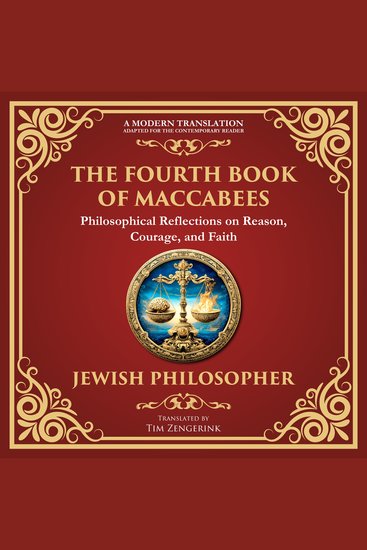
  • The Fourth Book of Maccabees - A Timeless Exploration of Faith Reason and Courage - A Modern Translation - Adapted for the Contemporary Reader - cover

    The Fourth Book of Maccabees - A...

    Anonymous Anonymous

    • 0
    • 0
    • 0
    What gives humans the strength to endure suffering? How can reason and faith guide us through life’s most difficult challenges? 
    The Fourth Book of Maccabees is one of the most profound and thought-provoking works of ancient literature. Set during the brutal reign of Antiochus IV, this powerful text reflects on the courage of Jewish martyrs and offers a philosophical meditation on the triumph of reason over emotion, and faith over fear. 
    Now available in a clear, modern translation, this edition brings timeless insights into the human spirit, moral conviction, and the fusion of faith and philosophy. 
    What you'll discover inside:The Power of Reason Over Emotion – How rational thought can overcome fear, pain, and desireFaith as a Source of Strength – Unshakable belief in God as the foundation for courage and enduranceLessons on Courage and Martyrdom – Stories of heroic individuals who chose righteousness over compromiseA Fusion of Philosophy and Faith – Ancient Jewish thought interwoven with Greek philosophical ideals 
    Whether you seek spiritual inspiration, moral clarity, or intellectual depth, The Fourth Book of Maccabees offers a timeless guide to resilience and integrity. 
    Begin your journey today and discover the enduring wisdom of this remarkable text on faith, reason, and the strength of the human spirit.
    Zum Buch