Begleiten Sie uns auf eine literarische Weltreise!
Buch zum Bücherregal hinzufügen
Grey
Einen neuen Kommentar schreiben Default profile 50px
Grey
Jetzt das ganze Buch im Abo oder die ersten Seiten gratis lesen!
All characters reduced
Discourses on the First Decade of Titus Livius - cover

Discourses on the First Decade of Titus Livius

Niccolo Machiavelli

Übersetzer Ninian Hill Thomson

Verlag: DigiCat

  • 0
  • 0
  • 0

Beschreibung

In "Discourses on the First Decade of Titus Livius," Niccolò Machiavelli explores the intricacies of political theory through a meticulous examination of ancient Roman history as chronicled by Livy. The work is characterized by Machiavelli's incisive analytical style, where he employs a blend of historical narrative and philosophical reflection to unpack the dynamics of power, governance, and civic virtue. Machiavelli argues for the relevance of republicanism and the importance of civic engagement, juxtaposing the strengths and weaknesses of different governmental structures within the context of human nature and historical precedent. This pioneering work is significant not only for its political insights but also for its impact on Enlightenment thought and modern political theory. Machiavelli, a prominent figure of the Renaissance, drew from his experiences as a diplomat and political advisor in Florence, where he witnessed the tumultuous interplay of power and the fragility of republics. His keen observations on the nature of authority, morality, and citizenship in "Discourses" reflect his resolve to inform contemporary leaders about the enduring principles of governance and the potential for civic corruption. His works are steeped in a profound understanding of historical cycles and human behavior, making him a foundational figure in political philosophy. I highly recommend "Discourses on the First Decade of Titus Livius" to readers who seek to comprehend the roots of modern political discourse. Machiavelli's reflections initiate deeper debates about the nature of power, the role of the citizen, and the moral dimensions of leadership. Whether for scholars of political science or general readers interested in history and ethics, this book serves as an essential guide to understanding the complexities of governance and the imperatives of fostering civic responsibility.
Verfügbar seit: 15.09.2022.
Drucklänge: 358 Seiten.


Weitere Bücher, die Sie mögen werden

  • VEDANTA: The Ancient Indian Wisdom for Living a Fulfilled Life - Finding Harmony Peace and Lasting Joy Through Timeless Wisdom from the Ancient Vedanta Philosophy of India - cover

    VEDANTA: The Ancient Indian...

    Sandeep Verma

    • 0
    • 1
    • 0
    Vedanta is an ancient philosophy that teaches us that true happiness and fulfilment can only be found within ourselves. This audiobook, "VEDANTA: The Ancient Indian Wisdom for Living a Fulfilled Life," is designed to guide you in unlocking the wisdom of Vedanta and applying it to your everyday life. By the end of this course, you will possess the knowledge and practical wisdom necessary to attain a state of enduring happiness and fulfilment. Join us on this transformative journey. Namaste!
    Zum Buch
  • Bisexual Swingers Foursome Menage with Gay MM & Lesbian Women - First Time Bi-Men Cherry Pop Sharing Wife & Swapping Husband Erotica - cover

    Bisexual Swingers Foursome...

    Dick Cummings

    • 0
    • 0
    • 0
    CAN A HOT NIGHT OF SWINGING GET A BI-CURIOUS HUSBAND TO TAKE THE PLUNGE? DEEP?  
    He's straight. 
    His man-cherry unpopped. 
    But is tonight the night he loses it? 
    This steamy read is hot from the start to the very end. 
    Raw and detailed scenes, not for the weak at heart. Perfect for those who don't like their stories sugar-coated, if you like it hot, naughty and raw then this is definitely your fill. Download now, guaranteed you'll be thoroughly satisfied tonight. 
      
    Zum Buch
  • Attack on Pearl Harbor: America Enters World War II - cover

    Attack on Pearl Harbor: America...

    Liam Dale

    • 0
    • 0
    • 0
    On December 7th 1941 as World War II raged, the focus of attention was snatched from the battlefields of Europe and diverted to the smoke and flames rising from the American Naval Base in Hawaii, Pearl Harbor. The Empire of the Rising Sun had finally struck, piercing the heart of the US navy in a bid to ensure that their plans for an Asian Empire, every bit as ambitious as Adolf Hitler’s Thousand Year Reich, were not threatened. 
     
    But as the injured were rushed to safety and America reeled from the shock of the Japanese attack, those battling against Hitler, most notably Winston Churchill and the people of Great Britain, were able to find some comfort in the tragedy, because America’s President, Franklin D Roosevelt, could now justify bringing the United States into the war. 
     
    The story of Pearl Harbor may have been told many times, but it’s nonetheless always fascinating and in this journal, we will have the opportunity to revisit the events of that monumental day as they unfolded, from the bombing of the USS Panay to the attack on Pearl itself, while discovering the reasons why the Japanese fleets travelled far across the ocean, to pick a fight with World War II’s sleeping giant.
    Zum Buch
  • Battle of Flodden The: The History of the Most Famous Battle Between England and Scotland - cover

    Battle of Flodden The: The...

    Editors Charles River

    • 0
    • 0
    • 0
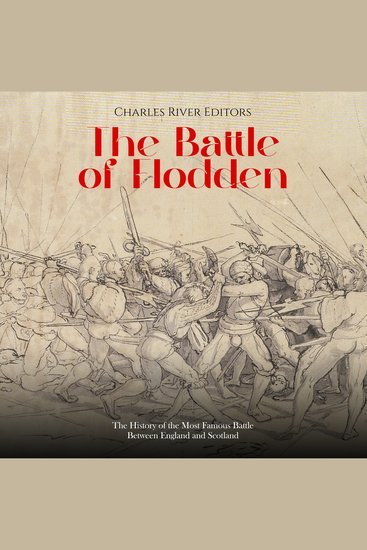
    The relationship between Scotland and England has always been rocky. For most of their history they have been at loggerheads and frequently at war, and, even after the Act of Union of 1707 which united the two nations, there were at least four Scottish uprisings. Today, the Scottish threat to separate from the post-Brexit UK is well-known. England has historically viewed the northern nation as a threat, and Scotland for its part has feared, with justification, its richer and more powerful neighbor.  
    	Famous encounters between the two countries include Falkirk (1298), Bannockburn (1314), Solway Moss (1542), Prestonpans (1745) and Culloden (1746), but the Battle of Flodden, or Flodden Field, fought on September 9, 1513, was the largest and perhaps most spectacular of the clashes between the ancient enemies. It involved the deployment of 56,000 men and vies with the 1461 Battle of Towton during the Wars of the Roses as the largest battle ever fought on British soil. The English had never entirely conquered Scotland, and since Bannockburn they had been unable to claim any degree of control, but it was not until 1328 that they finally acknowledged Scotland's independence. 
    On top of that, the nature of political marriages in England, and Europe in general, tied nations together even as they remained enemies. Indeed, throughout the 16th century, Scottish rulers would be eyed with suspicion by English royals who were fully aware that no shortage of Englishmen considered the Scottish royals the true heirs to England’s throne. Flodden Field would be one of the biggest battles in English and Scottish history, yet the two countries would still be at war a generation later. 
    Zum Buch
  • Victory for the Axis - How World War II Might Have Been Won - cover

    Victory for the Axis - How World...

    Marcus Draysun

    • 0
    • 0
    • 0
    World War II was a conflict shaped by countless strategic decisions, moments of chance, and pivotal battles. While the Axis powers achieved stunning victories in the early years, several key turning points ultimately led to their downfall. But what if just a few of these moments had played out differently? Could the Axis have secured victory? 
    One of the most significant turning points was the Battle of Britain. After the fall of France in 1940, Germany stood at the doorstep of the United Kingdom, preparing for a possible invasion. The Luftwaffe launched a fierce aerial assault, aiming to cripple British defenses and force a surrender. However, the Royal Air Force, supported by radar technology and an unyielding civilian spirit, held firm. If the Luftwaffe had adjusted its strategy—focusing more on airfields instead of shifting to city bombings—the RAF might have been overwhelmed. A weakened Britain could have been forced to negotiate peace, removing a major Allied power from the war. 
    Another crucial moment came with Operation Barbarossa, Germany’s invasion of the Soviet Union in 1941. Hitler’s decision to open an Eastern Front spread Axis forces thin and underestimated Soviet resilience. If the invasion had started earlier in the year, avoiding the brutal Russian winter, German forces might have reached Moscow before Soviet reinforcements stabilized the front. Additionally, had Germany prioritized capturing Soviet oil fields in the Caucasus over direct assaults on major cities, the Wehrmacht could have sustained its war machine much longer. A Soviet collapse would have left Germany dominant in Europe, free to shift its focus elsewhere.
    Zum Buch
  • The Maurya Empire - History of Events Causes and Consequences - cover

    The Maurya Empire - History of...

    Kelly Mass

    • 0
    • 0
    • 0
    The Maurya Empire was a South Asian Iron Age historic empire centered in Magadha, created by Chandragupta Maurya in the year 322 before Christ and lasting till 185 before Christ in a loose-knit way. The conquest of the Indo-Gangetic Plain focused the Maurya Empire, and Pataliputra functioned as its capital city (modern-day Patna). Beyond this royal core, the empire's geographical reach was limited by the dedication of army leaders who ruled the armed cities that dot the landscape. 
    Other than for the far south, the empire briefly controlled the significant city centers and arteries of the Indian subcontinent throughout Ashoka's rule (which was from around 268 to 232 before Christ). 
    After Ashoka's reign, it sank for practically 50 years before liquifying in 185 before Christ with the murder of Brihadratha by Pushyamitra Shunga and the facility of the Shunga dynasty in Magadha. 
    Let’s explore the details of this empire that’s relatively unknown in the west, but certainly something people in South Asia are often familiar with.
    Zum Buch