Begleiten Sie uns auf eine literarische Weltreise!
Buch zum Bücherregal hinzufügen
Grey
Einen neuen Kommentar schreiben Default profile 50px
Grey
Jetzt das ganze Buch im Abo oder die ersten Seiten gratis lesen!
All characters reduced
Ten Books on Architecture - With Illustrations & Original Designs - cover

Ten Books on Architecture - With Illustrations & Original Designs

Nelson Robinson, Herbert Langford Warren, Morris Hicky Morgan, Vitruvius

Verlag: E-Kitap Projesi & Cheapest Books

  • 0
  • 0
  • 0

Beschreibung

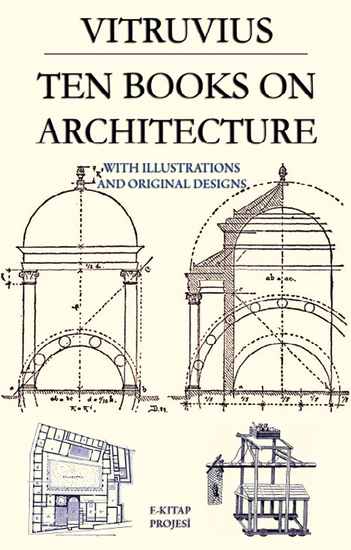
The architect should be equipped with knowledge of many branches of study and varied kinds of learning, for it is by his judgement that all work done by the other arts is put to test. This knowledge is the child of practice and theory. Practice is the continuous and regular exercise of employment where manual work is done with any necessary material according to the design of a drawing. Theory, on the other hand, is the ability to demonstrate and explain the productions of dexterity on the principles of proportion.1. While your divine intelligence and will, Imperator Caesar, were engaged in acquiring the right to command the world, and while your fellow citizens, when all their enemies had been laid low by your invincible valour, were glorying in your triumph and victory,while all foreign nations were in subjection awaiting your beck and call, and the Roman people and senate, released from their alarm, were beginning to be guided by your most noble conceptions and policies, I hardly dared, in view of your serious employments, to publish my writings and long considered ideas on architecture, for fear of subjecting myself to your displeasure by an unseasonable interruption.2. But when I saw that you were giving your attention not only to the welfare of society in general and to the establishment of public order, but also to the providing of public buildings intended for utilitarian purposes, so that not only should the State have been enriched with provinces by your means, but that the greatness of its power might likewise be attended with distinguished authority in its public buildings, I thought that I ought to take the first opportunity to lay before you my writings on this theme. For in the first place it was this subject which made me known to your father, to whom I was devoted on account of his great qualities. After the council of heaven gave him a place in the dwellings of immortal life and transferred your father's power to your hands, my devotion continuing unchanged as I remembered him inclined me to support you. And so with Marcus Aurelius, Publius Minidius, and Gnaeus Cornelius, I was ready to supply and repair ballistae, scorpiones, and other artillery, and I have received rewards for good service with them. After your first bestowal of these upon me, you continued to renew them on the recommendation of your sister.3. Owing to this favour I need have no fear of want to the end of my life, and being thus laid under obligation I began to write this work for you, because I saw that you have built and are now building extensively, and that in future also you will take care that our public and private buildings shall be worthy to go down to posterity by the side of your other splendid achievements. I have drawn up definite rules to enable you, by observing them, to have personal knowledge of the quality both of existing buildings and of those which are yet to be constructed. For in the following books I have disclosed all the principles of the art.
Verfügbar seit: 13.12.2023.
Drucklänge: 300 Seiten.

Weitere Bücher, die Sie mögen werden

  • Globo arte June 2023 issue - Special issue covering 4 different ways in which artist can make money - cover

    Globo arte June 2023 issue -...

    Globo Arte team

    • 0
    • 0
    • 0
    This is our second special edition where we are talking about different ways a creative an artist can make money 
    We are covering 4 different ways 
    1) Starting with Print on demand store 
    2) Selling digital downloads 
    3) Starting with magazine 
    4) Selling art/backgrounds on Teachers pay teachers website 
    And in depth tips and also steps on how to get started 
    We are covering only 4 ways in this edition will cover rest in upcoming issues 
    So if you are looking to make money as a creative person then thsi is for you. 
    Will see you in book
    Zum Buch
  • The Inner Game of Music - cover

    The Inner Game of Music

    Barry Green, W. Timothy Gallwey

    • 0
    • 0
    • 0
    The Inner Game of music is that which takes place in the mind, played against such elusive opponents as nervousness, self doubt, and fear of failure. Using the same principles of "natural learning" W. Timothy Gallwey developed so successfully for tennis, golf, and skiing and applying them to his own field, noted musician Barry Green shows how to acknowledge and overcome these internal obstacles in order to bring a new quality to the experience and learning of music. It is also ideal for those who don't play an instrument but who feel their appreciation of music will be enhanced if they understand more about the process of playing. 


    In precise, easy to understand language, Green and Gallwey explain how natural skills can be nurtured and enhanced, and through a series of special exercises they demonstrate the ways in which musicians can achieve exact intonation, artistic phrasing, and improved technique. 


    Ensemble playing, improvisation, composition and creativity, and listening skills are discussed throughout. 


    A methodology with a proven track record, this will be invaluable to anyone seriously interested in music, professional or amateur, composer, performer, or an appreciative listener.
    Zum Buch
  • Taisho Era - Democracy and Social Change in a Modernizing Japan - cover

    Taisho Era - Democracy and...

    Rolf Hedger

    • 0
    • 0
    • 0
    The Taisho Era (1912–1926) marked a period of transition in Japan, bridging the highly centralized and authoritarian rule of the Meiji period with the growing democratic movements that characterized the early 20th century. Emperor Taisho ascended to the throne following the death of Emperor Meiji in 1912. Unlike his predecessor, who had been a strong and active ruler, Emperor Taisho was frail and suffered from chronic illness, which significantly limited his ability to govern. As a result, political power gradually shifted away from the emperor and toward elected officials and political parties, paving the way for what would become known as "Taisho Democracy." 
    At the dawn of the Taisho Era, Japan stood at a crossroads between tradition and modernization. The country had rapidly industrialized during the Meiji period, transforming from a feudal society into a modern industrial state. However, with this modernization came social and political unrest. As Japan’s economy expanded, so too did the urban population, leading to the rise of a new middle class that demanded greater political participation and social change. The oligarchic rule of the genrō—elder statesmen who had dominated Meiji politics—faced increasing pressure from political parties, intellectuals, and the general public. 
    The political landscape of early Taisho Japan saw significant changes, including the growing influence of elected politicians. The 1912–1913 Taisho Political Crisis was a defining moment in this shift. When Prime Minister Saionji Kinmochi refused to increase military funding, the army resigned in protest, forcing him to step down. This led to widespread public outrage and a movement advocating for the power of elected officials over military and oligarchic influence. In 1913, the Katsura Tarō government collapsed due to public demonstrations, highlighting the rising political consciousness of the people.
    Zum Buch
  • The Cocoanuts A Classic Comedy Film On Audio Starring The Marx Brothers - cover

    The Cocoanuts A Classic Comedy...

    Morrie Ryskind

    • 0
    • 0
    • 0
    The Cocoanuts is a 1929 pre-Code musical comedy film starring the Marx Brothers (Groucho, Harpo, Chico, and Zeppo). Produced for Paramount Pictures by Walter Wanger, the film also stars Mary Eaton, Oscar Shaw, Margaret Dumont and Kay Francis. The first sound film to credit more than one director (Robert Florey and Joseph Santley), it was adapted to the screen by Morrie Ryskind from the musical play by George S. Kaufman. Five of the film's tunes were composed by Irving Berlin, including "When My Dreams Come True", sung by Oscar Shaw and Mary Eaton. The following is the audio track of the full feature film.
    Zum Buch
  • Mastering the Philly Accent - A Guide to the Accent Of Philadelphia for the Stage and Screen - cover

    Mastering the Philly Accent - A...

    Oscar Stanley

    • 0
    • 0
    • 0
    This comprehensive audio guide helps actors and language enthusiasts master the distinctive sounds of Philadelphia speech. Perfect for performers preparing for auditions, dialect coaches, and anyone fascinated by American regional accents.
     
    Discover the unique "wooder" phenomenon, where locals transform "water" into something entirely different. Learn the complex Short-A Split System that gives Philadelphia speech its characteristic melody. The guide breaks down distinctive consonant patterns like L-vocalization and subtle R-dropping that create authentic Philly speech rhythm.
     
    Explore how nasal resonance uniquely shapes vowel sounds and understand unexpected stress patterns in multi-syllabic words. Follow along with practice phrases and exercises developed by a dialect expert to internalize these speech patterns naturally.
     
    The course includes contemporary and traditional pronunciations, showing how the accent evolves across generations while maintaining its core character. Build an authentic vocabulary with regional expressions like "jawn," "youse," and "down the shore."
     
    Whether you're studying dialect for acting roles, preparing for an upcoming Philadelphia-based production, or simply interested in American regional speech patterns, this audio resource provides everything needed to convincingly reproduce this distinctive urban dialect.
     
    Keywords: Philadelphia accent, Philly dialect training, acting preparation, regional American speech, dialect coaching, wooder pronunciation, short-a split, L-vocalization
    Zum Buch
  • Satavahana Empire - Buddhism Trade and the Power of the Deccan - cover

    Satavahana Empire - Buddhism...

    Rolf Hedger

    • 0
    • 0
    • 0
    The Satavahana Empire, one of the earliest and most influential dynasties in ancient India, emerged in the Deccan region after the decline of the Mauryan Empire. The origins of the Satavahanas remain a subject of historical debate, but they are believed to have belonged to the Andhra region, gaining prominence as local chieftains before consolidating their rule into a powerful dynasty. Their rise marked a significant transition in Indian history, bridging the gap between the Mauryan administration and later regional powers. 
    The early history of the Satavahanas is primarily reconstructed through inscriptions, numismatic evidence, and references in ancient texts. The Puranas mention them as the Andhra dynasty, while inscriptions such as the Naneghat and Nasik inscriptions provide valuable insights into their rulers and governance. The first known ruler of the dynasty, Simuka, is credited with establishing Satavahana rule by overthrowing remnants of Mauryan authority in the Deccan and expanding his control over parts of present-day Maharashtra, Telangana, and Andhra Pradesh. His successors continued to strengthen the empire, laying the foundation for centuries of Satavahana dominance. 
    Following Simuka, his brother and successor Krishna further expanded the territory, but it was under the reign of Satakarni I that the empire gained considerable power. Satakarni I led successful military campaigns, extending his influence northward to the Narmada region and challenging the Shunga and Kshatrapa rulers. His achievements were commemorated in inscriptions and coins, some of which depict him performing Vedic sacrifices such as the Ashvamedha, indicating his aspirations for imperial legitimacy. This period also saw the Satavahanas emerging as key players in trade, administration, and culture, integrating diverse communities into their governance system.
    Zum Buch