Rejoignez-nous pour un voyage dans le monde des livres!
Ajouter ce livre à l'électronique
Grey
Ecrivez un nouveau commentaire Default profile 50px
Grey
Abonnez-vous pour lire le livre complet ou lisez les premières pages gratuitement!
All characters reduced
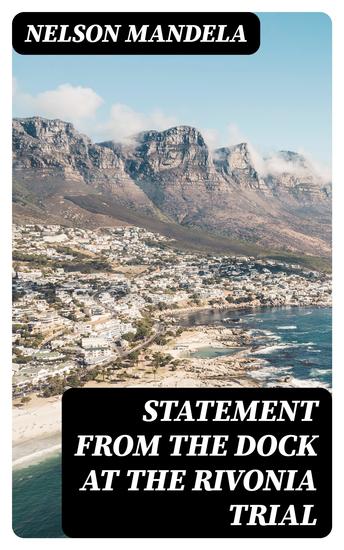
Statement From the Dock at the Rivonia Trial - cover

Statement From the Dock at the Rivonia Trial

Nelson Mandela

Maison d'édition: DigiCat

  • 0
  • 0
  • 0

Synopsis

In his profound and impassioned "Statement From the Dock at the Rivonia Trial," Nelson Mandela articulates the moral and political imperatives that underpinned his struggle against apartheid in South Africa. Written in 1964, during a pivotal moment in the nation's history, this declaration blends the eloquence of classic oratory with the stark immediacy of a political manifesto. Mandela's literary style, marked by poignant reflections and powerful rhetoric, sheds light on the injustices faced by the black majority and lays bare the depths of his commitment to freedom and equality. Contextually, this statement encapsulates the broader anti-colonial movements of the 20th century, anchoring Mandela's personal narrative within the global struggle against oppression. Nelson Mandela, a key figure in the fight against apartheid, draws upon his extensive experiences as a lawyer, activist, and leader of the African National Congress. His imprisonment did not deter his vision but rather sharpened it, galvanizing a movement that would eventually lead to the dismantling of institutionalized racism in South Africa. The Rivonia Trial was not only a trial of individuals but a trial of ideas, reflecting Mandela's unwavering belief in justice and humanity. This essential text is highly recommended for readers seeking insight into the philosophical underpinnings of social justice and resistance. Mandela's eloquence offers a powerful lens through which to understand not only South African history but also universal themes of injustice and resilience. These words resonate as a call to action, inspiring generations to continue the fight against oppression worldwide.
Disponible depuis: 21/07/2022.
Longueur d'impression: 28 pages.

D'autres livres qui pourraient vous intéresser

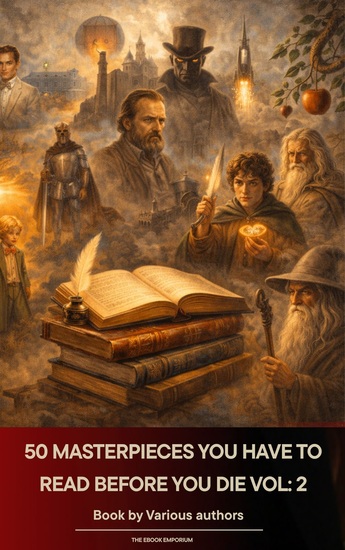
  • 50 Masterpieces you have to read before you die vol: 2 - cover

    50 Masterpieces you have to read...

    George Eliot, Charles Dickens,...

    • 0
    • 0
    • 0
    This book contains now several HTML tables of contents that will make reading a real pleasure!
    Novels
    Jerome, Jerome K.: "Three Men in a Boat"
    Joyce, James: "A Portrait of the Artist as a Young Man"
    Joyce, James: "Ulysses"
    Kingsley, Charles: "The Water-Babies"
    Kipling, Rudyard: "Kim"
    La Fayette, Madame de: "The Princess of Clèves"
    Laclos, Pierre Choderlos de: "Dangerous Liaisons"
    Lawrence, D. H.: "Sons and Lovers"
    Lawrence, D. H.: "The Rainbow"
    Le Fanu, Joseph Sheridan: "In a Glass Darkly"
    Lewis, Matthew Gregory: "The Monk"
    Lewis, Sinclair: "Main Street"
    London, Jack: "The Call of the Wild"
    Lovecraft, H. P.: "At the Mountains of Madness"
    Mann, Thomas: "Royal Highness"
    Maugham, W. Somerset: "Of Human Bondage"
    Maupassant, Guy de: "Bel-Ami"
    Melville, Herman: "Moby-Dick"
    Poe, Edgar Allan: "The Fall of the House of Usher"
    Proust, Marcel: "Swann's Way"
    Radcliffe, Ann: "The Mysteries of Udolpho"
    Richardson, Samuel: "Clarissa"
    Sand, George: "The Devil's Pool"
    Scott, Walter: "Ivanhoe"
    Shelley, Mary: "Frankenstein"
    Sienkiewicz, Henryk: "Quo Vadis"
    Sinclair, May: "Life and Death of Harriett Frean"
    Sinclair, Upton: "The Jungle"
    Stendhal: "The Red and the Black"
    Stendhal: "The Chartreuse of Parma"
    Sterne, Laurence: "Tristram Shandy"
    Stevenson, Robert Louis: "Treasure Island"
    Stoker, Bram: "Dracula"
    Stowe, Harriet Beecher: "Uncle Tom's Cabin"
    Swift, Jonathan: "Gulliver's Travels"
    Tagore, Rabindranath: "The Home and the World"
    Thackeray, William Makepeace: "Vanity Fair"
    Tolstoy, Leo: "War and Peace"
    Tolstoy, Leo: "Anna Karenina"
    Troloppe, Anthony: "The Way We Live Now"
    Turgenev, Ivan: "Fathers and Sons"
    Twain, Mark: "The Adventures of Huckleberry Finn"
    Verne, Jules: "Journey to the Interior of the Earth"
    Wallace, Lew: "Ben-Hur"
    Wells, H. G.: "The Time Machine"
    West, Rebecca: "The Return of the Soldier"
    Wharton, Edith: "The Age of Innocence"
    Wilde, Oscar: "The Picture of Dorian Gray"
    Xueqin, Cao: "The Dream of the Red Chamber"
    Zola, Émile: "Germinal"
    Voir livre
  • I'm an 8-Hole - For Enneagram Eights and Those Who Put Up With Them - cover

    I'm an 8-Hole - For Enneagram...

    C.V. Meo

    • 0
    • 0
    • 0
    For Eights. By an Eight. In Eight Language. What does it mean to be an Enneagram Eight? Why does it feel like everyone misunderstands and demonizes me? How do I grow into health and maturity? C.V. Meo asked these same questions of himself many years ago. Since then, he has gone on a journey of self-discovery. From reading all of the best Enneagram experts, to attending Enneagram workshops, to the hours spent in his therapist's office, C.V. has emerged with insights on what it means to be an Eight. If you want to learn more about all things Enneagram Eight, then this is the book for you. It's time to break the stereotypes and caricatures that others have placed Eights in. It's time to grow in self-awareness, maturity, and love. It's time to become more than just an 8-Hole.
    Voir livre
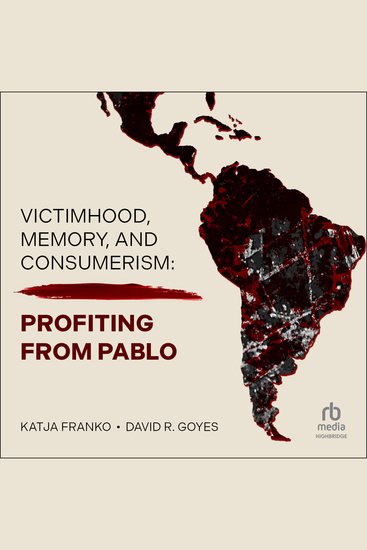
  • Victimhood Memory and Consumerism - Profiting from Pablo - cover

    Victimhood Memory and...

    David Goyes, Katja Franko

    • 0
    • 0
    • 0
    Inhabitants of Medellín, Colombia, suffered from the war-like violence perpetrated by drug cartels and other actors in the 1980s and 1990s. Thousands died, including innocent civilians, judges, and journalists, many more were injured and suffered psychological trauma. Three decades later, however, transnational media companies such as Netflix have transformed the traumatic memories into entertainment while the main perpetrator, Pablo Escobar, became a 
    recognizable brand name. 


    Victimhood, Memory, and Consumerism: Profiting from Pablo documents the story of violence inflicted on Medellín, and critically examines the status of its victims. Drawing on unique empirical material, the book addresses the impact of commercial exploitation of the city's violent past on the victims of mass drug violence and on the present nature of the city. 


    Victimhood, Memory, and Consumerism offers a poignant critique of the role of the global market economy in the unequal distribution of narrative power among those engaged in processes of collective memory construction. A thoroughly compelling listen, this volume will appeal internationally to academics in criminology and victimology, as well as those interested in critical perspectives on Netflix, commercialism, and Colombian history.
    Voir livre
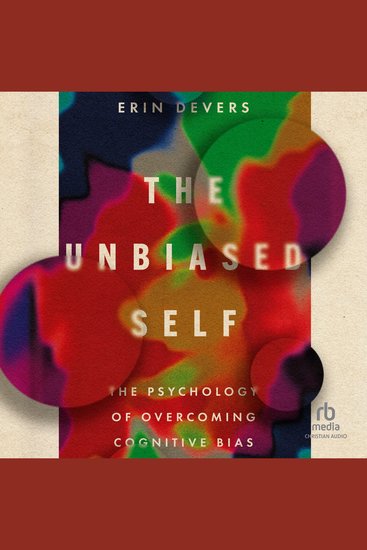
  • The Unbiased Self - The Psychology of Overcoming Cognitive Bias - cover

    The Unbiased Self - The...

    Erin Devers

    • 0
    • 0
    • 0
    A Christian Perspective on Overcoming Cognitive Bias 


    So much human behavior can be explained by two motives: we want to be right, and we want to feel good about ourselves. But the tension between these two motives makes us especially vulnerable to bias—and bias distorts our view of the world and of ourselves and can keep us from doing even what we know is right. 


    In The Unbiased Self, social psychologist Erin Devers lays out what psychology has discovered about bias and selfishness. To truly overcome cognitive bias, we need a vision of what an unbiased self could look like, stemming from a solid sense of identity—an identity available in Christian faith. Devers explains how a Christian concept of the self can provide the combination of humility with self-confidence that enables unbiased thinking. Using current research and illuminating stories, this book describes how "fast" and "slow" thinking work together in everyday life; 
    diagnoses when we're most vulnerable to distorted thinking; 
    considers how regarding every person as a child of God counteracts implicit bias; reveals psychological insights into spiritual formation; and recommends practices for slowing our thinking to seek God's wisdom about our ourselves and others.
    Voir livre
  • No One Left - Why the World Needs More Children - cover

    No One Left - Why the World...

    Paul Morland

    • 0
    • 0
    • 0
    'Highly readable ... Everything we need to know on this subject' Financial Times
    'Fascinating' Geographical Magazine
    'A must read for anyone wanting to understand the forces shaping our world' Eliza Filby
    'A compelling argument for having more children' New Statesman
    A population calamity is unfolding before our eyes. It started in parts of the developed world and is spreading to the four corners of the globe. There are just too few babies being born for humanity to replace itself.
    Leading demographer Paul Morland argues that the consequences of this promise to be calamitous. Labour shortages, pensions crises and ballooning debt threaten to engulf us all, and sooner than we think. Unless we radically change our attitudes towards parenthood and embrace a new progressive pro-natalism, argues Morland, we face disaster.
    Voir livre
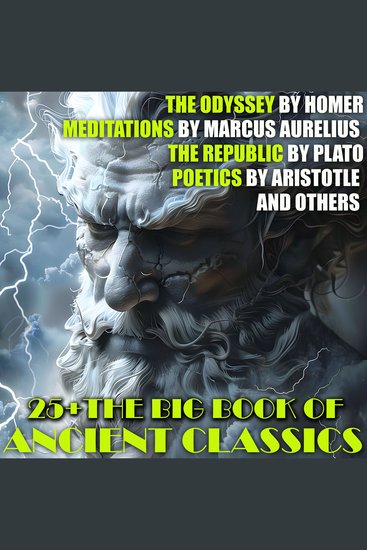
  • 25+ The Big Book of Ancient Classics - The Odyssey by Homer Meditations by Marcus Aurelius The Republic by Plato Poetics by Aristotle and others - cover

    25+ The Big Book of Ancient...

    Aristotle, Aeschylus, Marcus...

    • 0
    • 0
    • 0
    We live in an era rife with cultural conflict. The 21st century is by no means free of wars, terrorism, riots, famine, nor epidemics. We may attempt to solve the challenges of our times by uniting the humanistic disciplines of philosophy, science, and technology. Our modern reality requires a fundamental understanding of the problems beleaguering our existence. Science and literature are key tools for gaining this insight. The wisdom accumulated throughout the centuries by scientists, philosophers, and writers is a solid foundation on which modern man can build the future. Our ability to learn from those who have come before is precisely what led Protagoras to declare that "Man is the measure of all things."
     
    Poetics by Aristotle
    The Athenian Constitution by Aristotle
    On Life and Death by Aristotle
    Agamemnon by Aeschylus
    The Eumenides by Aeschylus
    The Choephori by Aeschylus
    Meditations by Marcus Aurelius
    Medea by Euripides
    The Works and Days by Hesiod
    The Theogony by Hesiod
    The Shield of Heracles  by Hesiod
    The Odyssey by Homer
    The Apology of Socrates by Plato
    Charmides by Plato
    Crito by Plato
    Euthyphro  by Plato
    Ion by Plato
    Laches  by Plato
    Lysis by Plato
    Menexenus by Plato
    The Republic  by Plato
    The Allegory of the Cave by Plato
    Symposium by Plato
    Meno  by Plato
    Phaedo by Plato
    Critias  by Plato
    The Complete Poems by Sappho
    Antigone by Sophocles
    Voir livre