Rejoignez-nous pour un voyage dans le monde des livres!
Ajouter ce livre à l'électronique
Grey
Ecrivez un nouveau commentaire Default profile 50px
Grey
Abonnez-vous pour lire le livre complet ou lisez les premières pages gratuitement!
All characters reduced
Leaves from Lantern Lane - cover

Leaves from Lantern Lane

Nellie Letitia McClung

Maison d'édition: Librorium Editions

  • 0
  • 0
  • 0

Synopsis

January 19th, 1935 was a perfect day to look at a house with the intention of buying. None of your beguiling, sunshiny, wheedling days that lowers one's sales resistance and makes almost any place in the country appear inviting. No, it was a rough, gray day, with razor blades in the wind and white caps on the sea. Not only that, but in spite of the cold, there had been down-pours of rain from the iron-gray clouds that had obscured the sun for weeks. Indeed I had a sinking feeling sometimes that the sun might never shine again. There was a finality about it all, a thick, settled, stubborn grayness.
We were not enthusiastic when we heard of another country place. No one could be enthusiastic about anything. The whole country, east and west, was in the grip of the worst winter since '79; but we had come to Vancouver Island to buy and we drove out the six miles to see the place. Nobody spoke. It was better to do anything than sit in the lounge of the hotel and look out at the slanting rain between us and Elbethel Chapel, or watch the motionless old ladies in their purple and gray nightingales, just sitting watching the fire, with no sound in the room but the ticking of a clock on the mantle. The hotel advertising mentioned that it was "a quiet place," and we found it had not exaggerated.
Disponible depuis: 15/03/2023.

D'autres livres qui pourraient vous intéresser

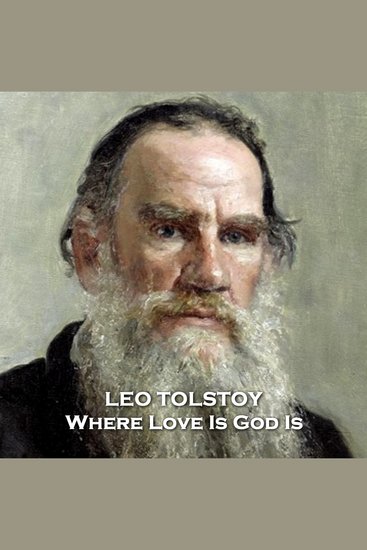
  • Where Love Is God Is - From their pens to your ears genius in every story - cover

    Where Love Is God Is - From...

    Leo Tolstoy

    • 0
    • 0
    • 0
    Leo Tolstoy was born in 1828 in the Russian province of Tula to a wealthy noble family. As a child, he had private tutors but he showed little interest in any formal education. When he went to the University of Kazan in 1843 to study oriental languages and law, he left without completing his courses.  Life now was relaxed and idle but with some writing also taking place.  Gambling debts forced an abrupt change of path and he joined the army to fight in the Crimean War.  He was commended for his bravery and promoted but was appalled at the brutality and loss of life.  He recorded these and other earlier experiences in his diaries which formed the basis of several of his works. 
    In 1852 ‘Childhood’ was published to immediate success and was followed by ‘Boyhood’ and ‘Youth’. 
    His experience in the army and the horrors he witnessed resulted in ‘The Cossacks’ in 1862 and the trilogy ‘Sevastopol Tales’. After the war he travelled around Europe, visiting London and Paris and meeting such luminaries as Victor Hugo and Charles Darwin.  
    It was now that Tolstoy began his masterpiece, ‘War and Peace’. Published in 1869 it was an epic work that changed literature. He quickly followed this with ‘Anna Karenina’.  
    These successes made Tolstoy rich and helped him accomplish many of his dreams but also brought problems as he grappled with his faith and the lot of the oppressed poor. These revolutionary views became so popular that the authorities now kept him under surveillance.  
    He led a life of asceticism and vegetarianism and put his socialist ideals into practice by establishing numerous schools for the poor and food programmes. He also believed in giving away his wealth, which caused much discord with his wife.  
    His writing continued to bring forth classics such as ‘The Death of Ivan Ilyich’ and many brilliant and incisive short stories such as ‘How Much Land Does A Man Need’.  
    In 1901 Tolstoy was excommunicated from the Church and controversially deselected for the Nobel Prize for Literature. 
    Whilst undertaking a pilgrimage by train in October 1910 with his daughter Aleksandra he caught pneumonia in the nearby town of Astapovo.  Leo Tolstoy died on November 9th, 1910, he was 82.
    Voir livre
  • The Monkey’s Paw - cover

    The Monkey’s Paw

    W.W. Jacobs

    • 0
    • 0
    • 0
    Experience the chilling tale of "The Monkey’s Paw" by W.W. Jacobs in a gripping audiobook format. This timeless classic explores the consequences of tempting fate and the power of supernatural forces. 
    In "The Monkey’s Paw," listeners will be drawn into a world of mystery and suspense as the White family comes into possession of a magical monkey’s paw that grants three wishes. But as they soon discover, every wish comes with a price, leading to unforeseen and terrifying consequences. 
    Perfect for fans of horror and suspense, "The Monkey’s Paw" audiobook delivers spine-tingling thrills and thought-provoking themes. Whether you're listening alone on a dark night or sharing the experience with friends, this gripping tale will leave you on the edge of your seat until the very end. 
    So, if you're ready to immerse yourself in a chilling tale of supernatural intrigue and suspense, start listening to "The Monkey’s Paw" today and prepare for a haunting journey into the unknown. Start Listening to "The Monkey’s Paw" today!
    Voir livre
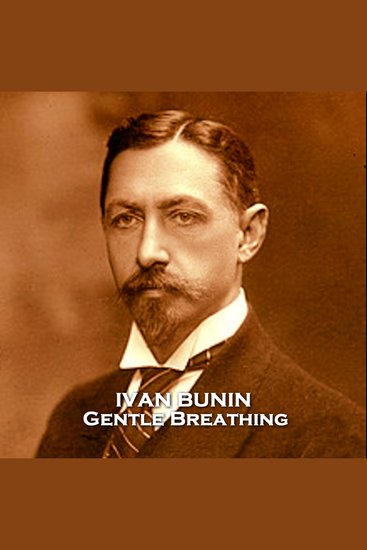
  • Gentle Breathing - From their pens to your ears genius in every story - cover

    Gentle Breathing - From their...

    Ivan Bunin

    • 0
    • 0
    • 0
    Ivan Alekseyevich Bunin was born on 22nd October 1870 in Voronezh province, in the South-West of the Russian Empire. 
    His early life was plagued by his Father’s gambling habits which caused his education to be erratic and the family to lose most of their wealth. 
    Bunin published his first poem in 1887 in St Petersburg and later in Oryol he worked for the local paper and became its editor, handily allowing him to publish his own poems and short stories.  There he met and married Varvara Pashchenko.  Ivan Bunin's debut book of poetry ‘Poems (1887–1891)’ was published in 1891. 
    This poetry and his translation of Longfellow garnered him his first Pushkin Prize.  Now he switched to writing prose and his novella ‘Antonov Apples’ is regarded as his first masterpiece.  Many more would follow. 
    The October Revolution of 1905 found Bunin in the Crimea.  Scenes of ‘class struggle’ he saw more as the oppressed people's craving for anarchy and destruction. 
    In November 1906 he began a passionate affair with Vera Muromtseva, within a few months they were touring through Egypt and Palestine.  ‘The Bird's Shadow’ collection was the result.   
    His second Pushkin Prize came in 1909 for Poems (1903–1906) and further translations.  He was now elected to the prestigious Russian Academy. 
    More widespread fame came in 1910 with ‘The Village’, a controversial and bleak portrayal of Russian country life.  Travel too beckoned them back to the Middle East, Ceylon (now Sri Lanka) and for winters in Capri with their friend Maxim Gorky.  
    That friendship suddenly ended in April 1917 as the revolution began to ferment in war-ravaged Russia.  After the Bolsheviks took power and the upheavals continued, he decided to leave Russia, finally achieving that in early 1920.  
    It would take some time to heal the wounds and stress he had been under and for his writing to begin again.  Settled in France, Bunin published many of his previous works and collections of novellas.  He also made regular contributions to the Russian emigre press.  
    Although reluctant to become involved in politics, Bunin was now feted as both a writer and the figurehead of non-Bolshevik Russian values and traditions.  In 1933 he became the first Russian to be awarded the Nobel Prize for Literature ‘for following through and developing with chastity and artfulness the traditions of Russian classic prose.’  
    In 1938 Bunin began working on the celebrated cycle of nostalgic, and erotically themed stories known Dark Avenues (or Dark Alleys).  
    As World War II broke out he chose to remain in Grasse spending the war at his remote Villa Jeanette, high in the mountains.  
    Ivan Bunin was a staunch anti-Nazi, and often, under difficult conditions, sheltered fugitives after Vichy was occupied by the Germans.  He wrote but did not publish during these years until on August 23rd the Nazi’s fled Grasse without a fight.  The next day the Americans came.  
    In May 1945 he returned to Paris and, apart from convalescing at times in Juan-les-Pins, he stayed for the rest of his life. 
    After 1948, with his health deteriorating, Bunin concentrated upon writing his memoirs and a book on Chekhov.  His last years were overshadowed by bitterness and despair at the situation in Russia and the treatment of its peoples.  He was suffering now from asthma, bronchitis and chronic pneumonia. 
    Ivan Alekseyevich Bunin died in a Paris attic flat on 8th November 1953.  Heart failure, cardiac asthma and pulmonary sclerosis were given as the causes of death.  He was 83.
    Voir livre
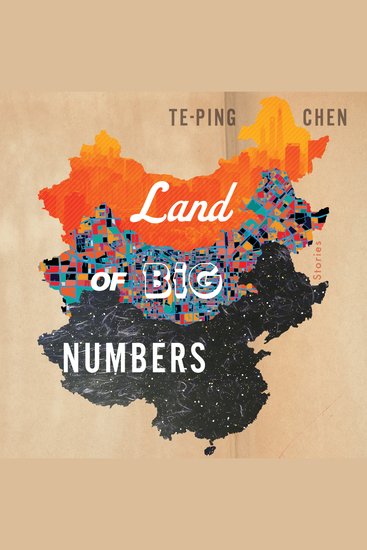
  • Land Of Big Numbers - Stories - cover

    Land Of Big Numbers - Stories

    Te-Ping Chen

    • 0
    • 0
    • 0
    A Best Book of the Year: Barack Obama · NPR · The Washington Post · The Philadelphia Inquirer · Esquire · Kirkus Reviews · Chicago Public Library · Electric Literature  
    Malala Yousafzai’s Fearless Book Club Pick for Literati  
     
     ""Dazzling...Riveting."" —New York Times Book Review 
     
    “Gripping and illuminating . . . At the heart of Te-Ping Chen’s remarkable debut lies a question all too relevant in 21st Century America: What is freedom?” —Jennifer Egan 
     
     “Immensely rewarding, from the first sentence to the last . . . An exceptional collection.” —Charles Yu 
     
    A “stirring and brilliant” debut story collection, offering vivid portrayals of the men and women of modern China and its diaspora, “both love letter and sharp social criticism,” from a phenomenal new literary talent bringing great “insight from her years as a reporter with the Wall Street Journal” (Elle). 
     
     Gripping and compassionate, Land of Big Numbers traces the journeys of the diverse and legion Chinese people, their history, their government, and how all of that has tumbled—messily, violently, but still beautifully—into the present. 
     Cutting between clear-eyed realism and tongue-in-cheek magical realism, Chen’s stories coalesce into a portrait of a people striving for openings where mobility is limited. Twins take radically different paths: one becomes a professional gamer, the other a political activist. A woman moves to the city to work at a government call center and is followed by her violent ex-boyfriend. A man is swept into the high-risk, high-reward temptations of China’s volatile stock exchange. And a group of people sit, trapped for no reason, on a subway platform for months, waiting for official permission to leave. 
     With acute social insight, Te-Ping Chen layers years of experience reporting on the ground in China with incantatory prose in this taut, surprising debut, proving herself both a remarkable cultural critic and an astonishingly accomplished new literary voice.
    Voir livre
  • Book of Heroes - Stories - cover

    Book of Heroes - Stories

    Daniel Janke

    • 0
    • 0
    • 0
    A bold literary debut from one of Canada’s most versatile creative voices. 
    In Book of Heroes, composer, filmmaker, and writer Daniel Janke turns his artistic lens to fiction in a witty and deeply reflective debut collection where ordinary lives become the stage for extraordinary acts of grace and resilience. 
    These are stories of travellers and observers. From the serene and starkly beautiful Yukon to a perilous swim on the beach in The Gambia, and the sharp musings of a homeless philosopher beneath a city bridge, Book of Heroes charts a world where the everyday clashes with the utterly surreal. Its characters, caught between the mundane and the fantastic, are called to act, sometimes bravely, sometimes absurdly, but always with heart. 
    Through sharp wit and deep compassion, Janke uncovers the complicated truths hiding beneath the surface of ordinary life, crafting stories imbued with humour, tenderness, and insight. 
    DANIEL JANKE is a writer, composer, and filmmaker based near Whitehorse, Yukon. Creator of the CBC series Northern Town and the award-winning NFB film How People Got Fire, he has collaborated with leading Canadian musicians. Book of Heroes is his debut fiction collection, following decades of multi-disciplinary creative work.
    Voir livre
  • F Scott Fitzgerald - A Short Story Collection - A wonderful collection from the legendary American author of The Great Gatsby - cover

    F Scott Fitzgerald - A Short...

    F. Scott Fitzgerald

    • 0
    • 0
    • 0
    Francis Scott Key Fitzgerald was born on September 24th 1896 in Saint Paul, Minnesota, to an upper-middle-class family. His early years in Buffalo, New York showed him to be a boy of high intelligence and drive with a thirst for literature.  
     
    In 1908, his father was fired from Procter & Gamble, and the family returned to Minnesota. Here Fitzgerald attended St. Paul Academy, in St. Paul, until 1911. At 13 he was published in the school newspaper, it was, of all things, a detective story. In 1911, aged 15, he was sent to the prestigious Newman School, in Hackensack, New Jersey. And, after graduating in 1913, he decided to continue at Princeton University. Here he firmly dedicated himself to writing. Unfortunately his writing pursuits came at the expense of his coursework. In 1917 he dropped out to join the U.S. Army.  
     
    However this service to his country came with the very real fear that he might perish in the trenches of Western Europe with his literary dreams not yet begun. So he spent the weeks before reporting for duty at work on a novel entitled The Romantic Egotist.  Fitzgerald was assigned to Camp Sheridan, in Alabama. It was there that Fitzgerald met the love of his life; Zelda Sayre, the "golden girl," of Montgomery youth society.  
     
    The war ended before Fitzgerald could be deployed, and he moved to New York City hoping to start a career in advertising that would be lucrative enough to convince Zelda to marry him. Unable to convince her that his means were enough to support her she broke off the engagement. Fitzgerald returned to his parents in St. Paul, to revise The Romantic Egoist, now recast as This Side of Paradise. His revised novel was accepted by Scribner's and published in 1920 becoming an instant success.  
     
    It launched Fitzgerald's career as a writer and provided a steady income suitable for Zelda's ambitions. The engagement resumed and they married at St. Patrick's Cathedral in New York. Frances Scott "Scottie" Fitzgerald, their only child, was born on October 26, 1921. 
     
    Inspired by the parties he had attended visiting Long Island's north shore Fitzgerald began planning the greatest of his novels, The Great Gatsby, in 1923, wanting to produce "something new—something extraordinary and beautiful and simple and intricately patterned."  Published in April 1925, The Great Gatsby received mixed reviews and sold poorly; only 20,000 in its first year.  Today, it is considered a literary classic and one of a small circle vying for the title "Great American Novel".  
     
    Fitzgerald continued to supplement his income by writing short stories for magazines and to sell his stories and novels to Hollywood. He called this "whoring".  
     
    In February 1932, Zelda was hospitalized with schizophrenia. Fitzgerald rented a house nearby and worked on his latest book, Tender Is the Night, and finally published it in 1934.  
     
    Fitzgerald's heavy and excessive drinking had now developed into alcoholism and with recurring financial difficulties, the emotional toll of Zelda's mental illness, this meant several difficult years.  
     
    In 1937, Fitzgerald moved to Hollywood. His income improved and he began to work in the film industry. He found movies beneath his talents, but was once again in perilous financial straits, and so spent the second half of the 1930s in Hollywood, working on a triangle of short stories, scripts for MGM, and his final novel, The Love of the Last Tycoon.   
     
    In 1939, MGM ended the contract, and Fitzgerald became a writer for hire. Still an alcoholic, he now became estranged from Zelda and developed a relationship with Sheilah Graham, the Hollywood gossip columnist. They quickly became lovers.  
     
    In this last period of his life his alcoholism had left him physically wrecked. After suffering a heart attack, in Schwab's Drug Store, he was ordered to avoi
    Voir livre