Begleiten Sie uns auf eine literarische Weltreise!
Buch zum Bücherregal hinzufügen
Grey
Einen neuen Kommentar schreiben Default profile 50px
Grey
Jetzt das ganze Buch im Abo oder die ersten Seiten gratis lesen!
All characters reduced
Sociology of Gender - Comprehensive Guide - cover

Sociology of Gender - Comprehensive Guide

Neeraj Venkataraman

Verlag: Educohack Press

  • 0
  • 0
  • 0

Beschreibung

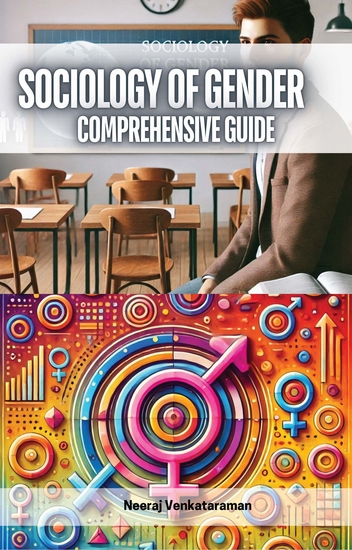
"Sociology of Gender: Comprehensive Guide" embarks on a journey through the intricate landscape of gender and sociology. We delve into the social constructions, power dynamics, and cultural influences that shape individuals' experiences across the gender spectrum. This guide serves as a resource for scholars, students, and curious minds exploring gender within sociology.From foundational concepts of gender identity and expression to the exploration of institutionalized patriarchy, each chapter offers thought-provoking insights into key themes and theories. We embrace the interdisciplinary nature of gender studies, drawing from feminist theories, queer studies, and intersectionality, fostering a deeper understanding of how gender intersects with race, class, sexuality, and other social categories.Our guide highlights the evolution of feminist movements and the ongoing struggle for gender equity, emphasizing the importance of dismantling oppressive structures. We tackle issues such as sexism, misogyny, and the impact of heteronormativity while celebrating diverse gender identities and queer theory contributions."Sociology of Gender: Comprehensive Guide" encourages readers to question societal norms, challenge stereotypes, and engage in meaningful dialogues for a more equitable and inclusive future.
Verfügbar seit: 20.02.2025.
Drucklänge: 345 Seiten.
Weitere Bücher, die Sie mögen werden

  • The Arab Spring - Uprising and Change in the Middle East - cover

    The Arab Spring - Uprising and...

    Nova Ashford

    • 0
    • 0
    • 0
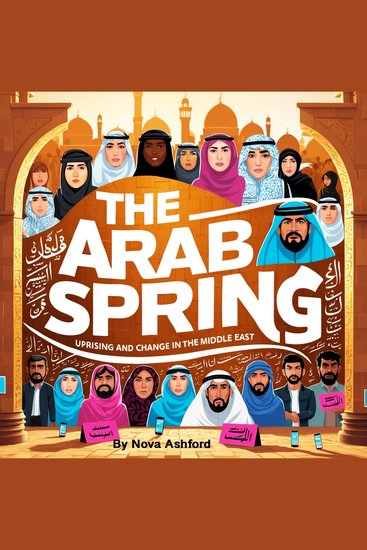
    The Arab Spring, a series of pro-democracy uprisings, protests, and revolutions that swept across the Arab world beginning in late 2010, marked a significant turning point in the modern history of the Middle East. The movement, which began in Tunisia and quickly spread to other countries including Egypt, Libya, Yemen, Syria, and Bahrain, was driven by widespread discontent with authoritarian regimes, economic inequality, and a lack of political freedoms. The Arab Spring was not a single, unified event but rather a collection of distinct yet interconnected uprisings fueled by both longstanding grievances and immediate catalysts. It highlighted the power of ordinary citizens in challenging deeply entrenched political systems, showing the world that the will for change could be powerful even in the face of brutal government repression. 
    The Arab Spring began on December 17, 2010, when Mohamed Bouazizi, a street vendor in Tunisia, set himself on fire in protest of police harassment and government corruption. His act of desperation sparked mass protests throughout Tunisia, which eventually led to the ousting of President Zine El Abidine Ben Ali in January 2011. This success encouraged similar uprisings in neighboring countries, particularly in Egypt, where mass protests in Cairo’s Tahrir Square forced President Hosni Mubarak to resign after 30 years in power. These initial successes ignited a wave of hope across the Arab world that authoritarian regimes could be overthrown and democratic reforms could be achieved.
    Zum Buch
  • Your Right to Self-Identify My Right to Disagree - Who is oppressing whom? - cover

    Your Right to Self-Identify My...

    Kenny Bomer

    • 0
    • 0
    • 0
    In today’s world, a new social contagion is being spread by provocateurs and social media influencers who are determined to pressure people into accepting falsehood over truth. Battle lines have been drawn on both sides of the debate regarding “Transgenderism” and the mental health effects of Gender Dysphoria. As the battle rages, First Amendments Rights of Freedom of Speech that protect people’s rights to say unpopular things without government interference, and the right to refuse to say things the government wants said, are being called into question. 
    The minority group argues that it is their right to “Self-Identify” as whatever they wish in order to accommodate their thoughts and feelings instead of accepting their bodily realities, thereby defying biological design in the process. In response, the majority fight to maintain their right to disagree with people who psychologists say suffer from mental health issues. Common sense and basic language are being challenged and unfamiliar and innovative words have been invented to define one hundred and twelve genders, as claimed by Transgender Activists. This recent phenomenon leaves society to face many provocative questions. 
    Should the thoughts and feelings of one group override another groups desire to rely on truth and biological facts? Who is oppressing whom? For the God-Conscious, what roll does our Creator play in it all?
    Zum Buch
  • The Fall of Rome - The Birth of the Middle Ages - cover

    The Fall of Rome - The Birth of...

    Harris Ropes

    • 0
    • 0
    • 0
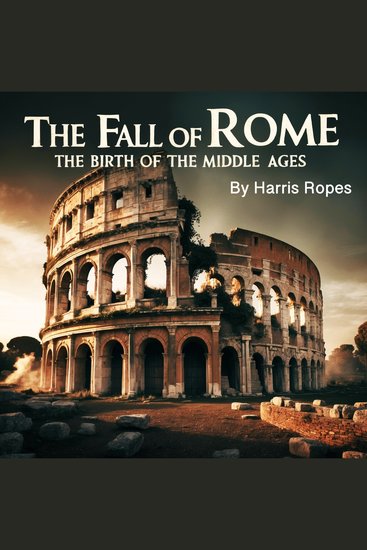
    At its height, the Roman Empire stood as one of the most powerful and influential civilizations in history. Spanning continents, from the windswept moors of Britain to the deserts of Egypt, Rome’s reach seemed boundless. The strength of the empire lay not only in its vast military conquests but in the complexity and efficiency of its administrative systems. Roman law, engineering, and political structure provided a level of organization that allowed a diverse collection of peoples and cultures to function under a single imperial banner. The Pax Romana, a period of relative peace lasting over two centuries, demonstrated Rome’s ability to maintain stability across its vast territories. 
    Roman culture was a dynamic blend of traditions inherited from earlier civilizations and innovations of its own. Latin served as the unifying language, enabling administration and communication across the empire. The arts flourished, with literature, sculpture, and architecture reaching impressive heights. From the poetry of Virgil and Ovid to the engineering marvels of aqueducts and roads, Roman achievements stood as symbols of sophistication. The grandeur of public spaces like the Colosseum and the Roman Forum reflected the empire’s emphasis on civic life and the power of the state. 
    Governance played a key role in the success of Rome. A highly structured bureaucracy allowed the empire to manage its provinces effectively, while a legal system based on Roman law continued to influence Western societies long after the empire’s decline. Though emperors held supreme power, the Senate, magistrates, and various local officials contributed to a layered political system that managed both urban centers and rural territories. Roman citizenship, which could be extended to people across the empire, fostered a sense of unity and shared identity among diverse populations.
    Zum Buch
  • How to Increase Your Emotional Intelligence - Master Your Emotions Improve Your Social Skills and Develop Self-Awareness to Build Healthy Relationships - cover

    How to Increase Your Emotional...

    Gabriel Carter

    • 0
    • 0
    • 0
    Inside, you’ll learn:  
    ✅ The 4-step method to stay emotionally centered—even when someone pushes your buttons on purpose  
    ✅ The 3 hidden emotional habits that quietly ruin relationships (and how to rewire them fast)  
    ✅ A simple way to name exactly what you feel—so you stop saying “I’m fine” when you're clearly not  
    ✅ The exact scripts to say “no” without guilt, set boundaries without drama, and ask for what you need without overexplaining  
    ✅ The 6 verbal traps used by aggressive people—and how to shut them down with calm authority  
    ✅ The real reason you absorb other people’s moods—and how to protect your emotional energy  
    ✅ How to respond to criticism without shrinking, overjustifying, or becoming passive-aggressive  
    ✅ What to do when you're overwhelmed—but expected to stay “professional”  
    ✅ The 3 questions emotionally intelligent people ask before answering under pressure  
    ✅ The difference between healthy empathy and emotional self-erasure—and how to stop losing yourself in others  
    ✅ Why most people misunderstand emotional intelligence—and how changing just a few words can change everything  
    ✅ How to stay emotionally available in your relationships without becoming everyone’s emotional sponge  
    If you’re tired of being caught off guard by your emotions…  
    If you want to stop overthinking, start communicating clearly, and feel more in control…  
    Then this is the emotional toolkit you’ve been missing.  
    You don’t need more advice. You need emotional clarity.  
    Start building it—today.
    Zum Buch
  • Swimsuits Optional - cover

    Swimsuits Optional

    Rod Mandelli

    • 0
    • 0
    • 0
    Secretly gay Italian stud Joey has homosexual fantasies about his super-jock best friend, blonde-haired and blue-eyed Steve. With Steve leaving for vacation, Joey has two choices. 
    He can spend his time thinking about Steve with his hand in his pants or spend two weeks by the pool with Steve's older substitute who believes that swimsuits should be optional and something other than water should be splashed on Joey's face.
    Zum Buch
  • Condemnation of Paganini - cover

    Condemnation of Paganini

    Anatoly Vinogradov

    • 0
    • 0
    • 0
    One never knows where genius comes from. Follow one of the greatest musicians and composers in history from the slums of Genoa to the grandest concert halls and palaces of Europe, through poverty, war, revolution, love, parenthood, and loss. An incredible life set against the backdrop of tumultuous Europe in late 18th - early 19th centuries.
    Zum Buch