Rejoignez-nous pour un voyage dans le monde des livres!
Ajouter ce livre à l'électronique
Grey
Ecrivez un nouveau commentaire Default profile 50px
Grey
Abonnez-vous pour lire le livre complet ou lisez les premières pages gratuitement!
All characters reduced
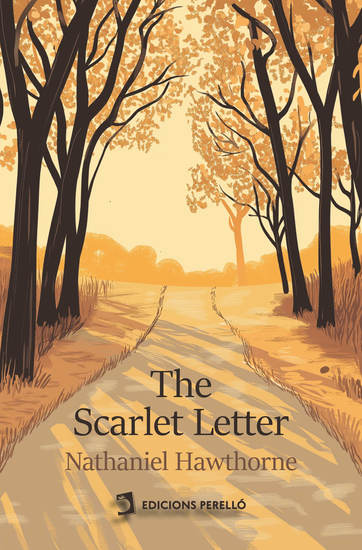
The Scarlet Letter - cover

The Scarlet Letter

Nathaniel Hawthorne

Maison d'édition: Edicions Perelló

  • 0
  • 0
  • 0

Synopsis

In a 17th-century Puritan colony, Hester Prynne is condemned for the sin of adultery and forced to wear a scarlet "A" on her chest as a mark of shame. Despite the social condemnation, Hester faces her fate with unshakable dignity, raising her daughter Pearl amid the rejection of the community. Throughout the novel, the deep moral conflicts of the protagonist are explored, along with the silent suffering of her secret lover and the weight of judgment in a society that does not forgive.

The Scarlet Letter is a profound reflection on guilt, redemption, and the complexity of the human heart.
Disponible depuis: 15/04/2025.
Longueur d'impression: 200 pages.
D'autres livres qui pourraient vous intéresser

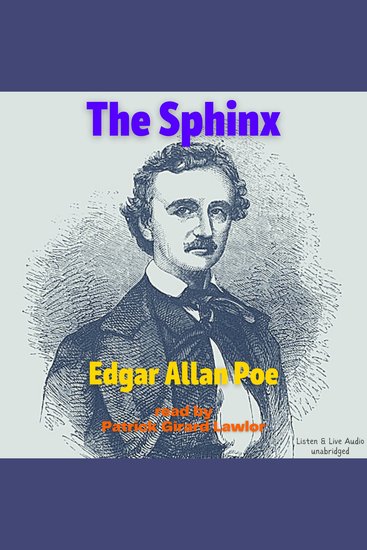
  • The Sphinx - cover

    The Sphinx

    Edgar Allan Poe

    • 0
    • 0
    • 0
    The Sphinx is a short story written by Edgar Allan Poe about a man who decides to visit a relative living near the Hudson River north of New York City for two weeks during a cholera epidemic that occurred during the summer of 1832. One day during this visit, the man is reading a book near the window revealing a scenic view of the Hudson River. His attention is focused upon the cholera epidemic nevertheless, and when he glances up from th pages of his novel, the man sees a ghastly sight in the distant hills--there an enormous creature larger than any oceangoing ship is climbing down!
    Voir livre
  • Nicholas Nickleby Volume 3 - cover

    Nicholas Nickleby Volume 3

    Charles Dickens

    • 0
    • 0
    • 0
    In "Nicholas Nickleby Volume 3," the gripping finale of Dickens' masterpiece unfolds with fervor and resolution. As Nicholas confronts the darker machinations of society, he champions love and justice, ensuring his family's happiness amidst adversity. James Harrington's narration breathes life into this vivid tapestry of Victorian life, amplifying the heart and humor of Dickens' timeless commentary on human nature and redemption.
    Voir livre
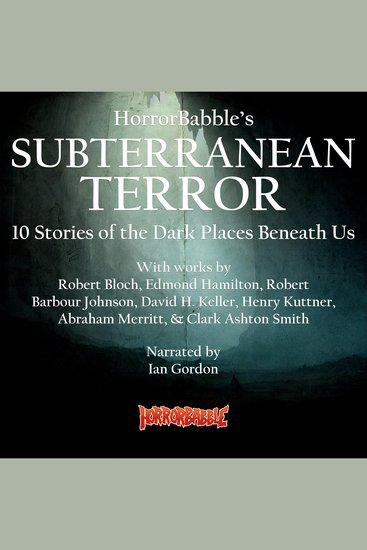
  • HorrorBabble's Subterranean Terror - 10 Stories of the Dark Places Beneath Us - cover

    HorrorBabble's Subterranean...

    Robert Bloch, Edmond Hamilton,...

    • 0
    • 0
    • 0
    A collection of horror stories set in shadowy caverns, crypts, and other undesirable hollows. 
    Contents: 
    Far Below by Robert Barbour Johnson (Weird Tales, June-July 1939) 
    The story of dreadful creatures burrowing up into the New York subway. 
    The Creeper in the Crypt by Robert Bloch (Weird Tales, July 1937) 
    An unusual case of kidnapping in witch-haunted Arkham. 
    The Secret in the Tomb by Robert Bloch (Weird Tales, May 1935) 
    A man answers an inexplicable summons from beyond the grave. 
    Murder in the Grave by Edmond Hamilton (Weird Tales, February 1935) 
    A night of terror ten feet below the surface of the ground. 
    The Thing in the Cellar by David H. Keller (Weird Tales, March 1932) 
    The tale of a terrified little boy, and his fear of what might be lurking in the basement. 
    It Walks by Night by Henry Kuttner (Weird Tales, December 1936) 
    A ghastly horror that stalked through the crypts beneath an old graveyard. 
    The Graveyard Rats by Henry Kuttner (Weird Tales, March 1936) 
    A cemetery caretaker must exterminate a colony of monstrous rats. 
    The People of the Pit by Abraham Merritt (All-Story Weekly, January 1918) 
    An individual descended much too deeply into the heart of the Earth. 
    The Epiphany of Death by Clark Ashton Smith (The Fantasy Fan, July 1934) 
    A shocking revelation in the catacombs of Ptolemides. 
    The Seed from the Sepulchre by Clark Ashton Smith (Weird Tales, October 1933) 
    In the Venezuelan jungle, a diabolical plant lived on human life.
    Voir livre
  • The Waste Land - cover

    The Waste Land

    T. S. Eliot

    • 0
    • 0
    • 0
    The Waste Land is a poem by T. S. Eliot, widely regarded as one of the most important poems of the 20th century and a central work of modernist poetry. Published in 1922, the 434-line poem first appeared in the United Kingdom in the October issue of Eliot's The Criterion and in the United States in the November issue of The Dial. It was published in book form in December 1922. Eliot's poem loosely follows the legend of the Holy Grail and the Fisher King combined with vignettes of contemporary British society. Eliot employs many literary and cultural allusions from the Western canon, Buddhism and the Hindu Upanishads. The poem shifts between voices of satire and prophecy featuring abrupt and unannounced changes of speaker, location, and time and conjuring a vast and dissonant range of cultures and literatures.The poem's structure is divided into five sections. The first section, "The Burial of the Dead," introduces the diverse themes of disillusionment and despair. The second, "A Game of Chess," employs alternating narrations, in which vignettes of several characters address those themes experientially. "The Fire Sermon," the third section, offers a philosophical meditation in relation to the imagery of death and views of self-denial in juxtaposition influenced by Augustine of Hippo and eastern religions. After a fourth section, "Death by Water," which includes a brief lyrical petition, the culminating fifth section, "What the Thunder Said," concludes with an image of judgment.
    Voir livre
  • The Fall of the House of Usher - cover

    The Fall of the House of Usher

    Edgar Allen Poe

    • 0
    • 0
    • 0
    A point of view of the proceeding madness of a friend. The mind ponders the possibility of madness and redemption upon the eve of ones family name. Usher shall be no more!
    Voir livre
  • A Chameleon - From their pens to your ears genius in every story - cover

    A Chameleon - From their pens to...

    Anton Chekhov

    • 0
    • 0
    • 0
    Anton Pavlovich Chekhov was born on 29th January 1860 in Taganrog, on the south coast of Russia.  
    His family life was difficult; his father was strict and over-bearing but his mother was a passionate story-teller, a subject Chekhov warmed to. As he later said; ‘our talents we got from our father, but our soul from our mother’.  
    At school Chekhov was distinctly average. At 16 his father mis-managed his finances and was declared bankrupt. His family fled to Moscow. Chekhov remained and eked out a living by various means, including writing and selling short sketches to newspapers, to finish his schooling. That completed and with a scholarship to Moscow University obtained he rejoined his family. 
    He was able to help support them by selling satirical sketches and vignettes of Russian lifestyles and gradually obtained further commissions. In 1884, he qualified as a physician and, although it earned him little, he often treated the poor for free, he was fond of saying ‘Medicine is my lawful wife, and literature is my mistress.’ 
    His own health was now an issue as he began to cough up blood, a symptom of tuberculosis.  Despite this his writing success enabled him to move the family into more comfortable accommodation.  
    Chekhov wrote over 500 short stories which included many, many classics including ‘The Kiss’ and ‘The Lady with a Dog’.  His collection ‘At Dusk’ won him the coveted Pushkin Prize when was only 26.  
    He was also a major playwright beginning with the huge success of ‘Ivanov’ in 1887.   
    In 1892 Chekhov bought a country estate north of Moscow. Here his medical skills and money helped the peasants tackle outbreaks of cholera and bouts of famine. He also built three schools, a fire station and a clinic.  It left him with less time for writing but the interactions with real people gained him detailed knowledge about the peasantry and their living conditions for his stories.  
    His most famous work, ‘The Seagull’ was received disastrously at its premiere in St Petersburg. It was later restaged in Moscow to highlight its psychological aspects and was a huge success. It led to ‘Uncle Vanya’, ‘The Three Sisters’ and ‘The Cherry Orchard’.  
    Chekhov suffered a major lung hemorrhage in 1897 while visiting Moscow. A formal diagnosis confirmed tuberculosis and the doctors ordered changes to his lifestyle.  
    Despite a dread of weddings the elusive literary bachelor quietly married the actress Olga Knipper, whom he had met at rehearsals for ‘The Seagull’, on 25th May 1901. 
    By May 1904 with his tuberculosis worsening and death imminent he set off for the German town of Badenweiler writing cheerful, witty letters to his family and assuring them his health was improving.  
    On 15th July 1904 Anton Chekhov died at Badenweiler.  He was 44.
    Voir livre