Begleiten Sie uns auf eine literarische Weltreise!
Buch zum Bücherregal hinzufügen
Grey
Einen neuen Kommentar schreiben Default profile 50px
Grey
Jetzt das ganze Buch im Abo oder die ersten Seiten gratis lesen!
All characters reduced
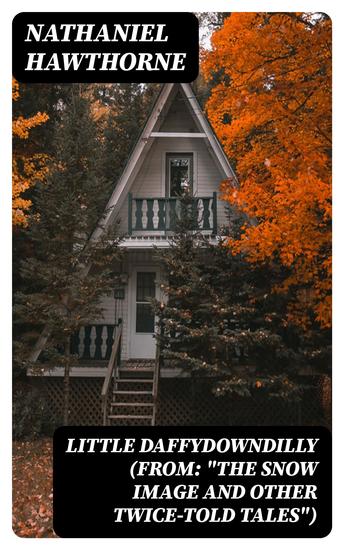
Little Daffydowndilly (From: "The Snow Image and Other Twice-Told Tales") - cover

Little Daffydowndilly (From: "The Snow Image and Other Twice-Told Tales")

Nathaniel Hawthorne

Verlag: DigiCat

  • 0
  • 0
  • 0

Beschreibung

In "Little Daffydowndilly," a gem from Nathaniel Hawthorne's "The Snow Image and Other Twice-Told Tales," the author weaves a poignant narrative that explores the themes of innocence, sacrifice, and the harsh realities of life through the lens of childhood. Written in Hawthorne's characteristic style—marked by rich symbolism and a deep moral undertone—this tale deftly blends fantasy with an underlying critique of societal norms. Hawthorne's use of lyrical prose and vivid imagery encapsulates the fragile beauty of youth juxtaposed with the inevitable passage of time, making it a striking illustration of his preoccupation with the moral complexities of human experience in early 19th-century America. Nathaniel Hawthorne, a master of American romanticism, was profoundly influenced by the Puritan backdrop of his youth, often examining the interplay of sin and morality in his works. "Little Daffydowndilly," like many of his tales, reflects his fascination with the concept of innocence lost and the bittersweet nature of existence. Hawthorne's own experiences in a rapidly changing society, along with his keen observations on the human condition, shaped his ability to portray childhood's poignant fragility. Recommended for readers seeking a nuanced exploration of childhood, "Little Daffydowndilly" is an essential read that resonates with anyone reflecting on the bittersweet nature of innocence amid life's inevitable transitions. Hawthorne's delicate touch and profound insights invite readers to ponder the depths of their own experiences with loss and beauty.
Verfügbar seit: 16.09.2022.
Drucklänge: 7 Seiten.
Weitere Bücher, die Sie mögen werden

  • The Complete Works of George Eliot - cover

    The Complete Works of George Eliot

    George Eliot

    • 0
    • 0
    • 0
    Discover the "Large Mind" that Defined an Era.
    
    George Eliot was more than a novelist; she was a profound philosopher of the human heart. Writing under a masculine pseudonym to ensure her work was taken seriously, she produced a body of work that remains the pinnacle of English realism. This comprehensive collection brings together her entire literary output, offering an unmatched look at the intricate connections between individual character and the community at large.
    
    This collection explores the pillars of her literary genius:
    
    The Master of Psychological Realism: Experience her revolutionary ability to delve into the inner motivations, flaws, and moral dilemmas of her characters with scientific precision and deep empathy.
    
    Portraits of Provincial Life: Vivid, atmospheric journeys into the heart of rural England, capturing the shifting traditions and social hierarchies during a time of immense cultural change.
    
    The Web of Society: Witness her signature "interconnected" storytelling, where the smallest actions of a single individual ripple outward to affect the lives of an entire town.
    
    Intellectual and Moral Inquiry: Beyond the drama, Eliot's work is infused with her deep interests in religion, politics, and the pursuit of a meaningful, virtuous life in a modernizing world.
    
    Eliot's prose is celebrated for its wisdom, its wit, and its "massive" intellectual scope. Whether you are seeking a sweeping social epic or an intimate study of a marriage, her work remains the gold standard for classic literature and social history.
    
    Explore the depths of the human condition. Buy "The Complete Works of George Eliot" today and own the library of a Victorian titan.
    Zum Buch
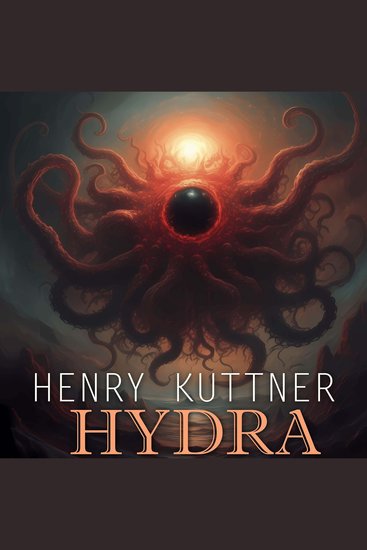
  • Hydra - cover

    Hydra

    Henry Kuttner

    • 0
    • 0
    • 0
    Henry Kuttner's "Hydra" falls primarily into the genres of horror and fantasy, with elements of occultism and science fiction. The story deals with a dangerous experiment in occultism that opens a door to another dimension, resulting in horrific consequences. It's also considered part of the Cthulhu Mythos, a subgenre of cosmic horror created by H.P. Lovecraft and his associates.
    Zum Buch
  • The Red Fairy Book - cover

    The Red Fairy Book

    Andrew Lang

    • 0
    • 0
    • 0
    Brought to you by Altrusian Grace Media and narrated by Matthew Schmitz. 
    The Red Fairy Book, compiled by Andrew Lang and first published in 1890, is a richly imaginative collection of classic fairy tales drawn from a wide array of cultural traditions, including Russian, Norse, French, and German folklore. Featuring stories such as “The Twelve Dancing Princesses,” “The Death of Koschei the Deathless,” and “The Master Thief,” the book weaves a tapestry of magical quests, enchanted creatures, clever tricksters, and timeless moral lessons. Each tale is steeped in symbolic resonance—princes undergo trials, maidens are tested, and villains often meet poetic justice—capturing the essence of the mythic imagination. Imbued with the mystique of oral tradition, The Red Fairy Book stands as one of the most enduring volumes in Lang’s influential series, offering readers a glimpse into the enchanted realms of old-world wonder.
    Zum Buch
  • Waltz Through Eternity - cover

    Waltz Through Eternity

    Margaret Teegarden

    • 0
    • 0
    • 0
    Sit back and relax. Let your mind slip right into the characters of the pages that follow. When you completely drift into the lives of the characters you'll experience frustration, anger, hurt and despair and soon you'll feel pain and agony that lasts for all eternity. This type of suffering can only be relieved by truth and everlasting love.
    Zum Buch
  • Hamlet - Full Cast Drama - cover

    Hamlet - Full Cast Drama

    William Shakespeare

    • 0
    • 0
    • 0
    The play begins with the guards of Elsinore Castle encountering the ghost of the recently deceased King Hamlet, the father of Prince Hamlet. The ghost appears to be a harbinger of doom, hinting at foul play surrounding the former king's death. Prince Hamlet is informed of this mysterious apparition and decides to meet the ghost, who reveals that he was murdered by Hamlet's uncle, Claudius, who has now assumed the throne and married Queen Gertrude. Hamlet is deeply disturbed by this revelation and the apparent betrayal by his mother. He grapples with his grief, anger, and a profound sense of disillusionment. To confirm the ghost's claims, Hamlet stages a play within a play called "The Mousetrap," which mirrors the circumstances of his father's murder. Claudius's reaction to this play confirms Hamlet's suspicions. As Hamlet navigates the complexities of the court, he feigns madness as a way to investigate further and protect himself. His erratic behavior confuses those around him, and he alienates his lover, Ophelia, and her brother, Laertes, in the process. Meanwhile, Hamlet's obsession with revenge intensifies, and he contemplates the moral and philosophical implications of taking another person's life. His famous soliloquies, such as "To be or not to be," reflect his inner turmoil and contemplation of existence and mortality. "Hamlet" is not only a story of revenge and political intrigue but also a profound exploration of the human psyche, existentialism, and the moral and emotional complexities of life. The character of Hamlet is an enduring symbol of the human condition, and his journey through the play continues to captivate and resonate with audiences to this day. 
     
    Zum Buch
  • A Scene from the Ghetto of Venice - From their pens to your ears genius in every story - cover

    A Scene from the Ghetto of...

    Rainer Maria Rilke

    • 0
    • 0
    • 0
    René Karl Wilhelm Johann Josef Maria Rilke was born into a troubled marriage on the 4th December 1875 in Prague, then part of the Austro-Hungarian Empire.  His mother, having previously lost a baby girl, would dress the young boy up in girl’s clothing.   
    Later his father dispatched him to a military academy at age 10 but after a miserable 5 years the young Rilke left due to illness and instead entered first Prague and then Munich and finally Berlin university to study art history, philosophy and literature. 
    His initial forays into literature was in poetry.  His intense, mystical and lyrical style was much admired and over time inspired many in succeeding generations.    
    His short prose collection ‘Stories of God’, written in an impassioned burst over several nights was published in 1900 and offers a beguiling view of much of Rilke’s influences and outlook.  
    The following year he married the pioneering sculptor and artist Clara Westhoff.  The union produced one child, a daughter Ruth.   
    He lived in Paris for most of the Century’s first decade where he mixed with many great minds of the time.  Although he continued to write he also worked as a secretary to the sculptor, Rodin.   
    It was only after they settled in Switzerland in 1919 that his writing output was in full flow.  Here he wrote profusely in both German and French, which included much on his previous travels, his left-wing sympathies, his religious and existential thoughts, all part of a unique and consummate style. 
    From 1923 on, Rilke increasingly struggled with his health which was now in constant decline and often spent time rehabilitating at a sanatorium.   
    Rainer Maria Rilke died of leukaemia on the 29th December 1926 in Montreux, Switzerland.  He was 51.
    Zum Buch