Rejoignez-nous pour un voyage dans le monde des livres!
Ajouter ce livre à l'électronique
Grey
Ecrivez un nouveau commentaire Default profile 50px
Grey
Abonnez-vous pour lire le livre complet ou lisez les premières pages gratuitement!
All characters reduced
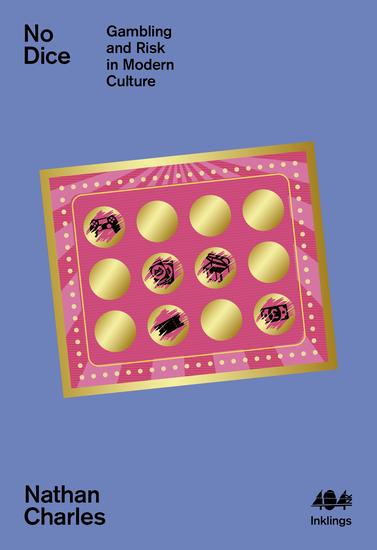
No Dice - Gambling and Risk in Modern Culture - cover

No Dice - Gambling and Risk in Modern Culture

Nathan Charles

Maison d'édition: 404 Ink

  • 0
  • 0
  • 0

Synopsis

When you think of 'gambling' you might think of Vegas casinos, betting shops and football flutters but the risk of gambling is embedded in numerous corners of popular culture that many of us consume.
By considering the concept of 'soft gambling', No Dice asks how we could possibly link the Pokémon Trading Card Game with gambling. Can we compare Netflix to a night at the theatre? When does fictional gambling within video games go too far with their infamous loot boxes? Does such risk affect everyone or are socio-economic divides driving further inequality?
No Dice explores the messy world of gambling and risk that we encounter regularly, from childhood through adulthood, considering if it is worth the risk and if we even know what risks we might be taking.
Disponible depuis: 29/10/2022.
Longueur d'impression: 112 pages.

D'autres livres qui pourraient vous intéresser

  • The BPD Guided Journal - Your Space to Release Intense Emotions Nurture Self-Compassion and Take Charge of Borderline Personality Disorder - cover

    The BPD Guided Journal - Your...

    PhD Daniel J. Fox

    • 0
    • 0
    • 0
    Journal your way to lasting emotional balance, self-compassion, and better relationships. 


    If you've been diagnosed with borderline personality disorder (BPD), you should know that BPD doesn't have to define you. Like many mental health issues, BPD manifests on a spectrum, and while some people may encounter extreme symptoms on one end, others may be less affected on the other. What do you all have in common? You likely experience difficulty balancing your emotions, thoughts, and behaviors. You may struggle with relationships. And you may not see yourself clearly—continuously switching from the hero to the villain of the story you've written about your life. So, how can you take charge of your own story, and start on the road to healing? 


    This compassionate guided journal offers a personalized, constructive, and healing approach to managing your symptoms. Through the act of writing, you'll gain insight into the four elements of BPD—emotions, thoughts, behaviors, and relationships—and find powerful tools to balance your emotions, reverse unhealthy habits that get in the way of meaningful relationships, and move past feelings of shame and regret to cultivate self-compassion. This book will help you gain empowering insight into yourself and your unique mind, so you'll feel equipped to step out into a world where you know you belong.
    Voir livre
  • Time to Escape - cover

    Time to Escape

    Raphael Terra

    • 0
    • 0
    • 0
    This audiobook has been recorded using Text to speech (TTS). 
     
    This is a mad, mad world. A world full of crazy humans. Our species is growing at an alarming rate; the globe is warming out of control; our food sources are being depleted; a massive energy crisis is looming and the pressure on each and every one of us to earn more, compete with our peers and look cool is so great that suicide rates are growing faster than ever. 
     
    Marry, have two children, hold down a good job, fight for your country, pay your mortgage and drive a petrol guzzling car. What about creativity, freedom, emotions? We are sold to, manipulated by marketing and propaganda, told what and who to believe. We are born and thrown into a bewildering world of control with no options and no purpose other than to feed the machine. 
     
    For many it all becomes too much and the pressure forces suicide. But is this the only way to live? No it is not. There are ways to escape the madness of human society. To escape the Queen Bee of capitalism and control. To no longer be a drone. 
     
    It is time to jump off.
    Voir livre
  • Polycentric Water Governance in Spain - Understanding Determinants Patterns and Performance of Coordination - cover

    Polycentric Water Governance in...

    Nora Schütze

    • 0
    • 0
    • 0
    Increasing irrigation efficiency has been high on the political agenda in Spain for many years. However, the overarching aim to reduce agricultural water consumption has not been met so far. To explore this phenomenon, Nora Schütze investigates processes of coordination between the water and agricultural sector in three Spanish river basins in the context of the EU Water Framework Directive implementation. From the perspective of polycentric governance, she identifies multiple mechanisms which illustrate how and why actors interact in certain ways, and thus shows why environmental aims of the Water Framework Directive remain unachieved.
    Voir livre
  • Globalization and System Capabilities - China and India in the Twenty-First Century - cover

    Globalization and System...

    Rana Eijaz Ahmad, Mahnoor Mansoor

    • 0
    • 0
    • 0
    Welcome to the world of artificial intelligence, where digitalization has transformed the globe worldwide. This book investigates the 'system capabilities' and its utilization through the lens of leadership as per its idiosyncrasy. The thesis of this book emphasizes that it is not the form of government but the efficient utilization of the system capabilities by the leadership that make the difference in the socio-political and economic development of any country in the world. It provides a dynamic landscape of globalization, discovering how two economic dynamos—China and India—navigate and shape the complicated web of global relations in the contemporary era.
    As the world becomes increasingly interconnected, understanding the roles of major players in shaping global systems is crucial. China and India, with their rich histories, diverse cultures, and rapidly evolving economies, stand as pivotal actors in the unfolding narrative of our shared global future.
    Voir livre
  • Summary: Who Ate the First Oyster? - The Extraordinary People Behind the Greatest Firsts in History by Cody Cassidy: Key Takeaways Summary & Analysis Included - cover

    Summary: Who Ate the First...

    Brooks Bryant

    • 0
    • 0
    • 0
    Disclaimer: This book is not the official, but a summary & it does not accompany the official. 
    Step back in time and explore humanity's quirkiest milestones with our engaging summary of Cody Cassidy's 'Who Ate the First Oyster?' This delightful and concise guide unravels the stories behind the world's strangest 'firsts'—from the first oyster-eater to the pioneer of tattoos. 
    Cassidy takes us on a whimsical journey through human history, but our summary cuts to the chase, giving you the most astonishing tidbits without the fluff. How did ingenuity and daring shape our civilization, one peculiar discovery at a time? Uncover the answers in a read that's as entertaining as it is enlightening. 
    In a world obsessed with the latest and the greatest, take a moment to appreciate the firsts that got us here. This is the perfect read for the curious at heart, the lovers of odd trivia, and anyone who wonders about the humble origins of everyday things. Dive in and discover a side of history that textbooks don't tell you!"
    Voir livre
  • The Republic - cover

    The Republic

    Plato

    • 0
    • 0
    • 0
    The Republic (Greek: Politeia) is a Socratic dialogue, written by Plato around 380 BC, concerning the definition of (justice), the order and character of the just city-state and the just man, reason by which ancient readers used the name On Justice as an alternative title (not to be confused with the spurious dialogue also titled On Justice). The dramatic date of the dialogue has been much debated and though it must take place some time during the Peloponnesian War, "there would be jarring anachronisms if any of the candidate specific dates between 432 and 404 were assigned".    It is Plato's best-known work and has proven to be one of the most intellectually and historically influential works of philosophy and political theory. In it, Socrates along with various Athenians and foreigners discuss the meaning of justice and examine whether or not the just man is happier than the unjust man by considering a series of different cities coming into existence "in speech", culminating in a city (Kallipolis) ruled by philosopher-kings; and by examining the nature of existing regimes.    The participants also discuss the theory of forms, the immortality of the soul, and the roles of the philosopher and of poetry in society. Short Summary (Epilogue): X.1—X.8. 595a—608b. Rejection of Mimetic Art X.9—X.11. 608c—612a. Immortality of the Soul X.12. 612a—613e. Rewards of Justice in Life X.13—X.16. 613e—621d. Judgment of the Dead The paradigm of the city — the idea of the Good, the Agathon — has manifold historical embodiments, undertaken by those who have seen the Agathon, and are ordered via the vision. The centre piece of the Republic, Part II, nos. 2–3, discusses the rule of the philosopher, and the vision of the Agathon with the allegory of the cave, which is clarified in the theory of forms.    The centre piece is preceded and followed by the discussion of the means that will secure a well-ordered polis (City). Part II, no. 1, concerns marriage, the community of people and goods for the Guardians, and the restraints on warfare among the Hellenes. It describes a partially communistic polis. Part II, no. 4, deals with the philosophical education of the rulers who will preserve the order and character of the city-state. In Part II, the Embodiment of the Idea, is preceded by the establishment of the economic and social orders of a polis (Part I), followed by an analysis (Part III) of the decline the order must traverse. The three parts compose the main body of the dialogues, with their discussions of the "paradigm", its embodiment, its genesis, and its decline. The Introduction and the Conclusion are the frame for the body of the Republic.    The discussion of right order is occasioned by the questions: "Is Justice better than Injustice?" and "Will an Unjust man fare better than a Just man?" The introductory question is balanced by the concluding answer: "Justice is preferable to Injustice". In turn, the foregoing are framed with the Prologue (Book I) and the Epilogue (Book X). The prologue is a short dialogue about the common public doxai (opinions) about "Justice". Based upon faith, and not reason, the Epilogue describes the new arts and the immortality of the soul.
    Voir livre