Begleiten Sie uns auf eine literarische Weltreise!
Buch zum Bücherregal hinzufügen
Grey
Einen neuen Kommentar schreiben Default profile 50px
Grey
Jetzt das ganze Buch im Abo oder die ersten Seiten gratis lesen!
All characters reduced
The Scarlet Letter - Secrets Sin and Redemption - cover

The Scarlet Letter - Secrets Sin and Redemption

Nataniel Hawthorne, Zenith Crescent Moon Press

Verlag: Zenith Crescent Moon Press

  • 0
  • 0
  • 0

Beschreibung

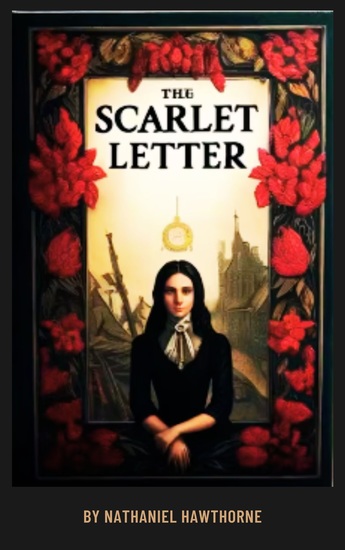
🌟 Unveil the dark truths of Puritan society with Nathaniel Hawthorne's powerful classic, The Scarlet Letter. This gripping novel delves into the lives of Hester Prynne, a woman shamed and ostracized for her sin, and the individuals bound to her by love, guilt, and secrets.
📖 Set in 17th-century Massachusetts, this timeless masterpiece explores themes of sin, punishment, and redemption with unmatched depth and sensitivity. As Hester proudly wears her scarlet "A," symbolizing her transgression, she transforms from a figure of shame into one of strength, resilience, and defiance against a strict moralistic society.
💔 Hawthorne's evocative storytelling reveals the emotional struggles of each character—from the tormented Reverend Dimmesdale to the vengeful Roger Chillingworth—creating a narrative rich in psychological and moral complexity. It's a story that poses eternal questions about forgiveness, judgment, and the nature of human imperfections.
✨ Renowned for its profound themes and eloquent prose, The Scarlet Letter remains a cornerstone of American literature. Perfect for readers who love thought-provoking tales, rich symbolism, and enduring moral dilemmas.
👉 Click now to immerse yourself in this bold, moving story that has captivated minds and hearts for generations!
Verfügbar seit: 18.03.2025.
Drucklänge: 218 Seiten.

Weitere Bücher, die Sie mögen werden

  • The Adventure of the Three Students - cover

    The Adventure of the Three Students

    Arthur Conan Doyle

    • 0
    • 0
    • 0
    The Adventure of the Three Students, one of the 56 Sherlock Holmes short stories written by Sir Arthur Conan Doyle, is one of 13 stories in the cycle collected as The Return of Sherlock Holmes.Sherlock Holmes and Dr. Watson find themselves in a university town when a tutor and lecturer of St Luke's College, Mr. Hilton Soames, brings him an interesting problem. Soames had been reviewing the galley proofs of an exam he was going to give when he left his office for an hour. When he returned, he found that his servant, Bannister, had entered the room but accidentally left his key in the lock when he left, and someone had disturbed the exam papers on his desk and left traces that show it had been partially copied. Bannister is devastated and collapses on a chair, but swears that he did not touch the papers. Soames found other clues in his office: pencil shavings, a broken pencil lead, a fresh cut in his desk surface, and a small blob of black clay speckled with sawdust.Soames wants to uncover the cheater and prevent him from taking the exam, since it is for a sizeable scholarship. Three students who will take the exam live above him in the same building. The first, Gilchrist, is athletic, being a hurdler and a long-jumper, and industrious (in contrast to his father who squandered his fortune in horse racing); the second, Daulat Ras, is described as quiet and methodical; the third is Miles McLaren, a gifted man but thoroughly dissolute and given to gambling.Famous works of the author Arthur Conan Doyle: A Study in Scarlet, The Sign of the Four, The Adventures of Sherlock Holmes, The Memoirs of Sherlock Holmes, The Hound of the Baskervilles, The Return of Sherlock Holmes, The Valley of Fear, His Last Bow, The Case-Book of Sherlock Holmes, Stories of Sherlock Holmes, The Lost World.
    Zum Buch
  • The Signalman - cover

    The Signalman

    Charles Dickens

    • 0
    • 0
    • 0
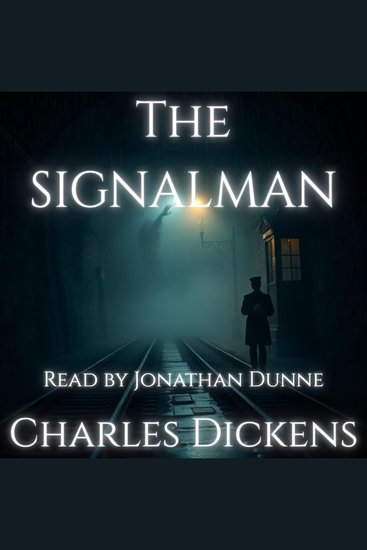
    Title: The Signalman 
    Author: Charles Dickens 
    Narrator: Jonathan Dunne 
    Original Publication: 1866 
    Public Domain: Yes 
    Series Placement: Number 50 in the Timeless Terrors series 
    Description: 
    The Signalman is Charles Dickens’ taut and haunting meditation on fear, fate, and the limits of human perception. Set along a lonely railway cutting, the story follows a traveler who encounters a signalman tormented by a mysterious, foreboding apparition. Their conversation gradually reveals a chilling vision of impending tragedy, as the signalman struggles against forces beyond his comprehension. 
    Blending Gothic suspense with psychological tension, Dickens transforms a seemingly simple ghost story into a darkly reflective exploration of isolation, dread, and the uncanny ways in which warning signs are often ignored. Narrated by Amazon-bestselling horror author Jonathan Dunne, this performance captures both the quiet unease and mounting terror of Dickens’ narrative — a world where the ordinary and the supernatural intersect in subtle but unforgettable ways. 
    While the text is in the public domain, this narration is an original performance and copyright © 2025 Jonathan Dunne. Part of Timeless Terrors, a series devoted to resurrecting the masters of the macabre and uncanny, The Signalman endures as one of Dickens’ most suspenseful and psychologically intense short stories — a tale of foreboding that lingers long after the final words.
    Zum Buch
  • At Christmas Time - From their pens to your ears genius in every story - cover

    At Christmas Time - From their...

    Anton Chekhov

    • 0
    • 0
    • 0
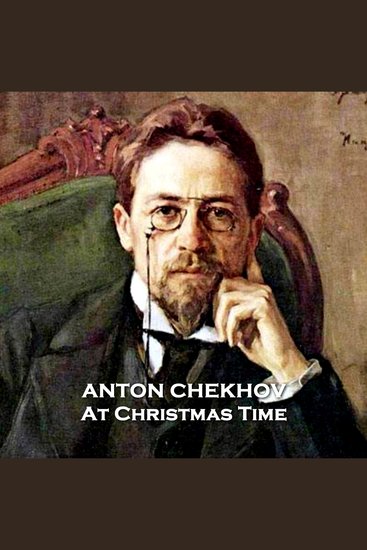
    Anton Pavlovich Chekhov was born on 29th January 1860 in Taganrog, on the south coast of Russia.  
    His family life was difficult; his father was strict and over-bearing but his mother was a passionate story-teller, a subject Chekhov warmed to. As he later said; ‘our talents we got from our father, but our soul from our mother’.  
    At school Chekhov was distinctly average. At 16 his father mis-managed his finances and was declared bankrupt. His family fled to Moscow. Chekhov remained and eked out a living by various means, including writing and selling short sketches to newspapers, to finish his schooling. That completed and with a scholarship to Moscow University obtained he rejoined his family. 
    He was able to help support them by selling satirical sketches and vignettes of Russian lifestyles and gradually obtained further commissions. In 1884, he qualified as a physician and, although it earned him little, he often treated the poor for free, he was fond of saying ‘Medicine is my lawful wife, and literature is my mistress.’ 
    His own health was now an issue as he began to cough up blood, a symptom of tuberculosis.  Despite this his writing success enabled him to move the family into more comfortable accommodation.  
    Chekhov wrote over 500 short stories which included many, many classics including ‘The Kiss’ and ‘The Lady with a Dog’.  His collection ‘At Dusk’ won him the coveted Pushkin Prize when was only 26.  
    He was also a major playwright beginning with the huge success of ‘Ivanov’ in 1887.   
    In 1892 Chekhov bought a country estate north of Moscow. Here his medical skills and money helped the peasants tackle outbreaks of cholera and bouts of famine. He also built three schools, a fire station and a clinic.  It left him with less time for writing but the interactions with real people gained him detailed knowledge about the peasantry and their living conditions for his stories.  
    His most famous work, ‘The Seagull’ was received disastrously at its premiere in St Petersburg. It was later restaged in Moscow to highlight its psychological aspects and was a huge success. It led to ‘Uncle Vanya’, ‘The Three Sisters’ and ‘The Cherry Orchard’.  
    Chekhov suffered a major lung hemorrhage in 1897 while visiting Moscow. A formal diagnosis confirmed tuberculosis and the doctors ordered changes to his lifestyle.  
    Despite a dread of weddings the elusive literary bachelor quietly married the actress Olga Knipper, whom he had met at rehearsals for ‘The Seagull’, on 25th May 1901. 
    By May 1904 with his tuberculosis worsening and death imminent he set off for the German town of Badenweiler writing cheerful, witty letters to his family and assuring them his health was improving.  
    On 15th July 1904 Anton Chekhov died at Badenweiler.  He was 44.
    Zum Buch
  • Growing Up of Cornelia The (Unabridged) - cover

    Growing Up of Cornelia The...

    L. M. Montgomery

    • 0
    • 0
    • 0
    Lucy Maud Montgomery (November 30, 1874 - April 24, 1942), published as L. M. Montgomery, was a Canadian author best known for a series of novels beginning in 1908 with Anne of Green Gables. The book was an immediate success. The title character, orphan Anne Shirley, made Montgomery famous in her lifetime and gave her an international following.
    The Growing Up of Cornelia: Aunt Jemima gave me this diary for a Christmas present. It's just the sort of gift a person named Jemima would be likely to make. I can't imagine why Aunt Jemima thought I should like a diary. Probably she didn't think about it at all. I suppose it happened to be the first thing she saw when she started out to do her Christmas duty by me, and so she bought it. I'm sure I'm the last girl in the world to keep a diary.
    Zum Buch
  • The Adventure of the Devil's Foot - cover

    The Adventure of the Devil's Foot

    Arthur Conan Doyle

    • 0
    • 0
    • 0
    The Adventure of the Devil's Foot is one of the 56 Sherlock Holmes short stories written by Arthur Conan Doyle. It is one of eight stories in the cycle collected as His Last Bow.Doyle ranked "The Adventure of the Devil's Foot" ninth in his list of his twelve favorite Holmes stories.Holmes and Dr. Watson find themselves at Poldhu in Cornwall one spring for the former's health, but the holiday ends with a bizarre event. Mr. Mortimer Tregennis, a local gentleman, and Mr. Roundhay, the local vicar, come to Holmes to report that Tregennis's two brothers have gone insane, and his sister has died. Tregennis had gone to visit them in their village ('Tredannick Wollas'), played whist with them, and then left. When he came back in the morning, he found them still sitting in their places at the table, the brothers, George and Owen, laughing and singing, and the sister, Brenda, dead. The housekeeper had discovered them in this state, and fainted. The vicar has not been to see them yet. Tregennis says that he remembers one brother looking through the window, and then he himself turned to see some "movement" outside. He declares that the horrific event is the work of the devil. Mortimer Tregennis was once estranged from his siblings by the matter of dividing the proceeds from the sale of the family business, but he insists that all was forgiven, although he still lives apart from them. The doctor who was summoned, reckoned that she had been dead for six hours. He also collapsed into a chair for a while after arriving...Famous works of the author Arthur Conan Doyle: A Study in Scarlet, The Sign of the Four, The Adventures of Sherlock Holmes, The Memoirs of Sherlock Holmes, The Hound of the Baskervilles, The Return of Sherlock Holmes, The Valley of Fear, His Last Bow, The Case-Book of Sherlock Holmes, Stories of Sherlock Holmes, The Lost World.
    Zum Buch
  • Evening Guest An - From their pens to your ears genius in every story - cover

    Evening Guest An - From their...

    Alexander Kuprin

    • 0
    • 0
    • 0
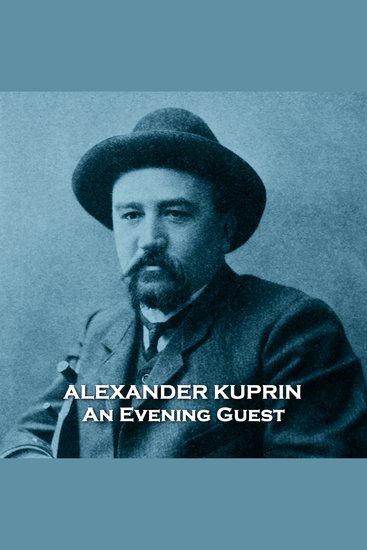
    Alexander Kuprin was born in Narovchat, Penza in Russia on 7th September 1870. 
    At 3 his Father died and he and mother moved to Moscow. By 10 he was enrolled at the Second Moscow Military High School and there his interest in literature began. The Alexander Military Academy followed and two years later he was a sub-lieutenant and posted to an Infantry Regiment for a further four years. 
    Despite his duties he was a now a keen writer and published his first short story at this time. His military duties also garnered him experiences for his breakthrough work ‘The Duel’.  Leaving the military he left for Kiev to work for local newspapers.  He continued to publish both stories and novels and by 1901 he was in St Petersburg becoming part of a group that included Chekhov, Ivan Bunin, Maxim Gorky and Leonid Andreyev.  
    In the years that followed further controversial works and acclaim followed.  His comments on the regime meant he was also put under secret police surveillance.   
    As World War I erupted, Kuprin opened a military hospital but was then given command of an infantry company in Finland. He was soon discharged on grounds of ill health.  
    The October Revolution saw him praise Lenin, but he warned that the Bolsheviks threatened Russian culture and might cause further widespread suffering to the peasants.  As Civil War raged he took his family to Helsinki and then on to Paris. 
    Exile saw his talents decline further and his succumbing to alcoholism. He became lonely and withdrawn. The family's poverty increased his malaise.   
    In May 1937, the Kuprin’s returned to Moscow.  He now saw his work published but wrote almost nothing new.  In 1938 his health rapidly deteriorated.  Already suffering from a kidney problems and sclerosis, he had now developed cancer of the oesophagus.  
    Alexander Kuprin died on 25th August 1938.
    Zum Buch